Teaching English as a Missionary Language

HANDOUT 06JUL15 FE REV 1  6140876241_ea35373c1a_o copy.jpgWhile he was still President, Jiang Zemin was allegedly asked at a dinner party what fundamental change he would like to see happen in China. His response was that he would like to see China become a Christian country.

He’s not isolated in this. Some of the leading creatures at the top of the CCP have apparently concluded from their studies of developed countries that the key to their success was the role of Christian beliefs. I don’t think they’re being inconsistent in this, given that there isn’t really anything to Party ideology any more apart from nationalism, the need for an authoritarian state and letting the free market take over all aspects of economic life. In fact, I think it’s better to think of the CCP as the Chinese Nationalist Party (國民党!) these days. And I think it’s precisely this vacuum of ideas that makes young people in particular so vulnerable to right-wing fundamentalist groups like this who dispatch every year more and more young people to China to preach the holy word – under the guise of teaching english.

I came across this fascinating and timely article about missionary groups using ESL as a means of harvesting converts around the world. Unfortunately as it’s a PDF I can’t copy and post much of it here, but I’d encourage anyone remotely interested in either ESL or the evil influence of these bible bashing nutters to read the whole article, long as it is:

According to a report by missionaries recently returned from China, they are planning to return soon: ‘We will teach English to Chinese students between the ages of 10 and 18 for six weeks in July and August.’ On their last visit, they tell us, ‘over 350 students heard the Gospel’ and the principal of the school admired their dedication even though, as he explained, ‘I don’t understand what they were talking about but I knew it was something very deep and very special.’

It is something I find extremely worrying, not to say depressing. I’ve heard that in some cases in China the religious organisations offer to pay half the salaries of these ‘teachers’. We have at least one of them here – I have seen the person concerned heading into class with a big thick ‘Rapture’-type book. I’ve heard about Chinese students being baptised by foreign teachers in the bathtub of their apartments. Sometimes one of my students proclaims in class that they’re a Christian – I just ignore it and move very swiftly on. Tragically though, because the students have so few reference points to help them understand Western life in any depth (hence the appalling and maddening assumption that I am a Christian), I think they actually see it as pretty ‘cool’.

Personally the whole thing makes my blood boil.

This is not a general diatribe against teachers who happen to consider themselves Christians – you really need to follow the above link to know what I’m talking about. As it makes clear, what the organisations concerned are proselytising is the complete opposite of Liberation Theology. The article gives some example sentences which one English teaching missionary group encourages their staff to use in the classroom:

  • Right: Man has a right to punish his children when they behave poorly.
  • Struggle: I’m struggling to finish this work soon.
  • Boss: The boss is good. He treats us well and pays us a good wage.

No problem for them that all churches in China are obliged to accept the authority of the Communist Party before they can go about their work. And the Communist Party leadership are fully aware that what right-wing Christian ideology has to say about the world constitutes very little threat to their own power, so they at least tolerate it, and I suspect increasingly encourage it. What is being preached, after all, is submission – submission to whatever forms of authority exist, be it a husband (after all, we call it the missionary position for a good reason), a corrupt government or an intolerant and ignorant God. In much the same way, in fact, as the world’s financial institutions force obedience to the law of the market on the world’s poorest countries:

While on the one hand preaching a strong line in neoliberal politics, many evangelical organisations preach an equally strong line on political obedience. The Christian Television (online, 2002) warns us to ‘Stop the Revolution’ because ‘one day Jesus will return and overthrow all who remain rebellious to this rule.’ Stopping rebellion allows former sinners to find ‘true freedom’. This doctrine emphasises acquiescence not only to the authority of God but also to the authority of government.

With tragic irony, these Christian churches are preaching this nonsense under the guise of giving people what has become one of the most empowering tools these days, the ability to communicate in English.

At least in China, I’d question the depth of conviction of any recent converts to Christianity. According to Paul Theroux’s book, it’s very common for ‘religious’ Chinese people to bet on several horses at the same time. Just because someone says they’re a Christian doesn’t mean that they don’t believe in Taoism, Confucianism, Buddhism, Falun Gong and maybe the Party too!

However, this is not just happening in Chinese universities, but all over the world. There needs to be a movement throughout ESL to expose and challenge these people. They are exploiting the needs of the poor in order to push their twisted, bigoted ideology. They really do qualify as ‘foreign devils’!

Slavoj Zizek sums up my thoughts of the last week

…what Europe do we want?

To put it bluntly, do we want to live in a world in which the only choice is between the American civilisation and the emerging Chinese authoritarian-capitalist one? If the answer is no then the only alternative is Europe. The third world cannot generate a strong enough resistance to the ideology of the American dream. In the present world constellation, it is only Europe that can do it. The true opposition today is not between the first world and the third world. Instead it is between the first and third world (ie the American global empire and its colonies), and the second world (ie Europe).

You can read the complete article here.

When is a Massacre not an Incident?


I’ve noticed an increasing and worrying tendency to refer to the Massacre, even in the international press, as the ‘Tiananmen Square Incident’. In fact, a friend’s Chinese teacher referred to it once as the Tiananmen Square Accident, and then tried to defend her choice of word! The actual ‘Tiananmen Incident’ took place in 1976. What took place was also a massacre, and certainly not an ‘incident’, whatever that means:

Things became rowdy, and inside the Great Hall of the People China’s rulers were alarmed. After consultation with Mao, it was decided to use force to clear the square. Mao authorized the use of force but not guns.

That evening when only a few thousand protesters remained they were driven from the square by militia armed with clubs. Four thousand were arrested. Sixty were dragged into the Great Hall of the People, beheaded and later shipped to Shanghai and secretly cremated.

It’s at best misleading to use this phrase to refer to the events of 1989, and at worst it plays right into the hands of the Chinese authorities in their attempts to have the massacre recorded in the history books of the world as something much more neutral and ambiguous than pure cold-blooded butchery of their own people.

I think this may have something to do with increasing Chinese Government influence in debates concerning human rights in China, and when it occurs I think it needs to be confronted and the fact that it was a massacre must be insisted on at all costs.

The saddest thing about all this is that the average Chinese student, despite seeming to spend every available minute online, probably has about as much awareness of the Tiananmen Square Massacre as the average British student has of the Tiananmen Incident. How foreigners can choose to go on living here year after year in the full knowledge of the extent of their students’ ignorance is truly beyond my understanding.

The Tiananmen Square Massacre


It seems to me that if you seriously want to understand the mentality of Chinese people today, you have to consider the impact of the events of June 1989. The protests were not isolated but were part of a general push for democracy in the late nineteen-eighties. This is abundantly clear if you read any books which cover the period – at the moment I’m reading ‘Riding the Iron Rooster’ by Paul Theroux, his account of a year spent travelling around the country. It was published in 1988, and in the book in conversation after conversation people express their shame and disgust at the Cultural Revolution, their rejection of Mao as someone who made nothing but mistakes and as someone who they recognise to have been essentially cracked after 1956, and their wish for more political freedom. He visits Mao’s home village, a site of pilgrimage 10 years before, and finds it completely deserted.

He talks about the massive protests which took place all over the country in 1987, involving both students and workers demanding greater political freedom: press freedom, electoral reform, a multiparty system, official permission to demonstrate and, perhaps more importantly, their right to have their protests reported in the press; and social freedom – the students’ demands included sexual freedom (in 2005 it is still illegal to ‘cohabit’) and better food in the canteens. At one point there were between 100,000 and 200,000 people on the streets of Shanghai, and similar protests in other cities. The person scapegoated and purged in the wake of these protests was Hu Yaobang, whose death was the initial impetus for the buildup in Tienanmen Square in April 1989. There also followed a general campaign against the effects of ‘bourgeois liberalism’, especially amongst the young.

We all know what came of that – if anyone needs reminding they only need to take the time to read the report which the Guardian fortunately keeps posted on it’s Special Report on China page here. As I say, it was not an isolated event. The ongoing impact has involved a partial rehabilitation of Mao’s reputation, a refusal to confront the consequences of the Cultural Revolution and what I consider to be a general intellectual impoverishment, contrasted with the real intellectual awakening of the nineteen-eighties which is evident in Paul Theroux’s book and also in Ma Jian’s ‘Red Dust’, which is the story of a Beijing writer and painter travelling the country in the mid-80s, on the run from the authorities visiting his friends and witnessing the changes taking place. His friends also paint, write and talk about the recent past and about the possibility of living in a freer society.

I can only compare that with the conversations I’ve had over the last ten months, obviously especially with young people, in which political change has not been any kind of issue for them.

The authorities after 1989 took the decision that they would systematically crush any sign of independent thinking amongst young people. In order to achieve this they increased military-style discipline in universities, increased political (read nationalistic) education for university and school students and removed from campuses any places where students or teachers would be able to gather and discuss their lives. This over the last few years has happily coincided with a general improvement of the standard of living, along with certain projects of national prestige which are used to bolster young people’s sense of national pride and attachment to the state.

Just as important in my opinion has been the growing availability of mobile phones and the internet. Chinese students see themselves primarily as consumers, just as connected to and engaged with the outside world as young people in Japan or the USA. In reality they are disconnected from the society that they live in, atomized, disregarding of any notion of solidarity or democracy. What it will now take to shake them out of this stupor and make them think about what is going on around them I do not know. They really don’t seem to know or in fact care that the internet they see is filtered and a pale imitation of what the rest of the world uses. I’ve tried asking them what they would do if the government banned mobile phones, but it’s a bit too abstract as that clearly is not about to happen.

This, on the other hand, is fantastic news.

What am I doing here?


The first time I met someone from mainland China was in 1994 at a party. We were both catastrophically drunk and partly because of this, and partly because at the time I mixed in a dark red circle, I naively assumed that he was some sort of dissident who’d fled the country. I don’t think he was, and he may even have been a gatecrasher, but I bombarded him with all sorts of stupid questions, the subtext of which was ‘Bu..b..but what is your life like?!?’ The exoticism of the life I imagined for him in China was boundless. I don’t remember a single word he said to me.

Five years later when I started teaching I had Chinese students in all my classes. The boys would turn up halfway through the morning, evidently still fast asleep, and in the meantime we, the Europeans, would bombard the girls with questions. ‘So you’ve really never heard of the Beatles/Elvis/techno music?’ was a common theme. They in turn would timidly ask if it was true that there were really late night discos in Dublin. In the break they would crowd round the tape player and turn up their cassettes of what sounded to me like Fisher Price Disney pop ballads.

They were (I think) rich kids who had failed to get into University and had therefore been sent away until they had learnt English. To me ordinary life in China was full of mystery, and even their most mundane comments fed this impression. One insisted throughout his entire stay that back home he was a taxi driver. Lost for the answer to a question he would grin and burst out ‘I drive taxi – where you wanna go?’ to great hilarity. Discussing the issue of acceptable questions to ask on a first date they came up with ‘Who is your local party chief?’, which they seemed to find just as deliriously incongruous as we did.

Hungover and mischeavous one early summer day, I decided we would talk about special occasions and festive holidays in our different countries. I mentioned that June 4th was a significant day for many people in China. The idealstic young Russian and German students saw the opportunity I’d sensed they were waiting for and launched into a furious attack. The Chinese were nonplussed. When things had calmed down a bit one of the students, a patient and drowsy whisp of a boy from Qingdao, explained exactly what had happened that day.

The student protestors, he said, had tied duck feathers (duck feathers? we asked, understandably confused. Duck feathers, he assured us) to the soles of their feet and had tickled (yes, he knew what tickled meant) the soldiers, and a lot of soldiers had died because of the tickling.

The students I had that summer and the next seemed to be constantly coming up with similarly bizarre, usually hilarious and often disturbing explanations for things. And I think it was that more than any other single thing that gave me the impulse to want to come to China and to find out what it was like to live amongst people who had such an outlandish view of the world.

Now, I’m aware of how quickly what seems exotic from a distance quickly becomes mundane upon closer contact. I still believe there is more to the attraction of the exotic than this, and there are some places which retain their mystery and allure when you live there. But China today would present quite a challenge to anyone’s sense of wonder and mischief. What was the Cultural Revolution if not a war of the mundane against the exotic? Young people in China today revere the most mundane and least interesting aspects of our culture – the NBA, the UEFA Champions’ League, KFC – and dream of becoming secretaries, accountants and CEOs. Anonymous, money-making dreams.

So was I naive? My only defence is that I didn’t come here expecting to find Shangri-La, or even Thailand. I came here in search of that sense of the bizarre I found in Dublin, for more duck feather stories.

It’s something that happens very rarely. The other day in class I was overjoyed when one of my students kept a completely straight face while she told the class that she used to have a patch of grass on the top of her head which could predict the future. People like that really stand out here. They apparently have a word in Chinese, Linglei, which describes young people with a different view of the world and who aspire to a different lifestyle, but here nobody recognises the word, let alone identifies themselves with it. For most their worldview compels them to repeat what they’ve never had cause to question. One of my students primly informed me that ‘the aim of University in England is to cultivate the perfect gentleman’. Another plucked up the courage to ask if I’d had another girlfriend before my present one. I’m 32 years old, by the way.

In just over two months I’ll be another year older and I’ll be gone. While I’ve been here and over the last few years mainland Chinese have been spreading out across the globe, possibly outnumbering the wealthier and worldlier Cantonese speakers. Dublin and Lisbon both have more and more shops, supermarkets and restaurants owned and run by newly arrived Mandarin speakers. Wherever I go in the world in the future I’ll be meeting more and more people from mainland China.

Now I don’t know what happens to Chinese people when they go to live abroad. I suppose that their different experiences may well broaden their outlook and cause them to question what they’ve been brought up to believe in in China. Now I’m not in much of a position to say. What I do think, however, is that the circumstances in which foreigners are allowed to come and live here in China are too inhibiting to permit any more than a superficial understanding of and engagement with what’s really going on around them. It feels like the unspoken question in the inquiring eyes of a Chinese person as they follow me down the street or round the supermarket is ‘why the hell did you choose to come here?’. The answer is that I feel ashamed that I made that choice, and I’ll feel much freer to talk openly to Chinese people – about the duck feathers and the fortune-telling head grass – when I’m no longer an ‘invited guest’of their government, a government which they have a lot more right and reason to hate then I do.

不一定 (Bu Yi Ding)


Does anyone remember Gary North? In 1999 I was a regular visitor to his site, which hosted thousands of links to articles presenting entirely plausible scenarios of global financial catastrophe at the end of the year. Embarrassing to admit now, of course, but I was actually quite frightened.

All the more chastening, in fact, to find out soon after that Gary North was a bit of a nutter. Actually, he was a fully-fledged hysterical fundamentalist lunatic who had already, in the early eighties, but without the benefit of the internet, happily predicted that AIDS would lead to a decimation of the decadent human species. He was a full-time doom-mongerer, with his own silly agenda.

These days I’m much more careful about believing predictions when I don’t know who’s making them and why, particularly when I come across them on the internet.

Now, Gordon C. Chang is a writer on Chinese affairs, and from what I know of him he’s been in a good position to make predictions about the future of the Chinese economy. His book, which I don’t think is on general sale in the People’s Republic, but which you can read an extract from here, is a very detailed account of what exactly is rotten about China’s economic miracle, and he provides a number of possible scenarios, all entirely plausible, for how things could go horribly wrong for the Chinese government in the not too distant future.

It’s obviously something he feels very deeply about. In fact, it is this which puts me of the book, which often reads like a rant. The individual stories he tells tend to get lost in the general sweep of his argument, making it compelling to read in short bursts, but over 200 pages he often comes across like somebody with a vendetta.

Could he be another Gary North? His name is not one that crops up much in the increasing amount of articles equally sceptical about the sustainability of the economic miracle, unlike that of Jasper Becker, whose book The Chinese I unfortunately won’t have the chance to read more of until I leave the country for good – hooray! – in the summer, but who turns up in this excellent BBC radio documentary.

Now I think I agree with a lot of what Chang says. My feelings cloud the issue, however – I’d love to see the C C P humiliated and overthrown, although I know that whatever challenges may emerge may not necessarily be to my liking. The general feeling, for example, that the Government is insufficiently anti-Japanese
(there is an eye-witness account of yesterday’s Beijing demonstration here) could be the spark for a firestorm of grievances against corruption, unemployment and economic inequality

But ultimately I’m not best placed or qualified to say. I only read what I choose to read and believe what I choose to believe. However, I do live in China and I do reflect on what I see around me. From this local point of view, then, and given that I don’t speak much Chinese and I miss most of what goes on around me, does all this apparent growth and prosperity look sustainable? Can the momentum be maintained, or is it heading like Chang says for an inevitable collapse?

Since in our college of 16,000 students there is nowhere to go and socialise, I spend a certain amount of time in the gym. I’ve been going for about three or four months now. I had to change gyms because the better equipped gym at the neighbouring University ceased to be better equipped when some of the machines stopped working. A week or so went by and when they weren’t fixed I had to switch to the gym on our campus.

At first this was much better. After 6 months in China I’m getting used to the same song being repeated at great volume for hours on end, and over time I persuaded the staff that it was better to close the doors on very cold days. The staff seemed quite friendly, given that they have what is in China considered a dream job, namely sitting around slurping noodles and sending text messages. The most important thing was that the machines worked.

All good things end eventually. When I asked when the machine would be fixed, the answer was ‘bu yi ding’. I asked someone what that meant. It means ‘not necessarily’.

I switched to another machine, which seemed at least to be hurting adjacent bits of my arms and shoulders. Truth be told I’m not much more of an expert on body-building than on the Chinese economy, but it was fine for two days. Then it broke. I asked again about the chances of it being fixed any time soon, and this time I was pleased that I understood the answer. Bu yi ding.

Armed with this new bit of vocabulary things are becoming clearer. Now when the state-of-the-art DVD PC facilities stop working, I know there’s no point asking if they’ll be fixed and if we’ll be able to use the classroom again. And the smell that comes out of the bathrooms and fills the corridors of the school’s brand new buildings, will anything be done about that? Bu yi ding.

It’s a simple question of maintenance. Because nobody knows what to do when these new fangled machines and these shiny new buildings get broken, damaged or worn, the authorities do all they can to prevent this happening. In the brand new language labs the students have to put little blue cloth slippers from a cardboard box by the door over their shoes so the floor doesn’t get damaged. In the 12-storey main building, it’s not possible to take the lift to or from the 2nd, 3rd, 4th or 5th floors in case it breaks down. As for the toilets, the solution is to leave all the doors and windows wide open at all times, which has the added advantage of affording the curious students even more access to the habits of Westerners than they get at the average English Corner.

As I said, I’m no ‘China hand’ or expert. I know what I see and I try not to generalise too much or let my opinions shade my judgments. But if the different parts of the economy are managed in a similar way to our college, the Government will have, in fact probably is having huge problems maintaining the appearance of economic momentum.

Do I think they’ll be able to continue making the economy grow without risking surplus production, over-investment and economic collapse, and without provoking massive social unrest in the not too distant future?

不一定.

Isn’t Taipei the capital of Thailand?!

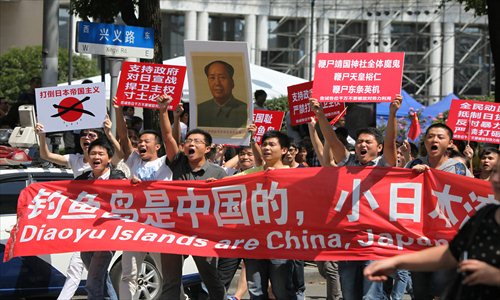
d25146ba-ded2-4854-bc2a-f2bcec8c265eThere are rumours of a large demonstration in Beijing this Sunday against all things Nipponese. I think that having marched everybody up and down the hill so many times over invading Taiwan, the authorities are now in a difficult position with regards to anti-Japanese feeling. They have to be seen internationally to calm things down, but this leads to anger in China as people perceive that they aren’t doing enough. And the internet and text messaging, which seems to be where this movement is being organised, are something that’s very difficult for them to monitor, try as they might.

For people who aren’t living here it’s probably difficult to get a sense of how strongly people feel about Japan. Or at least how they say they feel. Time and time again even the seemingly more clued-up students will volunteer that they ‘hate Japanese people’. It’s amazing how quickly a short statement of opinion can ruin your opinion of someone. ‘Congratulations!’ I think, ‘now I hate you!’

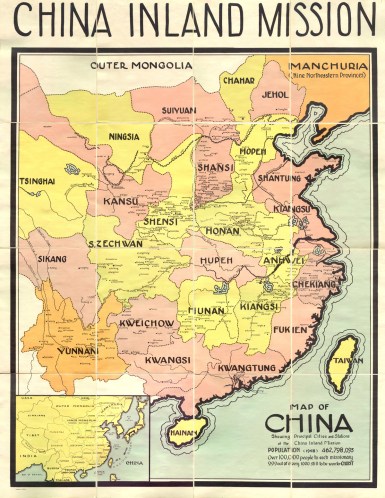
It also opens up an interesting dilemma. Now I’m aware that in the class I can’t make any reference to the three Ts. I think that even if I did, it would be greeted with silence. Actually the students are always keen to talk about Taiwan, but nevertheless I never respond when it’s referred to in class because I can’t honestly tell them how I or most of the rest of the world see it. A fellow teacher was just yesterday upbraided by the Communist Party stooge in the Foreign Affairs Office for pointing out at an English Corner (this is one reason I steer clear of the things) that Taiwan has in effect been independent for a very long time – something that is, for most of the world, a geographical question. Also yesterday when we were practising correcting false statements I mischievously wrote on the board ‘Taipei is the capital of Thailand’, which seemed to upset some of them – the idea of Taipei being a capital disturbs them, and as they’re taught never to say Taiwan, but Taiwan Province, whenever I make any mention of the place they make a big point of it.

However, Japan is a different matter. They don’t seem to consider it to be a controversial topic as far as talking to foreigners is concerned. So am I right in thinking that I can openly tell them that they are wrong and that their government is lying to them about it?

It will be interesting to see, now that the Government is clamping down on all references to the protests in the press, if foreign teachers are somehow made to feel they shouldn’t talk about it. In the meantime, I have no compunction about making someone who claims to ‘hate Japan’ lose face in class!

What are we all doing here?


The Chinese authorities keep a very close eye on the internet. Their objective is to prevent Chinese people coming into contact with information that shows their Government in a negative light. Just recently they have been trying to delete all references to the sometimes violent anti-Japanese protests. In this context, then, just why is it that an estimated 150,000 foreign teachers, most of whom are in their twenties or thirties and share a relatively informed view of the world, are allowed, mostly unsupervised, into classrooms to tell the new generation about how free and prosperous the outside world is?

In fact, I don’t think we’re here to present a positive image of the West. Actually I think we’re here to present a positive image of China.

Let me explain. The best selling book at the moment in China is a biography of Jiang Zemin, the former leader. Why is it so popular? According to the Washington Post:

The biography, “The Man Who Changed China: The Life and Legacy of Jiang Zemin,” by Robert Lawrence Kuhn, argues that the party has brought unprecedented stability, prosperity, global prestige and personal freedom to the Chinese people in the years since Mao Zedong died in 1976.

Who is Robert Lawrence Kuhn? Well, apparently he’s a managing director at Smith Barney Citigroup and an unpaid economic adviser to Chinese officials, ie a businessman. The Times also says that he speaks little Chinese and is not a China specialist.

And what about his book?

The book presents some new material about Jiang’s life, but most reviews of the English edition have panned it as a fawning work that exaggerates Jiang’s impact and seeks to defend him against almost any criticism.

The Chinese edition is even less revealing, with references to the internal political battles that Jiang fought to stay in power and other sensitive material deleted by censors. Kuhn said he was disappointed that portions of his book had been cut and said the work represented his own best effort to write a “personal story as told by Jiang’s family, friends and colleagues” that conveys Jiang’s “way of thinking” in the context of Chinese history and culture.

Now this is the interesting bit of the article, and I think it says a lot about why we were invited here:

Public reaction in China has been mixed. Some readers have praised the book for breaking a taboo against discussing the personal lives of high officials and for presenting details of Jiang’s life that were new to them. Others refused to buy it, dismissing it as propaganda.

“Kuhn is like a fan worshiping a celebrity. There’s no distance, no objectivity,” a Chinese editor who has read (the) book said on condition of anonymity. “It’s strange to us that a Westerner would write something like this.”

The editor said the fact that Kuhn is a foreigner is a selling point because many readers believe that any book written about the country’s leaders by a Chinese author must be propaganda — unless it has been banned.

In fact, a prominent Shanghai writer, Ye Yonglie, has alleged that the biography was sanctioned by the party and that officials quashed an early plan for Kuhn and Ye to write it together, perhaps because they wanted a foreigner’s name alone on the cover.

Now Chinese people, left to their own devices, might start to become suspicious of what the Government and the press in China tells them about China’s up and coming position in the world, given the corruption and mass unemployment they see around them. The Government here desperately wants people to believe that China is just another capitalist country, albeit one with massive growth. And who better to convey this message than foreigners?

Think about it. We are foreigners who live here, apparently comfortably. We are surrounded by McDonalds, KFC, shopping malls, English language media and all the trappings of Western life – remember, of course, that the overwhelming majority of our students have never actually been outside China, and don’t know what these things mean in a Western context.

When we talk to our students we talk most of the time about things we have in common – sports, DVDs, families, traffic jams. And contrary to what our students may have heard in the past about what foreigners think of China, we don’t seem to have any particular problems with life in China. We never mention Tibet, Taiwan or Tiananmen Square. We never talk about democracy or Human Rights and we never question the rule of the Communist Party. Instead, we talk about the massive changes that have taken place in China – the “unprecedented stability, prosperity, global prestige and personal freedom” – implicitly endorsing a crucial point of Communist party ideology, that it is only a matter of time until China achieves parity with the West and can be regarded as just another capitalist country.

The conclusion I draw from all this is that our presence here has very little to do with presenting the outside world to the Chinese – and, as we all know, very little to do with teaching English. It does have a lot to do with normalising China as just another capitalist country with which the West has no major issues.

The Da Shan Dynasty part 7: Down With The Da Shan Dynasty!


Several of my students don’t know or have already forgotten who Zhao Ziyang was. But they have all heard of Da Shan. Da Shan is ‘China’s favourite foreigner’, renowned in every corner of the Middle Kingdom for his dashing good looks and his complete mastery of the Mandarin Chinese of Beijing. He arrived here from Canada in 1988, and since then, according to his very informative webs…excuse me just a moment, one of the students has a question.

Yes, you there, you had a question?

“Yes, sir.”

Don’t call me sir. My name’s Richard. What’s your name again?

“Jamily, sir. Er, Mr. Richard.”

Jamily? Your name is Jamily?!? What’s your question, Jamily?

“Well, sir, it’s just that…I was thinking about that story you made us read, sir, Mr. Richard. The one about the picture. By that guy, er, Oswald Wo-‘

Oscar Wilde, Jamily. What about it?

“What, sir?”

Don’t say ‘what, sir?’ It’s … oh it doesn’t matter. What’s your point, Jamily?

“Well, I was thinking, because, you know, Da Shan came to China in 1988, sir, and that other guy, the one you asked about yesterday? I did some research, and I found out that he was locked up under house arrest, sir, Mr.Richard, in 1989, so I thought-”

Are you suggesting that Zhao Ziyang was like the picture in the attic, while Da Shan is like the-

“Yes, sir, exactly, Mr. Richard, sir! And Da Shan is like the guy who couldn’t, I mean doesn’t, get any uglier!”

That’s bollocks, Jamily.

“Thank you, sir”

No, I mean it’s preposterous. It’s one of the stupidest things I’ve ever heard in my life.

“But sir, just think how much better things would have been! And just imagine all the wonderful things he could have done on behalf of other gay people in Ch-”

Jamily, I never said that Zhao Ziyang was gay!

“Well, sir, maybe just a little bit bi-”

Jamily! This is just too silly for words. Sit Down! Stop calling me Sir!

And change your name!

“Sorry, Mr. Richard, sir.”

Right, sorry about that, now where were we? Ah yes, the blog. According to Da Shan’s very informative website…

Just a moment. I need to think.

You know, maybe that kid Jamily – Jamily! – has a point.

It does kind of all make sense.

In fact the more I think about it…

Right! I’ve thought about it.

It’s time for the Chinese people to stand up once again!

Down With The Da Shan Dynasty!!!

It’s time to establish a People’s Republic of China!

Adopt a Chinese Blog Campaign

As you probably already know, the Chinese Government is currently engaged in a crackdown on blogging websites, via new regulations obliging bloggers to register with the authorities. There is more on this podcast, from Global Voices. It has a frightening moment at about 15 minutes in, when the interviewee explains what happened when an independent blogger called the Ministry for information on how to register. And if you are outside China and have a web server, you may well be able to help.