 How much is an album worth these days? On CD, surprisingly little, given that I haven’t bought a CD since, erm, 2002. You can pick up a physical copy of the marvellous new Pet Shop Boys album for only £7.95 at HMV. Online, if you care to make a donation to the ailing record companies, you can get it track by track for merely 79p a pop. But why pay for a physical product? Music is now in the air, floating around for free. And according to Bob Dylan, it’s not worth paying for:
“It was like, ‘everybody’s gettin’ music for free’. I was like, ‘well, why not? It ain’t worth nothing anyway’.”
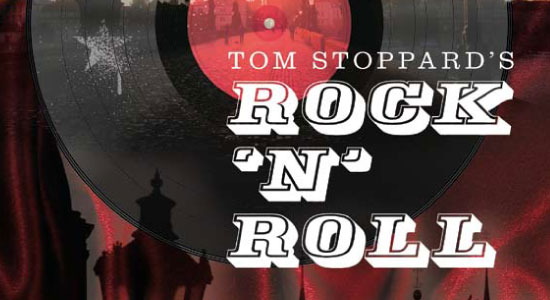
There is of course a marked difference between price and value. I’m sure Dylan didn’t feel the same way about the folk and blues discs he treasured when he was growing up. Tom Stoppard’s new(ish) play ‘Rock n’ Roll‘ is on one level an elegy to rock music as preserved on vinyl. In one of the most memorable scenes the main character returns to his flat in Prague to find that all of his beloved records have been smashed to pieces by the Communist secret police. His immediate reaction is to go to the bathroom and violently throw up.
Anyone who grew up with 12 inch LPs will immediately be able to sympathise. As someone recently wrote:
Entire lifestyles built up around albums, smoking dope to albums, having sex to albums. You lent your favourite albums out with trepidation; you ruefully replaced them, on CD, when they didn’t come back. Getting hitched paled into insignificance next to merging record collections with your loved one. Getting rid of the doubles made divorce unthinkable. Elastica once sang, of waking: ‘Make a cup of tea, put a record on.’ That’s how generations of hip young (and not so young) people have lived.
People’s relationship with their physical albums – and singles too – was an intensely personal and jealously guarded one. Tom Stoppard chose several of his favourite tunes to be interspersed throughout the performance. His choices are fairly predictable ones, covering the broad canon of late-sixties early-seventies rock music, but then he is getting on for sixty or so; I would have made quite a different selection, with maybe more Motorhead and Momus and less Pink fucking Floyd and no Guns n’ bleedin’ Roses, but then I am only twenty-seven years old. In my mind, anyway. But I digress.
There’s no doubt that the songs he chose are those that have been most important to him, and the titles and names of the performers are displayed on a screen between each scene, emphasising just how much these little details are or were so important in the fetishing of each individual record. But if nostalgia for the days when rock music assumed such critical importance in our lives is one theme, the main one is the role of rock music in the ideological struggle against the repressive Czech regime. The characters argue bitterly and passionately about music and about politics. The polarisation of the debates about materialism, about sex, about human happiness, and about what could be endured (in the name of freedom) and what must be resisted (in the name of freedom) is very clear. There is an appetite for ideas and a willingness to explore the implications of a particular stance; just as a vinyl disc had two sides, every idea must have its counterpart, both in the mind and in the ‘real world’. In the era of the two tribes, nobody could deny the existence of an alternative way to organise society, however pitiful and repressive that alternative might eventually turn out to be.
Perhaps since the advent of the CD, and certainly since the revolutions of 1989 and 1990, the debate about how we organise our economic and social life has become considerably more one-sided. A couple of weeks ago I visited the Museum of Communism in Prague, which proudly advertises itself as ‘above McDonalds, right next to the Casino’. It stands on a street which looks, with its Mango and Zara and Starbucks et al, not too dissimilar to the centre of Leeds. Consumer capitalism has swept all before it; who now would defend the Communist project, or argue for any different kind of society?
As a friend of ours pointed out during the interval, it’s unusual to hear passionate debates about basic political questions these days. And about music too; maybe because it’s harder to defend something that exists only as a list of ones and zeros on a device that may stop working from one moment to the next, rather than a physical artefact which you have held and cherished and studied intently for hours on end. The days of getting to know someone that bit more intimately by flicking eagerly through their record collection, making connections and laughing at their occasional folly, are long over. These days the question ‘what kind of music are you into’ reveals the unfortunate truth that so many of us have no longer have any discretion.
Discretion. There is an irony in the fact that, as we chat after the play to one of the actors about how quickly so many political arguments about the past and future of our planet simply dried up in the six months after the Berlin Wall fell, we do so sitting in one of central London’s many Caffe Unos (or maybe that should be Caffe Uni?!). Not a place I would choose to go, you know, it was raining and, hey, what’s the alternative?
One day in Prague an Australian businessman we got chatting to recalled how in 1990 he had seen trucks belonging to French antique dealers queuing up at the border into Czechslovakia waiting to load up with as much heritage and history they could get for a handful of francs and cart off back to France to sell for une fortune. It’s a truism that since then capitalism has run riot across that whole swathe of countries that were then just emerging from forty or more years of isolation and deprivation. But it struck me watching the play that we have experienced something akin to what James Connolly called a ‘Carnival of reaction’. The euphoric triumph of big business capitalism can be seen just as clearly in London, Lisbon or Leeds as it can in Prague or in Poland. Now everything has, as Bill Hicks put it, a price tag on it; usually, in the case of our own service-station nightmare of a nation, a highly inflated one.
But as music itself has got cheaper, political debate has too, to the point of having very little or next to no currency. Including, of course, in the realm of pop and rock music. The current consensus dictates that absolutely everyone, from Bill Gates to George Bush to Hu Jintao, and presumably Pol Pot if he were still around, has the interests of the poor and unfortunate of the world at heart. Is there any near equivalent to the Plastic People of the Universe, the dissident Czech rock group that Tom Stoppard’s play celebrates? Well, there is always the most prominent of our rock n’ roll heroes, Bongo of U2 and the UN, a defender of both the poor and the rich, and a man so politically stupid that he cannot see the contradiction between fighting for global justice and an end to poverty on the one hand, and studiously evading contributing to the cost of public hospitals, social welfare and schools on the other (fucking) one. Tax efficiency, they apparently call it. I’m sure Jesus Christ would have been very, very proud.
We stand outside in the rain mulling over these questions until the one-minute bell goes and then go back in for the second half of the play. The action has moved on to 1987 and so the curtain raises to the sound of … U2. On the train on the way home some young Australians are discussing whether if they were rich they would buy a Lambroghini or a Ferrari, a group of drunken English people are talking about how much they love working for their software company, and someone is gloating over the defeat of a football team belonging to the Russian oligarch Roman Abramovich. I find myself wondering: is this oh-so-ironic Schadenfreude the very best kind of challenge to authority we can offer up these days?


 Infinite Coincidence