In which I teach my Chinese students (and myself) all about Welsh

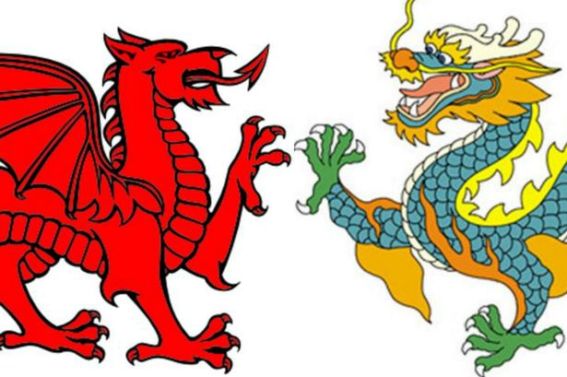
drag3

There’s a cliché that the ‘best English’ is spoken in Dublin. I’d like to put a new one into circulation: the friendliest variety of the language is that of the Welsh. When I left Cardiff a couple of weeks ago I felt genuinely sad to be moving away from a place where everyone I met in the course of two months greeted me in a helpful and engaging manner, even though I couldn’t speak a word of their official language. Well, one of their official languages. We managed, for the most part, to get by in English.

I spent eight weeks teaching almost exclusively Chinese students on a presessional course at Cardiff University. One reason I chose Cardiff is because I’m very interested in issues of language and identity, particularly national identity. I also thought it would be an opportunity to challenge my long-held patronising view of the Welsh language, which has occasionally caused me to use its very existence as a punchline whenever the name of a slightly absurd language is called for. Force of habit meant it was hard for me to overcome my slight amusement at finding in the university library a copy of the book ‘Business Welsh’. Surely the one phrase that would be most useful in such a setting would be ‘Edrychwch, pam nad ydym ni ddim ond yn gwneud y cyfarfod yn Saesneg?‘.

Things are, inevitably, considerably more involved, as is always the case with minority languages. The point of a language is not merely to communicate, after all, but to maintain and represent a particular culture and identity. Hence, gaining a better understanding of the role of Welsh is a way of rethinking other such languages. Besides, as this wonderful poem by Nayyirah Waheed implies, who wants to speak bloody English all the time? Nevertheless, in the relationship between Wales, Welsh, and English, contradictions abound. Reflecting on the role of Welsh in state school education put me in mind of a lengthy conversation I had with a young Spanish speaker in San Sebastian a number of years ago, who was frustrated that the Basque language was used to exclude people from other parts of Spain from public service jobs. On the one hand, I could relate to his annoyance. When I lived in Dublin I was prevented from applying for a civil service job by my total lack of Gaelic, and given the Welsh-English border is so fluid and that so many Welsh people don’t speak Welsh, it’s easy to understand why such exclusions, when and where they do exist, might create resentment. On the other hand, to complain about the imposition of such requirements is to ignore questions of historical injustice around identity which cannot simply be repressed. There are very good reasons why stickers reading ‘PARLA CATALAN!’ can be found on lampposts around Barcelona. The Spanish attitude to Catalan identity is exemplified in the nickname some speakers of castellano call Catalan: polaco (Polish), supposedly a language that few want or need to understand. Such attitudes are, as I write, provoking a potentially world-shaking response.

I suspect that Cardiff’s relationship with Welsh is rather like Dublin’s relationship with Irish. When I was living in Dublin, I barely noticed the existence of its second official language. Back then, as a confirmed monolingual, I didn’t spend much time thinking about languages. When I visited places like Singapore and Malaysia, I experienced and thought of them as essentially English-speaking countries. I must have just blanked out those portions of street signs and official notices that weren’t written in English. When I went to live in a non-English speaking country I became, as the young people like to say, woke, to the point where the role of languages and dialects became something of an abiding obsession in whichever country I happened to be living.

Wales is, of course, not as linguistically diverse as China (where I spent the academic year 2004-2005) or Italy (where I live now), but the Welsh language does have two distinct varieties. North and South Walians often don’t see tongue-to-tongue*. Those who have made the effort to learn the language (many of whom are from the south) are often disappointed to be responded to in English by ‘native speakers’ (who are more commonly found up north, and are (derisively, I think) known as Gogs)**. Nevertheless, the language has, since devolution, gained massively in prominence and official status right throughout the country. Many non-Welsh speaking-families now prefer to send their kids to Welsh language-schools, because Welsh medium institutions tend to achieve better Ofsted results***. The knotty implications of this are explored in a documentary called ‘The Welsh Knot‘, the title of which refers to a time in which the use of Welsh at school was severely discouraged.

Being in Cardiff in English meant I wasn’t exactly immersed in Welsh-speaking culture. In effect, given my level of exposure to Mandarin Chinese, I felt I was going to work in China every day, to the point where I started to feel I should be speaking it myself (I’d say my vocabulary, which had gone down over the years, made a sudden leap up from A1.1 to A1.1003). It was a conversation with a typically chatty Cardiff taxi driver that made me start to wonder about my students’ perceptions of the Welsh language. After all, although they were all effectively Mandarin native-speakers, some of them, particularly those from places like Sichuan, probably spoke different dialects at home. How did they think of Welsh? Did they recognise its existence? Did they think of Cardiff as a Welsh-speaking city?

Given a whole morning to work on my students’ note-taking skills through the use of an extended text, I decided to explore and develop their understanding of the role of the other official language of the country where (most of them) will be spending the next year. (I also thought that exposure to a totally unfamiliar language would help consolidate their understanding of English.) The first documentary I showed them followed younger learners from a range of countries going through a transition similar to my students, viz doing a crash language course in preparation for attending a (North) Welsh-medium secondary school. We also watched part of the one of I mentioned earlier, which centres on introducing a North Walian schoolgirl to a South Walian one; both of them study in Welsh medium schools but language plays a very different role in their lives outside the classroom. (The programme is described in detail here.) I introduced the topic to my class by saying a couple of Welsh greetings I’d taught myself (it was a unique situation in that it was the first time I’ve been the most proficient Welsh speaker in the room), and then asking them to do a short survey which I had prepared but have subsequently lost. (The results are thus not available for peer review.) They found answering the questionnaire entertaining, as they’d recently put together a similar survey of their own. In response to a question about which parts of China they thought similar to Cardiff in linguistic terms, many chose a region geographically close to their own where a substantially different dialect was spoken: Guizhou, Guangzhou and Shanghai were mentioned. Their estimate of what proportion of the local population spoke Welsh was 80% (it’s actually 20%). Asked for their opinion as to whether I spoke Welsh, about half guessed yes, which I thought was interesting as they know that I’m not from Wales. I also asked them if they could think of any words they’d learnt in Welsh, and a couple of them wrote down ‘prifysgol’, a word they’d seen hundreds of times over the previous few weeks for fairly obvious reasons.

While the results of my research were inconclusive, they did help me think about the ubiquity of linguistic diversity, and they both confirmed and challenged my assumptions that my students would automatically transfer their perceptions of their own country’s minority languages onto Welsh. Had I hung onto the results, I’d have more of value to impart. (Apparently the Welsh phrase for ‘sorry’ is ‘mae’n ddrwg’.)

Languages are multifarious, lithe, fluid creatures, filling up all available spaces to fit snugly into the social form. I suspect that my class, indeed the whole cohort of pressessional students in Cardiff, will, in the course of their courses, start to develop their own codes, relative to their new environment, mixing in English words and names and possibly even Welsh ones. Language creates and affirms shared identity: wherever new identities are being formed, new forms of language emerge to satisfy the collective need. That’s how classes, tribes and cultures are formed, and that process in some important ways reflects a more significant function of language than mere communication. When I first began to learn about the role of dialects in other cultures, I’d badger representatives of those cultures with a question which I now understand to be irrelevant and misleading: if you go to part X of your country, can you understand what people say to you? It’s a daft question, because the answer is almost inevitably: yes, because if, for example, a person from Rome goes to Napoli, or if someone from Sichuan visits Shanghai – or, for that matter, when someone from Cardiff finds themselves in Caernarvon – the locals will automatically communicate with them in their mutually understood language, not in the specific local variety. I’m sympathetic to the idea that there are no such things as languages, only language – in other words, that borders and boundaries between languages are artificial****. However, acknowledging that reality doesn’t help to resolve the status of different dialects and languages. The State has a responsibility to recognise the diverse cultural backgrounds that make up the population.

When people migrate to areas where a strong local dialect prevails, a variety of things can happen, depending on their kind of interactions they develop. Some assimilate, some develop hybrid varieties, some remain at a linguistic (and, presumably, therefore, social) distance from the local culture. Then there are very particular expressions and pronunciations which give the speaker the status of insider; code-switching, i.e. swapping between languages or varieties of a language in the course of a single conversation or utterance, is, after all, a ubiquitous feature of human speech. We all do it within our own languages, mimicking other social actors in order to take on or discard particular social roles. To switch between languages or dialects rapidly can take very great skill, but can be extremely useful. (On a side note, the fact that I look German means that in speaking German in a German-speaking country I get away with using a great deal of English vocabulary.) It would be interesting to know how this operates with regard to Welsh and English. As I said to the taxi driver, I can’t imagine that sort of thing is actively encouraged at the Eisteffod. One curious detail I found about about some of my students’ perceptions of Welsh is that when they didn’t understand what (for example) a shopkeeper was saying to them in English, they just assumed they’d started speaking Welsh, which some, it turned out, thought of it as a mere dialect of English. Such mortifying linguistic confusion may explain why some students included in the bibliographies of their final essays seemingly random references to texts published in Turkish and Portuguese . Oddly enough, however, none of them cited any works written in Welsh. Byddai hynny’n fucking hyfryd!

*Thanks to Terry for teaching me the English word ‘Walian’.

**According to my mum, an English speaker can learn French in half the time it takes to learn Welsh. (N.B. My mum doesn’t speak Welsh, and may well have gleaned that information from the Daily Mail, so it might be ceilliau.)

***More thanks to Terry for pointing out that the local equivalent of Ofsted is actually called Estyn, which, to its credit, sounds a bit less like the name of a character from ‘The Handmaid’s Tale’.

**** Someone who’s demonstrated this is Diego Marani, the inventor of the ‘language’ (actually more of a game) Europanto.
We can no longer ignore why hurricanes – and earthquakes – are getting stronger

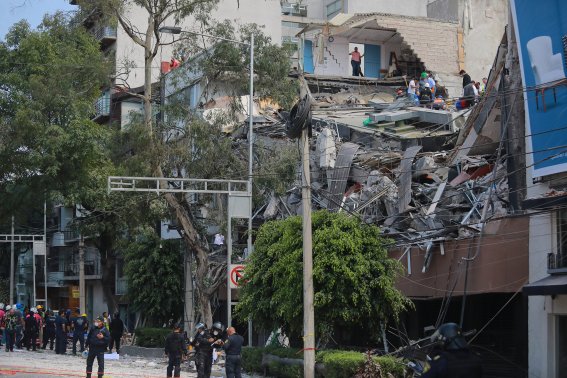
Earthquake Strikes Mexico City

“You already know enough. So do I. It is not knowledge we lack. What is missing is the courage to understand what we know and to draw conclusions.” Sven Lindqvist.

If you’re not Mexican and you’ve lived in Mexico City, you’ve probably lived or hung out in La Condesa, with its tree-lined avenues, pavement cafes and energetic night-time economy. My wife and I recently spent a wonderful year (May 2015-May 2016) living in a 3rd-floor apartment on the corner of Calle Campeche and Calle Cholula, above a branch of the taco chain Tizoncito. Having seen the destruction around Avenida Amsterdam, just a very pleasant three-minute stroll or two-minute jog away, I hope our former home is still standing and that everyone who was in the building is safe and sound.

I experienced three small earthquakes in my time in DF (the most common local name for the city). The first time I didn’t notice, or at least I saw belatedly on Twitter that there’d been an ‘#alertasismica’. I subsequently tried to find out if the public alarm system had actually worked, because I certainly hadn’t heard it. The second tremor apparently took place while I was in the metro one afternoon – I only heard about it in retrospect. The third one took place during our farewell party. As about 20 or so of us bounced round our ultimately oversized apartment at 3am, someone pointed out that the lampshade seemed to have joined in with the manic dancing. Sure enough, when we went to peer over the balcony, the staff and straggling customers of the taco joint were gathered in the street looking a bit chastened. Ah, chingale, we thought, and went straight back to ‘Born Slippy’. It turns out that we were immensely lucky.

By far the strongest and longest earthquake I’ve felt wasn’t actually in Mexico. It took place in Rome a few months after we’d left DF, on the eighth floor of the maternity hospital where my wife would just a few weeks later give birth to our first child. We were visiting a fellow couple and their brand new baby when the water in a plastic bottle began to shake, and then the building began to wobble. Everyone went quiet – I think that was one of the uncanny things about it. Outside, down in the street, some people were gathered in small groups and others were just getting on with their lives. It seemed to go on for several minutes but afterwards the sensation of physical distress and disorientation went on for more than a week. I immediately felt inspired to write this short piece of absurdist satire in an attempt to turn my fear into something…useful? Meaningful?

The stories I’ve read in the media and posted by friends in the last few hours are genuinely shocking. By no means do I want to make a disaster I didn’t even experience about me, but knowing those streets and recognising some of the buildings, not to mention worrying for the safety of friends who still live nearby, has been a sobering experience. There have also been reports of acts of immense courage. For all its manifold cracks and faults, I felt that Mexico City is a place in which those who share space look out for one another to a greater extent than in both London and Rome, especially given the relative absence of the State. Events like this, and those in Florida and the Caribbean over the last few weeks are not a good advert for cutting back on the provision of centrally-funded emergency services.

The courage that ordinary Mexicans display in continuing to make do in the midst of constant dangers, big and small, from disappeared daughters to bent traffic policemen, is immense. Partly by virtue of living in Condesa, we were sheltered from so many of the threats that chilangos take for granted. I hope that if I were still there I’d have the bravery and integrity to help out. It’s becoming clear now that, wherever we live, the rest of our lives now will both trigger our instincts of self-preservation and also necessitate acts of great selflessness. I pray that incidents like Brexit and the election of Trump are not conclusive evidence that the two are mutually opposed.

Although I’d be hard-pressed to compare it to dragging people put of broken buildings, it did take something like courage to investigate something I’d purposefully been avoiding: the relationship between earthquakes and the changing climate. This article, by the highly-respected academic Bill McGuire, sets out the link. It turns out that as the planet heats up (and particularly as deeply-compacted ice melts, and hurricanes hammer at the surface), the earth shifts. (Incidentally, if you haven’t read the article, which was published in an eminently reputable publication and summarises the results of some very extensive research which took place over several decades and was subject, like all significant academic research, to extensive and rigorous peer-review based on the systematic application of doubt, please do not comment below.)

It’s immensely difficult to talk about climate change. We’re neither evolutionarily equipped nor socially encouraged to take it seriously. The most powerful forces on the planet employ endless legions of trolls to shout down any discussion of its causes and effects, often in the name of (ahem) “free speech”*. Republican and Conservative politicians insist that it’s never the right time to address planetary overheating, particularly at those moments when its consequences are most visible and stark. Anywhere I post this online there will immediately attract those who, without having digested or even nibbled at its contents, will insist on screaming with spluttering toddler-like outrage that someone has had the temerity to try to feed them the C-words. Their campaign of intimidation around an almost impossibly intimidating subject has made climate change into a taboo, a heresy.

Now, in 2017, everyone – particularly politicians and journalists – who talks about hurricanes without mentioning the changing climate is being cowardly and dishonest. We also owe it to each other, and to the new generation, the one which, absolutely blameless, is already here, to face up to the fact that our failure to even discuss the dangers before us has much deeper consequences than we blithely assumed. An essential step is to get rid, by any means necessary, of those ‘leaders’ who, by means of scapegoating and by encouraging inane conspiracy theories, deny reality on our behalf. They are the sort of people who should have hurricanes named after them: #HurricaneRickScott or #HurricaneScottPruit may have had more useful political impact than #HurricaneIrma. Perhaps, given his government’s stated intention to throw limitless amounts of fossil fuel onto the fire, this particular disaster should go by the name of Enrique Peña-Nieto.

* Such people specialise in belittling the suffering of anyone with darker skin, so climate change is an ideal topic for their trolling.

Ecco perché Eataly non mi piace

01_torino

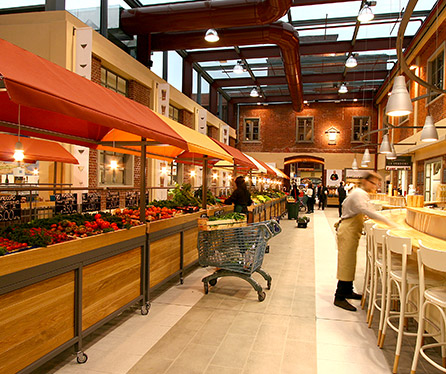
Wouldn’t it be great if someone could combine the range and quality of Italian food with the style and convenience of Ikea? No, it would be shit. How can I be so sure? Well, I’ve been to such a place, and I also live surrounded by images of it. Eataly is marketed rather aggressively here in Rome – entire metro stations are smothered with adverts for the place, leaflets litter the streets, and while it may be true that all roads eventually lead to Rome, in the città eterna itself around a third of the road signs direct you to Eataly Ostiense.

The founder of the company is a friend of perma-gurning Flash Harry past-but-not-future Prime Minister Matteo Renzi. Oscar Farinetti is an odd character, who stresses the importance of local food culture but has also defended Coca Cola and McDonalds. His company only started in 2007 but already has 28 stores in six countries, 18 of which are in Italy. The flagship Ostiense branch occupies a huge building (a former air terminal) 170,000 square feet in size. It is an upscale food court mixed with Whole Foods or Waitrose. Farinetti was inspired by the thought that “unfortunately the world of small food shops, those small places dedicated to quality food, like Americans imagine, died many years ago”, a dubious statement but one that serves a self-serving and self-fulfilling prognosis – there would be more independent food outlets in Rome were it not for Farinetti’s mission to replicate and supercede them. Italy doesn’t have many chains but Eataly is starting to be as dominant as Starbucks is elsewhere.

The Eataly brand is selling lifestyle just as much as convenience. What it trades in first and foremost is the experience of being the kind of person who shops there. Hence the tone of its advertising is aspirational and (as befits any place associated with Renzi) smug. The atmosphere is anodyne, sterile, antiseptic, the kind of non-place Frederic Jameson characterised as ‘useless as a conduit of psychic energy’, an example of the nicely-packaged and air conditioned but ultimately boring future that J.G.Ballard predicted. Paradoxically, given that it has replaced a large chunk of the centre of Rome, it’s not easy to get to; as the New York Times wrote, it’s not designed for people arriving on foot. I’ve yet to get there from Piramide metro station without getting lost at least twice. Parking is a central selling point, meaning for those who live nearby, even more unsustainable levels of traffic. Rome is one of the world’s greatest walking cities, but this is a big box mall is just as remote from the pavements and piazze of Testaccio as a mall in the LA suburbs.  And given the sheer quantity of produce on offer (no reflection of the range) it is not at all clear what is quality and what not.

Rome has a dearth of food markets. The one near us is friendly but small, and the one in Testaccio, near Eataly, is pleasant and varied but under-occupied. There is a larger market near Termini station (Mercato Esquilino) which is bursting with immigrant energy and variety, but longer-standing homegrown equivalents are scarce. As it happens, the first Eataly was in Torino, also home to one of the most vibrant markets I’ve ever been to, whose atmosphere was earthy, foul-mouthed, and sometimes abrasive, the vendors not there to impress you or to sell you an image of yourself. Such a place exists because it exists, not because some tycoon with political connections decided to remake the city according to their megalomaniac vision.

The experience reminds me of the surprise I felt in 2001 when it turned out that a Portuguese student’s ‘favourite restaurant’ turned out to be in a shopping centre. Nowadays, with Giraffe and Carluccio’s and Zizzi’s and Wahaca and Las Iguanas and Viva Brasil and The Real Greek and Wagamamma and Yo! Sushi, it seems that many cities are, to recall Karl Marx, in chains (with London the most obvious example) . It can sometimes be hard to tell the difference between local and corporate, with many global cafés imitating the stylings of independent outlets. It took us a few months of living in the Condesa area of Mexico City to realise that many of the cafés and resturants were replicants of places in Polanco, a similarly safe-but-kinda-dull part of town. It was disappointing to see that the recently-revamped Cardiff Bay only offers the same eight or nine international chains one sees everywhere from Bangkok to Bangalore.

Eataly thus exists on the Uber GPS map of Rome, disembedded from the city itself. It depresses me that visitors go out of their way to come here. Rome may be messy, disorganised, inconvenient and occasionally overpriced, but it is Rome, not some branded and airbrushed simulacrum of itself. Its fascination partly lies in its being covered in remains of fallen empires; this one, sadly, is in the ascendant.

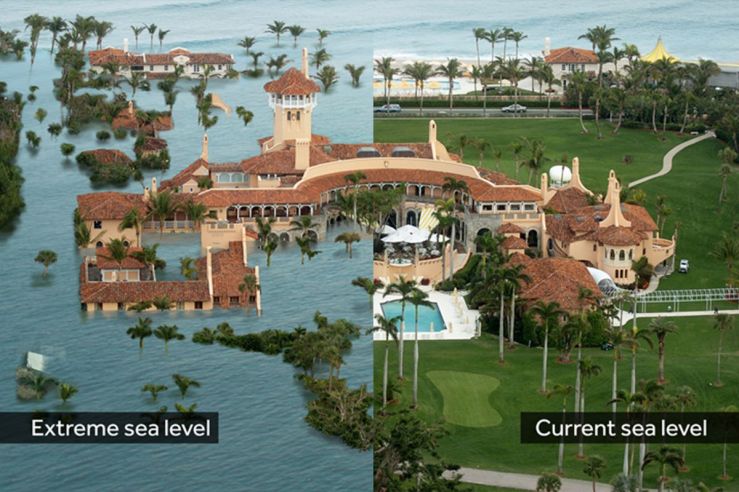
No one deserves to lose their home to a hurricane. Well, almost no one.

The question of whether or not it’s acceptable to use violence to stop fascism was resolved to the satisfaction of pretty much the entire human race in the middle of last century. Few in the late 1940s would have had much respect for the notion that genocide is merely a expression of the right to free speech. But if, as Patrick Mcgrath argued cogently this week, fascism is a monster which keeps growing new heads, then each one that emerges needs to be crushed with maximum force – or, as the finale of Psychoville spectacularly demonstrated, exploded.

Many of those fleeing hurricanes in Florida and Texas over the last week will inevitably have more awareness of and engagement with the problem of the changing climate than the writer of this blog. Others will, like me, be aware of the basic facts and share in the generalised but rarely-acknowledged terror at what a righteously vengeful planet next has in store. But there are inevitably many of those currently witnessing the destruction of all they hold dear who have actively dedicated much of their time and energy over the last couple of decades abusing mass and digital communication media to spread disinformation with a view to ensuring that such catastrophes would both take place and be wholly unprepared for by states with the duty and means to protect their subject populations. Many of them will even have lent their support to corrupt and venal political demagogues who have built their careers and fortunes on the spreading of staggeringly irresponsible lies  which deny the present and future suffering of millions of fellow human beings.

Many of those victims happen to be poor, dark-skinned and far away. It’s by no means an accident that the kind of scum who marched straight from 4chan to Charlottesville a few weeks ago divide their online time fairly equally between scapegoating and ridiculing foreigners, threatening and bullying women who dare to speak freely and attempting to disrupt every single online conversation about how scientific findings account for extreme weather events. Climate denial is a key component of 21st century fascism, the formal and explicit imposition of elite power through violence. (Hurricanes are extremely violent events – no wonder the manchild Trump appears to revel in their power.) Just as when those who seek to gain power by means of violence are pushed back by any means necessary, when people who have inflated their egos, boosted their careers and augmented their Paypal balances by denying the experiences of climate refugees themselves become climate refugees, who can spare them any sympathy? Of all the tragedies to be visited on the US over these few weeks, maybe the greatest, or at least the most ironic, is that Hurricane Irma appears to be steering clear of Mar-a-lago. While some may be #prayingfortexas or #holdinghandsforflorida, I’m hoping that the next extreme weather event brings in its wake a tsumani of divine justice. In the meantime, perhaps a more appropriate nickname for a hurricane ripping apart the south-west corner of the United States would be simply #RickScott.