Maya learns her ABC

landscape_music-abc-martin-fry-and-co

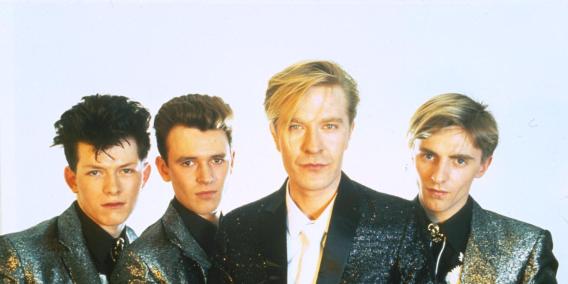
There are three reasons why I reckon it’s about time for our daughter to learn her ABC. Firstly, she’s now ten months old. Secondly, I am, like Martin Fry, from Sheffield, and thirdly, my repeated experiments with ‘Being Boiled‘ and ‘Nag Nag Nag‘ weren’t encouraging, so it’s probably better to go for something a bit more accessible. As it happens, later this month we’ll be visiting my folks in Sheffield, so I can show her the former art college just around the corner where Martin Fry and, er, the others did their first ever gig. (Although when I pointed out Phil Oakey’s nearby house to her when we were last there in May, she was fairly nonplussed, I reckon if I just keep pointing at the block of student accommodation which now stands where Psalter Lane Art College used to and sing bits of ‘The Look of Love’, something might get through.)

For her, an album from 1982 is as distant in time in relation to my own birth as one from 1937. (Although seeing as she doesn’t yet possess concepts such as albums, years, meanings or words, imagine how she’d struggle with that sentence. What’s your excuse?). I showed her some photos of the group silver and gold lame suits they used to sport at the time and she seemed quite impressed, although to be fair her little roundy face does light up in a quite worrying fashion whenever she looks at a smartphone, so maybe it was more related to that.

With regard to the music, she certainly doesn’t react nearly as badly as she did to ‘Reproduction’, the cover of which admittedly features women in stilletoes trampling on babies.  One of the many joys of parenthood is seeing which music is intuitive enough to inspire a reaction. ‘Reign in Blood’ by Slayer didn’t go down enormously well, but she does have an ongoing thing for Prefab Sprout, and as for The Fall, you can judge for yourself here. The opening bars of ‘Show Me’ certainly stir my soul, but she’s too distracted by the appetising sight of my laptop’s international plug adaptor, on which she’s had her eyes for the last couple of weeks, to pay very much attention. I had high hopes for ‘Date Stamp’, very much my favourite song whenever I’m not at that particular moment listening to any of the others. Its heart-bursting but somehow also wry denunciation of the then-inchoate idea that every aspect of our lives including love itself is mere merchandise, a notion whose power has only grown to the point where my hometown’s trees are currently being smashed up by corporate hooligans and malevolent forces are trying to hypnotise our children via Youtube is, in a very literal sense, music to my ears. Unfortunately she’s too busy putting in and taking out some wild animal finger puppets to and from an empty yoghurt container to really focus on how trenchant, lush and unabashedly romantic the whole thing is.

Attention spans being limited, I decide to skip the whole of ABC’S subsequent career up until ‘Lexicon of Love II’ (which means she misses out for the moment on the jagged swoons of ‘The night you murdered love’, but doesn’t have to sit through their attempts at house music). This belated sequel to the 1982 album was released just last year to general acclaim. Contrary to what you might expect given Fry’s history of involvement in ’80s revival cruise ship booze-ups, it sounds not at all like not a cheap copy of the original album, but really rather freshly minted. It sounds, in the most positive sense, like it could have been made any time between 1985 and 1992, like one of those Paddy McAloon records whose release was delayed for a number of years. She seems to appreciate its mix of expensively orchestrated pop classicism and hard-won middle aged wisdom, bouncing around with a massive baby grin on her face to ‘The Flames of Desire’. On the whole it goes much better than our previous music mentoring sessions, especially the ‘Reign in Blood’ one, which culminated in my having to put on ‘Il cocodrillo come fa‘ in order to get her to calm down. (My wife, that is. The baby seemed to be just starting to get into it by the time ‘Altar of sacrifice’ came on.) On this occasion it’s not Chiara that complains, but the downstairs neighbour, who bangs on the door to give out about unreasonable levels of noise at 3pm on the Day of Rest. Miserable bastard. Maybe one day he’ll, you know, cheer up and, as someone once sang, find true love. Or something.

‘Sweet Home Alabama’: Katie Hopkins to move family to US if Roy Moore elected

British media personality Katie Hopkins has announced that she plans to move to Alabama with her children should controversial Republican candidate Roy Moore succeed in his bid for a Senate seat.

A source has reported that Hopkins sees the move as an attempt to relaunch her career in an environment more appreciative of her talents. She is also said to believe that Alabama represents a healthier environment in which to raise her children, given the state’s preponderance of people who despise outsiders, its excellent potential for school shootings, its vulnerability to climate disasters such as floods, hurricanes and droughts and the fact that most of its heavily-armed and undereducated population apparently endorses sexual abuse of children. Hopkins recently spoke out about her own experiences of teenage sexual abuse in an attempt to encourage victims of such treatment to remain silent and to provide emotional support to any adults newly contemplating sexual assault of minors.

Hopkin’s fortunes in the UK have taken a downturn of late. She was sacked from her radio show at LBC because of falling listenership and for having called for a ‘Final Solution’, and was subsequently fired from her Daily Mail column for costing the newspaper hundreds of thousands of pounds in libel fees and also for being insufficiently entertaining. Her book of memoirs, ‘I, Hatey Katie’, sold only eight copies, and plans for her to go door-to-door shouting abuse at people in order to promote it had to be shelved for logistical reasons. A faeces-themed cookbook of recipes aimed at raising money for organisations fighting the homeless failed to find a publisher, and an offer to host a racist beauty pageant was revealed to have been an internet prank, as were rumours that she was to replace Angelina Jolie as Special Envoy to the UN High Comissioner for Refugees. Hopkins is also said to be disheartened that in recent weeks her prized position of pantomime harridan cartoon racist attention-dependent national hate figure appears to have been stolen by Jayda Fransen.

Hopkins is said to believe that relocating to the States will raise her standing in the Fox News ranking of probably-mentally-ill-people-who-can-be-guaranteed-to-come-on-TV-at-a-moment’s-notice-and-say-something-outrageous-about-black-people-or-climate-change-or whatever-just-to-get-attention, where she currently sits in 13,373rd position. She believes that she will quickly be welcomed into the supportive community of figures such as Tomi Lahren, Ann Coulter, Lauren Southern, all of whom similarly have built their careers by spitting in the face of female solidarity. Should her media ambitions not meet with success, Hopkins plans include dumping her kids in a motel and running through Washington screaming for people to notice her, before being transported to a secure psychiatric institution where she hopes to reinvent herself as that-one-who-just-stays-in-her-room-making-screeching-noises-all-the-damn-time.

Katie Hopkins is 64 years old.

P.S. Fake news? Indeed it is, but then so was this and this. She’d promise to auction off her kids if she thought it’d get her onto GMTV. I suspect they’d be secretly delighted. 

Violence and the Internet

I’ve been trying to work out why pretty much everyone treats everyone else like pricks on the internet, and also to figure out how far verbal violence online is starting to spill over into what we must for the sake of our sanity regard as the real world. For the philosopher Emmanuel Levinas, it is the face to face encounter with the other which gives birth to ethics and hence to the development of moral and social codes of behaviour. I suspect that the fact we increasingly interact via screens allows us to hide from that encounter and avoid the vulnerability, the threat of fellow feeling it engenders.

Discussing serious subjects online is almost always a total waste of time: the weak links that bind us mean that if a discussion gets too awkward or we stand to lose face, it’s easy to disappear back into the ether. There’s little risk of commitment and thus a lack of mutual obligation, not only to others but also to ourselves insofar as we abandon our duty of solitude. Technology frees us from the need to reflect on our thoughts and deeds. (Few of us are blameless in this regard, as Oliver Burkeman explores here.)

Sherry Turckle talks of the hope of the early days of the internet, in which protecting our identities could seen as be a positive thing, allowing us to explore other ways of being in a (to borrow a phrase from the then-future) safe space, with no risk of physical violence. But it’s become clear that the exploitative form of our relations offline, all the exploitation and bullying and pornography that in our day-to-day encounters we manage to get on in spite of, determines what happens online, and in turn the form of our online lives influences our social lives.

As the internet has developed (but not matured) I’ve noticed a spilling over of violence, as digital threats become embodied in physical encounters, like a fist or bullet coming straight through the screen. One obvious form this takes the form is doxxing, sharing address details of online antagonists (which the British fascist Tommy Robinson is endeavouring to turn into a form of entertainment), but there’s also the cases of sexual abuse facilitated by apps such as Uber and Tindr. The internet is an embodiment of Labi Sifre’s assertion that violence is never just physical. The film ‘Unfriended‘ is a very literal but not entirely trivial example of how online threats can transgress the boundaries of the hyperreal.

In that case the identity of the online tormentor is not clear; he or she may even be from the afterlife. As things stand, we can often track who is trying to turn online rage into offline violence. Anyone happy to dismiss the role of Russian trolls in seeking to undermine US democracy would do well to reflect on this. Charlottesville was a rally of internet trolls who’ve come to see fascism as a natural extension of their online tastes and habits. Much far-right bullying and deliberate disinformation is for to have derived from the teenage hate forum 4chan. Four or so years on from Gamergate, rape and death threats against any woman who dares to speak out against non-approved targets are increasingly coordinated. In an unerringly similar way, Isis seduces its potential recruits using online tools, mostly Snapchat and Skype. While it’s comforting to think of such platforms as forming us into an inclusive global community, the fact that terrorist attacks are planned and coordinated via Whatsapp rather takes the shine off the whole enterprise.

For anyone wanting to argue that World War 3 has already broken out online, metaphors abound, from ‘sniping’ to ‘troll armies’ to ‘weaponising anger’ to ubiquitous talk of ‘entrenched’ opinions. Political debate is often adversarial, but social media has opened up many more fronts, partly thanks to its dehumanising tendencies. The adage that the first casualty of war is truth is particularly apt to describe the ‘post-fact’ age. Maybe that is how we see our online interactions with strangers: as a battlefield in a tribal war. Certainly the polarisation of news sources, with each side only exposed to its own propaganda is very evocative of wartime. Although, given that I’m using the very same media I’m condemning, I’m obliged to mention the benefits, and acknowledge that the end of net neutrality in the US is a frightening prospect, right now I think that anything that reduces the attractiveness of the online world may be a good thing.

The effects on children is one subject that’s close to home for two reasons, partly because I’m currently teaching in a high school where the abuse that digital media makes possible is having horrendous effects, and also because we have a very young daughter whose face lights up at the sight of a smartphone and who will, unless we’re extremely careful, soon start demanding to be hooked up to Youtube. The notion that the chief danger the internet poses to children is exposure to predatory pedophiles is a hackneyed one, but stories from Mexico of young girls being seduced by men who then sell them on are are not just apocryphal.

The internet is amoral because it reduces that basic recognition that Levinas identified. It’s a cartoon representation of reality, so all the bullying that goes on social media is cartoon violence. Until, suddenly, it isn’t.

Is Donald Trump on opioids?

If you google ‘Trump on opioids’ you get lots of news reports about his initiatives on the issue – he declared it a national emergency, but then did nothing else whatsoever for months, and he has now appointed Kellyanne Conway, who looks uncannily like the ‘After’ photo in an ad warning of the dangers of crystal meth addiction, his opioid czar. If you google ‘is Trump on opoids’ you find only one link, to someone casually making a daft quip on Twitter.

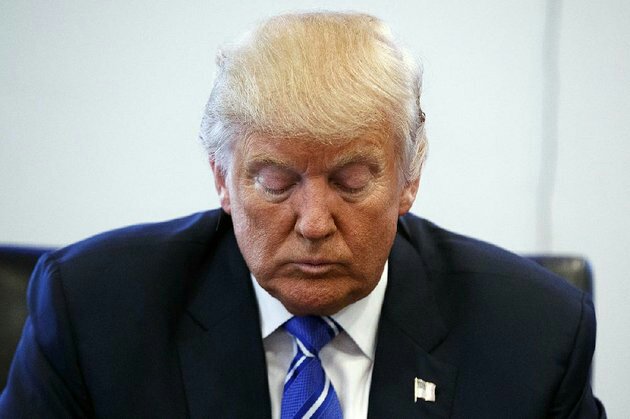
Without wanting to cause offence to anyone affected by the crisis, I think his inaction on the issue may be a tell. It’s also possible that his alternating bursts of euphoria and irritability, his very evident mental confusion both on and offline, his weight gain and his public slurring of words, his sniffiness and bizarre water fixation may all be somehow connected with reports that he has a quack doctor in New York who prescribes him whatever medications he needs to keep him (after a fashion) able to function. There are, after all, many things that connect Trump with Michael Jackson, from his 1980s ubiquity to the myriad rumours regarding various forms of abuse to which he’s subjected other people in his life. Trump has similarly spent pretty much his entire life immune to the consequences of his actions. Perhaps when his wife promises to give a voice to families suffering from opioid addiction, she’s unaware of the ironies involved. Maybe the thing that does for him will be whatever he’s taking to numb the pain and guilt he surely must suffer if he’s not actually, as all available seems to suggest, some sort of inhuman monster.

This is a blog, not a fake news site. I’m not pretending I have any inside information on Trump’s habits or medical proclivities – despite having read quite a few articles on the subject over the last few months, I’m still not even sure what exactly the term ‘opioids’ actually refers to*. I’m just innocently raising a question that I’m surprised not to have seen asked elsewhere.

The facts remain: opioid addiction is rife throughout the United States. In the words of Thomas Frieden of the Centers for Disease Control and Prevention, America is ‘awash’ in the stuff. At the same time, its President is clearly deeply unstable in myriad ways. Maybe there’s more to Trump’s claim to be a man of the people than we previously suspected. 

*In an earlier version of this post I even misspelt it.

Does Farage see Brexit as his Reichstag Fire?

nigel-farage-678138

I’ve long had a hunch that Brexit is essentially impossible. It would take years to disentangle the British State from its interdependences on the European Union, indeed probably longer than it took to join in the first place. It would involve very detailed preparation by experts in all sorts of fields in order to predict and mitigate the effects, such are the numbers of known unknowns and unknown unknowns involved.

It was already clear before the vote that neither of the Leave campaigns had done that preparation. They were so careless about the consequences as to try to quash serious debate entirely, up to the point of ridiculing experts and rejecting evidence and doubts out of hand. Since then, and very obviously of late, it’s become blindingly obvious to anyone not willfully myopic that pro-Brexit politicians are completely unprepared for what lies in store. Or, even worse, their very lack of preparation was itself a deeper level of preparation.

Now one of those myriad impossibilities involved has become clear: the Irish border. Regardless of any amount of vacuous rhetoric about Taking Back Control Of Our Borders, the UK has a back door which it is, pace the Good Friday Agreement, 100% politically, legally and morally obliged to keep open. (Not to mention that a fact that it can’t have a ‘soft border’ (what?) for trade and a ‘hard border’ for people.) This is an intractable problem, and one which, given that the Republic has, like all EU states, a veto over the final deal, will scupper the whole project. Not that the Brexiteers are short of solutions, you understand: Kate Hooey reckons that Ireland will just have to leave the EU and various Andrew Lilico types in the Daily Telegraph are proclaiming that ‘Eire’ will have to forget about being a sovereign and independent entity. James Connolly wrote of a ‘carnival of reaction’ after Irish partition: the UK’s partition from the EU is provoking a carnival of outright trollery.

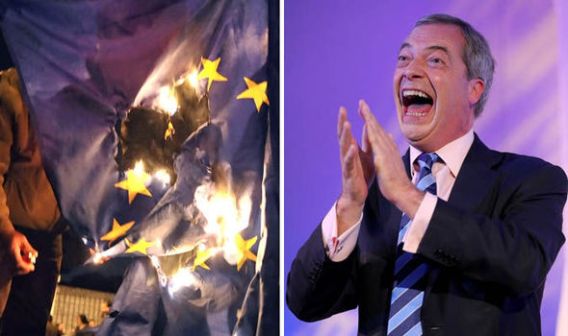
Nigel Farage presumably knew about such impossible aspects, but I increasingly suspect that he sees it as grist to the mill. Farage is a trickster: a Pied Piper type, an agent of chaos for its own sake. Any simple Occam’s Razor join the dots analysis also confirms that he is, from his days of marching round his boarding school singing Nazi marching songs to goosestepping onto the stage at the AFD conference a few weeks ago, a lifelong fascist. Unlike Trump, who presumably kept a copy of ‘Mein Kampf’ by his bedside to show off what an edgelord he was, Farage will, like Steve Bannon, have read up on how the Nazis managed to get into power. It doesn’t take much in the way of priveleged insight to recognise the role of the Reichstag Fire in allowing Hitler to seize control. After all, it’s pretty much all is taught in history lessons in theUK – unlike, say, the story of (Britain’s involvement in) the EU.

This is a mere blog. I have no claims to be a journalist. Like most such sites, it is a collection of overgrown below-the-line comments. Unlike some, it tries not to give credence to or promote paranoid and simplistic conspiracy theories. My opinion of such theories is influenced by a book I read long ago: ‘In Dubious Battle’, J. Bowyer Bell’s analysis of the (probably) MI6-sponsored 1974 Dublin and Monaghan bombings. In it he points out that anyone expecting to be able to track down signed and sealed confessions from the participants in such plots is probably deluded. Underhand collusion between nefarious interests does obviously exist, but it tends to be in the form of tacit suggestions, nods and winks, not formalised agreements. No one is likely to find a payment in roubles into Farage’s Nationwide Flexaccount, to choose a not-entirely-random example.

This piece was thus inspired not by a top-secret document handed to me by a stranger in a public park, but by a post I came across from a random person in the gossip mill of social media. The tweet includes no sources, referring vaguely to ‘rumours’. This is what it says:

Rumours circulating that the only thing making the govt determined to continue with this ludicrous Brexit charade is the threat of civil unrest from the loony right. Police and HO advise that they might not be able to cope.Govts abhor civil unrest, and right threatens violence.

There’s no reason to give credence to such a source, but without wanting to sound like Sarah Sanders, it does have a smack of truth to it. While Farage may be the only full-on fascist among the key Brexit zealots, it’s worth bearing in mind firstly that First World War-enthusiast Michael Gove has long been publicly hostile to the Good Friday Agreement itself, and secondly that the gunboat-style free trade imperialism propounded by Hannan, Rees-Mogg, Carswell, Patel, Johnson et al is so extreme and anathema to modern democracy as to necessitate a Year Zero approach. I suspect that to various degrees none of the above were particularly bothered about Britain’s leaving the EU per se.  They instead saw it as a means to an end, and thus regard the chaos that will inevitably ensue as akin to sweeping all the pieces off the board to create a tabula rasa. In the case of Farage, the referendum result is an opportunity to turn the UK into an authoritarian state, with scapegoating as its organising principle. The Conservative Party, out of conceit and complacency, fell into the trap that he had, with very great patience and guile, set for it. His ubiquitous media presence, from the Question Time panel to the LBC studio, from Andrew Marr’s sofa to Good Morning Britain’s, from the LBC studio to Loose Women and back to Question Time again, is part of his ongoing attempts to force the country into line with the Nazi ideology he professed as a schoolboy and has kept largely concealed ever since.

The ghost of Ayn Rand is haunting the streets of my hometown, wearing a hi-vis vest and carrying a chainsaw

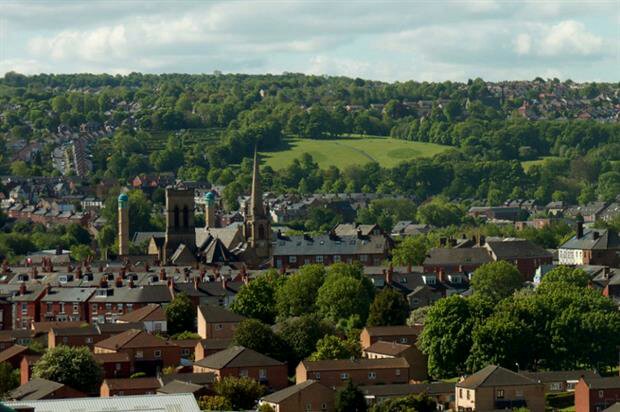
I grew up in Sheffield in the 70s and 80s. Its cheap bus fares, theatres, museums and art galleries, its network of well-stocked libraries and its abundant green spaces made me into the person I am and gave me an abiding sense of respect for the value of public provision. I went to primary school in an area of the city called Greenhill, where they taught me how trees, by absorbing carbon dioxide and thus ensuring we have enough oxygen, help us to breathe.

I don’t live in Sheffield now, but all my family do, including my nieces, who all go to school in Hillsborough which they walk to and from along tree-lined streets. Those trees have attracted national attention recently because the local council is bowing to the demands of a private company and allowing a huge number of them to be cut down on the flimsiest and most selfish of pretexts. Although the trees represent £11.4 million in purported value*, there’s no way for Ferrovial (the transnational corporation which has, via its subsidiary Amey, bought up large parts of Sheffield City Council) to monetise it, and it costs to maintain them so they might as well chop them all down**.

Although some legal systems insist on granting them the same status as human beings, corporations don’t actually live and breathe. They do think, after a fashion, but they have only one obsessive thought: how to accumulate more wealth. They achieve this in large part by externalising their costs. PFI, the secretive and essentially deeply corrupt system of which Sheffield’s deal with Amey is part, has had a devastating impact on the wages and conditions of public servants. The rationale for the whole scheme is not just that the private sector is more efficient, but also that it grants access to global financial markets. Thus it represents not only a transfer of wealth from the public to the private sector, but also the exposure of essential public services to the whims and storms of the global market. Not quite by chance, it’s also accompanied by a lack of democratic transparency. Whether it be in Sheffield in relation to trees, or (my former London borough) Haringey with regard to housing, voters are not allowed to know what exactly has been agreed in their name.

Modern corporations are by definition psychopathic, in that nothing else matters to them but short-term self-interest. The possessors of great wealth have not always been so single-minded in the attempt to turn everything of public utility into private wealth. Centuries ago, feudal landlords created country estates like Chatsworth by turning commonly farmed land into symbols and sites of their power and wealth, thus depriving peasants of access to food and forcing them to move into cities to get jobs in factories as wage labourers. They sculpted the landscapes of their estates to demonstrate their command over nature, but at least they kept most of the trees standing. In the case of Sheffield, some local nabobs donated their land to the city, making it into one of the greenest in Europe. Some notable figures also funded the construction museums and art galleries.

For previous generations of capitalists, acres of trees not only stood as signs of wealth. They could also be pulped and transformed into physical money. The American writer Thomas Pynchon’s ancestral family fortune was made and then lost in paper, described in ‘Gravity’s Rainbow’ as ‘the wholesale slaughtering of trees’, ‘producing toilet paper, banknote stock, newsprint—a medium or ground for shit, money, and the Word’. Before that they were fur traders, ‘still for the living green against the dead white’.

Nowadays capitalism, if it can still be called that, has entered a new phase, not that of the dead white but rather the flat white of the service economy, serving principally the needs of corporations. About twenty years ago I spent a year working in a corporate environment, in the technical support area of a software giant in Dublin. At the time I thought that computers were somehow exciting – I hadn’t yet realised that I was essentially working with hyped-up stationery. One episode stands out as emblematic of such organisations and how they operate. The company in question had a new piece of utility software for a brand-new version of the Apple Mac tantalisingly close to readiness, but the end of quarter was closing in and the programmers weren’t going to make the deadline. That didn’t stop the company from selling thousands of packages of the new version at a software trade fair in France – the problem came when the purchasers arrived home and to their horreur – zut alors! – discovered that the box contained a note explaining that the actual software wasn’t quite ready yet, but do please accept this database accounting programme as a temporary replacement. I have rarely felt so relieved not to speak better French, because my francophone colleagues had to explain to several thousand really, really, really fucking angry customers that they would have to wait just zat leetle bit longer. The enraged Mac enthusiasts weren’t exactly mollified when, a couple of weeks later, the actual disc arrived and turned out to be full of bugs which (I forget the exact technical details) shat all over the insides of their beloved iMacs. In order to save time, the company had curtailed the testing stage. Fortunately, things ended well, as the share price of Symantec (which was the name of the company) rose at the end of the quarter, so everyone was happy, except the people who actually wanted the software. They’re probably still vert de rage two decades later.

Nowadays if you need some software – say, Microsoft Word – you can just download it, but while in the intervening years you could do so for free, Silicon Valley has found new ways to make its products pay. Such programmes are now available for a yearly rent. Tech firms are thus the cutting edge not just of technology but also of new forms of buying and owning and the legal architecture that underpins them. In the book ‘I Hate The Internet’ Jarett Kobek nails one major inspiration for the ideology that inspires such innovation:

Ayn Rand [is] probably the most influential writer of the last fifty years. She wrote books about how social welfare recipients were garbage who deserved to die in the gutter. She was well regarded by very rich people unwilling to accept that their fortunes were a combination of random chance and an innate ability to humiliate others. Ayn Rand’s books told very rich people that they were good, that their pursuit of wealth was moral and just. Many of these people ended up as CEOs or in high levels of American government. Ayn Rand was the billionnaire’s best friend.’

Jonathan Freedland calls this ‘the age of Ayn Rand***’. She is worshipped, and her adolescent take on neoliberalism advanced, by hugely influential figures including Alan Greenspan, Paul Ryan, Peter Thiel and Jimmy Wales in the US and Sajid Javid and Daniel Hannan in the UK. The Rand cult is not the only source of such ideas – Thatcher and Reagan were devotees of Friedrich Hayek, whose doctrine, with its antiregulatory zeal, has come to dominate global politics over the last forty years – but it is an emblematic one.

Although the Little Red Book of the technocultural revolution, TED Talks, provides the comforting sense that corporate interests can be persuaded to act in the interests of humanity and the planet, with the innovative shift to a digital, virtual paper-free economy a symbol of this potential for environmental responsiblity, there’s nothing sustainable about an economic system which is wholly subservient to the ideology of self-interest. Such a form of capitalism is much more corrupt and infinitely more destructive than any prior phase. It dictates that everything that does not serve private interests has no value and must be destroyed.

The concept of ‘seven generation stewardship’ urges humanity to weigh all its decisions with an eye to the needs of people in 150 or so years. Instead, here in the UK, we have continual bursts of shock doctrine austerity wrecking the life chances of our children, our children’s children and our children’s children’s children ad infinitum: no libraries, no galleries, no social or economic security, no public transport, no trees. Our Government barely seems to think more than a day or two ahead, or to the next Daily Mail front page. According to this ultra-short-term, grab-what-you-can ideology, trees resemble people, indeed entire populations: they’re too expensive to maintain. Permanent austerity is therefore a response to environmental collapse, one which represents the priorities of elites far more articulately than any number of photos of David Cameron with huskies. It is a war against not only the very notion of public provision, but human existence itself.

Sheffield owes its development to the industrial revolution,  and the industrial revolution owes a lot to Sheffield. Its confluence of rivers and hills created boundless energy. A visit to Shepherd’s Wheel, Forge Dam or the Abbeydale Industrial Hamlet convinces you that such forces can be sustainable on a small scale, but once the wheel started turning the momentum was unstoppable. We created forces of which we quickly lost control. The driving force of capital accumulation demands acceleration far beyond anything the planet, our bodies and our mind can contain. Trees fall for the same reason our children can’t keep their eyes off our iPads. It’s a vapid conceit to kid ourselves that this mode of interacting with the world is more sustainable: it is produced and promoted by the same dynamic as that turning the Arctic into an oil field. We can have ipads and smartphones like the one I’m using to write this (made of plastic derived from oil and hand-manufactured by slaves in China); but no trees. We can have the internet, but we must in return wave goodbye to a stable climate. This is the faustian pact of unrestrained capitalist development. Culture, from music to books to art galleries, survives only as a medium for advertising and other forms of corporate promotion. All that is solid melts into air, and we end up paying for oxygen. As Karl Marx wrote, ‘Accumulation: This is Moses and the Prophets!’ – ones worshipped by politicians such as Michael Gove, who called the felling of trees in Sheffield ‘bonkers’ but who will search in vain for ways to stop it. Successive governments, at the service of private interests to whom his ideological devotion is total, have sacrificed democracy to corporate power. Despite Gove’s sentimental pretences, that ‘bank holiday from cynicism’ in the words of Oscar Wilde, he has no more respect for trees than he does for experts. This is a man who tried to abolish the teaching of climate change in schools. For those of his persuasion nothing, not even the planet, can stand in the way of the market. The fact that it is fixed in favour of corporations is by-the-by. Roberto Saviano was right to call the UK the most corrupt country in the world. He, a veteran of exposing the mafia at very great personal risk, knows la materia: globalised, financialised corruption covered up by legal omertà. Unlike those who stand in the way of organised crime in Palermo or Acapulco, the heroic protectors/protestors of Sheffield’s trees are threatened not with death (although the forces they are combatting are not averse to using violence) but with jail and/or destitution.

This is not a conspiracy theory. No single human being or secret committee is in charge of the global market. Abstract forces are increasingly convinced that they can keep growing only if they can dispense with human beings. They believe that they can survive without the physical world. Their barely human servants, from Gove down to the austerity-bound councillors who voted for privatisation, are just doing their bidding. Increasingly computers have become self-aware, making decisions for us without our even knowing it, unerringly following the guidelines programmed into them. Capitalism is thus an out-of-control driverless juggernaut,crashing down the street at full pelt, uprooting and destroying everything in its path, from democracy itself to ancient oaks and elms. There is no utility software which can resolve its malfunctions.

*I understand why desperate campaigners come up with such figures; personally I think that framing the issue in such terms is a mistake. Doing so capitulates to the priorities of the other side.

**I am by no means an expert on the tree issue, these people are.

***Or, to give her her full name, Ayn ‘Medicare‘ Rand