The unacknowledged present: An interview with the artist Stine Marie Jacobsen

smj-own-1160x741

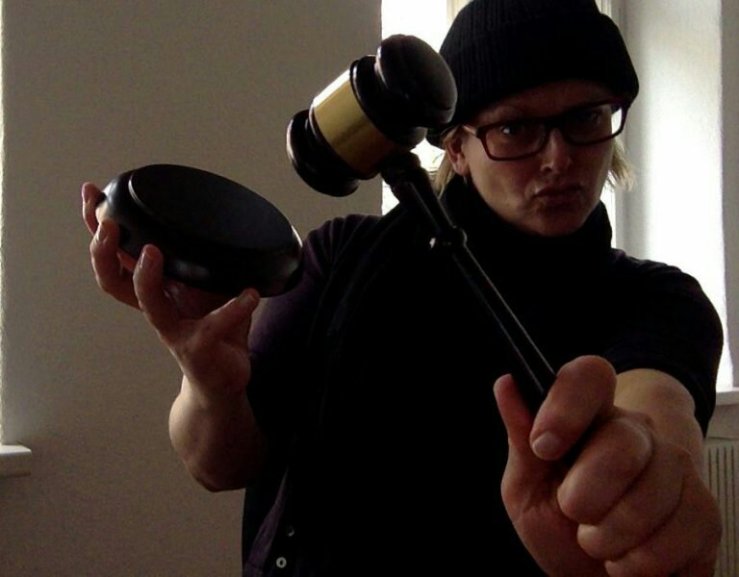
Stine Marie Jacobsen is an artist and also a human dynamo. She pours her immense resources of energy and imagination into a staggering range of projects, from best-selling German phrasebooks for expat artists and other newcomers to collaborative workshops exploring the relationship between violence in movies and in our lives. In the work Direct Approach she asks people to describe the most violent scenes they have seen in films and then to re-enact them, playing either protagonist or victim.

More recently she has developed a project which addresses the law, allowing school students, immigrants, refugees and ordinary citizens to rewrite verdicts and decide sentences in past cases and also (with the help of lawyers) to draft their own laws for public display and debate. The project is called ‘Law Shifters‘ and she spared some time from her bewilderingly busy schedule to tell Katoikos about it.

Richard Willmsen: What inspired Law Shifters?

"Do you have time to kill me today?" (2007-09)

Stine Marie Jacobsen: In 2013 I was invited by Air Antwerpen to come to Belgium as part of an artist residency and work on the growing right-wing tendency in politics. I started having conversations about this with a broad range of citizens and would during the interview ask them to compare their observations to a film they had seen. My trade mark!

The citizens spoke to me about a sanction law that enables municipalities to hire citizens to subjectively give other citizens fines, the so-called GAS (Dutch: ‘gemeentelijke administratieve sanctie’), for whatever they deem as a “public nuisance”. GAS was supposed to unburden the police from “petty crime”, so they could focus on tougher cases. GAS was written in 1999 by a lawyer called Luc Van den Bossche, who was inspired by the British ASBO (Anti-Social Behavorial Order). The citizens are only trained 8-15 hours, and the result was abuse and overuse.

Municipalities as well as police stations started getting back reports saying “frozen ice”, “man honking too loud at his wife”, “boy mimics siren” (no kidding, I tried to interview him but he wanted to be anonymous), “teenager eats sandwich and crumbs on church steps”, etc. GAS had been also used to target especially protestors and immigrants, Peace Judge Jan Nolf told me in an interview.

It literally sounded to me like the surrealists had come back to Belgium, but alas it was the cruel reality of laws going too far. This made me interested in the “condition of law” and from here Law Shifters started.

How does this project work?

The Law Shifters sessions depend on “stakeholders”. If they are students, I and a lawyer “warm them up” by inviting them to re-judge a real court case and to discuss their verdict with the original verdict. We use court cases as historical or current documents as a way of looking into how we behave towards each other and how that might have been changing.

For example, what was considered an unacceptable racist remark in 1980s might no longer seem too bad to a young person now, among others because they can read adult citizens writing “let them drown” about refugees.

If the participants already are “carriers of need or knowledge”, we go straight to discussion and law writing. The second part is that a lawyer translates these laws into official law language. These laws are then either carved into walls, floors or displayed on street posters.

Which responses to the project have been most surprising and rewarding?

One Syrian teenager surprised me when he asked: “But is it okay to write one’s own law?! It will not hurt my asylum application, will it?”

As for rewarding (not that I suffer from a saviour complex…), it was when a refugee in France said: “Thank you for listening to my needs and for treating me like a human”, or when a street worker from my collaborator Gangway heard a German pedestrian react to one of our street posters as follows: “Wait, is this a real law? Since when does the German Government display its laws in public?”

Are you aware of the work of Augusto Boal, specifically his Forum Theatre and the Theatre of the Oppressed?

Of course, I know both Boal’s work and the writings of his “forefather”, Paulo Freire. Law Shifters does empower participants in a similar fashion.

However, it seems to me that I can detect in Augusto Boal’s texts and methods a tendency to search for and use the idea of ‘absolute evil’. In Direct Approach, on the contrary, I do utilise the terms ‘victim’, ‘perpetrator’ and ‘bystander’ to trigger chaos, but in general I try to use such morally charged terms very sparingly.

I don’t think we can ever offer answers as if we had a standard morality. So we need designs that are more correlative, associative and organic. But maybe I misunderstand Boal and Freire and need to read more of their work.

To what extent is your artistic model transferable; could it, for example, be turned into a school textbook? Would it work as well in such a framework?

Law Shifters textbook

Yes, it could work well as a textbook. As a matter of fact, we made one in 2016 in German about Immigration Laws. You can access it here, and please feel free to share it! I also plan to make a publication with Flat Time House in London during our Law Shifters collaboration in April–May 2018, so if you know of any funds we can apply for, let me know!

If in the meantime there are educators or indeed anyone who wants to put the framework to use in their own practices, are they welcome to get in touch?

Yes, they are most welcome to get in touch with me. Actually, I would be delighted, because one of the most difficult things about artistic methods or projects is to make them happen without the artist being present.

Finally, do you consider yourself a politically or socially engaged artist? Should artists seek to make the world a better place?

Probably a little bit of both, because my focus in creating scenarios of sociabilities and igniting participants’ (ethical) self-reflections, could become a political arena if the participants wanted to. My work lies in creating ignition and reflection, but I want the participants themselves to take further action. My intention is not to service needs, but to find and name them.

I think art in itself makes the world a better place by sensitizing, provoking or expanding humanity, but I wouldn’t say that artists should be obliged to improve the world.

Instead, it is crucial how art is engaged with (and respected as a very different profession) on a bigger societal scale. The difference to other professions, for example, is that artists do art because they have an inner urge and need to express something that they can’t do elsewhere or elsehow. A society should protect the forms or objects that originate in this deep urge.

After its experience with entartete Kunst during the Nazi rule and the WWII, Germany, for example, realized the importance of art as raising humanity to a higher level and opening Kunstvereins all over the country. Especially in times of populism and the growing right-wing, it is important that art does not become normalized or restricted. After all, it always mirrors the health condition of a society.

So now is the time for artists to go out into and engage with societies that, in turn, should embrace the artists’ abilities to sense tendencies before they become conscious.
Twitter, Bedlam and George Soros

“Robert Mueller…paid by Soros…the Las Vegas guy…paid by Soros…my noisy neighbour…”

Those who believe, like the philosopher John Gray, that social progress is an illusion would do well to consider the following:

In the mid-18th century, queues of people would gather outside Bethlem, the psychiatric institution in London popularly known as Bedlam. In return for a small fee, they would have access to the facilities and could wander round at leisure taking amusement in the gurns, groans and gestures of those that society had condemned as too disturbed, demented and/or dangerous for general circulation. It is speculated that in the mid-1700s there were around 96,000 such visitors a year. It was not the intention of the authorities that the public should find what they saw a mere source of entertainment: according to Wikipedia, “the mad on display functioned as a moral exemplum of what might happen if the passions and appetites were allowed to dethrone reason”. Nevertheless, the historian Roy Porter records that what drew most people was undoubtedly “the frisson of the freakshow”.

The practice ended in 1770, just as the world entered a more enlightened age. No rational person would now defend such morbid and disrespectful treatment of the mentally disturbed. We are now infinitely more sensitive with regard to how we treat and talk about mental illness in all its forms. Still, curiosity persists as to the mindset of those whose psychological proclivities and/or life histories of emotional torment deprive them of access to reason. Thankfully, technology affords us a window into their way of thinking, so we can view the most mentally unsettled at a safe and solicitous distance. For example, simply typing the words ‘paid by Soros‘ into the Twitter searchbox produces instantaneous and bounteous insights into the macabre forms that outright derangement takes in our own era. Just remember not to laugh too loud or too long. There but for the grace of God go we.

Disclaimer: This article was funded with a generous donation from the Open Society Foundations.

Motion for a second f*cking referendum

This house recognises:

1) That all this bluster and bravado about a ‘no deal’ Brexit makes it abundantly clear that the Government has no plan and no strategy for what lies in store.

2) That no one who voted to leave the European Union did so on the understanding that the purported departure would be conducted under conditions of total chaos.

3) That those who argue for a no deal Brexit have no basis for their dishonest predictions of sunny uphills, tally ho and full steam ahead beyond a desire to cause maximum disruption to British society and the economy; that they hope to take advantage of the resultant catastrophe to satisfy their personal political ambitions.

This house proposes:

1) That a second referendum be held, during which the only slogans permitted to the pro-Brexit forces be the following:

‘WE DON’T KNOW WHAT THE FUCK WE’RE DOING’;

‘VOTE FOR TOTAL CHAOS’;

‘LET’S TAKE ALL THE BENEFITS WE GET FROM EU MEMBERSHIP AND FLUSH THEM DOWN THE FUCKING TOILET’.

(The latter to be postered on every form of transport in the country and also tattooed on Boris Johnson’s face and hands.)

2) That the Conservative Party be outlawed as a political organisation for a period of at least 50 years.

3) That anyone who expresses an view on continued EU membership without taking due account of the findings of experts be jailed.

4) That Nigel Farage be banned for the duration of the referendum campaign from inciting racial hatred and political violence; that he also be prohibited from appearing on ‘Question Time’ for a period of one (1) week.

5) That the name of our country be changed forthwith to ‘The United In The EU Kingdom Of Being In The EU #fuckbrexit #fuckmurdoch #fucktrump’.

Here’s why we WON’T be taking our daughter to be vaccinated

Last month a couple in Turin, Italy, almost lost their 7-year-old daughter to tetanus. Questioned as to why they hadn’t had her vaccinated against the disease, they said that they were blameless: information they’d encountered in the media had convinced them it would do more harm than good.

I live in Italy, so I know it’s not the newspapers and TV that are at fault, but rather social media and the internet. One blog in particular has been called Europe’s main source of fake news: that of Beppe Grillo, stand-up comedian turned political leader. The movement he created (the ‘5 Star Movement’) now runs both Turin and Rome, and if there were a general election tomorrow would probably win the most parliamentary seats. It has mostly been built up online on the basis of a truly populist progamme, principally against corruption and the ‘casta’ (political establishment). Although it resembles the left-wing party Podemos in Spain, it’s by no means progressive, particularly in relation to immigration.

One of Grillo’s pet bugbears is ‘big pharma’, a euphemism for those transnational pharmaceutical companies which profit from the sale of vaccines. The fake link between the MMR vaccine and autism was first ‘discovered’ by then medical researcher (now disgraced former medical researcher and Trump cheerleader) Andrew Wakefield in 1998. ‘Anti-vaxx’ sentiment has been particularly influential in Italy, with compulsory immunisation programmes leading to large numbers of parents who have read online or been convinced by friends that vaccines cause disease withdrawing their children from school altogether. This presents a huge problem for society – not only are such parents putting their own offspring at risk of illness and death, they also jeopardise the ‘herd effect’ – when a certain percentage of a population has been vaccinated, the chain of infection is broken and the risk of any member of that group becoming infected is vastly reduced.

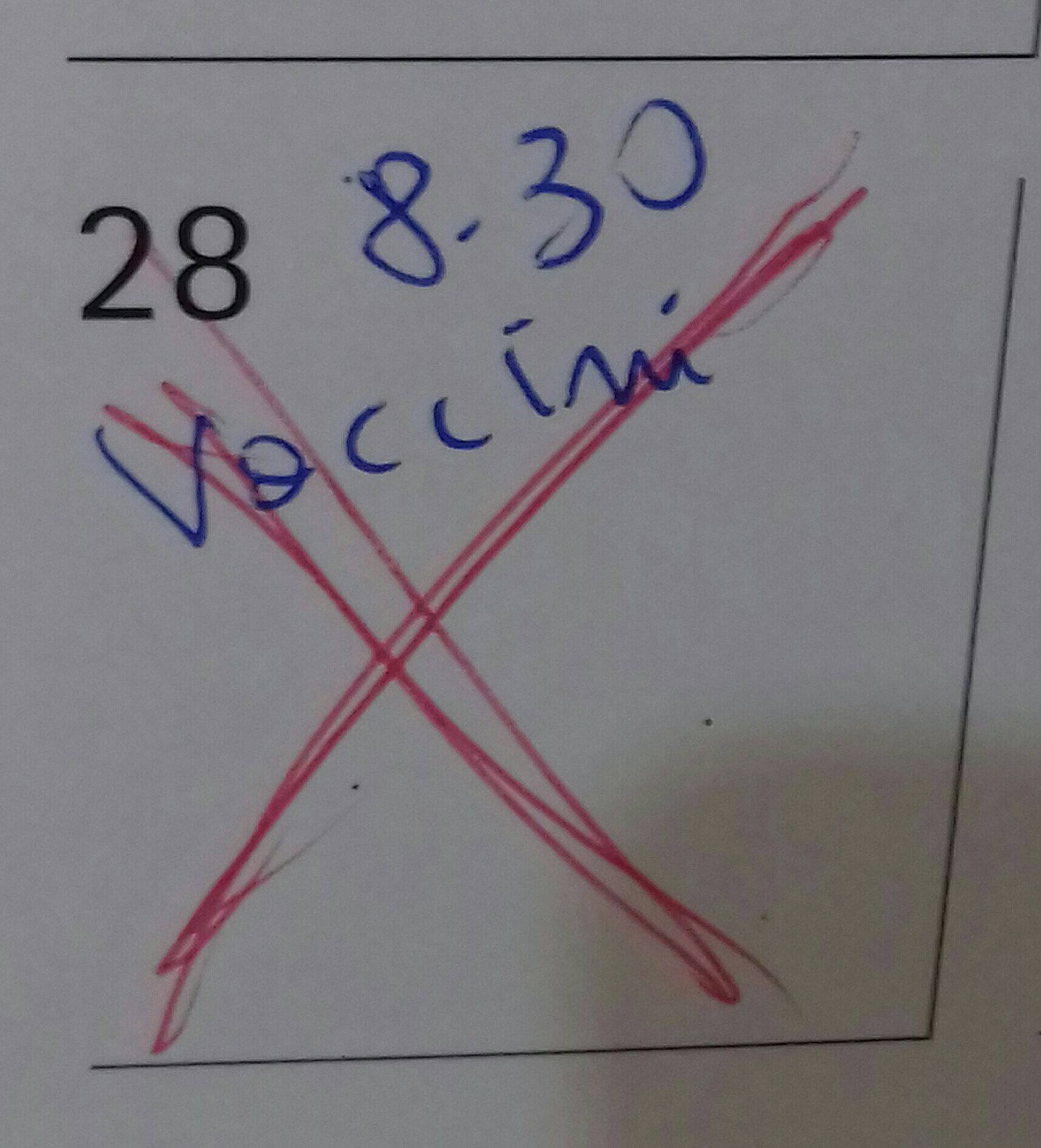
So far our 8-month-old daughter has had two sets of vaccinations, including tetanus, polio, and meningitus. We’re due to take her again on Dec 28th, but we’ve decided we just can’t go through with it this time. Why? Well, it’s very simple: we’ll be away on that date, visiting family in the UK for Christmas. We’re going to postpone her appointment until we get back the following week.

We’re not fucking stupid.

Why I’ve switched from the Guardian to the Telegraph

IMG-20171018-WA0000

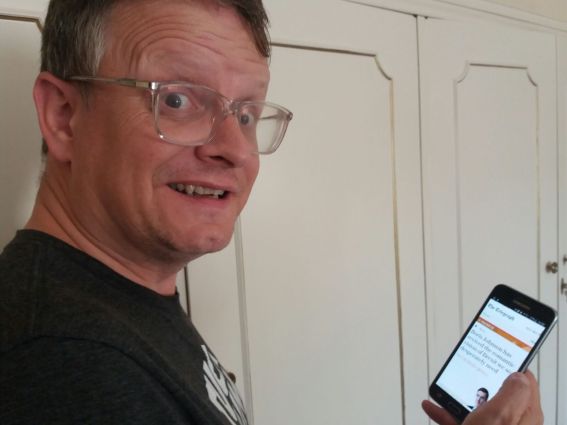
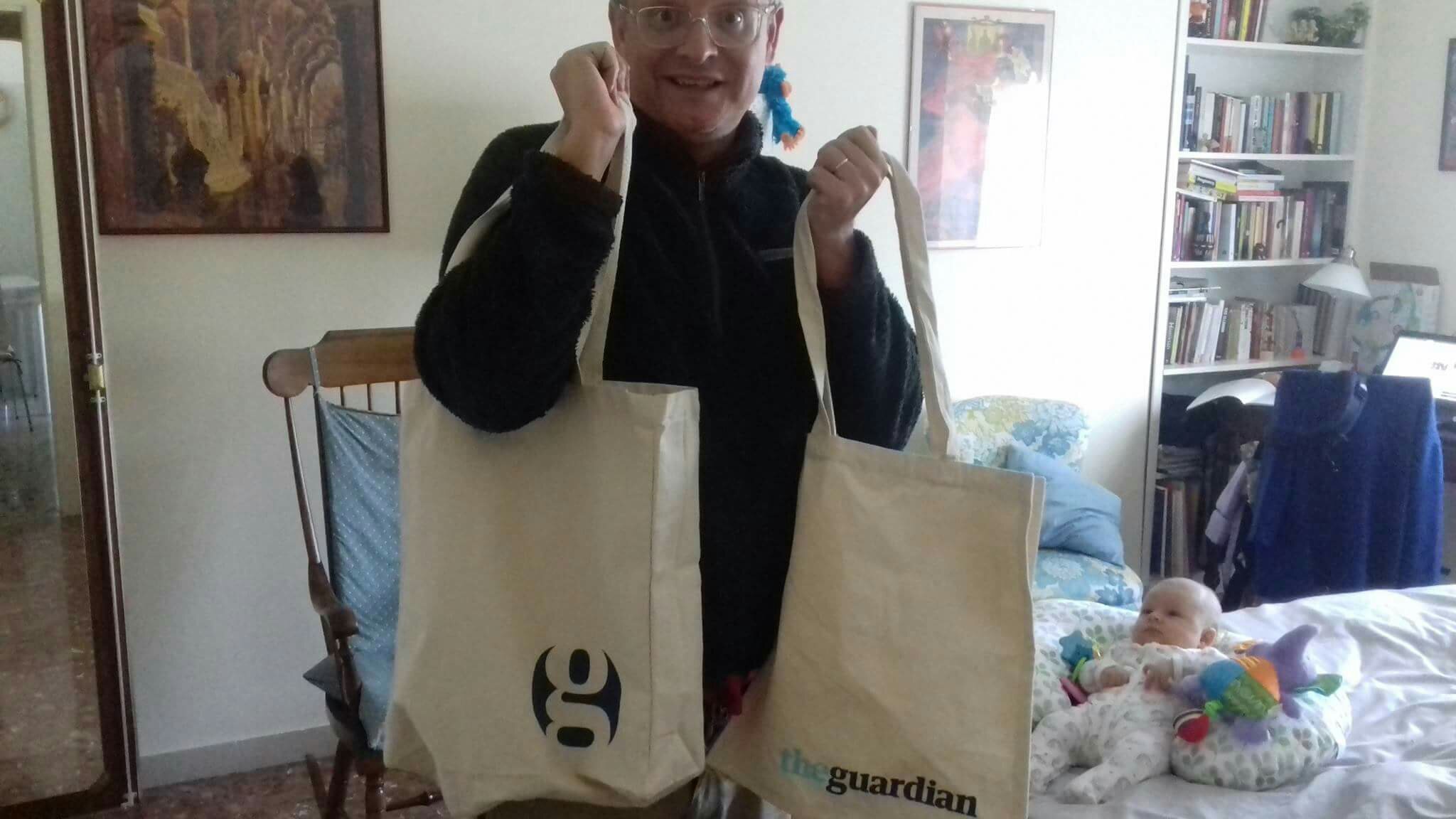
One thing that’s characterised this website throughout its nearly a year! of existence is a puppy-like loyalty to the newspaper The Guardian. I do read other news sources (including the BBC, the WaPo and various outlets in Italian, Spanish and, you know, Welsh), but my mainstay has always been the favoured journal of pinko bleeding heart libtard scum. Having read Nick Davies’ book on churnalism, I’m not an unquestioning reader of the Guardian’s coverage, but I do have a strong emotional attachment to it, to the extent that in our house we have not one but two subscriber-only Guardian-branded shopping bags. Within my world the phrase ‘I read it in the paper’ is always understood to refer to one publication, and it’s definitely not the Daily f*cking Telegraph.

However, I’m increasingly aware, in this age of filter bubbles, that I should seek to broaden my ideological horizons by varying my media diet, to push through the algorithmic fences that limit and direct our online movements*. News coverage biases aside, there’s obviously a risk of being exposed to the party line if I only read whatever George Monbiot, Aditya Chakrabortty, Suzanne Moore, and Owen Jones think of the world. James Ball, in his book ‘Post Truth’, lists reading a wider range of news sites as one means of resisting the tide of bullshit news. He also argues that newspapers themselves should seek to represent a range of political viewpoints. To be fair, The Guardian has made some efforts in this direction, employing columnists such as Matthew Norman, Simon Jenkins, Max Hastings, and for one brief period in the mid-2000s, Nick Griffin**. It’s important to challenge readers’ preconceptions from time to time. Maybe, since he’s no longer at the Guardian, Seamus Milne now writes a weekly column for the Daily Express. I wouldn’t bet my Guardian shopping bags on it though.

The obvious counterpart to the Guardian is the Daily Mail. If you can get past the almost always hateful front page it does have some stories which are both entertaining and reassuring if you happen to share its splenetic worldview. However, even though I live in Rome I simply cannot take the risk of being seen by a compatriot looking at the Daily Mail website on my phone. Maybe it’s merely my own projection, but I would actively sneer at such a person. Then there’s The Times, which does have lots of quality journalism and thoughtful columnists such as Caitlin Moran and Matthew Parris. The problem there is the paywall:  I’m not paying Rupert Murdoch a fucking penny***. So, further to the right, without dropping down a level to the Dailies Express or Star, we have the Torygraph. Although I don’t have any Telegraph-reading friends, in my family history there was one: Duncan, my favourite uncle, who was extremely affable, fittingly avuncular and profoundly Conservative. He would not have been seen dead with a copy of the Guardian – indeed, he still hasn’t been in the five or so years since he passed on. While he was alive his relationship with the Telegraph mirrored mine with the Guardian. This letter gives a flavour not just of his character, but also that of a lot of Telegraph readers: slightly blimpish but jocular with it. The perfect audience for Boris Johnson’s ultimately ruinous shtick, essentially.

My uncle lived all his life in the provinces; you very rarely see people in London reading The Telegraph (and even fewer in Rome, oddly enough****). It’s the favoured newspaper of Tims-nice-but-dims and white-haired colonels living in Surrey. When I picture the archetypal reader it’s Jim Bergerac’s friend Charlie Hungerford that springs to mind: an image of blustering pomposity unmatched by intellectual brilliance. I once knew a journalist who told me that during her training she’d learnt that regardless of its range of vocabulary, the level of argumentative sophistication of Telegraph articles is equivalent to that of The Sun. But these are ultimately prejudices, ones I want to, if not overcome, subject to rigorous reexamination.

However, there’s an immediate problem, viz: if I even think about that c*ntrarian Toby Young my blood starts to simmer. Plus, whenever there’s a Telegraph journalist on ‘Question Time’ you can pretty much guarantee that he or she will agree with at least 80% of whatever verbal effluence Farage comes out with. The Telegraph provides a platform for people who it’s very, very hard not to regard as mere trolls. Its chief political commentator is Charles Moore, whose climate denial makes it very hard to take seriously anything he writes on other topics. In addition, the Brexit vote almost certainly wouldn’t have happened had it not been for Boris Johnson’s Telegraph column spreading outright lies about the EU. Then there’s episodes like this, not to mention the tone of snobbery endemic to the whole enterprise. Nevertheless, the Telegraph does also employ proper journalists, experienced fact-finders who assiduously follow professional guidelines to render the truth with accuracy and fairness, even though it’s presented in the form of articles whose editorial bias occasionally makes people who care about others want to vomit with rage :-P.

Another reason for becoming a Telegraph reader***** is that in contrast to the Guardian’s Comment is Free pages, pretty much all of whose content I’m primed to agree with, it would surely be more useful for me to engage with those with opposing views (insofar as I have to discuss newspaper articles online. Obviously I don’t.) However, as it happens there’s no shortage of right-winger commenters on CIF, in particular following articles written by women or those that dare to mention racism and/or climate change. Ideally, online debates on newspaper articles would be a meeting of minds and a serious engagement across the lines of political affiliation which would put our ideas and assumptions to the test; in reality, the internet doesn’t work like that, regardless of the masthead. At this point, anyone commenting below the line can be regarded as a troll unless they specifically prove otherwise.

It’s time to don the surgical gloves and get a forensic feel for the innards of this exotic creature, the Daily Telegraph website. As it happens, I’ve just received a handy email drawing my attention to the publication’s star columnists. When I click through to the site, however, I’m faced with an obstacle: much of what they write is only available to ‘Premium’ subscribers. I don’t have a problem with paying for online content – the Guardian will be forced to introduce something similar one day – but that particular word I find off-putting, designed to appeal to elitist values that I don’t subscribe to. There’s an echo of ‘How to spend it’, as though quality reporting and incisive commentary is a luxury. It turns out that unless I’m a paid-up subscriber I also can’t comment. But this is a club in whose leather-bound armchairs I don’t think I’d be very welcome to recline.

On the front page, however, I immediately feel more comfortable. There’s some bad news about Brexit, which is as it should be, and a report on George Sanders’ Booker Prize win. I really should get round to reading that novel, I think. I’m already starting to relax and feel that I’m simply reading a newspaper, rather than creeping through a rat-filled gas-reeking enemy trench. The Sanders article does have a particular angle which if I was feeling vexatious I could choose to regard as Typically Telegraph, the idea being that the Booker’s opening up to non-British and Commonwealth writers was misjudged. I could choose to get annoyed about this but on reflection its a fair point, and one I’ve come across elsewhere. There’s far more promising trigger material in an article by someone called Zoe Strimpel: an attack on the #MeToo meme, whereby women who’ve suffered sexual harrassment out themselves on social media. With its dismissive tone, references to “dated” 70s-style feminism, I soon find that the finger is starting to tighten. The whole piece seems like exactly the kind of thing you’d expect to find in The Daily Telegraph website, or maybe it would, except I can’t read the whole piece because I’m not a subscriber. Oh well. I click instead on (part of ) an article by Michael Deacon, who I’ve come across on Twitter, where he’s constently thoughtful and smart. On the Telegraph site he’s literally smart, with an colourful oversized tie and a sardonic expression which is also present in his writing – it has the wry tone of a parliamentary sketch writer. The piece is enjoyable (he’s having a go at David Davis), but it’s also Premium, so it also stops halfway through. I can take out a trial subscription, easily cancellable if I decide that the Barclay Brothers are to be trusted. At this point I think about all the things I could be doing in life rather than signing up for the Daily Telegraph website, but then remind myself that (at the risk of sounding as pompous as a Telegraph leader writer) understanding what other people think is probably one of the top three most important things in life. I decide that I will give it a week: no Guardian for seven days, just a steady diet of p̶o̶m̶p̶o̶u̶s̶,̶ ̶b̶i̶g̶o̶t̶e̶d̶ ̶h̶o̶r̶s̶e̶s̶h̶i̶t̶  news and commentary from an unfamiliar source. Hopefully the experiment will serve to both broaden and refine my view of the world; if, on the other hand, I suddenly start sporting a bow tie, declare Brexit to be the best thing since the slave trade and proclaim Jacob Rees-Mogg to be the saviour of Western civilisation, you’ll know something’s gone horribly wrong.

*A clear example of, in the words of Thomas Pynchon, ‘unshaped freedom being rationalized into movement only in straight lines and at right angles and a progressive reduction of choices, until the final turn through the final gate that leads to the killing floor’ (Against the Day, 2006, p11).


**A clear example of fake history.

***Why are there far fewer pubs in the UK than there used to be? The reasons are manifold and well-understood: housing market pressures; the smoking ban; changing demographics; cheap supermarket booze; and, perhaps most importantly, the greed of Rupert Murdoch. Recently, in a conversation about Cardiff’s disappearing drinking establishments, a taxi driver told me about a pub he used to pick the staff up from. It was on the verge of shutting down, according to the duty manager, because the owners couldn’t keep up the payments on the Sky Sports package. They were paying, I shit you absolutely not, £600 a week. In case you’re too shocked to think, I’ve done the maths for you: that’s more than £30,000 a year. The effects of Murdoch’s social impoverishment of British society are akin to the damage that his Zimbabwean counterpart has done to his country’s economy.

****You may be able to buy a paper copy of the Telegraph from Roman newspaper kiosks, it’s never occurred to me to enquire. There’s always ‘Il Giornale’.


*****Apart, that is, from the cricket coverage.

Read the sequel here.

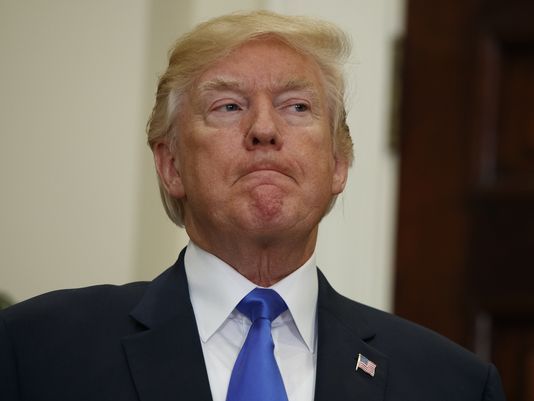
21 questions for Donald Trump


In 2009 the Italian newspaper La Repubblica started to publish a daily set of ten questions to then Prime Minister Silvio Berlusconi. The questions related to numerous allegations of corruption and Berlusconi’s evasive and inconsistent responses to them. The questions were never answered.

Although Berlusconi has been compared to Trump in terms of his populist appeal, his explicit corruption, his gaffes, vanity, sexual venalities and ongoing hairline issues, he was a much more astute and wily operator than Trump. Berlusconi was malevolent and arrogant, but not stupid or mad; Trump appears to present a perfect shitstorm of evil intentions and mental and emotional instability, together with profound and wilfull ignorance of the world, his role in it and how he is regarded by all thinking people.

If Trump were to be posed a similar set of questions in relation to his own crimes and the lies he tells to disguise them, he would struggle to understand the questions. His limited vocabulary, inability to concentrate and lack of attention to detail don’t appear to allow him to deal with matters of any complexity or depth, and his stupidity is such that he appears to have very little awareness of how his staggering dishonesty is apparent to all, for all that he is given a free pass by his supporters*. He is, to an extent, aided and abetted by those sections of the media which have sought to normalise his presidency, treating him as a legitimate holder of the office and – partly thanks to the understandable need of media organisations to maintain cordial relations with and thus access to the White House – rarely holding him to account for the outright lies that he espouses. Nonetheless, many have speculated about what might happen if he were to be truly put on the spot. I therefore present these questions – none of which, I feel with some certainty, he would be able to answer in a meaningful way – in an attempt to plumb the depths of his ignorance, for it is within that dark, dismal chasm that we now all dwell.

1. What is the capital city of Iran?

2. Which country is your present wife from?

3. What are the opening words to the US Constitution?

4. Can you name 3 presidents before Kennedy and give their terms of office?

5. What does the term ‘balance of payments’ mean?

6. What is the name of your predecessor’s autobiography?

7. When did you last see your grandchildren?

8. What is the current population of the United States?

9. When did Kim Jong Il die?

10. What is the address of the White House?

11. Why was the American Civil War fought?

12. Can you name any one of the four soldiers who died in Niger two weeks ago?

13. What is ‘Leaves of Grass’?

14. Who composed the national anthem?

15. Can you name three leading US newspaper columnists?

16. Can you describe how climate change is supposed to work?

17. What is the name of the current Prime Minister of Canada?

18. What is the name of the athlete who inspired the #takeaknee movement?

19. What does the word ‘nuclear’ mean?

20. What is the territorial status of Puerto Rico?

21. What do you remember of the Oath of Office?

*Of course there will always be a hard lump of supporters who will never abandon him, maybe best thought of less as deplorables and more as unflushables.

Curb Your Enthusiasm: That joke isn’t (as) funny anymore

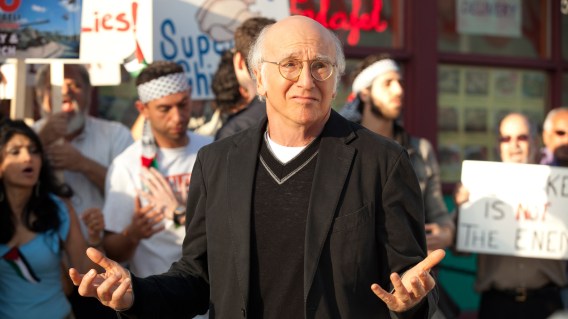
Although the title ‘Curb Your Enthusiasm’ was apparently randomly chosen, given that the show depicts the tribulations of a rich, white, straight man in a world where, to coin a phrase, Others’ Feelings Matter, perhaps an alternative title – one more in keeping with the world in 2017 – could be ‘Check Your Privilege’. While I’ve long been a huge fan of the programme, it’s sometimes felt like a guilty pleasure as I’ve noticed that it’s much more popular with male friends than with female ones. Similarly, ‘Larry David”s enjoyment of life is often constrained by the need to exhibit respect towards people different from himself. I was looking forward to the new series but judging from the response in The Guardian, from Limmy, and from a friend who’s somehow seen the first episodes (I’ve only seen assorted clips*), enthusiasm for the show is waning.

As a bluntly-spoken New Yorker living in California (not to mention something of a schlemiel), Larry constantly triggers fault lines among people who appear primed to take offence. In each episode he either gets stitched up or manages to stitch himself up as the bit of social fabric he has (often inadvertently) torn up tangles itself around his ankles. Adam Kotsko’s essay ‘Awkwardness’ addresses programmes such as ‘Curb’ and The Office’. He argues that although their protagonists are mostly affable and largely well-intentioned, such shows demonstrate that the process of adjusting to a post-1960s world ostensibly built on mutual respect is inherently problematic, and therefore, in an exaggerated form, excellent material for comedy. They show that the imposition of rules around language and etiquette leads to constant clashes, given that such rules are mostly unstated and thus can appear arbitrary and unfair. The fact that Larry David and Michael Scott seem to be emotionally stunted, often sociopathically reckless, selfish, egotistical, and grudgeful does not render them monsters. Rather, their fallibility represents our own vulnerabilities. This is a complex, messy world and we all behave or seem to behave like assholes from time to time. As Phil Harrison puts it, ‘there’s an exquisite agony about the finest episodes that stem from the suspicion that everything happening to Larry could probably happen to you on a particularly bad day’. Their plight is a universal one.

Thus, ‘Curb Your Enthusiasm’ was never a resentful diatribe against political correctness per se, but rather an intelligent satire. It is not demanding that the edifice of post-60s respect for other identities be blown up. There are limits on individual honesty and the satisfaction of our impulses, and sometimes our encounters with those limits are awkward and lead to more hurt feelings. That doesn’t imply we should all join the NRA and look up the quickest route to Charlottesville. Or, as the article puts it, ‘Maybe the world has changed without telling Larry David. Maybe Larry now simply feels too much like a rich, straight white man lumbering around shoving his demented, free-ranging privilege and entitlement in everyone’s face?’.

The extent to which curmudgeonly white men are no longer on the back foot is once again demonstrated, with unerring and dispiriting predictability, in the comments following Phil Harrison’s article. Their tone is largely resentful and humourless, anti-intellectual and personally spiteful, expressing fury against the media itself and the individual journalist as though the free press has no right to cover culture. Some of the commenters seem to regard the piece as an example of #fakenews.

The fact that the article calls the new series ‘catchphrase and slapstick’ put me in mind of a stage show I saw recently about the life of Benny Hill. Although I found it trite and distasteful, the rest of the audience, people mostly in their 60s and 70s, lapped it up. Tastes in comedy change very quickly, especially from generation to generation. The funny bone changes shape in tune with changing social mores. Butts of jokes turn out to have their own perspectives, to want to explain their own actions and maybe make their own jokes. Although Larry David is the same age as Donald Trump, he’s certainly no fan and his show is – or has been so far – much too sophisticated for your average deplorable. Nonetheless, there is something of Trump’s appeal in David’s comedy. (Plus his indiscrimate targetting of Muslims/Arabs/Iranians may explain why Steve Bannon apparently finds it so entertaining.) Thus in 2017 his particular shtick doesn’t make us laugh as it did five or ten years ago. As someone else who used to be amusing and is now little more than a source of embarrassment once sang, it’s too near the bone and it’s too close to home. Tl;dr: Crotchety old white men are not as charming as they used to be.

*Anyone unhappy that I’ve written this without watching the whole new series is welcome to track down somewhere I can stream it in Italy.