Six years in Marylebone 

FOT1168956

The renowned architectural critic Ian Nairn recorded in his 1961 essay about Marylebone that at the heart of the district, one he called ‘terribly civilised’, stood the Listener magazine. The fact that the area is now prominently home to Monocle seems to exemplify a shift. Although I’ve never lived in that part of London, I was a sort of blow-in, in that I worked from late 2009 to early 2015 in a language school on Manchester Street, one which bravely hung onto to a very marketable location for some years but has recently been forced out by rents in the region of £100,000 a year.

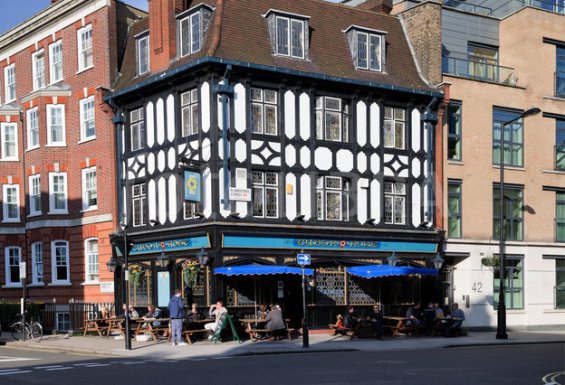
It’s customary to think of Marylebone as well-heeled and genteel. It certainly has a character, albeit not one that I particularly identify with. In any case that character may be getting killed off, written out of the script. Chiltern Street is the centre of the gentility, with its reliably expensive wedding dress outlets, woodwind shops and hunting gear outlets, seemingly straight out of Jeeves and Wooster. It’s deeply Old Tory: patrician, leisurely, all tweed and creased leather. By contrast, the advent of Monocle with its neoliberal hipsters seems like a Viz parody of the ‘globalist’ worldview. (A typical cover of the magazine proclaims that ‘style has returned’ to wherever has been most crippled by austerity. It’s easily parodiable.) There’s also a bit of a walking joke striding around, in the form of Jeremy Clarkson, who seems to have a liking for an absurd gentrified pub called Gunmaker’s, one which is so salubrious it’s like an upper class person’s idea of a British local, bedecked in pristine union jacks and selling high-faluting sausage rolls and £8 scotch eggs from the Ginger Pig across the square .

International money is buying into that image – or possibly buying it up. The anodyne ‘luxury’ new flats may be a sign that local Tory sympathisers are being priced out by people who don’t exist and therefore don’t vote. Significantly, the owner of our school was a personal friend of Jeremy Hunt, someone heavily invested in education-as-online-transaction, and David Cameron was seen trying to endear himself to the neoliberal gentry in the Chiltern Firehouse (maybe he was also a regular customer at the Ginger Pig…). The greasy spoon cafe Blandford’s went suddenly upmarket, in competition with the Nordic Bakery and various other healthier outlets catering to European eating habits. Then there are the chains which, rather as Karl Marx – whose daughter stood as a local election candidate – predicted, increasingly dominate: Pizza Express, Sandro, six or seven branches of Eat crowding each other out. In my time there restaurants and shops came and went in the space of a few months, due to the hurricane-like pressures of retail rents.

It would be a tragedy if Daunt Books (on Marylebone High Street) fell prey to such forces. It’s one of London’s best bookshops, with its friendly and erudite staff. Although its selection of literature and poetry is almost beyond equal, it’s not the kind of place that has a section on critical theory or hosts talks by Ian Sinclair. It’s a long way from Hackney, more Alan de Button than Jeanette Winterson. The atmosphere is like Stanford’s, with its slightly late-19th century travel section. The fact that it is just up the road from the typically overstocked Oxfam and round the corner from the reliably excellent library is some indication of the local quality of life.

An emblematic loss which my time in Marylebone bore witness to was the demise of the Tudor Rose. It combined the worst pub menu outside Scholar’s Pub in Rome with the kind of clientele who even Jeffrey Bernard might have turned his nose up at, including a landlord whose own alcohol consumption may have been the only thing keeping the place in business (not much of a business plan, it turned out, especially if you are also fond of the old gee-gees). It’s been replaced by the kind of place which is probably lovely if you can afford it. Although my colleagues insisted that Marylebone counts as central London, it always felt to me more like the west, peopled mostly by sloanes who rarely went east of Tottenham Court Road. The closure of a place like the Tudor Rose definitely moved it a few more inches in the direction of the setting sun.

There was a sense of an uneasy coalition between old and new money. This LRB article details how the values of Theresa May are not the same as those of the neoliberal ‘globalists’. What the impact of Brexit will be on London no one can say. Britain will be more ‘open for business’ than ever before, which is another way of saying that everything of value will be for sale to all comers. As it happens, most of the time I spent working there I was living in Haringey, whose council is currently doing all it can to get rid of its human population and replace it with notional numbers on distant computer screens, or at least happy smiling computer-generated white people on vandal-proof billboards. Cycling back and forth between Haringey and Marylebone probably balanced out my life expectancy: in 2011-2013 there was a two-year difference between the two. Although that may have been levelled off by the fact that as I hit Euston Road, I passed through the area with the highest level of air pollution in the country. At least, thanks to Brexit, London’s contravention of EU clean air regulations won’t be a problem for very much longer. Anyone who thinks that bodes well for the local quality of life may well find that they’re whistling, or rather coughing, in the wind.


Murder on the Trump Train Express

The release next month of a new version of ‘Murder on the Orient Express’ may be, as we’ll see, timely, but I doubt the movie will have the same impact on me as the star-studded original did when I half-saw it while hiding behind the sofa at the age of eight or so. I found the film so upsetting because it’s a multiple murder mystery – the plot shows that the victim was such an abhorrent bastard that pretty much everyone he came into contact with had more than enough motive to stick a dagger deep into his guts. But how, you might ask, does that make the movie timely? Well…

Robert Reich yesterday posted the transcript of a conversation he had with an old friend, a Republican former member of Congress. His friend bemoaned the situation that so many Republicans find themselves in: on the one hand, they’re pretty much all fully aware that Donald “President” Trump is out of control and beyond all reason, a perfect human shitstorm of insanity, stupidity and evil who could, on a momentary whim in response to the merest slight his befogged brain might perceive via ‘Fox & Friends’, unleash a planetary catastrophe of unprecendented proportions – or, even worse, damage the mid-term prospects of the Republican Party. The bind that the poor Republicans find themselves is that although they are aware of all the above, and would – in at some least some noble cases – prefer the human race to survive, they also really, really want to give themselves a huge tax cut, and so are disinclined to disembark from the Trump Train for the time being. You can imagine their frustration. (Not for nothing did Noam Chomsky call the GOP the most dangerous organisation on the planet.) Then there are individual Republicans who have been betrayed and/or publicly humiliated, some of whom happen to combine a history of violence with proximity to their tormentor: former soldier John McCain (who’s going to die soon anyway); John Kelly, who has been wearing an army uniform and carrying a loaded weapon since the age of 3; erstwhile oil baron/mass-murderer Rex Tillerson; and Ayn Rand-worshipping psychopath Paul Ryan. All of whom happen to be firm believers in the primacy of the 2nd Amendment and thus subscribers to the notion that political violence can be both righteous and redemptive. The list of those insulted by Trump also includes: the entire populations of Mexico, Qatar, Iran, North Korea and Puerto Rico; pretty much all NFL and most NBA players; 800,000 DACA recipients and their friends and relatives; the families of the four soldiers killed in Niger last week; the entire surviving US military and anyone who respects the Stars and Stripes; all journalists and everyone with regard for the freedom of the press and the First Amendment; anyone who might need healthcare and/or isn’t a white supremacist; all those of us who care about our children; every single human being who doesn’t want to die in a nuclear holocaust; anyone who doesn’t share his profound contempt for the entire human species; Rosie O’Donnell; all women who are not Rosie O’Donnell, plus, obviously, Rosie O’Donnell again; Russell Brand; and, why the hell not, just for good measure, me.

Speaking of me, this is what I wrote last November:

The US Republican Party is now faced with the conundrum of managing a situation which is to all intents and purposes impossible. There may already be whispers in the arras that he could be forcibly removed…few rational people living or dead would be all that opposed to a good old-fashioned off-stage poisoning or stabbing. Or possibly an air crash? I sincerely hope that 1) there are still some Republican leaders out there who still have some measure of faith in the values they profess and the integrity to implement them and 2) that they have left no options off the table.

It’s also worth noting that at the end of the film, Monsieur Poirot (played by Albert Finney) gracefully declines to arrest the twelve people responsible for ridding the world of such a repugnant beast, declaring (with a knowing look to the camera) that he has the ‘honneur to retire from the case’ – after all, the victim had been ‘deservedly murdered’. I hope that whoever dons the pince-nez and the twirly moustache in the 2017 version is able to deliver such lines with similar panache and make its implicit message of blithe impunity clear to all those with the means to respond accordingly. As for the motive, everyone who’s not catastrophically deluded and/or criminally complicit has more than enough of those. As with that other ‘elderly, malevolent American’ ‘Samuel Ratchett’, no sane human being would mourn the more-than-timely death of Donald Trump.


Is this a transitional object I see before me?

aaaaaaaaaaaaaaaaaaaaaaaaaaaaaaaaaaaaaaaaaaaaaaaaaaaaaaaaaaaaaaaaaaaaaaa
This is the opening paragraph from the book ‘Post-Truth: How bullshit conquered the world’ by James Ball:

The US government stockpiled 30,000 guillotines, stored in internment camps – including one in Alaska large enough for two million people – ready to wipe out Second Amendment supporters at a rate of three million an hour. Trump supporters at a New York victory rally chanted, ‘We hate Muslims, we have blacks, we want our great country back’. Denzel Washington endorsed Donald Trump – and Trump actually won the popular vote in the US election, despite the mainstream media telling you otherwise.

I’m sure you can see the item in that list that ‘triggered‘ me. Within seconds I was already drafting an outraged response to shout into the ether. Even though I knew full well that I was reading a book about fake news, I dearly wanted the report in question to be true. As the Italian phrase has it, ‘Se non è vero, è ben trovato’, or as they say in Jamaica, ‘If it not go so, it go near so’. I dismissed those stories that conflicted with my worldview immediately. It took concentrated reflection – System 2 thinking – to realise that the headline which had raised my hackles must also have been false, and then some more mental work to understand that many faced with the same set of headlines would have had the exact opposite reaction, would have found the fake news story about guillotines similarly compelling – and, in a way, comforting.

This blog is not a fake news outlet. Everything on this site makes a claim on the truth; I’m not Paul Horner or Beppe Grillo. Satirical articles are clearly labelled as such. Although satire aspires to be (like Picasso said of art) ‘the lie that tells the truth’, I’m aware that the kind I feel compelled to write sometimes cleaves too close to the truth. Headlines such as ‘NRA condemns mass murderer: ‘Poor guy, must have had a bad day or something’‘Mail editor Paul Dacre to be knighted at long last’ and ’21 facts that PROVE Donald Trump is NOT racist’ are designed to mislead, and I’ve come to accept that any such misinterpretations and any accusations of spreading ‘fake news’ are largely my own responsibility. After all, 59% of shared articles are not read by the person liking or reposting them. Anyone writing online should be aware of how their ‘content’ contributes to the deluge of bullshit. This site doesn’t exist in a vacuum, but among millions of others that are deliberately misleading.

According to James Ball’s taxonomy of potentially dodgy sites, this blog falls into the category of ‘extremely partisan’: it mostly tells people what they want to hear. Nonetheless, unlike operations such as Breibart and The Canary it makes no pretence to be a news site. I found it amusing that when my post about Trump snapping went viral people were arriving at my site by googling ‘Is Internet Coincidence reliable?’. That particular post triggered people’s sensibilities at just the right moment, and probably fed illusions that Trump’s reign would be over before we knew it, a momentary bad dream. The fact that such an assumption has been revealed to be bullshit doesn’t, I think, mean that my argument was bullshit, but it does indicate a lack of political acuity, as further evidenced by headlines such as ‘A prediction: Trump will tweet in favour of Catalan independence‘ and I’ve put money on it: Rees-Mogg will be the Tories’ answer to Corbynism’. At the end of the day, Brian, this is not a very reliable source of information. Thank God it’s just a blog.

In any case, the principal currency of the internet is not information per se. Google and Facebook aren’t, contrary to the boast of the former, ‘organising’ but rather editing what we find according to a set of ambiguous but consistently amoral and manipulative criteria. The real dollars don’t lie in accurate detail, but in headlines and pictures which may be misleading but do connect with that sweet spot between outrage and pleasure. Breitbart understands this very well – although by no means all of its stories are outright fakes, the posts that get shared the most are the blatantly dishonest ones, instantly transmissible as memes – and once the lie has been embedded into an emotionally arresting image, the ‘information’ it contains cannot be countered by rational argument and fact-checking. The internet thus resembles a playschool, decorated in colourful images with clear, simple messages, a place where everything has a familiar and reassuring meaning. Everything we see on social media tells us: these people feel the same as I do. As for encountering other perspectives, we are slowly realising that the conversational model has little to do with dialogue and much more to do with either reinforcement or confrontation. No one changes their mind because of an internet debate, a meme, or a piece of satire. In fact, there is abundant evidence shows that the online sharing of opinions reinforces and possibly even polarises entrenched points of view. One word I haven’t noticed in the articles and books I’ve read about online identities is tribal, but it seems to me that the affirmation of belonging to a particular group fulfills that atavistic need.

So why write satire, or why for that matter produce any internet content at all? Principally, if I’m honest, to cheer myself up. It’s satisfying to feel that I’m part of a tribe, that I have a few twigs to throw on the campfire. It consummates a basic human need for belonging. It’s gratifying to see that people like and share something I’ve created, to the point, inevitably, of becoming, as John Kelly said of Trump’s relationship with Twitter, a ‘habit’. I use my device, as I think most people do to varying degrees, as a source of emotional support. Posting online is one way of feeling that I exist and that my existence matters. Thus I can relate to Trump’s apparent need to feel triggered. To paraphrase Sherry Turckle, I post, therefore I am. This is not, I recognise, a healthy or a mature condition, but neither is it a rare one. The internet is in its adolescence, so it’s inevitable, if not exactly natural, that so much of it resembles ‘Lord of the Flies’. Hopefully phenomena such as 4chan and characters such as Milo are symptoms of a development which is not permanently stunted. That’s not to blame the state of affairs on the young: neither I nor Donald Trump, to choose two random examples, are ‘digital natives’.

As it happens, over the last few months I’ve become a keen student of the process of human physical, emotional and intellectual development. Like my first experience of university, this often involves manic bursts of impromptu studying at very irregular hours. For example, when she was between four and five months old, our baby daughter, who had previously slept, well, like a baby should, developed trouble getting to sleep and staying there. In desperation, responding to advice we’d obtained, oddly enough, online, we tried ‘controlled crying’: letting her cry herself to sleep in her cot, with our reassuring interventions taking place at longer and longer intervals. The method is controversial – some believe that babies should never be allowed to cry, ever*. The most cunning element of the plan was the deployment of two fluffy characters called Bunnywunny and Bunnywunnywunny. With their help she was almost immediately able to sleep for ten or so uninterrupted hours. BW and BWW were examples of comfort or security objects, or as Douglas Winnicott called them, ‘transitional objects‘, which teach infants to rely less on their parents and to start developing emotional independence and their own sense of ego/self. Since then, whenever she wakes up at night, they are the first thing she grabs for. Feeling comforted by their presence, she immediately falls back to sleep.

Some of this should ring a bell, unless that is you’ve got your brain turned to silent or vibrate. Freud argued that the primary function of dreams is to allow us to go on sleeping. As we transition towards a reality which for so many will resemble a living nightmare, it seems to me that the role of our devices is to provide us with emotional comfort, and to enable us to control our waking dreams.

*These seem to be the same people who don’t believe in protecting children from disease.

Does nostalgia for the slave trade lie behind Brexit?

181289_600

This essay, by Ta-Nehisi Coates, is a masterpiece. He argues that Trump’s white supremacy is not a tumour on the body politic, one that can be simply excised, but something that feeds on the roots of the USA, a society build on stolen land by forced labour. Trump’s victory drew its strength from far beneath the soil, tapping into seams of ancestral resentment from whites conditioned to think they’d been usurped. It was nourished with the blood of generations of whipped and beaten slaves.

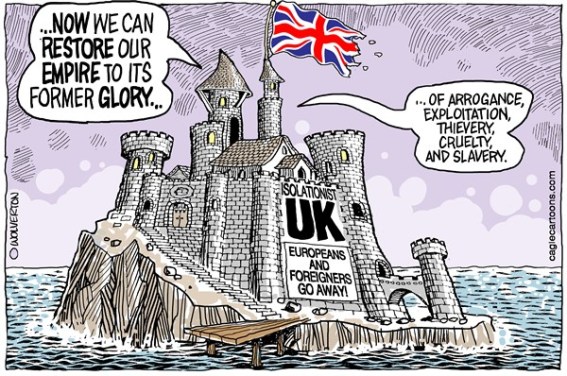
The essay set me thinking about how its thesis relates to the UK. Clearly, we could have seen Brexit coming – Sunderland shouldn’t have come as such a shock. It was similarly fuelled by buried resentments which exploded like fracked flames bursting out of suburban kitchen taps. Just as the civil rights movement in the US didn’t uproot racism, the appeal to deeply-buried imperial nostalgia was – as many have explored – central to the Brexit victory. It drew on melancholy and resentment from the loss of status that the end of empire occasioned. There is plentiful evidence of this, from the Tory MP tweeting how many Olympic medals the ‘Empire’ won, to Ukip’s rhetoric of ‘Bongobongoland’, to the woman on the Croydon tram bemoaning ‘my Britain’s fuck all now’, to those who suggest that the Commonwealth will be a more than adequate replacement for the EU, to the Whitehall officials who talk openly about “Empire 2.0”.

While it’s axiomatic that saudade for the symbols and status of empire played a role in Brexit, what about the slave trade which served as its centrepiece? Although there were slaves in Britain, relatively few British people actually brandished whips, at least on dry land. Unlike the US, the empire was not built on the direct use of stolen labour to develop land, but on the wealth which came from slave-trading. White people in Britain gained in status from the slave trade, much like slave labour enabled American whites to feel that they weren’t at the bottom of the pile. The roots of Britain’s economic development lie in the imposition of an ideology of white supremacy. Napoleon Bonaparte, when explaining his remark about the British being a nation of shopkeepers, allegedly commented:

I meant that you were a nation of merchants, and that all your great riches, and your grand resources arose from commerce…What else constitutes the riches of England. It is not extent of territory, or a numerous population. It is not mines of gold, silver, or diamonds. 

That commerce was in black people and the labour they embodied: Britain led the world in buying and selling human beings. When pro-Brexit politicians such as Daniel Hannan and Douglas Carswell fantasise about Britain once again dominating the high seas of commerce far beyond European shores, the wind that boosts their sails blows from centuries of race-based atrocity. The ships that they pine for carried hundreds of thousands of black lives treated as nothing but expendable merchandise. It’s no accident that the Daily Mail’s peculiar agenda encompasses both deep distaste for foreigners and intense fury at any threat to the value of property. Perhaps, deep in the collective imagination of the British, our homes carry much the same value as holdfulls of slaves did in the past. When the effect of Brexit on house prices becomes clear, we know who such newspapers will blame: those foreigners who no longer submit to the imperial yoke.

Not being a historian, I’m certainly not the person to write such an account. Coates spent two years researching another of his celebrated essays; I’m trying to get this written and posted in time for lunch. It’s also possible that someone is already investigating this theme – or rather, given the vastness of the topic, that several PhD theses are being written at this very moment. (At least one satirist has reached the same conclusion.) A central character in any such a narrative is, of course, Boris Johnson, with his undisguised and unapologetic nostalgia for Empire. His list of things that post-EU Britain can sell to the world was missing the one item that we grew rich on, and it certainly wasn’t cupcakes.

The horizons of those who dream that Britain can blithely abandon Europe lie in the past. This does not mean that those who voted to leave the EU were consciously motivated by longing for the return of the slave trade, nor that the Foreign Secretary is keen to literally bring back slavery, but on reflection, the fact that successive generations, including my own, were brought up to boast in song that ‘Britons never shall be slaves’ is a clue to the ‘role’ that unashamed (and economically illiterate) imperialists foresee for the country’s future.

NRA condemns mass murderer: ‘Poor guy, must have had a bad day or something’

After two days of silence following the massacre in Las Vegas, the CEO of the National Rifle Association, Wayne LaPierre (aka ‘The Marksman’), has finally spoken out against such mass killings, in terms some commentators are calling ‘unprecedentedly strong’ for his organisation.

Mr LaPierre called the events of Sunday night ‘unfortunate if not regrettable’, adding that he personally found the death toll ‘a little excessive’ and the sight of so many dead bodies ‘distasteful’. His said that the NRA ‘equivocally condemned’ anyone who committed such acts, and in response to questions from the media conceded that the killer was ‘probably a bit of a jerk, or maybe he’d just had a bad day or something, as we all do sometimes’. Although he commended the ‘almost military-standard’ shooting skills of the now-deceased gunman, he questioned whether it had been ‘wise’ to conduct the slaughter at ‘such a politically sensitive time’, and stressed that the NRA had recently written to its members politely asking them to ‘refrain’ from murdering large numbers of strangers in cold blood ‘at least until the silencer legislation is good and passed’.

However, Mr LaPierre did also point out that for many members of his organisation shooting powerful guns at large crowds of random people ‘is a very important part of their lives and a key element of their identity’. He urged the media to respect the feelings of gun users at this time, stressing that some of his members were feeling chastened at the ‘somewhat overblown’ media reaction to the events, and warned that in such a mood they may react badly to further criticism. He pointed out that the high death toll had been the result of ‘some incredibly powerful weaponry’, and expressed ‘relief’ that the ‘very impressive’ collection of weapons used by the shooter do not appear to have suffered any damage. Mr LaPierre also mentioned that the very same models were now on sale on his personal website as part of a ‘Las Vegas Frenzy’ special offer, with a 80% discount for NRA members who are fully paid-up and have murdered at least four people in the last three months.

In response to questions about the possible need for a tightening of regulations regarding gun ownership, Mr LaPierre said that such talk was ‘absolutely unhinged’, and that ‘only a madman’ would suggest that there was any sort of link between guns, bullets and piles of dead bodies. He said that it was ‘monstrous, evil beyond measure’ to suggest, as some people had, that the NRA in any way encouraged such acts, and urged NRA members to ‘take action’ against all politicians who pursued such a ‘truly sick’ agenda, without sparing anyone who happened to be standing in their vicinity. He then asked for a ten-minute silence for the protagonist of the massacre, calling him an ‘exemplary customer’ and a ‘true American hero’.

Tagged: Satire, Fake News, This did not happen.

Mexrissey: A glorious celebration of colaboración intercultural

image

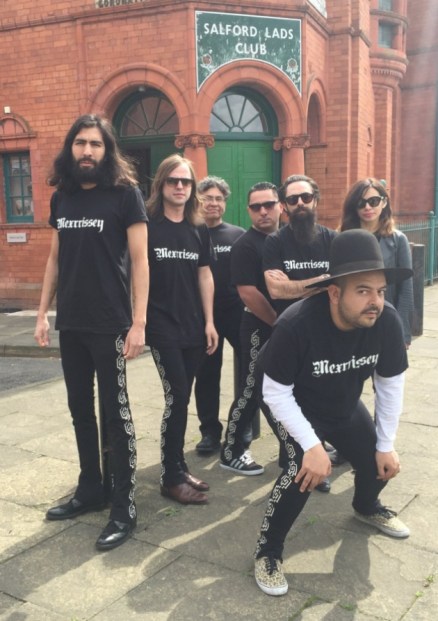
It’s unlikely that even at the height of their fame any of The Smiths (Johnny Marr, Andy Rourke or Mike Joyce) would have expected to one day become the subjects of a Mexican tribute album. The Manchester trio became huge global stars in the mid-1980s with their songs of maudlin woe and overliterate self-pity striking a chord with misunderstood teenagers all over the world. On the surface it’s hard to see how their fey northern English sensibility might appeal to millennial Mexicans, but a portly deadpan genius by the name of Camilo Lara (together with the bandmaster Sergio Mendoza) has drawn on the threesome’s long-standing cult status in his country and amongst LA chicanos to create an album which mixes trip-hop and dub reggae with happy/sad mariachi trumpets and the swooning strings and tragic sobs of ranchera, all of which overlays the erudite gloom of the original songs to wonderful (and often hilarious) effect. Working under the name ‘Mexrissey’ (although the origin of the group’s name is obscure, the album’s title, ‘No Manchester’, is a top-class chilango pun), he has given songs such as ‘Cada día es como domingo’ and ‘El último del gang a morir’ (I’ll leave you to work out which is which) a new twist which reveals new dimensions of sound and meaning.

Unlike most tribute bands, who just present a photocopy of the original work and look of their idols, Mexrissey’s histrionic performances (there is little Mexicans enjoy more than drinking, singing and crying all at the same time) are a outright celebration not just of the music of the three Manchester troubadors, but also of the joyousness of such cultural interaction. They reveal the songs of The Smiths to make more sense once uprooted from the petty, miserable, post-colonial melancholy that originally inspired them. While the young (was he ever thus?) Nigel Farage might once have felt some affinity with the line ‘England is mine, it owes me a living’ or stomped along to the song ‘Bengali in platforms’, he and his dwindling fanbase would surely feel affronted to hear it sung with such typically Mexican melodrama. Music is, after all, all about interacción and reciprocidad. It puts me in mind of one of the very best gigs I’ve ever seen: UK-born Cuban and Bangladeshi musicians bashing and tooting up a storm together in East London several years ago. For all the despondency of their source material, Mexrissey make music in much the same spirit. The three members of The Smiths must be encantados.

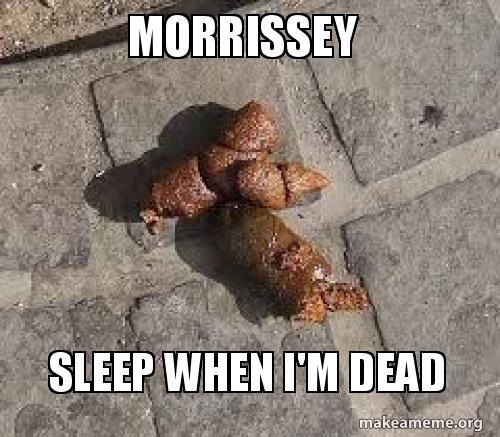
In unrelated music news, former-pop-star-turned-political-commentator (and, er, novellistMorrissey has announced that his new single will be a cover version of the Bon Jovi classic ‘Sleep when I’m dead’. In a break from tradition, the sleeve photo of the single will not be a portrait of one of his idols (cover stars have, in the past, included Myra Hindley and Benito Mussolini), but an image of the singer himself. You can see an exclusive photo of the single here.)

(Btw, Anne Marie Waters isn’t, as media reports are calling her, an ‘anti-Islam activist’. She’s a pro-death camp wannabe demagogue.)

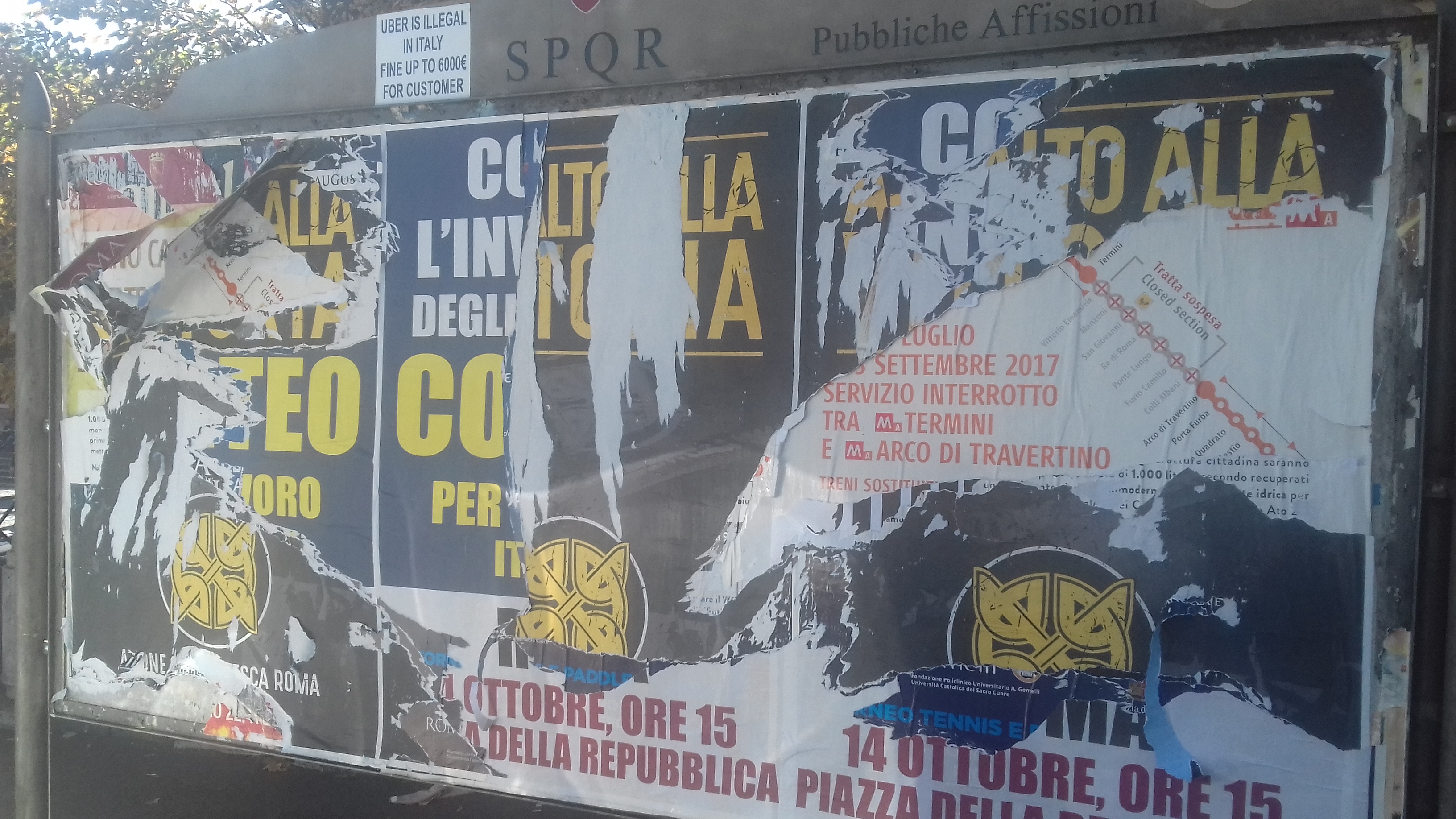
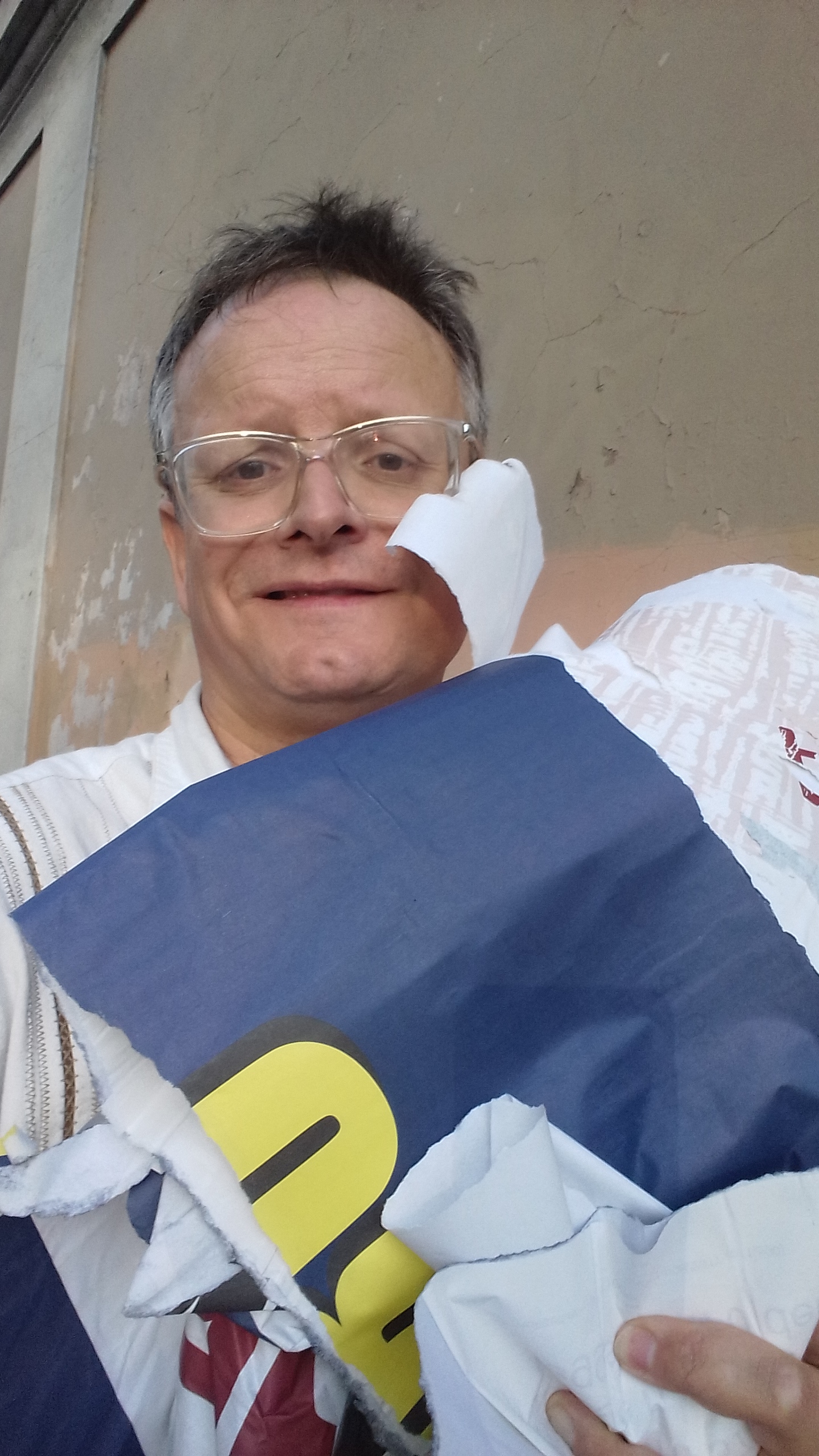
(Bbtw: actually, Morrissey and I have a lot in common: we both have immigrant parents, for one thing, and we’ve also both been immigrants ourselves in Rome. That’s where some of his far-right bedfellows – the ones he’s been spending all day in bed with, if you like – just put up some posters advertising a demonstration against the ‘immigrant invasion’. Sadly for them and for him, one of those invading immigrants (me) was on hand to rip them right down again 🙂

Thanks to my baby daughter, I’m used to handling other people’s shit. Time to find a bin, one fit for unrecyclable, undifferentiated filth.

Che pezzo di merda sei, Morrissey.)

How to speak better English than Donald Trump

https://youtu.be/9CvKu5y5I_o

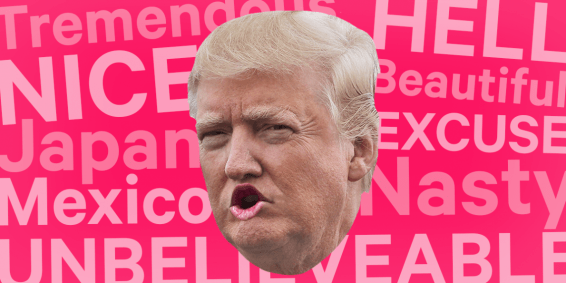
Would you (or your students) like to speak better English than a “native speaker”*? Wouldn’t it be great if your command of the language could be superior to that of the most powerful English speaker on the planet? Granted, Donald Trump is not noted for his articulacy. Possibly as a result of a degenerative brain disease, his fluency, coherence and range of vocabulary have deteriorated considerably over the years, as this 1992 interview demonstrates and this article explains in detail. He used to be able to follow a train of thought; now listening to him is more like witnessing a syntactical train crash. Half-ideas cascade chaotically like carriages piling up on top of one another, deafening explosions of total incoherence reverberate down the track while anyone with any regard for their personal safety runs away screaming.

The very latest indication that Trump’s mastery of standard (or, rather, sane) English is slipping out of his tiny grasp came yesterday, in the tweet he posted in the wake of yet another NRA-sponsored massacre**. His tweet offered his “warmest condolences” to the victims (and, obviously, no condemnation of the culprit – Trump hasn’t expressed any anger at the killings). Cue howls of ridicule across social media: why? Well, no one talks about “warm condolences”. You might offer warm congratulations to a friend who’s just found a job, or sincere or heartfelt condolences to someone who’s just lost a loved one. But the adjective ‘warm’ just doesn’t go with the noun ‘condolences’. Or, in other words, it doesn’t collocate.

How do I know this? Well, I’ve spoken (and, more importantly, read) English all my life (and taught it for nearly 20 years). I’ve never seen or heard that expression before. The fact that Trump thought that ‘warm’ was an appropriate word in response to a mass shooting may be some indication of how such events make him feel deep down. But it’s also an indication that he’s not in control of what he’s saying. Maybe the fact that he boasts of never reading books has something to do with it.

So, how can you acquire a better command of the language than him? Well, you could buy yourself a collocations dictionary, which will tell you which adjectives are commonly used with which nouns, which nouns collocate with which verbs, etc. (Better language coursebooks also put a great deal of emphasis on what many now call ‘word grammar’.) Or, you could use this website. As you can see, it has a really simple interface, and is free. I urge all my students to use it, and it has an immediate and dramatic impact on the quality of their writing in particular. A smattering of collocations can easily raise any IELTS score from 6.5 to 7.0, for example. I’m sure Trump would struggle to write a coherent 250-word essay; he probably hasn’t composed anything longer than 140 characters since he was cheating his way through college. (As for writing in a foreign language, he’s probably barely aware at this point that such things exist.) In the speaking test, he’s probably get a 4.0: links basic sentences but with repetitious use of simple connectives and some breakdowns in coherence; can only convey basic meaning on unfamiliar topics; errors are frequent and may lead to misunderstanding and/or nuclear war.

*This is in inverted commas as it’s a highly problematic term, its use punishable by stoning in some quarters.
**Trump is also sponsored by the NRA, to the tune of more than $30 million.

Las Vegas killer ‘not a lone wolf’, says wolf 

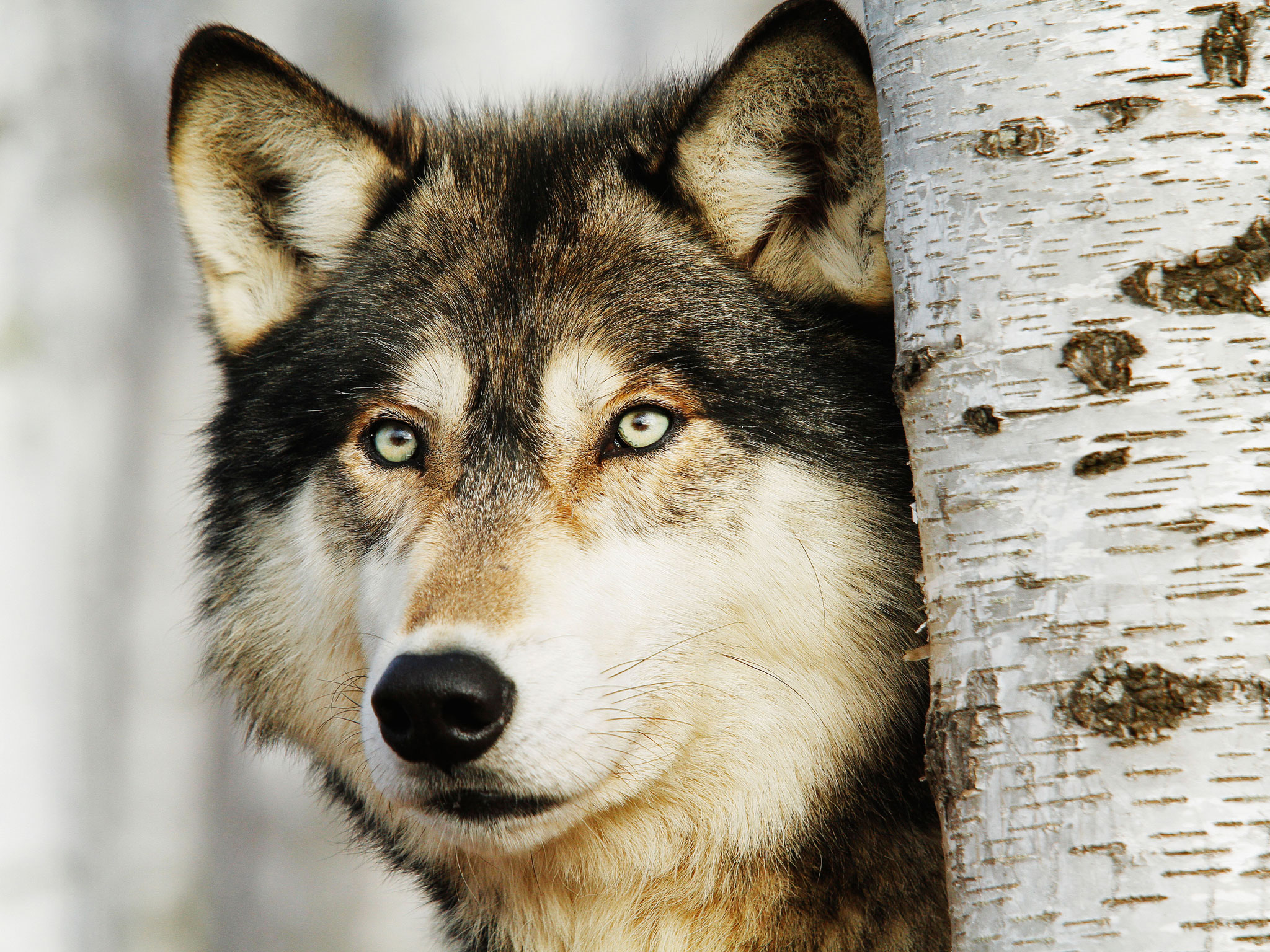
The leader of a pack of wolves has spoken out against ‘ubiquitous‘ media descriptions of the perpetrator of the biggest ever mass shooting by a sole gunman on American soil as a ‘lone wolf’.

Speaking at a hastily-arranged press conference, the wolf, who refused to give his full name, expressed his ‘grave disappointment’ that such a term was being used to smear his species.

“Although there have, as we all know, been cases – often more mythological than actual – of wolves attacking groups of humans, this outrage was not perpetrated by one of our kind.”

He went on to point out that wolves do not possess the type of anatomical equipment necessary for the use of automatic weapons, and are also not conditioned by the same instincts of brutal, senseless cruelty which seem to have lain behind the slaughter in Las Vegas.

“We would like to make it very clear that the culprit in this case, lone or otherwise, did not belong to our pack, indeed was not a member of our species. In fact, he appears to be yet another example of a far more deadly creature: the white male human, armed not only with the kind of weaponry which should clearly be unobtainable for the ordinary citizen, but also with a deep-seated resentment against others of his species, indeed a contempt for the very notion of belonging to a ‘pack’. We would suggest that inquiries into how such an individual was radicalised, inspired and propelled to commit murder on such a massive scale might focus less on scapegoating the lupine community, and more on the role of media outlets such as Fox News (no pun intended) and Infowars. And should your species wish in all sincerity to address this problem, then call your NRA by its proper name: a terrorist organisation, one far more bloodthirsty than anything to be found in the animal kingdom.”

The wolf then excused himself, asking only that his “deepest condolences” be passed on to the victims of the massacre.

Blow for Trump as golf stars ‘take a knee’

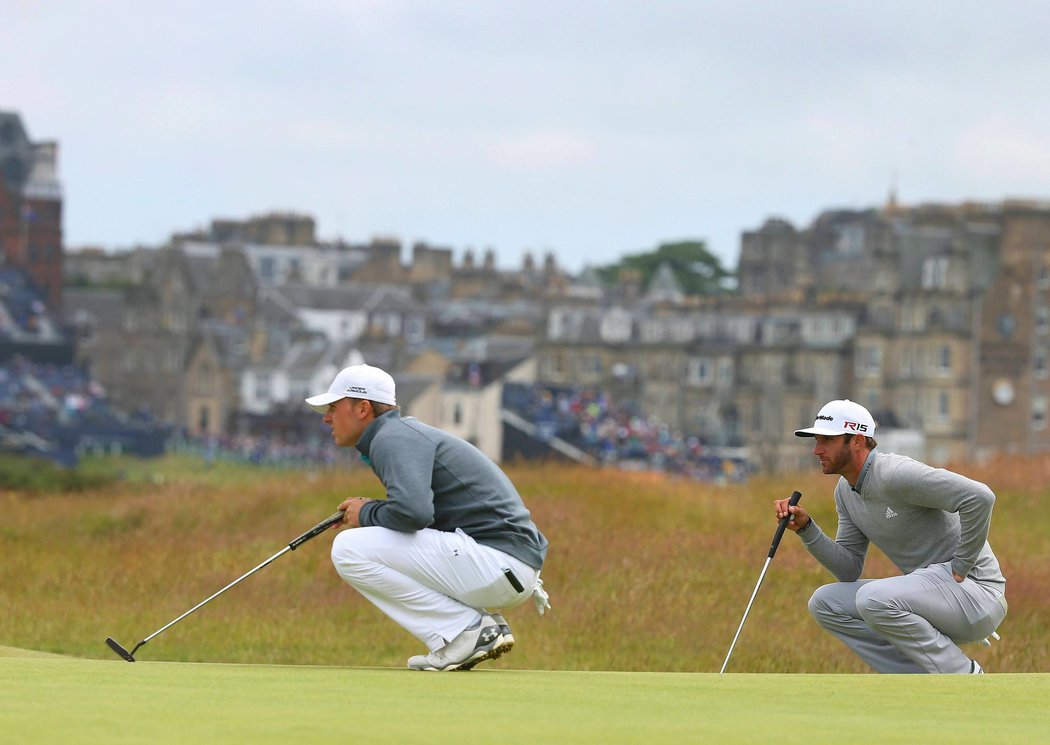
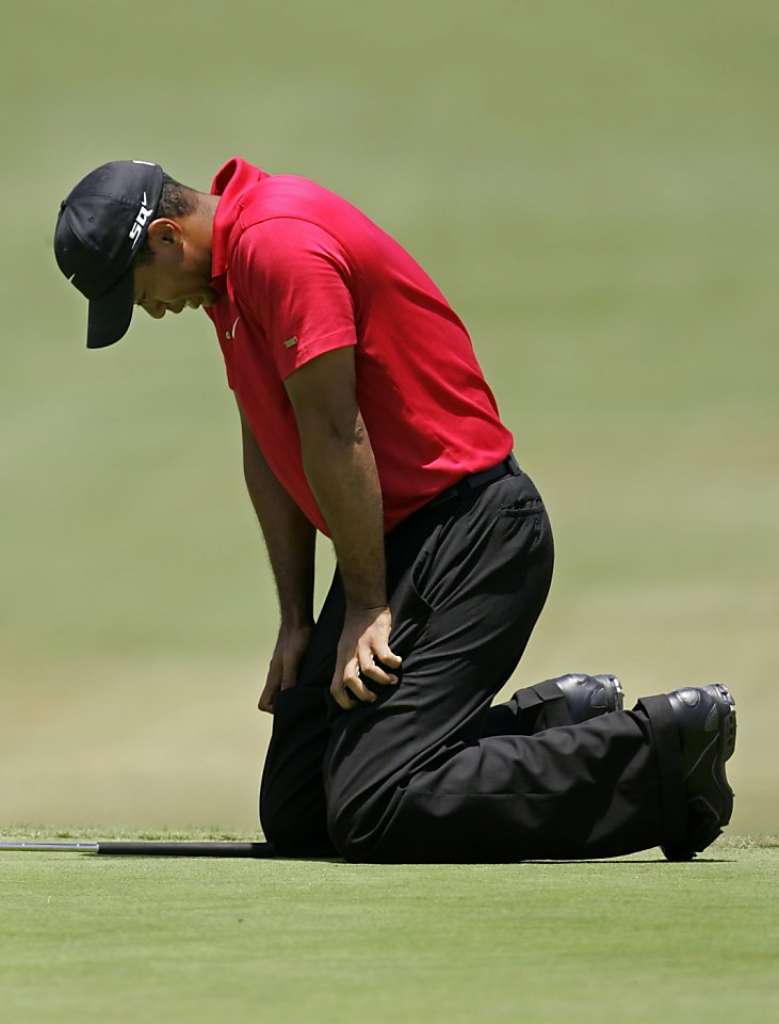
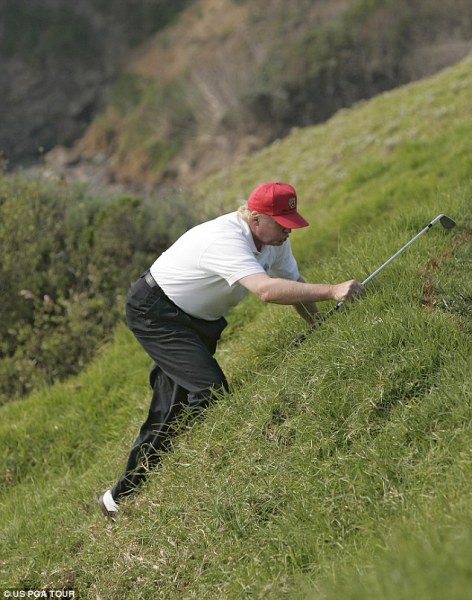
In an unforeseen development which will shake the world of sport to its core and cause further embarrassment to President Donald Trump, a number of the world’s leading golfers have chosen to demonstrate their solidarity with black victims of police violence by ‘taking a knee’. The golfers’ gesture will surprise those who saw the sport as one which would be resistant to political pressure. It will be politically disappointing for Mr Trump, as he is, like his North Korean counterpart Kim Jong Un, a major golf enthusiast, to the point where he has so far spent over two months of his term on the course.

dustin-johnson

The first golfer to join the protests was current world number 1 Dustin Johnson, who remarked “I cannot stand by while people of colour are treated with contempt by law enforcement officers and denied justice. It is quite frankly unconscionable”.

CROUSE1-master1050

Johnson’s playing partner, three-time Major champion Jordan Spieth, was quick to join in. He said: “The response this week by certain sections of white America to the mere act of black sportspeople peacefully protesting what they rightly see as race-based injustice has been extremely unedifying. As a leading golfer it behoves me to stand up for my fellow Americans.”

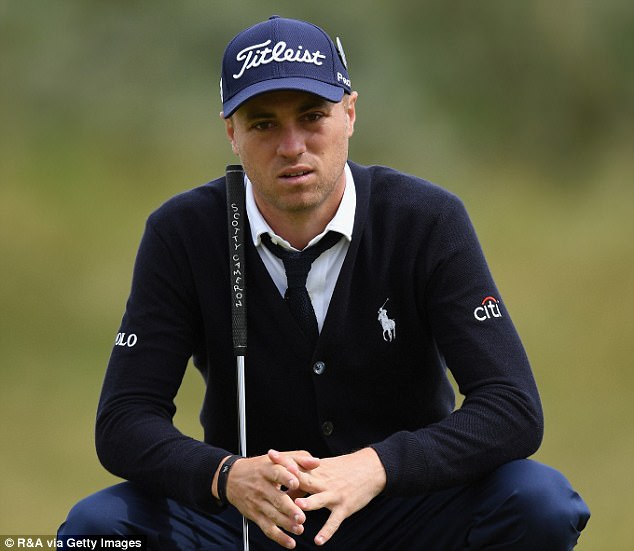
Justin Thomas, winner of four PGA tour events, took the knee during the President’s Cup golf tournament in New Jersey. He said that he was “proud to take part.”

1407351910634_wps_8_steve_stricker_plays_a_sh

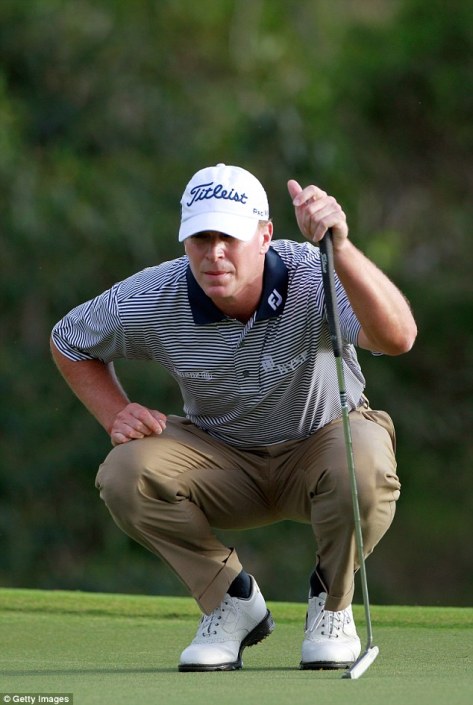
He was joined by the winner of that competition, Steve Stricker, who told a subsequent press conference organised by Black Lives Matter that “As a human being, an American and a public figure, I had no hesitation in making this gesture. The rebirth of white supremacy, especially since this current administration took power, is both terrifying and deeply, deeply shameful.”

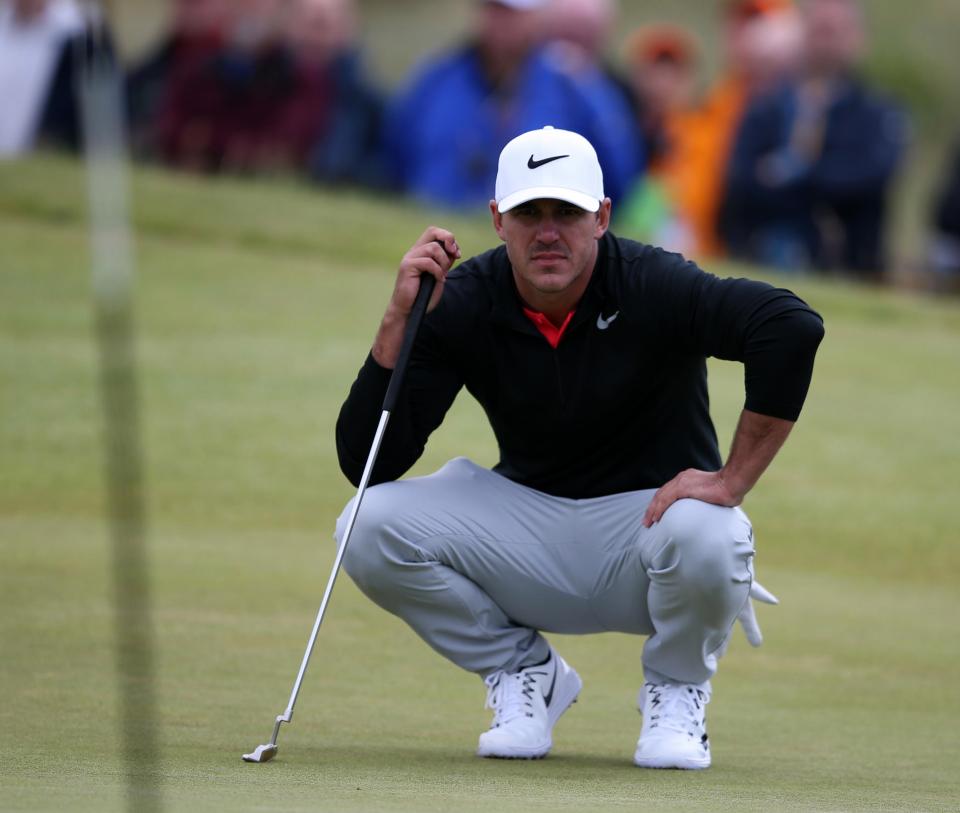
2017 Open Champion Brooks Koepka looked sombre as he knelt on the immaculate putting lawn at Florida’s Olympia Fields. He made no comment to the press, but did give a black power salute to the assembled crowd after completing the 18th hole.

Veteran golfer Matt Kuchar, who has won 13 titles throughout his lengthy career, said it was essential for someone of his stature to show an example to younger players, especially people of colour who aspire to play golf.

PGA tour star Rickie Fowler said that “as a Christian” he “would have been embarrassed if he hadn’t” taken a knee during the British Master’s event at Close House.

Tiger Woods also took part, subsequently stating via Twitter “#fuckDonaldTrump”.

A surprise participant in the protests was President Donald Trump himself, who commented “Racism is and always has been endemic to the American project, and my presidency is vivid living proof of that. Our country is literally unimaginable without plundered labour shackled to plundered land, without the organising principle of whiteness as citizenship, without the culture crafted by the plundered, and without that culture itself being plundered. This has to end. I am a disgrace”.

A prediction: Trump will tweet in favour of Catalan independence 

Maybe if Scotland had opted for independence in 2014 the international context would now be different. Maybe the Brexit vote wouldn’t have happened and Trump would have lost. In such a scenario, the prospect of Catalan independence would have a very different meaning.

Catalonia is a country with a distinct culture, its own political traditions, a (partially recent) history of brutal oppression by the Spanish state and (most importantly) a consequent desire to be independent. The fact that it isn’t already is a pure accident of history. Nation states come and go; a country is, someone once, a dialect with a flag. As it happens, Catalonia has a very attractive flag, one that makes it look like its national anthem should be composed by Manu Chao. Partly as a result, Barcelona is generally seen as a a left-wing city – it has a radical mayor (who, as it happens, opposes independence). However, especially outside Barcelona, Catalan nationalism is not necessarily a progressive force. The Catalan left has nontheless partly presented this referendum as a vote against austerity and neo-francoist Spanish nationalism. (The spectacle of violent repression has given credence to the latter claim.) Nevertheless, a huge vote for independence will not be interpreted in such terms internationally. Nationalism, by definition, always involves a narrow set of concerns. The fact that deeply reactionary forces outside Spain will celebrate the victory concerns me more than the impact on dynamics inside the Spanish state. In the country where I live, Italy, the result will encourage the far-right to renew their campaign for more autonomy for the rich regions of the north, who have long complained about the burden of having to sustain the filthy peasants of southern Italy. There have been echoes of this kind of rhetoric in the Catalan case.

Hence the support of the global far-right for independence. The Italian fascist leader Matteo Salvini and the British far-right party Ukip have expressed support for Catalan independence; should the vote be tallied and independence be approved, their allies such as Le Pen and the AFD will present it as another Brexit, a vote against the European status quo. The Kremlin’s propaganda outlet Russia Today has made no secret of its affiliation, some of Donald Trump’s few remaining non-bot social media enthusiasts have expressed principled, albeit somewhat selective, concerns about political violence, and Julian Assange has been busy spreading disinformation about events via Twitter. Then there’s Trump himself. As is well-known, Trump loves to be on the winning side. Regardless of his previous stated support for Spanish union, he, seeing his political allies celebrating, will be desperate to join in. Trump is nothing if not inconsistent: witness how quick he was to disavow his support for ‘his’ candidate in the Alabama primary this week. Of course, he’s far too stupid to understand either the ins and outs of the plebiscite’s legality or the consequences of explicit US support for an unofficial referendum over the break-up of a major European power. He won’t reflect on how his actions will affect countries from Turkey to Italy to the US itself (how much does Puerto Rico gain from its status?). Trump has no consistency, no ideology, no loyalty and no strategy, and is in endless need of new distractions. That’s why I believe that in the aftermath of the vote and the near-universal revulsion that the violence has provoked, he will, with no regard for the implications, in between bouts of attacking hurricane victims, berating black sports people and trying as hard as his tiny fingers will allow him to provoke an actual nuclear war, tweet in support of independence for Catalonia. If he does, I hope the Catalan independence movement tells him very firmly ves-t’en a prendre pel cul. That would be a great symbolic statement of the kind of country they would like to build.