Angkor Brexit

At the end of June 2016 I flew from Bangkok to Siem Reap in Cambodia to visit the nearby temples of Angkor Wat. My wife was away on a study trip and I fancied a bit of a holiday. However my mood had been somewhat curdled by the result of the Brexit referendum a few days earlier. This is the deeply embittered photo essay which resulted. I didn’t have a blog at the time so am posting it here now for posterity. រីករាយជាមួយ.

come-cmabodia
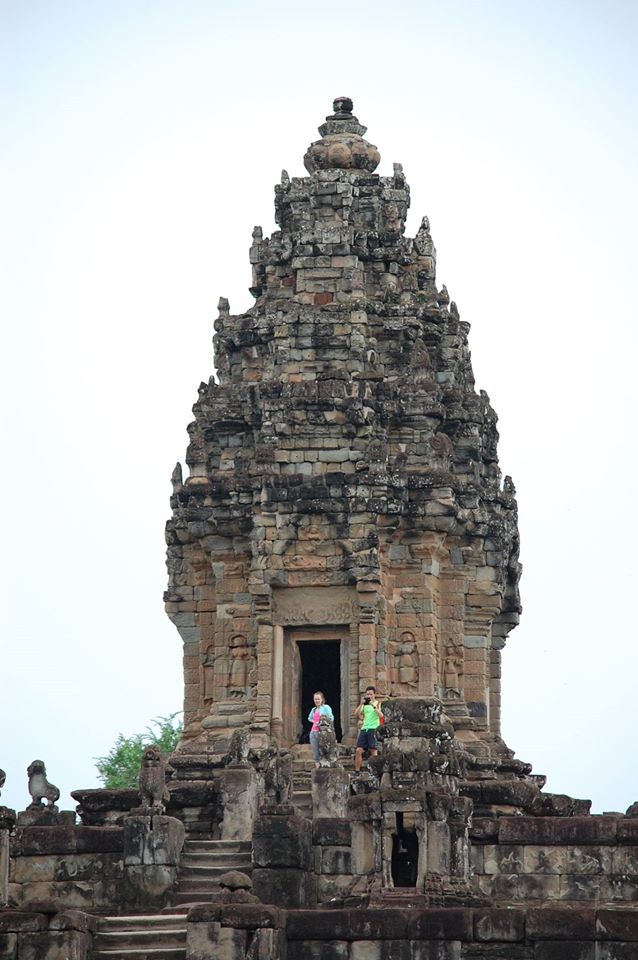
I’ve come to Cambodia to visit Siem Reap (pronounced with a sort of nasal burp at the end) and Angkor Wat.
cpp
This is a ubiquitous banner promoting the ruling party of Cambodia, who are a bit like the UK’s Conservative Party, at least in that they’re apparently currently facing a massive political crisis. It’s odd to see this banner everywhere a few weeks after having visited Cuba, because in theory Cambodia is a more-than-one-party state, but in practice the opposition gets kicked around a great deal by the government and its media. Unlike the UK then, although I don’t know if there is any equivalent to Blairites in the Cambodian opposition party, and I don’t know the Cambodian phrase for asking about this.
anl
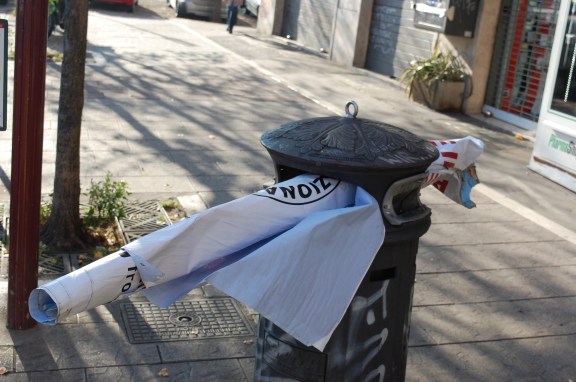
This puts me in mind of the well-known Anti-Nazi League sticker with someone depositing a swastika in the bin. I was hoping to escape from thoughts of UK politics but so far it isn’t going very well. Actually you see quite a few other-way-round swastikas in Cambodia and Thailand, emblazoned on t-shirts and so on. I always feel a bit put out by this but maybe there are some symbols that we have in our culture that remind Cambodians of the Khmer Rouge. As they say in Cambodian, “អ្នកមិនដែលដឹង”.
names
This is a list of all the people in Sunderland who voted Labour in 2015 but chose to vote Leave in the referendum. It’s in Cambodian so no-one can track them down on Twitter and ask them what the fuck they were thinking.
nissan
“If you vote leave…your husband will probably lose his job at Nissan. It’ll close down. And the Tories…if Johnson and Gove take over they’re gonna have no mercy whatsoever on the NHS. None.”
hr-camb
This is what life was like in Brussels before last Thursday, according to Brexit voters.
bloodyeu
This looks immaculate, but there was dog poo, actual dog poo, on the floor, and obviously I’d taken my sandals (crocs) off, and I nearly stood on it! Bloody EU.
goldfish
There’s a link being passed around right now among(st) right-wing idiots about a EUROPEAN SUPERSTATE! It seems to be particularly provoking rage among(st) those who are too dim to remember that they actually voted last week. I’m not into IQ tests but I think a lot of the people who voted Leave would probably score well below your average painted statue.
goneoffcorbyn
I’ve kind of gone off Corbyn.
rally
This is a photo from the pro-Corbyn rally that took place a couple of days ago in Parliament Square, a rally that all the main news channels, but particularly the BBC, chose to ignore, the bastards.
fan
I apologise for the previous caption, it was unduly cynical of me. Somewhere here I will explain what I think of the current Labour leadership debacle. I think I might put it next to a photo of a monkey eating a banana.
cope
Looking at this kinda reminds me that Julian Cope has a fantastic (and apparently solidly-researched) theory about how places like Angkor Wat, Stonehenge etc all got built (and thus, presumably, how a lot of historic decisions came to be made). I think a lot of the voters on June 23rd may have simply been drunk.
kids
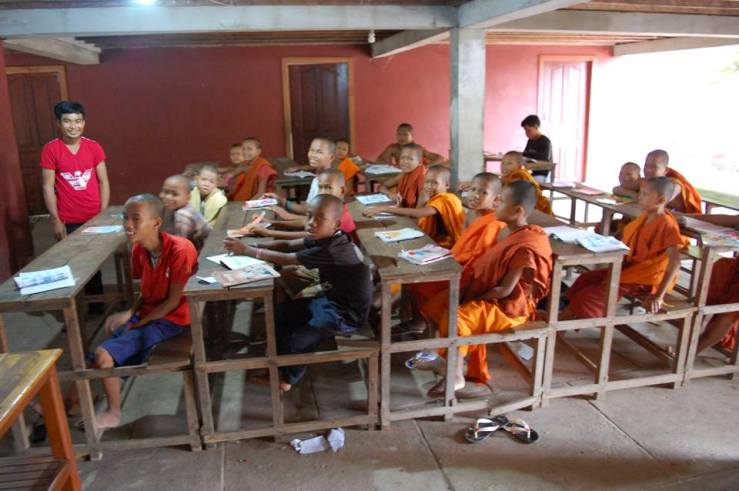
When I arrive (unplanned) the class happen to be drilling the phrase “he is ugly”. I teach them to say “We’ve all had enough of experts” in perfect estuary accents.
samet
Hooray for Mr Samet! Who has never heard of Brexit and thinks the UK must be a great place to live.
schools
Aren’t all schools…oh never mind.
cosmos
The complex at Angkor Wat is a representation of the cosmos in miniature. It’s not actually particularly miniature. That’s not meant as a criticism.
walking
This is unusual – a Downfall video which actually uses the exact words of those being parodied.
decisions
Oh Jesus it’s just started raining torrentially again. The rain is actually very welcome, as this part of Cambodia has just been through a massive drought, there are even emergency appeal collecting jars in local bars, where foreigners (like me, for example) drink beer made with local Cambodian water. The jars are for collecting money, not water.
devil
Which reminds me that if there is one single thing that damns this referendum to hell for all eternity it’s the fact that neither side at any point made any reference to the changing climate and what we’re going to do about it. The Leave side didn’t because it was led by three climate liars (Johnson, Farage and Gove) and the Remain side didn’t because it was shit. At least Caroline Lucas exists.
music
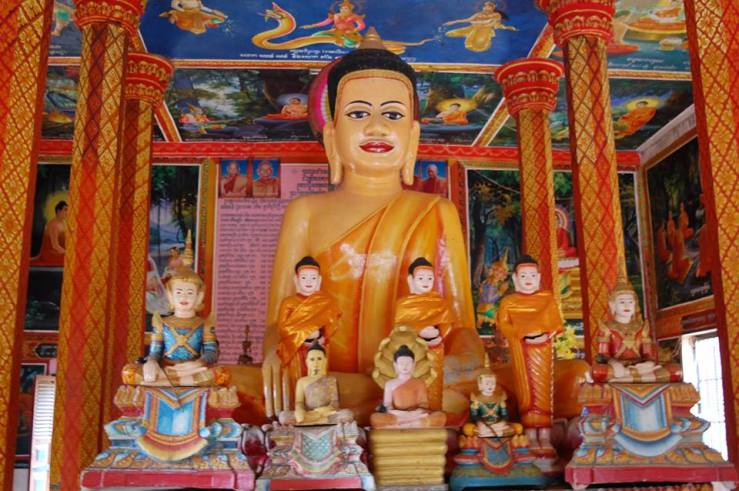
This was actually even more peaceful than it looks, because there was some Cambodian classical music playing all around the temple, it was basically like this. Which calmed me down a bit as I’d been spending the last few days mostly listening to this.
jepsen
Speaking of music, although it’s not clear from the photo, those colourful lights were actually flashing and all the statues were bumping their hips to something that sounded a lot like Carly Rae Jepsen.
temples
By the way, if you go to Angkor Wat and you don’t see any of these, you’re not in Angkor Wat. Tell your tuktuk driver you want to go to THE TEMPLES.
enlighten
#Brexit is the opposite of enlightenment.
building
Some of the temple things are still being built after almost 1,200 years. Probably some more bloody corrupt EU shenanigans.
dog
I think at this point I might go for a drink.
article50
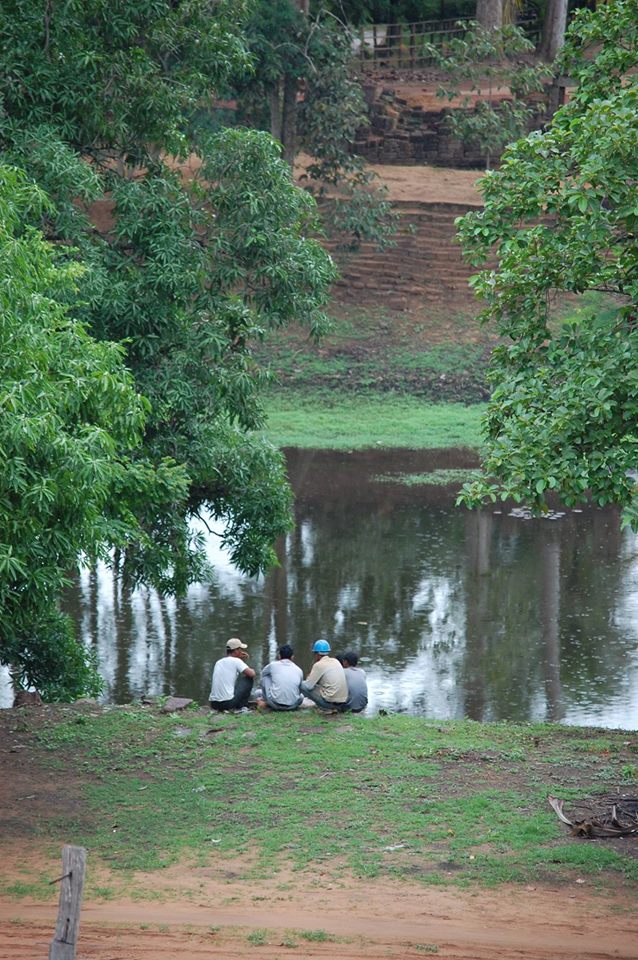
Local agricultural workers discussing Article 50 in some detail.
ukip
This pricing policy may have been determined by the Cambodian equivalent of #Ukip.
sunderland
He’s been this way ever since the Sunderland result was announced.
madcow
Some wag on Twitter posted two maps side by side. The first showed the areas which mostly voted for Brexit, the second the areas where Mad Cow disease had a major impact in 2000. They matched up pretty much perfectly.
leksonal
Still though, at least our language still dominates the world https://www.google.com.kh/search?q=leksonal&oq=leksonal&aqs=chrome..69i57.6036j0j7&sourceid=chrome&ie=UTF-8.
peasant
I don’t know what this thing is but I suspect that if you bought one for a Cambodian peasant for his birthday he’d be so overjoyed he’d happily vote whichever way you told him to.
tree-hun-sen
One of these two men is the Prime Minister Hun Sen, the other is almost certainly the bloke who with great ceremony ordered the planting of the tree you can see to the left of the photo.
cows
There is more meaningful debate going on between these two cows about what they’re going to have for dinner than took place between the two sides during the entire referendum farce.
ballott
Can’t look at that bloke pushing that trolley/cart thing without thinking it might be a ballot box.
result-financial
Although I’m working hard and having some success at immersing myself in the here and now, unfortunately this puts me in mind of the recent referendum in the UK over membership of the European Union, the result of which had an impact on global financial markets.
drink
Another result of the recent referendum in the UK over membership of the European Union is that I briefly contemplate buying and drinking one of these.
landscape
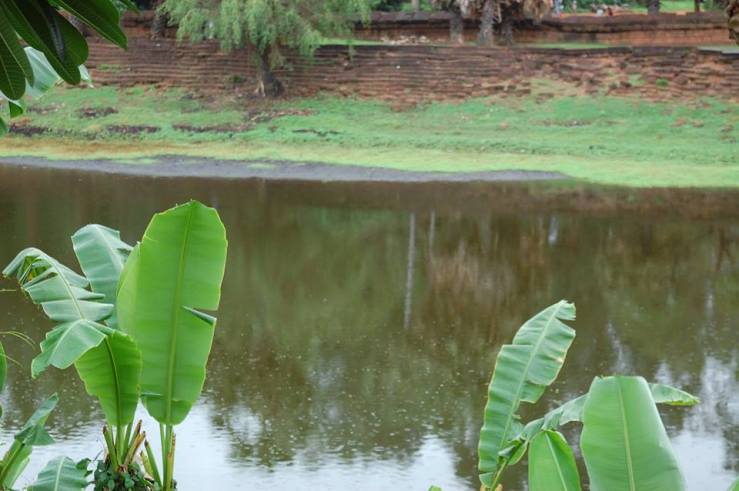
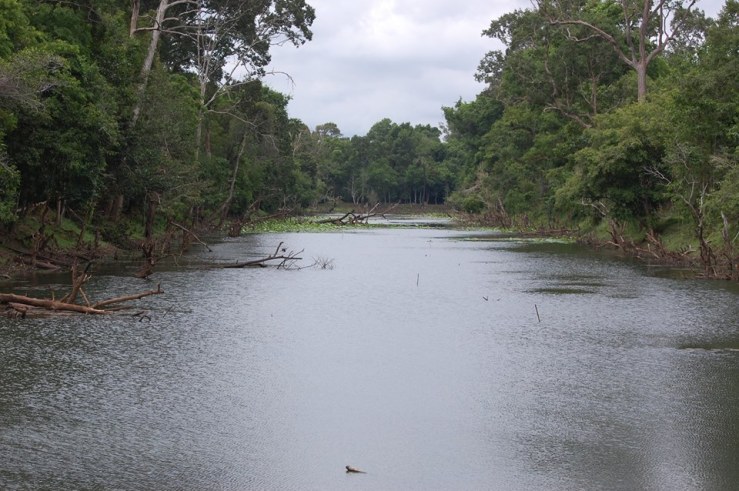
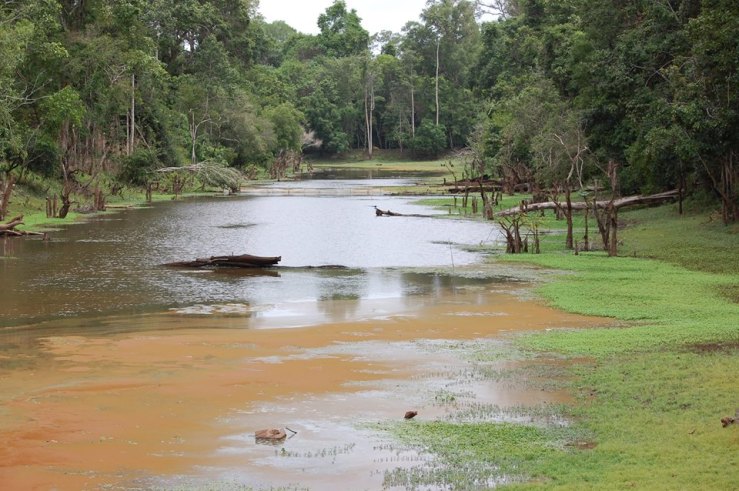
Post-Brexit landscape.
birthday
This looks a bit like a wedding cake. Tomorrow it’s my birthday. I hope they make me a cake, although I don’t know who they might be.
fellow
These people look like they might be British. Maybe I could invite them for a birthday drink. Then again perhaps not. Over these few days I speak to lots of Europeans and Americans, but find I have no appetite for making conversation with my ‘fellow Brits’. Alternatively, they could be German. They do appear to be marching in step. Actually here I was just playing with the focus.
split
More than one person I have spoken to online in the last couple of days was (shouldn’t that be were?!) of the opinion that a split inside the Labour Party is now inevitable.
benn
References to goings-on in British politics abound.
blairites
The three branches on the left seem to be making a bid for the other side. Maybe they’re ‘Blairites’.
zzx
One aspect of the situation with Corbyn is that there are so many things we know now about how people make voting decisions, insights gained from cognitive science, that effective political campaigns take advantage of and ineffective ones don’t. In the (OH GOD NO) referendum Labour had nothing with which it could respond to “take back control”, a metaphor which reached right into people’s deepest aspirations and crushed all rational argument. In the final debate last Wednesday Johnson and the others used that phrase 114 times. That’s why, much to what we now know to be Johnson’s absolute horror, they won. I don’t think there’s anyone in the Corbyn leadership who has a notion of that. They think it’s all about putting a more reasoned argument. I know all this sounds horribly Blairite, but if anyone fancies a who-hates-the-Blairites-more competition I’m game.
kahnemann
Two things which are an absolute must-read for anyone vaguely interested in the psychology of voting are Thinking Fast, Thinking Slow by Daniel Kahnemann and pretty much anything by George Lakoff. Actually those are both quite entertaining names for psychologists to have. Thinking Fast and Slow is a particularly important book to read to understand why we can’t bring ourselves to think about climate change.
sturgeon
Around this point I get talking to a German couple who are so level-headed and sensible in their assessment of Brexit and the refugee situation I do actually start to feel a little teary. “Na ja, naturlich wir können hilfen. Wir müssen hilfen!”. I tell them I’m thinking of doing a kind of photo essay where I combine photos of Angkor Wat with my thoughts and feelings about Brexit and they seem to think it’s a great idea. Shortly after this we switch into English as I am starting to worry that they think I am slightly mad.
syrians
I point out to my new continental friends that already, four days after the vote, most British people I know and come across online are talking about other countries they could go and live in. The Syrians have had five years of civil war and after less than a week of mild political instability we all want to take refuge elsewhere.
germans2
Me and the Germans are so engrossed in talking about politics that we manage to get horribly lost . We soon disentangle ourselves from the labyrinth using our collaborative skills and European ingenuity.
crack
I think this is my favourite photo I’ve ever taken. It shows that despite the disappointment and despair occasioned by the Brexit vote, there are always cracks where hope can enter. Unfortunately this one is in Cambodia, nowhere near the UK, which is f*cked.
bananas1
Primates actually peel bananas in a different way from we humans. When I say “we humans” I’m not including anyone who voted to leave the European Union.
experts
You might even say that monkeys are “experts” at eating bananas.
brand
According to something Russell Brand said, chimps (I know these are not chimps) never live in troops of more than 85 members. Is that the answer to our predicament of how to live together? I’d imagine inbreeding would be a problem. If the UK spurns all economic and social intercourse with what we may now as well go back to referring to as the continent, within a few years we’ll all start to look like our intensely horsey Royal Family, who as is well-known only maintained the fecundity of their own gene pool by irrigating it with European blood (not actually blood).
buddhist
Buddhist monkey contemplating eternal suffering caused by imminent ill-advised EU withdrawal.
ancestral
Ancestral wisdom of a greater species: abandoning one’s troupe is a form of suicide.
tongues
If only those people who used the Brexit vote as a gesture of anger against the political establishment had restricted themselves to sticking their tongues out of their mouths like this monkey. That woulda really stuck it to the man without the need to sabotage our future by destroying relations with our neighbours.
nose
“My God’s got no nose…”
victoria
Not amused.
mum
I was very surprised to see your mum there.
composition
“Nice composition, Richard”.
passports
The queue to apply for German passports stretched from Chesham Place to just outside Siem Reap.
tree-decline
The process of industrial decline soon accelerated.
script
The first script here is Khmer (Cambodian), the second Thai, and the third…some shit tribe, a civilisation that voted itself out of existence many eons ago and whose “language” nobody now remembers or speaks, no-one of any importance anyway.
germans
The final ruins of a collapsed civilisation, one which once conquered vast areas of the globe but now barely survives on income from foreign tourists. An economic backwater and geopolitical nonentity. Some people will blame Nicola Sturgeon, of course.
americans-brexit
The Americans who took this picture had never heard of Article 50.
voting-three
“How am I voting? Well, stay, obviously. Remain. I may be only three days old (and a monkey) but I’m not a f*cking idiot!”
350
“350 million pounds does sound like an awful lot of money”.
edl
The English Defence League took to the streets in order to physically obstruct the invasion of foreign marine life.
six-days
Six days too late. Mate.
cake
Somebody did make me a cake.

Madrid: ¡Hala Madrid!

3469397237_26d975ab27It sometimes feels as though I have cuentas pendientes (accounts to settle) with Madrid, but as it happens I left with a saldo positivo (positive balance) in everything other than pecuniary terms. When I came to live here in September 2005 it was a realisation of a long-standing ambition, partly in that I’d wanted to come to Spain in 1999 but thanks to my peculiar psychological make-up I ended up living in Portugal for five years instead, happily at first and then increasingly wishing it was more like Spain. There then followed a one-year hiatus in China (I’d wanted to go to Japan, but qué vas a hacer) reading Gárcia Márquez and feeling impatient for my life to restart. I had picked up a copy of Cien Años de Soledad in San Sebastián in 2001 and finally finished it three and half years later on the beach in Thailand. It too so very long because my edition didn’t have an árbol genealógico (family tree) and given that several generations of characters all have the exact same names there are only so many times you can read the sentence ‘por aquel entonces Rebeca Buendía tenía doce años‘ without seriously fearing for your sanity*.

My hard work on the language stood me in good stead**. I felt extremely content in Madrid and I found it easier than anywhere else I’ve ever lived to make friends and find 414y9dbpjml-_sx311_bo1204203200_people to do fun things with. I’d always identified with the unholiness, the foul-
mouthedness of the Spanish. It’s no accident that their swearwords are designed to shock God and the Church. I had gotten hold of a handy little volume called
Pardon your Spanish, one of those books which aspire to teach you bad language, and it actually did an excellent job with some superbly phrased insults and some masterfully-translated curses***. I had also been an avid reader of Jueves, the Spanish equivalent of Viz, as well as a long-standing fan of the exuberant melodramas of Pedro Almodóvar. I also loved the fact that they say coño on the news and I really enjoyed trying to make out what gratuitously offensive thing Torrente was saying. All this may sound puerile**** but actually I found the lack of prissiness refreshing after the more, shall we say, tempered temperament of the Portuguese and the fact that in China I hadn’t been able to understand what people were saying (or, so very often, shouting). It was also accompanied by shades of hedonism around alcohol and drugs.

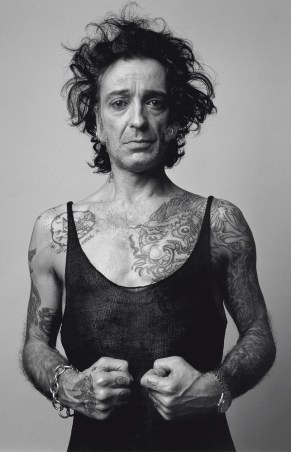
Certainly the Spain and the Spanish I knew were part of the generation influenced by la Movida, who had grown up after the clerico-fascist regime had been rapidly transitioned alberto-garcia-alix-homme-d-images-devenu-imagem177506away from. The proletarian decadence of the 70s and 80s was immortalised in the stunning photos of Alberto García-Alix. The confidence and upfrontness of some Spanish people can grate, like when they are presented with a Colombian and immediately blurt out the one question guaranteed to make them explode with rage*****, or when they think it gleefully original to make slanty eyes gestures at Chinese people. Still, I’ve always quite liked the Spanish insouciance in relation to Portugal. ¿¡Ir a Portugal? Para qué?! Spanish people are apt to think whenever the prospect of visiting their neighbours is mooted, para comprar toallas?! – to buy lace?! From the other side of the border the refrain is ‘de Espanha, nem bons ventos, nem bons casamentos’ – Spain brings neither good winds nor good marriages. Nevertheless there is a long-standing (but not now prominent) movement for Iberismo, the union of the two countries. One notable exponent was the Portuguese novelist José Saramago, who in response to a slight from his own country’s government married a Spanish woman and went to live in Lanzarote. Not that you’d know it from his accent, which remained resolutely and hilariously Lusophone, with no concession made whatsoever to the sounds of Spanish.

Curiously, however, whereas in other countries my desire has meant I’ve wanted to see myself and be accepted as one of Them, I don’t think I felt like that in Madrid. I certainly KONICA MINOLTA DIGITAL CAMERAwanted to fit in but I felt that my foreignness was never an issue. While in Portugal I had always felt a bit like a guest or a novelty, in Madrid strangers happily chatted away to me at bus stops. I was just a fellow human being who happened to have a funny accent and an occasional habit of saying things that didn’t make much sense. I enjoyed telling people I lived in Casa de Campo, a huge park not far from the centre famous for prostitution; Spanish people find that kind of thing titillating, and in any case it was partly true as that was what the Metro stop was called. I have some deathless memories of nights out in Malasaña and La Latina til 6am and tapas bars which turned into shoutalong midnight discos. Ultimately such a schedule was incompatible with the very silly earlybird job I was doing at the time, for which I was paid twice-yearly in actual cacahuetes. Then a Relationship suddenly took me back to London after only four months in Madrid and twelve and half years of what was starting to feel like self-imposed exile from what I was reluctantly beginning to accept was my own country.

Now we’re back for one day and it all feels readily familiar. I remember immediately how and why I liked living here so much. We visit shortly before Christmas 2015 on the way back from Mexico City to Rome. There’s a lot of movement in the centre, and that buzzy chattiness I always used to appreciate. I do notice some changes in the nine years since I
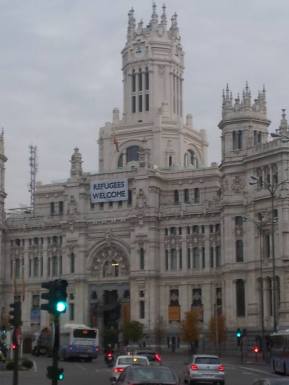
left. After all, in the meantime we’d had a massive global economic crisis, 15M, the rise and possible fall of Podemos, and more recently major terrorist attacks in other European 12308364_10153831308858436_6995415496932279548_ncapitals. There are police with guns but we’re used to that because, as I enjoy telling everyone we talk to, We Live In Mexico Now. I don’t feel threatened by the military presence although it strikes me that if I was Middle Eastern maybe I would. There’s a visible increase in the number of homeless people and I notice that the station in Plaza del Sol is now ‘sponsored by Vodafone’. There are more adverts in English, so often the language of exclusivity and exclusion, so it’s encouraging to see a banner hung from the municipal palace reading (in English) ‘Refugees Welcome’. It’s also freezing cold so we seek asylum in a nearby
bodegón and gorge on familiar favourites like albóndigas and patatas both brava and alioli. For old times’ sake I have a Ponche Caballero, which comes in a silver bottle, is hideously sweet and has since I first came across it on my first visit to Spain in 1988 always seemed like the world’s naffest drink. Immersed as I still am in el mundo hispanohablante, I find it difficult to speak Italian with our friends Michele, Ivana and Eva, who in any case is only one month old so isn’t yet very conversational******, so we stick with Spanish, which I speak differently now because, as I may have mentioned, We Live In Mexico Now, and also because I’m not and never will be Spanish, but that doesn’t stop me from feeling like I’m very much at home.


* On the very last page it turns out that that was kind of the point of the book.

** I also read the serialisation in La Jornada of the novel that Paco Ignacio Taibo II wrote with Subcomandante Marcos and picked up lots of Mexican slang, all of which would come in handy ten or so years later.

*** My fave bit of filthy vocab: zorrero, a burglar who breaks into your house and shits on the floor.

**** The reader may feel the need to nod at this point. In my defence I would like to point out that I was only, er, 14 years old at the time.

***** I’ve had several Colombian students who had the wherewithal and dignity to point out that while their country may produce cocaine, Spain is the number one country for consuming it.

****** She’s growing up both Italian and Spanish, so that will change.

dsc_0647


Rome: The Streets Where We Live

sin-tituloI was tickled to see that someone on Tripadvisor had described the restaurant immediately underneath our flat as being in an ‘absolutely insignificant quarter of the city’. The area may not have a name as such (we have to describe it using a series of awkward coordinates) or any singular identity but it is of significance to us for two reasons: one, there’s the fact that we live here, and two, that it embodies certain tendencies and pressures both global and local*.

Take, for instance, that restaurant. It’s become quite popular of late partly by virtue of its very good rating on Tripadvisor (and/or the other way round). It also attracts quite a few foreigners, a lot of whom may well be staying locally. There’s now something which calls itself a ‘guesthouse’ in our building, but no hotels nearby. I attribute the presence of those tourists to (and I presume the guesthouse is part of) Airbnb. Will Self once remarked that most inhabitants of London don’t actually live in London itself, but rather on the map of underground stations. In a similar way, nowadays most tourists visit a Google Maps version of a city: sleeping in Airbnb homestays, eating in Tripadvisor restaurants, getting driven round by Uber**. A recent report on the effects of Airbnb in Amsterdam mentioned established local businesses getting pushed out by new concerns catering to tourists such as bike rental shops, so it’s not by chance that one has just opened up right across the street from us. To be fair, those tourists do need some way of getting around, given that Uber barely exists in Italy and the public transport system appena funziona. Finding a normal taxi in Rome often feels like getting your hands on something to smoke in an unfamiliar city: you have to hang about in particular places and hope you get lucky, or try to get hold of the number of someone who might be able to supply you with one. At least our area is more or less within walking distance of Trastevere, a much more Woody Allen part of town altogether.

In terms of local changes, it’s noteworthy that the restaurant itself used to (until about two years ago) be a Jewish one. Although I don’t know its history, there’s certainly a community centred on our street, with two butchers and a bakery on the other side of the road. It reminds me of the few weeks in the summer that I spent staying near to the huge Orthodox Jewish colony of Stamford Hill. It struck me as curious that the Orthodox people and the other locals rarely acknowledged each other. Those few interactions I had – looking for directions, asking to get past people on the bus – felt kind of encouraging. Although rumours abound in London about what the Orthodox community gets up to behind closed doors, peaceful coexistence is based on letting other people get on with their lives rather than bashing down doors in case someone’s doing something you could enjoy getting annoyed about. Racism itself is becoming conditioned by the intrusive habits and prurient morés of online life. It seems so easy to resolve conflicts and differences on the internet: you just call people names and it instantly feels like the world’s a better place. In offline reality respectful distance is the basis of civilised accord.

It sometimes seems as if anti-semitism is bubbling away, just beneath the surface, everywhere you look. Just beneath our apartment is a shop run by a guy from Bangladesh. This also feels like home from home; I used to live in a bit of Bangladesh, in Whitechapel to be exact. However, while almost all Bangladeshis in East London come from a tiny part of the country called Sylhet, most here seem to be from Dhaka. The proprietor of the shop works extremely long hours, and is tired of it. He wants to go to London, and he wants to know if there is any way I can help him. He got 5.5 in IELTS ten years ago and he used to work as a pizzaiolo. It’s hard to see how he might get a visa. After ten years here he finds Italy ‘disgusting’. Why doesn’t he like the country any more? my wife asked him once. ‘Because there are too many Jews’, was his rather startling response. Not a great move. Now we choose to shop elsewhere.

Although they might not welcome his support, he may have something in common with the local fascists. A couple of years ago there was a sudden local spate of far-right graffiti and posters against ‘usury’. I recently came across some graffiti from the teenage fascist collective Casapound reading ‘respect the hero, not the refugee’. This seems to be something of a trope on the far-right. They worship violent sacrifice and martyrdom in much the same way as their jihadi counterparts in the Middle East. Both are puerile Valhalla-worshpping death cults. Last December, in one of my proudest moments, I tore down and disposed of a huge fascist poster stuck up next to our local bus stop spreading the standard lies about immigrants getting precedence over local people in housing and healthcare. Then we got on the bus and went to the Museum of Liberation, which focuses exclusively on the Nazi occupation of the city. In Italy there is a keen distinction made between nazis and fascists. In some circles calling oneself a fascist is almost respectable, or at least it doesn’t have the same stigma as nazifascista, which applies only to the German forces. I recently read a book by a prominent US historian of fascism who argued that the Italian version wasn’t nearly as bad and had more in common with Mao’s China than Hitler’s Germany. I find this dubious – such arguments are destined to give succour and credibility to the contemporary far-right.

‘Nationalism is an easy illusion’. That’s what’s written in huge letters on a nearby railway bridge, more or less where Garbatella begins. This area was built during Mussolini but it houses a radical tradition, with lots of squats putting on politically-inspired music events. Just to the south there is the vast district of EUR, also inaugurated by Mussolini as a showcase for fascist architecture; Bertolucci used it to very great effect in Il Conformista. It does have some remarkable and not at all unpleasant-to-look-at buildings, such as the Square Colosseum. Nevertheless, things seem to get poorer and grubbier as you follow the main arteries further south, and the new far-right is keen to take advantage of popular discontent. I recently saw a news report about a squatted social centre in EUR being turfed out by ‘local’ people repeating the usual lies about immigrants. Also beginning just around the corner from us is Via Magliana. This area of the city gave the city the Magliana gang, which appeared to be dormant until about two years ago when a huge scandal broke, centring on the figure of Massimo Carminati. He boasted that his mafia operation was making far more money from running refugee centres than it does from dealing drugs. The investigation revealed a level of murkiness in the distribution of public money that most hoped was a thing of the past. The whole affair reminds me, once again, of Mexico. The fact that the new Mayor, Virginia Raggi, seems to be feeling the unexpected strain of her job may be part of a deliberate design to teach her who really runs the city. Two months ago she lamented that Rome is ‘full’ and can take no more migrants, and then a week later made a laudable statement attacking a gang of racists in a deprived part of town for trying to exploit the housing crisis for their own ends. In the meantime, a series of transport strikes have combined with the ongoing garbage collection crisis to create a sense of impending municipal doom.

There is a vibrancy to this area which is partly attributable to the presence of immigrants. When I first visited in 2012 we popped into the haberdashers to get keys made and I found out that the guy I thought was Sicilian turned out to be from Egypt. I feel comfortable speaking Italian with other foreigners. The lingua franca is Imperfect Italian. There seems to be a sense of shared experience despite my evident privilege. One common sight on Italian streets is recent (and sometimes not so recent) immigrants selling books. There appears to be a whole publishing industry based on these street sales, and over the years the quality of the publications has improved considerably. They sell illustrated children’s stories (which will soon come in handy) along with recipe books and some excellent volumes of African poetry.

The Algerian-Italian writer Amara Lakhous used our district as the setting for one of his novels. His books are always pleasurable and easy to read despite the abundance of new and old Italian slang. He presents a laudable defence of multiculturalism without flinching from the difficulties, with terrorism and the suspicion it generates an ever-present background. The world he describes is one I catch glimpses of, one of overcrowded apartments and constant anxiety about renewing one’s permesso di soggiorno (residence permit). One of the largest groups of recent immigrants is from Bangladesh, and they tend to be the ones you see in tourist places selling selfie sticks, luminous flying things and mobile accessories. Like the goods sold on the Metro in Mexico city it’s hard to find out how the goods are distributed. I asked my Bangladeshi hairdresser but he didn’t know or didn’t want to tell me. Visiting his shop is a cheap if not always cheerful experience. The first time I was there I had my hair cut by an Afghan who spoke no Italian, the second time it was the owner, who has been here for three years. I soon felt guilty about favourably comparing my Italian to his. His first year or two years in Italy were spent working in agriculture in Apuglia, which is apparently not exactly a bucolic idyll.  Before that he had been stuck for months in Libya, before managing to escape with hundreds of others on a boat designed for dozens. It’s tempting to call him one of the lucky ones but I wouldn’t swap my luck for his.

In addition to a local Chinese shop selling useful plastic tat, on the corner of the street there is a coffee bar run by cheerful second-generation Chinese people who seem to speak better roman dialect than the locals (after all, they are locals). It’s a very popular place to hangout, read the paper and argue and also doubles up as a gambling emporium. Although betting shops are becoming more prevalent in Italy, they are more subtly woven into the urban fabric than they are in the UK, and are easily confused for normal cafés. There may well be a link between their increasing number and the amount of people begging on Viale Marconi, outside the hundreds of shops selling expensive baby accessories and the dozens of french fries outlets that have sprung up in a sign that globalisation and austerity may be doing permanent damage to the Italian diet. There are also signs of gentrification, such as the brand new and very swish birreria just around the corner and the artisan beer shop on our street. Given that I am, in theory at least, its perfect customer and I’ve never been in there or seen anyone buying anything, I don’t know how it survives. However, Mexico taught me that just because somewhere doesn’t have any customers doesn’t mean it’s not…solvent. So chi lo sa.

Some tourists come to our area to go to Saint Paolo’s Basilica, in whose café I’m sitting as I write this. Since December 2015 it has been under very heavy guard, with armoured vehicles and fully-armed and camouflaged soldiers outside. The church is of huge historical and religious significance as it houses the remains of St Paul. You could fit several ordinary-sized cathedrals inside it and still have room for one or two smaller basilicas. I used to use it as a soulful shortcut to get to the metro station, but the experience of passing through a metal detector with a machine gun pointed at your feet is guaranteed to shush any spiritual siren calls that were beckoning you in.

To get to the Basilica and the Metro station you have to cross the river. At some not-quite-conscious level I’m always contemplating bridges and rivers and the relationship between the two. Along the Tiber you can walk all the way into the centre. On the other side of the river, towards the working class district of Testaccio, with its former gasworks and warehouse clubbing scene, you see signs of gypsy encampments amidst the overgrown foliage.

Like most areas of Rome our district has its share of dog shit**, graffiti, broken glass and smashed-up pavements. This is not a part of Rome that Penélope Cruz or Jesse Eisenberg will be spotted in any time soon. I haven’t written about many of the delightful things that this area and Rome in general have to offer, its restaurants and gelaterias and galleries and bookshops. I didn’t want to (and I probably wouldn’t know how to) write an Eat-Pray-Love-style elegy in which I boast of the tiny pleasures of sipping on a perfectly-formed cappuccino and nibbling at a melt-in-your-mouth cornetto in a picturesque Roman piazza while reading Dante in the original language. But there is much of significance on any street and I hope I’ve given something of a sense of what it’s like for this individual (me) to be living in this part of Rome at this particular moment in its immensely complex history and some suggestion of what it must be like for those less blessed with good fortune than myself.


* I’ve only been living here since September 2016 but me and my wife had already been visiting regularly since 2012.

** I’m aware of the irony of writing about this on the internet.

*** Mind you if you really want to see some dog shit the place to go is Via Vaiano near La Magliana. Mamma mia.

DSC_1646.JPG

Shame, Self-awareness and Zinedine Zidane

downloadWriting teaches you some salutary lessons about yourself, the world and the relationship between the two. Last week someone gave me an article about the ten phrases Italians most hate to hear in their own language, the equivalents of ‘literally’, ‘basically’, ‘shouldn’t of’, ‘at the end of the day’, ‘going forward’, etc. One curious example of an infuriating phrase is ‘piuttosto che‘, which means ‘instead of’, but instead of using it to mean ‘instead of’ increasing amounts of people (particularly in the north) use it to mean ‘or’, which causes obvious confusion and widespread rage. I thought it would be fun to write something in Italian which contained all those expressions, partly as a laugh and partly as a means of exploring questions of language and identity: who does a langauge belong to, who has the right to make mistakes, who defines what a ‘mistake’ is, etc. However, I screwed up. I overestimated myself. I didn’t (get Chiara to) check what I’d written properly so it didn’t work, being full of my mistakes, the typical ones that foreigners make. The sixteen people who read it will not have been nearly as amused or impressed as I wanted them to be. Che imbarrazzante! – how embarrassing, indeed shameful. I exposed my pretensions, the gap between what I want to be able to do and what I am able to do, who I want to be and who I am, who I am on the inside and who I am to others.

This often happens when speaking other languages. In making a claim on another identity I risk being seen as an imposter, a fraud, an outsider. (I wrote about how this feels here). A language learner can use this to their advantage – shame can burn itself into your brain so you never make the same mistake twice. Hence self-consciousness can be a source of self-awareness, the former implying shame and the latter a sense of control. Interacting in another language partly comes down to learning one’s lines, knowing how to act in a given routine situation so as not to lose face.

One of the people who has best developed this metaphor is the sociologist Erving Goffman, particularly in his book ‘The Presentation of Self in Everyday Life’. His ‘dramaturgical’ analysis of social interaction distinguishes between front and back stage behaviour. The goal of our performance as human beings is to be accepted by the audience.

As we develop we learn to play the role of ‘ourselves’. By the time we become adults we should, in theory, have become aware of who we are and how we should act. Hence being a teenager involves a lot of self-consciousness and shame. Teenagers shame each other, ridiculing each other’s pretensions and pretences. In my own cultural background (the north of England) ‘getting ideas above your station’ was scorned. A common source of shame is being exposed as fancying someone, wanting what you can’t have. Celebrating shame, enjoying one’s exclusion has long been a central element in youth culture, as the deathless popularity of figures such as Morrissey and Jim Morrison attests. Shut out of mainstream society, disaffected teenagers develop their own theatrical rituals and codes.

I have always admired people who surpass those fledgling anxieties about being who they want to be, who write their own scripts and improvise without fear. Two prominent examples died this year: Prince and Bowie. A less commercially recognised example is Momus, who has written very perceptively and eloquently about the English tendency to anticipate and thereby ward off shame by deprecating oneself*. The artist Grayson Perry, in his Reith Lectures of 2013, talked with his customary brazen wit and charm about the risks young people take in declaring themselves ‘artists’. Creating one’s own character can be a hazardous undertaking, but going off-script is essential for living a meaningful life**.

George Michael is a curious case. As he grew older he was notable for his total lack of shame in his private life but he remained conventional and conservative in his artistic endeavours, seemingly driven by fear of the market. Then there’s Trump, who appears to have no shame. It’s shameful to be completely shameless. It makes you look like a very bad person indeed.

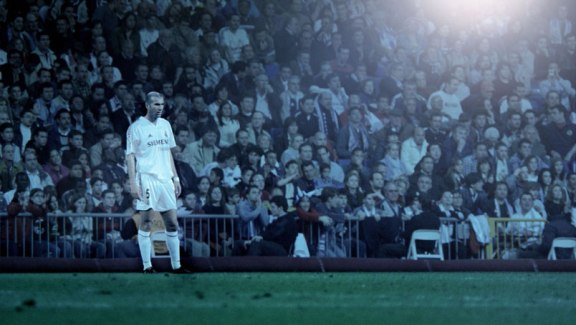
Another very interesting case study of the absence of shame and self-consciousness is the documentary ‘Zidane: A 21st Century Portrait‘, in which the camera follows the footballer throughout the course of an entire match, only very rarely cutting away to show the rest of the action. It shows him completely absorbed in the game, caught up in the flow. The footage (which mostly consists of him scratching his nose*** and looking a bit énervé****) is accompanied by his gnomic insights into the profound business of kicking a ball around some grass*****. On one level it’s a study of someone at work, a time-and-motion study of a global superstar. He doesn’t look at the camera; the world is a camera. What’s interesting about Zidane is not his skill but his visibility. His work is not so much trying to create chances and score goals as to be watched. The film is therefore more interesting as a reflection on spectacle and self-consciousness (and, given our awareness of his spectacular headbutt in the World Cup Final later the same year, on shame and its absence). How does it feel and what does it mean to be constantly observed, contemplated, regarded? What is it like to exist solely as an image? What does life as spectacle mean?

Sometimes, when I remember to, I like watching strangers out in public and imagining that they’re acting. People are simultaneously very good and very bad at playing themselves. What they are particularly good at is depicting self-consciousness. Cinema and photography (and now selfies) mean that we are constantly producing and consuming – literally and mentally – images of ourselves. I notice this in myself, when stepping off a plane, or leaving the cinema. Goffman called these ‘dramaturgical moments’. Images, particularly those in adverts, teach us how to act. When consuming products and services we are not just being watched on CCTV, we are also monitoring ourselves. We aspire to be images. We fantasise about being part of the spectacle. Hence the Zidane film is partly a voyeuristic morality tale, about how we are to behave as images of ourselves. It has elements of both going to a zoo and of watching pornography, and is also an anthropological study of spectacle that is itself spectacle.

There is a curious dimension to these issues, which is our use of smartphones. We increasingly use them to escape from awkward situations, ones that could cause us shame. Awareness and awkwardness are closely related, and conversation and eye contact make you vulnerable, potentially involve you in a tangled web of social obligations. Hence we employ our device as a shield and a screen to ward off psychic interference from others.

What does this do to our awareness of our actions? Are we self-aware when we’re online? Do we believe at some level that our devices render us invisible? What happens to our self-consciousness when we’re scrolling through our Facebook feeds on a bus? Does shame exist online? (There’s certainly shaming. One reason I stopped using Twitter is that the medium knows no shame when it comes to lying, being wrong and shaming others). It would be interesting for an artist to make portraits of people absorbed in using their mobile devices. When we do so are we on or offstage? Are we in public or in private? Does Goffman’s metaphor break down at any point? What would a film of someone famous texting for ninety minutes be like? Would a documentary featuring Kanye West playing with his iPhone 8, accompanied by a hauntological soundtrack and captions in which he reflects on fame and self-awareness, be a big hit?

I’m aware that these thoughts are not original. Perhaps I need to read some more Susan Sontag or Jean Baudrillard or something, or maybe just some more books about the joys and horrors of child-rearing. One point of writing these things here is to think things through. Another is to start conversations. I find it curious that people will occasionally praise what I write but rarely respond to the actual content. Maybe that’s because it’s boring, or not very well-expressed, or incoherent******, or blindingly obvious. It would be shameful, mortifying to be told that. But thankfully I’m 44 years old now, so I don’t have to worry so much about such things. Or at least, I shouldn’t. So why am I so excited about getting a new pair of spectacles? Is it about seeing better, or being seen better? Che presuntuoso.

* I would never do that, anyway I’m German.

** I feel very self-conscious about the fact that all of the people mentioned in this paragraph are men. I’m also aware that the last sentence sounds a bit like Alan de Button. I could change it but at the end of the day, Brian, I tend to write these things quite quickly so I can dedicate more time to thinking about what to put in the footnotes. 

*** Although not as much as Žižek, another supposed philosopher whose name also begins with Z and who also had a documentary which was just called by that surname, does.

****https://www.google.it/webhp?sourceid=chrome-instant&ion=1&espv=2&ie=UTF-8#q=%22pissed%20off%20in%20french%22

***** I wrote about my somewhat ambiguous relationship with football here.

****** Eg. obvious criticism of this article: shame and self-consciousness are not the same thing.

Milano: Odissea Lombarda

img-20160924-wa0009Io non ero propio entusiasto all’idea di visitare Milano, avrei preferito andare a Venezia piuttosto che Verona, ma sopratutto perché la mia prima visita li non ha avuto grande esito. Nel 1997 siamo arrivati da Dublino per un paio di giorni ma dopo avere cercato un albergo per diverse lunghe ore in mezzo del Milan Fashion Week, poco colpiti dai graffiti, dalla cacca di cani, dall’attitudine poco accoglienti dei milanesi, abbiamo deciso di prendere il treno notturno e viaggiare invece alla cittá eterna. Poi, molto anni dopo, quando ho conosciuto quella che sarebbe diventata mia moglie, sono rimasto veramente impressionato dal fatto che lei non c’era mai stata. Ammirevole, lodevole, e quant’altro.

In qualche modo, da sempre associo Milano a un certo, come dire, fighettismo. Dopotutto é il luogo di nascita di Berlusconi e di tanti suoi piccoli discepoli dal maglione sulle spalle e scarpe da barca che ho dovuto tollerare in classe a Londra per tanti anni. Milano sempre mi é sembrata una cittá dove la gente usa gli altri come se fossero specchi, un posto senza, come dire, sostanza. Comunque, ci sono romani che anno una opinione abbastanza piú positiva della seconda citta del paese. Quando dissi a una collega che ci andavamo mi rispose ‘ah, la citta dove tutto funziona’, pensando ai mezzi, l’assenza relativa di spazzatura per strada e quant’altro. Ma Milano é anche la terra di un forte movimento sociale e radicale, c’a dato anche Dario Fò e Umberto Ecco, tra gli altri. E visto che la Chiara stava faccendo un corso di una giornata intera (una roba sui rifugiati*) sono stato un attimino intrigato di scoprire ció che m’ero perso dall’altra riva del Pò.

Quindi é cosí che ho fatto senza volerlo (e senza medaglia!) la Maratona di Milano. Tra navigli, parchi, piazze soleggiate, avenues francesissime, mercati rionali, stadi di calcio e quant’altro, ho camminato 26 miglia. M’e piaciuta tanto la cittá che dopo avere lasciato l’appartamento airbnb alle 9 di mattina non ho visto ragione di fermarmi e ho continuato fino alle 6 del pomerriggio. Non é stato facile, ma ho trovato tante cose belle e capito che Milano é, in qualche modo, in almeno alcune quartiere – e io ne ho visto abbastanza – piu pulita e anche piu variegata di Roma. Certo, io ci sono stato poco tempo, ma m’e sembrato che il livello di integrazione delle communitá e piu sviluppato a Milano che a Roma.

Comunque. 26 miglia. Eccolo. Wow. Poi, dopo una deliziosa ma piccolisima cena peruviana bagnata da piú-che-sufficiente pizco sours e birre artiginali da rimpiazzarare tutte le calorie che ero riuscito a perdere, siamo arrivati, grazie a Uber, stanchi morti, a casa, dove un utilissimo amico su Whatsapp mi ha ricordato una piccola cosa: la maratona non é ‘soltanto’ 26 miglia. C’é di piu: un altro 0,2188. Ecco perché alle 9.45 di sera mi sono rimesso a camminare, dentro dello ‘spazioso’ (secondo Airbnb) ‘minisculo’ (secondo realtá) appartamento. Tutt’ora non sono assolutamente guarito della mia odissea lombarda. In qualche modo, la prossima volta andró in bici piuttosto che in tram. Niente piú maratone.

* Dove, come al solito in Italia, non c’era tempo per domande e risposte. Ma perché?!

img-20160924-wa0015

Mérida: Language learning, native speakers and red phone boxes

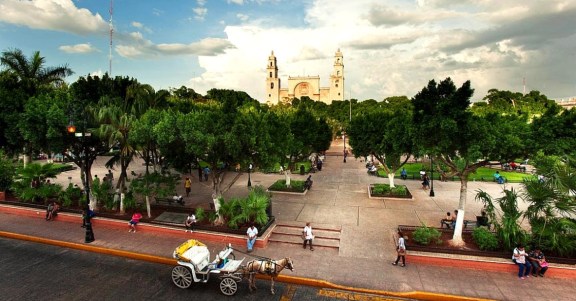
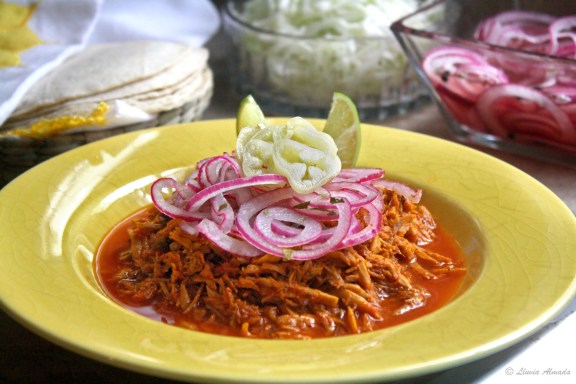
untitled-design-13-1170x611One of my roles in life involves testing the English language to make sure it’s working properly. It’s in this capacity that I get to fly down to Mérida for a few days, eat sopa de lima and cochinita pibil in nice restaurants, and pay a visit to an excellent language school. It’s easy to find because it has a red phone box outside. Everyone I meet there is friendly and seems competent. The owners (both English, in their thirties) greet and chat to the students as they arrive; they seem to know their names and both speak very good Spanish. As for the teachers, they are young, cheerful, and seem to be mostly English.

The school, which goes by the name of the London Academy and has been open for around two years, is “the only British language school in Mérida with 100% qualified British teachers that offers a true British cultural experience”. The images on the walls show cool young people enjoying themselves in London. It’s unlike a lot of  ‘British’ schools I’ve worked at in the past in that there’s a refreshing lack of photos of Beefeaters and the Royal Family and the atmosphere is by no means austere and reserved as it is in some anglophone learning environments. Entering the school I worked at for several years in Lisbon was like going to the dentists: staid, forbidding and snobbish. The school in Mérida is selling an updated version of the UK. It certainly needs to stand out, because there are a lot of schools in that particular suburb. When I walk round the block I count another four. Some seem to be part of chains and most are selling themselves on cost: low prices, discounts if you pay upfront for online classes and year-long courses.
img_4676Ultimately it’s a question of marketing. What the London Academy is selling is a tourist experience. For the students (or at least for their parents) the school is a corner of a foreign field. They will be immersed in the classroom in an English-only environment with a representative of the target culture. What the teachers get is a reasonably-paid job and an experience of living abroad, one which gives them the chance to learn some of the language and, if they’re lucky, become friends, or possibly very good friends*, with some of the locals. Nowadays in the world of English language teaching this is quite a retro model. It is based on the promotion of the assumption that the teacher is a monolingual native speaker with no or little knowledge of the host culture. Bringing a new cohort of teachers over every year is very expensive at a time when there is more competition from schools which use other images and associations to promote the learning of English.

There also seems to be a growing recognition that the language study trips abroad business is similarly a branch of tourism. The school I worked at for several years in London has just been bought up by a language travel organisation. It is true that there is no easier environment to learn and teach in. The students get some experience of interacting in an English-speaking setting and they also make English-language friendships with each other. This doesn’t mean that they start watching Eastenders and spend every night down the rub-a-dub. Rather they bond over their dislike of the food, the absurd rents they have to pay and the hangovers they picked up (and the fellow students they didn’t) in bars and clubs where most other customers (and the staff) are also there to improve their English. This is perfectly natural; after all, on holiday, you tend to make friends with other tourists rather than the locals. Some students do arrive with the impression that it’s all about becoming “English” (which is a useful marketing illusion), but they soon knuckle down to the more important and less confusing task of developing an English-speaking life. It’s far more important for Mehmet, who lives in Istanbul and deals with Chinese people on the phone, to understand Wei Wei from Shandong than it is for him to understand what Russell Brand says**. As for the teacher, their job largely involves creating a environment conducive to social and cultural exchange, with their role a mix of tour guide, cultural mediator, facilitator and occasional counsellor.
img_3197Sadly, thanks to a combination of international competition in the education market, arbitrary and ill-thought-out changes to visa rules and the global economic situation, the language school industry in the UK (and London in particular) has taken a hammering over the last few years, with very well-established places going to the wall and the survivors getting snapped up by international concerns. It is also possible that over the next few years the international marketing of British English by institutions such as the British Council will encounter difficulties in a world which no longer views Britain as vibrant, mobile and welcoming but rather as insular, hostile and closed. Whereas most marketing of English courses tends to sell an image of mobility – in the words of an advert I saw recently, ‘Where can you go if you don’t know English?’ – all this talk of shutting borders is designed and destined to do permanent damage to one of the very remaining industries which the UK still dominates.

Another major change in the world of English language teaching is a shift away from the notion that native speakers automatically make better language teachers. That’s not to say that the assumption is by any means dead. Browsing websites advertising teaching jobs in Mexico recently I was shocked by the number of ads looking for ‘native speakers’ and specifying ‘no experience necessary’. I’d imagine that most people learning a language would want a teacher with experience. But the rationale for this never was pedagogical. Again, it’s more to do with marketing, to the extent that one term commonly used in China for a foreign teacher is ‘dancing monkey’. Anyone ‘foreign’ will do as long as they don’t have a Chinese face or name. 
globalhelpswap-a-guide-to-merida-5There seems to be growing acceptance nowadays that the best attribute a teacher can have is the ability to teach, regardless of where they happen to have been born. The spread of English as a lingua franca has led to a growing recognition that it does not ‘belong’ to any one national group. Indeed, it helps to have consciously learnt the language you’re teaching. Having done so gives the teacher insights into the learning experience which allow them to give their students shortcuts and to identify potential pitfalls and misunderstandings. Non-native teachers also make more realistic role models, as the old joke about an English learner saying that when he grows up he wants to be a native speaker acknowledges. Plus it’s also true that a ‘native’ level of English is not a desirable goal. In international settings it is often British, American and Australians who have most difficulty making themselves understood, given their reliance on irony and idioms which may be lost on people who don’t share their cultural background. The trend is partly driven by economic changes – although native speakers are more profitable, non-native teachers are cheaper – but it has a positive effect as better teachers find it easier to get work.

The notion of ‘native speaker’ is problematic in any case. I’m one of them, yet there are lots of lots of ‘foreigners’ who use(d) ‘my’ language better than I do: Conrad, Nabokov, Zizek and Varoufakis all spring immediately to mind. My Italian wife writes things in her job that are much better than anything I could produce***. The idea that a ‘native speaker’ is an exemplary model has given way to a focus on proficient, competent or expert speakers. Similarly, the category of ‘mother tongue’ speaker does not take account of people who grew up speaking one language at home and another at school. Ultimately, nation state and language are just not a very good fit, especially in relation to English.
mexican-colorful-serapeI myself found out quickly in Portugal many years ago that in a monolingual EFL classroom it’s the monolingual teacher who has problems expressing what they want, especially when dealing with teenagers. Students know their own culture and can communicate perfectly well with each other. Hence they can run rings round a teacher who has little training and almost no experience of inspiring learning and imposing discipline. Such a relationship depends partly on the personality of the teacher and partly on their ability to assert their authority over the language on the basis of their national identity. Anyone who has taught in such a context will recognise the frustrations described by George Orwell in his story ‘Shooting an Elephant‘. It is all too common for fledgling (and sometimes veteran) EFL teachers to develop the attitude of a colonial policeman and to dismiss the ‘natives’ as lazy, stupid “evil-spirited little beasts” who are out to “make (your) job impossible”.

This doesn’t mean that teaching and learning is impossible in such a context but where it does take place it tends to be by accident. My own ‘teaching journey’ has taught me that any meaningful educational experience has to be based on cultural exchange. Every teacher who sticks at it works out eventually that if you’re not learning, you’re not teaching. The model I’ve been describing is about trying to impose one identity on another. What must take place instead is a recognition and validation of each others’ identities. This involves drawing on the students’ expert knowledge of their language, their experiences, expertise and social roles rather than dismissing all of the above and relying instead on a combination of communication games, bullying and luck.
2dd6318a70b4c4c1ae32371699eec48eI would like therefore to put forward five suggestions for roles that EFL teachers can usefully adopt in a monolingual teaching/learning environment:

1. The students’ knowledge of their own language is an essential classroom resource. This means that both the teacher and the students sometimes need to play the role of translators. It also implies a ceding of control and a certain amount of humility on the part of the teacher. My students know their own languages better than I do and sometime meanings have to be negotiated and dictionaries referred to. This has the advantage of reflecting real language use; in any given human interaction where more than one language is involved discussions over corresponding forms, functions and meanings are ever-present and sometimes other authorities have to be invoked. Clearly there are activities where this is not appropriate, and the teacher needs to establish when and why only the target language should be used. In a cooperative environment with purposeful activities students will be happy to go along with this.

2. Tip number 1. implies that the teacher should speak or be learning the language of their students. There are, bizarrely, language teachers who have no experience of learning another language or who have never done so successfully. Such teachers are not able to understand and relate to the frustrations and ritual humiliations their students are exposing themselves to. Several times in my teaching career I have been put on the spot by a student asking me to perform a task I have asked them to do. Such experiences have helped me to reflect on how useful and how ‘doable’ the activity I’m imposing is. Once, with a class of Italian teenagers who were traumatised by the prospect of their Trinity Exam, I did the task myself in very imperfect Italian, getting them to play the role of examiners. A light bulb went on. They realised that they didn’t need to be completely fluent and that it was fine to make mistakes as long as they basically made themselves understood. They all went on to pass the exam. In order to be a teacher you also need to be a learner. This is a role no teacher should ever stop playing; there are always new things to learn.

3. If you are teaching in another country you are also a model of someone immersed, out of their depth, occasionally thrown in at the deep end, experiencing anxiety, and sometimes losing face. Your ability to articulate these feelings and reflect on those experiences in English will be better than that of your students****. This involves drawing on your own experiences.  This paragraph itself could generate a very useful lesson for students struggling to articulate their own experiences with the language. It doesn’t mean that the teacher is an exemplary language learner but as someone who learns and also thinks about language a lot you do have insights to offer.

4. A teacher needs most of all to be a teacher, with a range of approaches and techniques to suit each particular class. Hence our role is not that of an oracle on our language and culture. Both students and teachers have gaps in their knowledge of the world. That is fine. A classroom can be a very useful place to identify things that we don’t know and to figure out how we can find out. It very often happens that I learn new things in English*****, and when that happens I point it out to my students. As a language teacher I know that some students fail to understand that one’s command of a language is never total. Pointing it out by using yourself as an example helps students to recognise that their English need not and can not ever be ‘perfect’. I am there in the classroom because of my teaching experience and ability, and not as a proxy for the Queen or for Cambridge University.

5. Teachers should also facilitate sharing of emotional experiences. We can help the students visualise their learning experience and identify specific examples of progress. One excellent way to do this is to explore learning metaphors: are they on a journey, climbing a mountain, working out in a gym, hanging out with some friends once a week? In tackling such themes the teacher is playing the role of a counsellor. In order for this to be effective the teacher needs to work constantly on creating an encouraging and forgiving environment based on an ethic of cooperation rather than on shaming people who make mistakes.

peninsula-de-yucatan-mexico-extreme-tourism-with-outdoor-diving-adventure-29These tips are written with the teaching of English in mind. Some of them also apply to other languages. For example, I can’t say that the list of characteristics of various French supermarkets I spent ninety minutes learning in an intermediate French class a few years ago has helped me a great deal when talking to recent Senegalese immigrants in Rome. The same applies to Spanish and to an extent Portuguese; there’s not much point learning to lithp or to use o senhor appropriately when you’re off to live in Mexico or Brazil. Some other-language courses I’ve encountered have confused language competence and grammatical knowledge, with little room for error and a very narrow definition of success. The teaching of English does have something to offer language teaching in general given that there is simply more practise and research taking place.

It’s different with, say, German, Italian, Japanese or Finnish, since almost all speakers of these languages are from those countries or have spent time there. Then learning things like the names of personalities and radio advertising jingles is important. At the moment I live in Italy, where what hinders my comprehension most is a lack of knowledge of the (admittedly very complex) culture. It is, however, only one of many possible experiences. In past I’ve tended to assume that my own learning experiences are the only or the ultimate model, which is clearly not the case.
590Several years ago in London there was a best-selling book/CD for English language learners called ‘Get Rid Of Your Accent‘. The cover featured a woman who looked like Agatha Christie and sounded like Lord Reith’s elocutionist. As David Crystal points out, learners do need a pronunciation role model but the notion there is one way of speaking is absurd. People certainly need to have a command of Standard English, but in a globalised world intelligibility is the main issue. The same goes for local varieties of grammar. A former colleague used to teach his newly-arrived elementary students to ask everyone they met “What do you do work-wise?”, a question guaranteed to draw a blank look from Akiko from Kyoto. It can be useful to teach students to understand local accents in questions like ‘wotjado?’ and ‘naamean?’, but it’s pointless and unfair to ask them to speak in that way. Sometimes over the years my lessons have been about making students talk just like me. That, to briefly use a particularly British English term, is bollocks.598434_10151531054831548_111665811_n

* In some cases, very many very close friends.

** Mind you, there’s a wonderful story about teaching TEFL from the man himself here.

*** This is not meant to suggest that I have a number of wives from different countries. Maybe I should ask her how to rephrase it to make it more clearer.

**** If it isn’t, you may have wandered into an INSET session by mistake.

***** Such as how to spell ‘bizarrely’.

George Michael, 1963-2016

imagesPoulton-Le-Fylde, Blackpool, 1986. I’m staying with my grandmother. She has a small red turntable from the 1960’s. Music is my lifeline to a life I’ve yet to live. The place, that room, that record player I associate with ‘State of the Nation’ by New Order, the 12″ version of ‘Bring on the Dancing Horses’ by Echo & the Bunnymen and the second coming of Frankie Goes to Hollywood. I see now that the timeframe is all wrong – I’m confusing two visits from the same year. But then like all 14-year-olds I was mixed up. It strikes me as significant in some way that I don’t remember my life in Sheffield at the time. I know school was hard in some long-since undefinable ways and Blackpool represented some sort of escape.

One song I remember very powerfully from that week was ‘Different Corner’. There was something about its mood that resonated with mine and something about its unusual, meandering shape (particularly its lack of a chorus) that I found intriguing. I assume that its lyrics must also have struck a chord (“I’m so scared…”). The mood I now recognise as languid but if you had asked me at the time I’m sure I would have described it as ‘melancholy’. Looking up its release date on Wikipedia I see that someone has categorised it as ‘adult contemporary’, which would have pleased George. As the title indicated, this was his attempt to be Taken Seriously, following a false start with the vapid holiday romance of ‘Careless Whisper’. But ‘Different Corner’ was more than AOR. It had a sense of disaffection which was more than just boredom with pop stardom. He sounded authentically distressed and so I found it consoling. The lyrics laid bare feelings which I, with my stoical Northern English upbringing, had difficulty articulating to myself. There was also the yearning aspect. I can see now that I entertained a courtly notion of love which pop music itself had taught me, albeit one suffused with a vague sense of the inevitable disappointment of a reality which I already sensed would never live up to my (in the words of Paddy Mcaloon) ‘four honeymoons each sleepless night’.

I see that ‘Cowboys and Angels’ was released as a single in 1991, but I may have come across it a few months earlier. I have no memory of buying the album it was on but the song is so familiar when I listen to it now that I must have taped it off the radio.  I can’t imagine that I listened to it at anything other than a low volume because I was living in university residences, in the Ziggurats of the University of East Anglia and my gauche attempts to establish myself as Cool would have suffered. George Michael was, despite his very best efforts, not credible, and my own assumption before I reached university that I would immediately be recognised as one of the campus’s most debonair intellectual talents had met with disappointment. ‘Cowboys and Angels’ had that same languid mood as ‘Different Corner’ and a similar chorusless structure, along with lyrics which alluded to disappointment and heartbreak, the ‘trace’ of something before. Musically its stylings were those of bossa nova, one of those flashes of good taste that George would show throughout his career. Its self-consciously coffee table sound and presumably deliberate lack of hooks meant that, like the similarly ‘mature’ ‘Being Boring’ a few months before, it wasn’t a hit.

I’m not aware of any interesting songs George Michael produced afterwards. In his striving for adult acceptance he took the road more travelled, dueting with Queen and Elton John. Bombast and sentimentality. Later came his hamfisted attempts at being ‘political’. But in interviews he always came across as heartfelt and his occasional public mishaps evoked pathos. His need to be admired, loved and regarded as thoughtful and sincere, is one that I recognise and relate to, and I think the same is probably true of everyone of his, my and all generations. Rest in peace, George.

Puebla: Clowns, Trains and Antorchistas

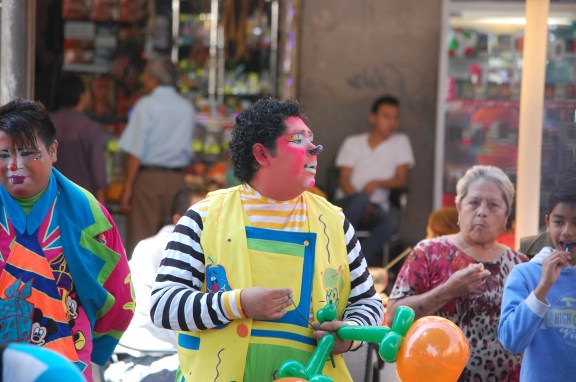
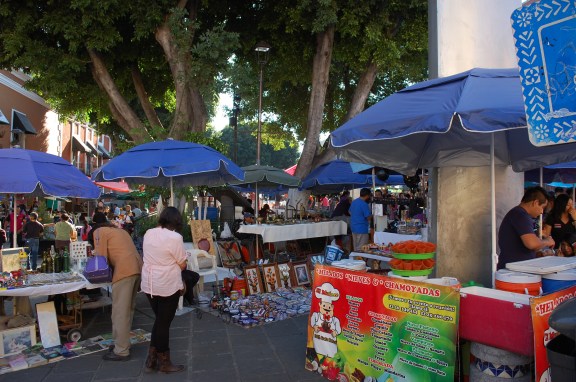
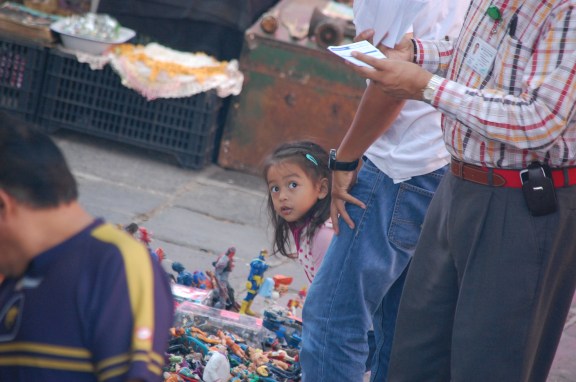
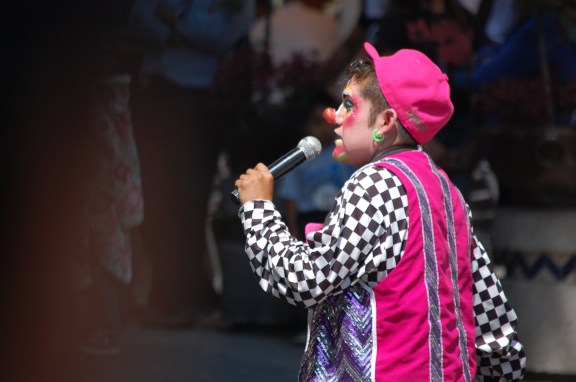
dsc_1022In Puebla I have my first ever attack of coulrophobia. The Zócalo (the main town square) plays permanent venue to a group of local clowns, and although I can’t understand everything they’re saying I can just about get the gist and it is uproariously obscene. It’s night time and we are part of a small, appreciative and apparently unoffendable crowd, some older and some very young. Behind us there’s what appears to be a genuinely spontaneous outbreak of live music and dancing. It’s one of the most beautiful places I’ve ever been to. We stand and laugh for a while and then go to a nearby bar where a succession of singers entertain us with trova classics, some of which even I’m able to recognise.dsc_0791Puebla is only about two hours from DF (Mexico City). The Zócalo itself is well worth a visit, with its gargantuan cathedral (the second largest in the country) and a vast range of human activities taking place at any given moment. The city centre also has a number of local street markets. My observations in the UK have taught me that one of the functions of the global ‘market’ is to displace and replace such places; it’s always a tragedy to see a well-established one close or go upmarket, because a city should give local people the opportunity to sell things, not just to buy them. Luckily some of Puebla’s markets deal in much more than just the usual Frida-related tourist tat. There are puestos selling books, vinyl records, coins, and ornamientos, which is apparently the Spanish word for nick-nacks. I have an entertaining conversation with one stall-holder about the relative merits of various Iron Maiden live albums. He’s a fan of Rock in Rio, while I’m sticking with Live After Death. To be fair he may have a point, because I haven’t actually listened to Live After Death since I was about fourteen, and I’ve never even heard Rock in Rio. Nor would I want to. Iron Maiden are terrible, but heavy metal never ceases to be kind of funny, especially when you’re conversing about it in another language.dsc_0830
dsc_0834

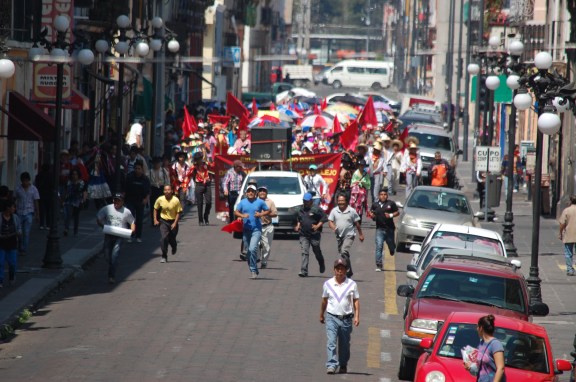
dsc_0835We take a turibus ride around the city, and when we disembark and go to pay it turns out to have been free because the machine isn’t working. Then, just as we walk away from the bus we see and hear an extremely loud and colourful demonstration coming down the street towards us.dsc_0887
dsc_0889

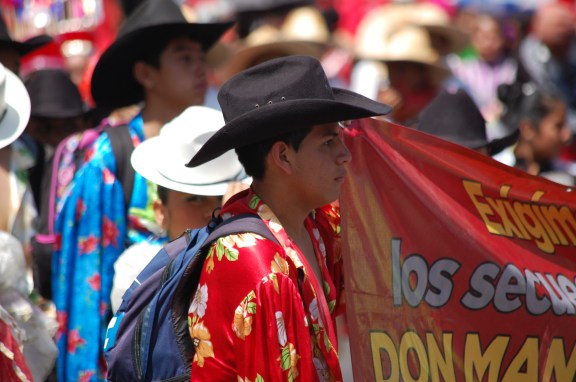
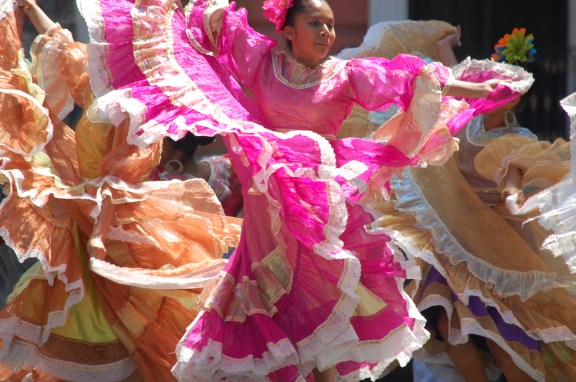
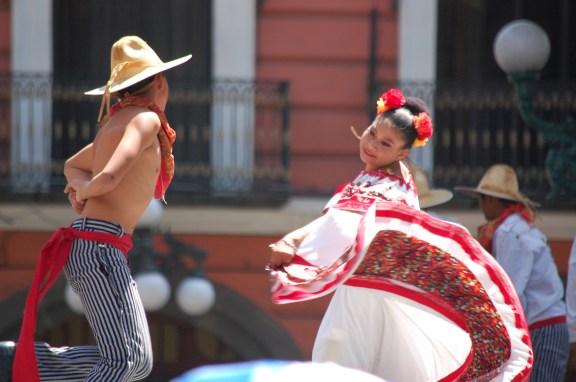
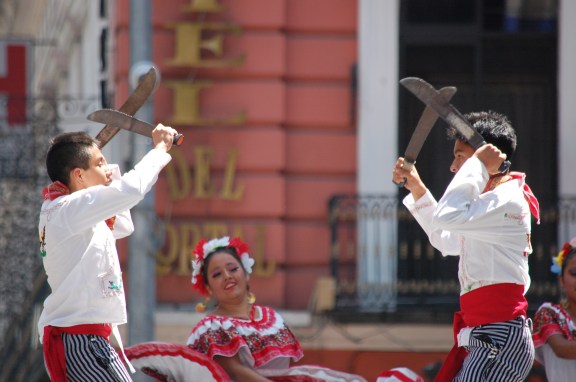
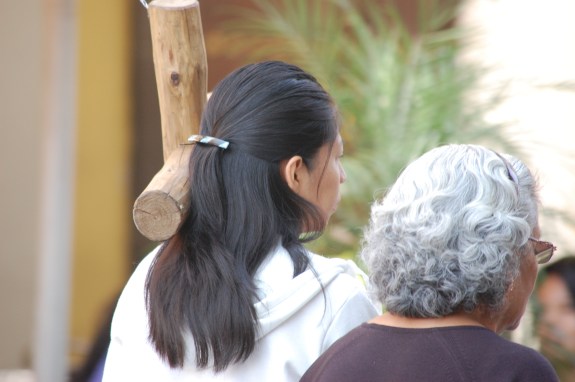
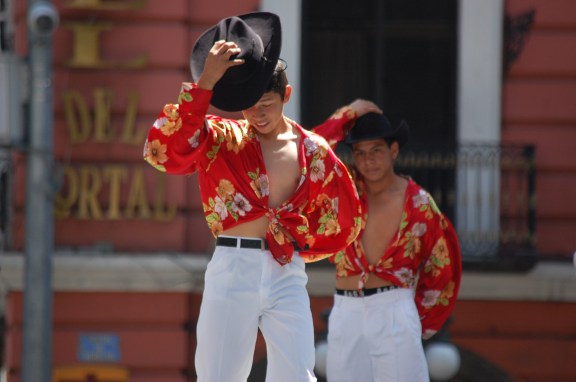
dsc_0892I’m surprised to see people holding parasoles promoting the Partido Acción Nacional. For anyone out there interested in analogies between Mexican and Irish politics (er…), this is the Fine Gael of Mexico, the substitute party, the one that proved, when in power between 2000 and 2012, to be just as corrupt and violent as the ruling (and staggeringly corrupt and violent) Partido Revolucionario Institucional. Like Fine Gael it allegedly has fascist roots. That’s why it’s surprising to see it mixed up in this protest led by a peasant movement known as the Antorchistas. I’ve seen graffiti advertising their events while travelling down the autopista from Mexico City, usually promoting huge demonstrations on which they promise to take 100,000 of their number to Mexico City. Most of the participants look to me to be indigenous and I see at least one carrying a huge crucifix.dsc_0893The march culminates on a stage in the Zócalo, where they have some speeches calling for justice for Don Manuel Serrano Vallejo, the father of a local PRI politician, who was kidnapped and murdered two years ago. This being Mexico, no-one has been arrested for the crime. There then follows a cultural extravaganza which in its colourfulness, display of dancing skills and juggling of actual machetes far surpasses anything I’ve ever seen the Socialist Worker’s Party put on. In fact, it’s best not to imagine the British Left playing with knives. They would probably end up in other people’s backs even before Mark Thomas turned up to do his turn.dsc_0932
dsc_0963

dsc_0994

dsc_0998Later I read up on the Antorchistas and find that for some time they have formally been part of the PRI, and are therefore a lot less radical than their posturing might suggest. Hence today’s demonstration may have been another example of the phenomenon of acarreando (corralling, i.e paying) people to come to major political shows of strength. Estimating just how many people from out of town have been herded onto buses on the promise of a free meal is part of the fun surrounding Mexican Independence Day in September.dsc_0897It’s an idyllic scene. All around us the square is packed with people of all ages walking around with beaming smiles, holding balloons, selling balloons, popping balloons, eating ice-cream, playing music, listening to music, dancing and eating. Which suddenly seems like a good idea. After lunch we wander over to watch the clowns. I have my hood up and I’m hiding because something about them makes me nervous. And sure enough within a few seconds the thing I dreaded, the thing I dread most in the world, actually happens: They see me. Possibly because I’m trying to accomplish the difficult task of hiding while taking decent photos. Immediately the question comes, in English: “Hey gringo, where are you from?”. Dozens of people are now looking at me, laughing and pointing and laughing some more.dsc_0900 I hate being exposed as an English speaker, so just doing the blindingly obvious thing and making myself part of the show is, tragically, not an option. I feel ashamed that other people will think I don’t speak Spanish and am thus some sort of unsophisticated monolingual oaf. I feel challenged. Such situations touch upon a very raw nerve, which is particularly close to the surface when, as now, I’m living in another country. In insisting on speaking other languages I’m making a claim on another identity while trying to shake mine off. I want to join another club, not my own, and I’m scared of being rejected. I feel objectified, seen as a representative of my own culture and country, which is awkward because even at the age of 40 or so I’m still not very clear what my relationship to that country and culture is. But I’m also aware that this ridicule I’m faced with is (apart from the damage I’m letting it do to my ego) harmless. Although these clowns have presumably seized on my presence as a chance to go into a tried-and-tested (and probably merciless) routine about foreigners, I’m very rarely greeted with hostility. I’m not the victim of negative stereotyping and I don’t face any threat of violence. Normally when people address my evident out-of-placeness it’s a friendly, good-natured, genuine interest. Besides, people want to use English. They, like me, want to be accepted as part of another community, in their case the global English-speaking one. The fact that this anxiety is such a constant theme in my life is an irony beyond all measure. I teach English. I examine people on their English. In a very important sense that is why I am here. I am not unaware of these things, but for some reason my subconscious self refuses to accept reality. One of Jacques Lacan’s key insights is that the unconscious is structured like a language. He might also have mentioned that it can sometimes behave like an absolute f*cking idiot.
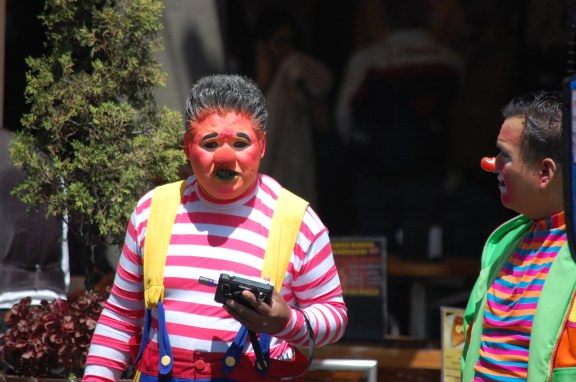

Fortunately, these feelings do wear off a little when I’ve lived somewhere for a while and my brain starts to accept that I’m just another person among millions who happens to have a silly accent which indicates that they come from another place. In Mexico my claim on a local identity is particularly absurd given that in my life here I’m relatively immune to social and economic pressures and benefit from a level of mobility denied to others, purely by virtue of my language and my passport.  I have come to understand that my fear and anticipated resentment at not being accepted and my terror of being ridiculed are partly related to my national and personal histories. I recognise those feelings when reading Orwell’s story ‘Shooting an Elephant‘ – it’s partly a legacy of colonial arrogance/insecurity. At a family level, my father left his own country (Germany) immediately after school and went to live in the UK, eventually serving as a conscript in the British Army. He then went on to work as a chef in countries around the world. Hence my anxiety over being from somewhere else and wanting to be accepted has deep roots. Even in conversation the border between languages is tense – I often get resentful when someone tries to switch into English. Thus, as is often the case, a kind of shyness turns into a type of rudeness.

Hence, when the ‘natural’ thing to do would be to play along with the clowns and to accept the role of the dumb foreigner, I stonewall, refusing to participate in the game. I pretend to be German. I make out that I don’t understand English. This is almost psychotic. English is effectively a national language in Mexico. It has more status and more people speak it than the other 64 indigenous languages. The problem is that if I respond in Spanish people will know I’m a foreigner anyway because of my accent, and there aren’t any foreigners in Mexico who don’t speak English. It would be like a Mexican who doesn’t understand Spanish. There are some of those, but I clearly do not look like one of them. This is excrutiating. There is only one thing left to do: huir, and spend the rest of the weekend steering well clear of The Clowns.

dsc_1045We head away from the centre towards the train graveyard, also known as the National Railway Musem. It has dozens of passenger and freight wagons, mostly from Mexico but also the US. There is a photo exhibition in one of the carriages on some of the now-despondent towns which the train line from Puebla to Veracruz used to pass through. The city of Puebla was created to secure the route between Mexico City and the port of Veracruz, so the train line was of vital importance when it was opened in 1873, particularly for the transport of goods. Then, after decades of neglect, in the early 1990s the entire network was broken into four and privatised. The line from Puebla to Veracruz closed, and now Puebla focuses on producing cars. On the way here from Mexico City you pass a huge Volkswagen plant; in the centre of town several street signs have been sponsored by the company. As for trains, the only surviving long-distance passenger line crosses Chihuahua state in the north. It is hugely popular with tourists. dsc_1039
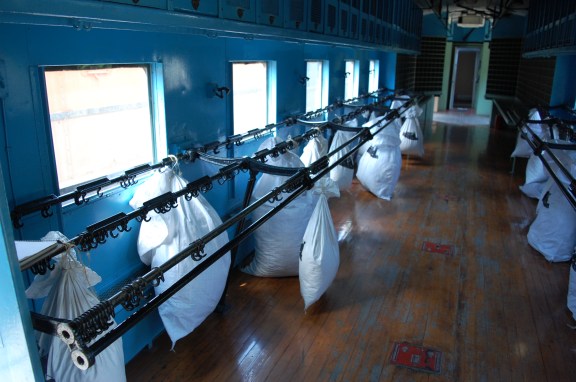
dsc_1047

dsc_1043

dsc_1054

dsc_1050

dsc_1034Then there is La Bestia. This is not a single train but a network of freight trains used by Central American immigrants to get from the south to the north of the country on their way to the US. It is so dangerous that it is also known as el tren de la muerte, the train of death. Since 2014 passengers have been banned from travelling on top of the train, partly thanks to an Obama-inspired crackdown by the Mexican authorities on immigration across the southern Mexican border. The subsequent treatment of those who still try explains the fact that in June 2015 an Amnesty International report called Mexico one of the most dangerous countries in the world for migrants. dsc_0166In the main building of the museum is another exhibition dedicated to the work done by Padre Alejandro Solalinde, who runs an organisation providing Central American immigrants with humanitarian aid and education. In return for his efforts his life has been threatened on several occasions.dsc_1058It puts my fear of clowns into some perspective.