 I wanted to write about the new US President’s decision to stop NASA conducting research on the earth’s climate, but word fail me, or maybe I them. Where to begin? It’s too depressing to even link to. It would require a command over language which I don’t possess. Maybe poets and other artists are better placed to develop the new forms of expression which will be able to address this new reality. Or perhaps I should get round to watching ‘Hypernormalisation’. Here are three writers who have tried to think through the topic (more or less) head-on.
Category: .
“All I know is what’s on the Internet”: All heil President Troll
 In China eleven years ago I noticed something surprising about democracy and something disturbing about the world economy. They both involved discrediting and devaluing. In the case of the world economy, what I noticed in China indicated to me that the chief function of neoliberal globalisation was to reduce western wages and conditions to a Chinese level. I also noticed that the notion of democracy had lost a lot of its value, especially in comparison with the student uprising of fifteen years earlier. Since that time global events have, to paraphrase Thomas Pynchon, been proceeding in accordance with an ominous logic. Continue reading ““All I know is what’s on the Internet”: All heil President Troll”
Sunday Sermon/Unsolicited Trump rant no. 3
 Isn’t our revulsion at Trump’s victory partly abhorrence at those aspects of ourselves which make us most ashamed and uncomfortable? Sometimes recently I’ve heard an echo of Trump’s worldview and temperament in my own thinking: a moment of selfishness, resentment or arrogance. Continue reading “Sunday Sermon/Unsolicited Trump rant no. 3”
Electoral tantrums
 Billy Bragg is spot on here. A very great deal of people were just dead set on voting for whoever the ‘political establishment’ told them not to vote for; the more obnoxious, unsuitable and irresponsible the better. The poster on the right is from Italy in relation to the upcoming constitutional referendum. It pretty much speaks for itself: people are being urged to vote against ‘Them’, in this case the banks and finance system (the hint of anti-semitism is no accident). The fact that the NO campaign is also supported by the far-right parties is irrelevant. The electorate doesn’t care. While millions are righteously angry that their economic plight and their inchoate fears of the future are entirely glossed over in the media spectacle, the only response they have come up with so far is a series of massive electoral tantrums. Continue reading “Electoral tantrums”
Two impossibilities: Brexit and Trump
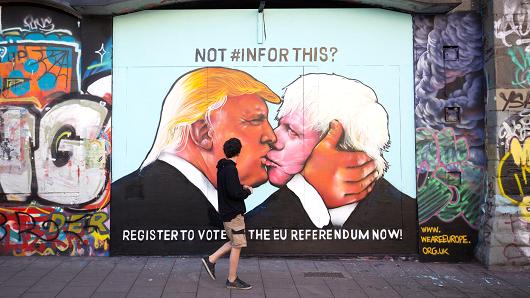 Two impossibilities: Brexit and President Trump. Not in the conventional sense that they were both considered impossible events until they became real, but rather in the sense that they still are. Continue reading “Two impossibilities: Brexit and Trump”
Poem: Tilt, by Jean Sprackland
I
When the wind collapses at last
the sand glitters with oil
like the fine mist of blood
a dying man would breathe
onto his friend’s face and shirt.
It’s this freak weather.
For five days and five nights the storm
hacked the steel legs, mauled the derricks.
The pipes flailed and shuddered.
Nothing the men could do
but play blackjack and drink the rig dry.
He has his friend by the sleeves
but he’s losing his grip.
The word was not spill, but incident.
II
The birds calibrate, recalibrate
the grains of magnetite in their heads
against their star maps,
their clock of polarised sunlight –
but it’s no good, south is cancelled.
Infrasound, dead reckoning
are not enough. They fall like hail
on the Atlantic, the Sahara,
the High Tatras, the shocked
roof gardens of Manhattan.
III
What we’re seeing is something immense
but distant, a galactic event,
a cosmic wobble, a glitch
on the Milankovitch Cycle.
The earth nudged off its axis
like a wheel skewed on its axle. See,
our planet is bored and oblique. It sits
on the lip of the dark. Then flick!
Like a needle skipping the groove.
Oh dear, I’m showing my age.
Let me put it another way:
the maths was slightly out.
We’d been working on old assumptions
and flawed equations. Twenty-one point five
to twenty-four point five degrees. Poor old earth,
didn’t give it much latitude.
Same weary ellipse. Same old axial tilt.
Now it’s free to discover its own inclination –
Pardon? Good question.
Straight answer: we don’t know.
But theoretically,
everything.
IV
When you slide along my already
slick and unreliable surfaces,
you remind me I am liquid,
you make me care about nothing except
falling, spilling, flooding.
All ice wants to be water.
Listen –
that sound at the edge of the dark
is the world’s ice ticking.
V
The city wakes to a tearing sound:
the ocean gathering itself,
mustering its goods: fish, whales,
luminous monsters with no names,
cruise ships, crashed aeroplanes, corpses
weighed down with stones,
drowned forests and volcanoes,
fibre optics, crude oil, spent reactors, each thing
sucked from its hiding place, and the sea
scouring its own floor, even the rifts and fissures,
dragging out the last flakes of life
and then fistfuls of utter dark,
all jacked high on the storm,
kicked over the city, right over the watching streets –
a mixed catch, writhing
in a green net of water.
VI
A partly dismantled giraffe.
A row of rat enclosures.
A zebra which can only sweat
and stare at its own hooves.
The zookeeper’s shovel
rusting against a wall.
His special coat all spidery
on its hook in the feed store.
The thrum of an electric fence.
The air like glue.
Enter a stray cat
with a baby monkey in its jaws.
Brexit and my family history
 My father is 82 years old. He was born in 1933 in Germany, a very auspicious time and place to come into the world. He spent the final months of the war hidden in a cellar as British bombs fell all around. When the Allies arrived, he defied the advice of his parents and crept out of their hiding place. He met his first British soldiers stationed in his family’s garage and they gave him some sweets and taught him his first few words of English.
After the war, his own father became Mayor of the local town, Verden an der Aller in Lower Saxony. Among his credentials were the fact that his family had had a travel agent’s which had helped a number of local Jews to escape the Nazis. Andreas Willmsen (https://de.wikipedia.org/wiki/Andreas_Willmsen) also became head of the local denazification committee. Had he stayed, my father would probably have competed his education and followed in his footsteps. As it was, he left Germany in 1950 after his Mother took off with a British serviceman. He remembers the incredibly complex procedure he faced in trying to cross so many borders, with so many documents and visas to be obtained. Working long hours in a hotel as a kitchen assistant in Guernsey, where his mother had settled, he became gravely ill. Much to his surprise, the head chef, a Frenchman who had been imprisoned under the Nazis and who consequently hated the Germans, nursed him like he was his own son.
Within a couple of years, my grandmother and her husband found another job in Sheffield, England and moved there. My father went with them. At some point he decided to apply for British nationality. On the form he saw the question: would you be prepared to do National Service in the British Army? Perplexed, he asked his father-in-law what he should do. Tick it, was the response. They’ll never take you.
They took him. For two years, first in the UK in Somerset and then in the Rhine Valley in Germany, he served in the British Army. The reception he got from his fellow soldiers was not always welcoming. He tells of having a bayonet held to his neck and repeatedly being referred to as ‘that bloody Jerry’. Nevetheless, he stuck it out and was eventually offered a commision. In the meantime, his culinary skills came in handy. He was appointed personal chef to the General of the British Forces in the region. One day the stately home where he was stationed received an honoured guest: the Duke of Edinburgh, Prince Phillip. The singlemost profound shock of my father’s life came when he was introduced to the Prince. Upon being told that the chef was German, he responded to my father in perfect German. There has never been a single day in my father’s life since then that he has not mentioned this experience at least six times.
His subsequent career as a chef took him to numerous countries: Kenya, Tanzania, the Bahamas, Barbados, Nigeria, always coming back to London between assignments. Wherever he went he met fellow Europeans: Dutch, French, Greeks, Portuguese. Many of them had reservations and prejudices against Germans, but he got to know them all on an individual level and their initial suspicions were overcome. Over the years, his European identity became a central element of who he was.
In 1973 Britain joined the Common Market, and my father was overjoyed. The Little Englander mentality, with its insular and resentful attitude to the rest of the world, seemed to be on the retreat. He still has a letter he received from Prime Minister Edward Heath in response to an enthusiastic letter he had written praising Britain’s foresightedness. Now my parents make regular visits to the grounds of Chatworth House in Derbyshire, and my father is hugely proud of the fact that the Duke and Duchess always recognise him and call him ‘The Hannoverian’. In addition to being a convinced European, he has long been something of an Anglophile.
That is not to say that he is enamoured with everything in the UK. For reasons best known to herself (mostly, she claims, related to an addiction to the crossword) my mother reads the Daily Mail. This means that for several decades my dad has been exposed to headlines written by people too young to have experienced war in Europe telling him that he doesn’t belong, that this is not his country. This puerile, hateful, reactionary set of attitudes provokes the response one might expect from someone with his particular background.
At his age now certain developments in the world pass him by: the internet, Russia’s increasing authoritarianism, Isis, refugees, the changing climate are all a bit too much for him to fit into his picture of the world, once that has become more fixed with age. At its centre is Europe, and its institutional form in the EU. For his generation, the social and economic relationship between Germany and France was the foundation of the building of a new, stable, peaceful Europe, a guarantee that the wars of the previous centuries will not be repeated.
I haven’t spoken to my dad very much since this whole puerile, blimpish, hateful referendum began. I suspect that at this stage, for all his long-standing contempt for those who want Europe as a historical project to fail, he has reached a state of equanimity. In his case, I think this is probably a good thing. I hope that he votes and that the result will not make him feel that his values have been exposed as worthless. But when I see characters like Gove, Farage and Johnson playing games with peace and stability, repeating the mistakes and follies that in the past have led to war, and pouring scorn on economists and historians who tell them very clearly what dangers they are leading us into, I feel a rage that goes back to before I was born, and an ancestral fear of how the egos and the will to power of men who have simply never grown up can lead to us to mass death and destruction beyond our current imaginings. In his own time, my father’s father fought in the trenches of the First World War. My dad learnt as a teenager what his own countrymen had been responsible for, and has fought throughout his life to make sense of that and to live a meaningful life in the light and dark of it. The building of European union, with all its myriad betrayals and contradictions, with all its corruption by corporate forces and its callousnessness and cowardice when it comes to the current refugee crisis, was an honest attempt to stop such horrors and barbarity from reoccurring. It is worth defending and fighting to improve, and Britain has no right to leave it.
México, DF: What links the murder of dogs in Condesa to the Corredor Chapultepec?
I’m trying to write a novel, one set in Condesa, a nice, quiet, leafy suburb of Mexico City, in mid-2015. A number of things make this difficult, not the least of which is that it’s now 2016 and not only are events quickly moving way ahead of me, they are also, conversely, getting closer to home. Last Saturday night two people were shot within around fifty metres from our front door. I know this because a journalist from Proceso magazine was brave enough to write about it several days later:
“Last weekend, in the middle of Calle Saltillo in Condesa, outside the bar Dussel, which only opens in the early morning and closes when the sun hits its peak, a man on a motorcycle killed two people. Approximately seven months ago, on the same street corner with Alfonso Reyes the owner of a bar known as LIFE was executed.
“The Roma-Condesa area is not just one of the trendy zones of Mexico city because of its bars, restaurants, galleries and parks and because it’s inhabited by middle-class hipsters or by the millennial generation. It’s also an area which has for some time been under the control of the first chilango (Mexico City) organised crime gang known as La Unión.
“The boom in restaurants, bars, pubs and nightclubs in Roma and Condesa, as well as the real estate boom that has attracted the capital’s young population, has attracted the attention of La Unión because it is a natural market for adulterated alcohol and all sorts of drugs.
“The authorities of Cuauhtemoc, the most economically and politically important district in the Federal-District, have detected people from La Unión operating in the fashionable colonies Roma-Condesa, carrying out the transfer and sale of drugs in the central streets of Tamaulipas, Michoacan, Alfonso Reyes, Saltillo, Alvaro Obregon, Orizaba, Colima and others where the bars and clubs that are being subject to extorsion but do not want to officially recognize it are concentrated.
“Violence has become increasingly present in these two colonies where there have been invasions of land and buildings, assaults on passers-by, armed robberies at some restaurants and executions outside of some clubs.”
…which reminds me that on Sunday morning we walked past the spot where the double murder must have happened, because the road right in front of the bar in question was closed off by police tape. At the time we dismissed it as not much, because there was no media in sight, but I understand better now that just because some people have been violently killed doesn’t mean that the mainstream media can or will report on it. Ironic, of course, that I only learnt about the details of what happened on our doorstep when a friend in London sent me the article via the internet. This part of the city is mostly populated by transient funseekers and youngish expats like ourselves, with few restaurants and cafes that don’t turn out to be chains, so there is less of a sense of community than I initially assumed. The murders fit into a pattern of recent events which we read about when we were thousands of miles away just before Christmas. Not just read about, in fact — a neighbour of ours filmed this video out of his window, a couple of hundred metres away. This was apparently followed by an incident where twenty armed men burst into an apartment building on Avenida Amsterdam, held up the residents at gunpoint and ransacked the place. Stories, not all apocryphal, of raids on bars and restaurants in Condesa and the adjoining barrio of Roma abound, as well as reports of extortion (‘derecho de piso’) of bar and restaurant owners in the neighbourhood.
Although we, as people entirely remote from the tit-for-tat battles between drug gangs, are little more likely to fall victim to violent crime than we were in Hackney, it’s made us nervous. All the time we’ve been here the fact that we live in a nice, safe part of town has been a major opening conversational gambit. So many people in Italy and the UK asked us ‘How’s Mexico?’ that some part of my brain started to assume it was a new greeting that had taken off in our absence, so after I while I found myself asking friends and family the same question. But the automatic answer we’d happily been trotting out over the previous few months no longer rang true. An uncomfortable aspect of this is that we had come to assume we had some sort of privileged immunity to the violence that simultaneously destablises and sustains this society. In my novel I’d like to explore the ways in which this is also true on a wider and deeper level, explore its myriad contradictions and try to come to terms with the manifold hypocrisies it entails. For the time being it means we need to watch our steps. After all, as the Proceso article mentions, the reason there are so many vibrant and pulsating bars in this district is drugs, and those who take them have obviously obtained them somewhere hereabouts. There is a huge nighttime economy, and violence is a powerful currency.
All this connects with the novel I’m trying to write in a way which if I attempted to pass it off as mere fiction would make anyone who read it dismiss as profoundly implausible. You would not get away with making this shit up. It is possible, for example, that recent events are somehow to do with the poisoning of several dogs in two nearby parks last summer. In my novel it will be 43 dogs, for fairly obvious, but hopefully not too trite, reasons. Certain aspects of the plot I stole from someone who shall remain anonymous, because I have no idea who connected the events in the first place. Try this on for size:
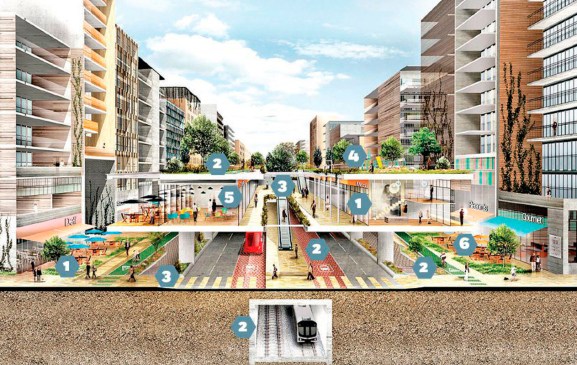
In about early December last year I popped into an internet cafe on Insurgentes in order to print something as part of my ongoing battle with the tax authorities. This involved cutting and pasting some details from my email, but when I clicked paste what appeared in the word doc was not what I expected. Instead what popped up was a closely-worded text in capital letters which must have been some sort of letter-to-the-editor. Although I was too slow and in too much of a hurry to understand more than the gist of it, in essence it set out a bad-tempered conspiracy theory arguing that the deaths of the dogs in Condesa was part of a political strategy by the authorities to manufacture a sense of paranoia which would somehow lead to a positive result in the referendum (to be held later that week) on the future of the Corredor Chapultepec. This is a huge scheme to turn a neglected thoroughfare in the centre of the city into a version of Dubai. The text alleged that the police and political authorities were engaged in a complex plot to destabilise an emblematically tranquil part of the city in order to achieve their political and commercial aims.
So far, so mindbendingly odd. Or possibly just mad. There’s little reason to believe it wasn’t written by a local nutcase, and I don’t want to assume that goings-on here are any more wacky than in, say, London. But then I did know from the US-born DF-based writer Francisco Goldman, and from various other informants, that in very much the same way as criminal gangs compete and kill over the drug trade in Condesa, the national ruling party (Peña Nieto’s PRI) do have a long-term plan to take over DF. Ever since the mayoral system was introduced nearly twenty years ago, it has been won by someone (at least nominally) on the left. Listen to the local radio here and you are sure to hear an advert from the PRI boasting of their ability to run the city. According to Goldman and his friend the former mayor Marcelo Ebrard, the PRI will stop at nothing to get their hands on the prize. The current mayor (Miguel Mancera) was elected in 2012 as an independent, but his brutally repressive/staggeringly incompetent actions since have led very many people to suspect that he is doing a job for the PRI. His claim that there is no organised crime in Mexico City is endlessly ridiculed as there is countless evidence that it is a straight-up lie, not least the hugely increased police presence in the more salubrious parts of the city over the last few months. What may well be happening on a city-wide scale is what the drug gangs are apparently offering to bar owners in Condesa — the PRI may be roughing things up so that it can then offer ‘protection’. When the left-wing former and future presidential candidate Lopez Obrador (‘the Pike’) talks about the ‘mafia of power’ it is more than just an attention-seeking metaphor.
Ultimately in my novel I might end up taking a leaf out of one of Martin Amis’s better novels and having a character with my own name drifting in and out of the action (but hopefully not getting shot dead on page 16). At least for all of my extremely limited understanding of the dynamics of life in this city, there’s no way on earth I would do DF as much of a disservice as Amis has done in every novel he’s written about London in the last thirty years. The more I pick up on what’s going on around us, I start to suspect that capturing even the vaguest sense of it all might just be beyond my powers. I think even Thomas Pynchon himself would balk at some of the outlandish plot twists devices that reality comes up with in Mexico, DF. At least one other novelist, Roberto Bolaño, had a term he used to classify the level of surrealism inherent to this place: infrarrealismo. If I now proceed to get arrested for researching how to poison dogs online, it will fall into that category.
In defence of people smugglers

When I was a child I loved reading novels about escape. They were mostly stories of people escaping from areas under Nazi control, being smuggled across borders into neutral countries, or trying to get hold of the right papers, or at least ones convincing enough to allow them to escape from imprisonment, torture and death. Along the way they would meet some people who would help them and some who would betray them — the suspense and drama came from sharing the character’s uncertainty as to whether or not they’d make it, and whether or not the person they’d just met could really be trusted. The escapees, exhibiting bewildering levels of courage and ingenuity, were occasionally assisted by networks of resistance, anonymous people of staggering bravery who were prepared to face torture and give their lives to save others and to combat injustice.
This kind of fiction was everywhere when I was a kid, which was still within the broad cultural aftermath of the excitement and traumas of the war. You could still buy Victor annuals which revelled in imagery of armed conflict — I’m pretty sure the very first phrase I learnt in German was ‘Achtung! Ich bin hit!’. By the time I came into being there had already been a good couple of decades of this stuff. As an adult I read A Night in Lisbon by Erich Maria Remarque, a more complex account of the brutalities of the struggle for escape and survival, and also Austerlitz by WG Sebald, which explores the deeper implications of what it is to be rescued and to start a new life elsewhere. They depicted deep, intense psychological and moral battles, in a way conditioned by a profound sense of empathy at suffering and loss. There was always a great deal of romance in these stories: divided couples and also people with divided emotions and divided loyalties who were forced by the threat of violence or by their conscience to do the wrong or the right thing. Intense human drama, in other words.
Brave and principled people who, despite not being perfect human beings, clearly did the right thing
The people who helped potential victims of Nazi persecution to escape were heroes and still are. Oskar Schindler himself is only one of them. In Portugal a few years ago there was a spate of articles about Aristides de Sousa Mendes, the Portuguese Consul-General in Bordeaux in France who defied the orders of Portugal’s Salazar dictatorship to issue visas and passports to a number of refugees. There is also the similar story of Gilberto Bosques Saldívar, Mexican Consul in Marseilles, who directed his employees to issue a visa to anybody wanting to flee to Mexico. Two weeks ago in the UK press there were a number of obituaries of Nicholas Winton, who organized the rescue of 669 children, most of them Jewish, from Czechoslovakia.
These were all extremely brave and principled people who, despite not being perfect human beings, clearly did the right thing, and they were not few in number—it is remarkable that in a few minutes’ googling I was actually quite hard-pressed to find any nation that doesn’t have a claim to their very own saviour-of-the-Jews (one might even argue, given the ending of the film, that Schindler in Spielberg’s film is the Israeli Schindler, a stand-in for the state of Israel itself as the only possible refuge for the Jewish people).
Another example is closer to home. When my mother was trying to open a kindergarten in the UK about 20 years ago, she was temporarily stymied in her efforts by a group of local residents who didn’t want to hear the sound of screaming kids on their street day in day out. My father looked at their petition and recognised a name from many years ago. He went to the house and introduced himself to the son of a man whose family my father’s father had, by means of his travel agency, helped to escape from Nazi Germany sixty years or so before. They soon dropped their opposition to the nursery.
What about the wars of today? Where are the 21st century Schindlers?
All of the Schindlers above are dead and buried. The war they fought seemingly has a happy ending: tyranny was defeated, and a handful of good people tried to do the best they could to help the helpless. It’s a comforting tale which allows us to get on with our lives without dwelling too much on our own standing in relation to the events we’ve seen. Schindler’s List flatters ordinary people by putting us partly in the position of helpless victims, partly in the role of the heroic saviour, helpfully allowing us to forget what we know full well: that ordinary people like us were actually the protagonists of the Nazi genocide. But that was seventy years ago. What about the wars of today? Where are the 21st century Schindlers?
It is worth playing devil’s advocate in relation to the massive refugee crisis engulfing the world, a world in which 1 in every 122 people is now exiled from their home by war, the changing climate, or extreme poverty.
There are two recent must-read articles which can help us begin to do this. One of them has a happy ending: it tells the story of Hashem Alsouki, who managed, over the course of three hellish years, to make his way from Syria to safety in Sweden, suffering enormous tribulations along the way, managing to keep at all times his identity papers and a Human Rights Watch report about the destruction of his hometown hanging from his neck in a waterproof pouch. In the other story we don’t meet the main protagonist, who met a less happy fate.
In both cases many people helped them along the way. Some of them were activists serving as a point of contact for people escaping from horror. Others were fellow refugees in an equally desperate plight. But some were traffickers, people who promised that they could take them the next stage of the journey in return for everything they possessed.
It’s probably fair to regard the majority of these traffickers as exploitative and abusive, but…
It’s probably fair to regard the majority of these traffickers as exploitative and abusive. It is a brutal and horrifying trade. A great deal of stories involving people smugglers resemble tales of kidnapping rather than transport. People fleeing are extremely vulnerable to fake promises and attempted rip-offs, and women, particularly those travelling on their own, are especially at risk. Cases abound of those piloting ships and boats in the Mediterranean simply abandoning their human cargo to the waves.
But given the near-impossibility of refugees reaching safe countries in which they may be able to exercise their fundamental human right to claim asylum through anything approaching conventional means, it cannot be denied that such people are also serving a fundamental human need.
Clearly not all involved in the trade are, in the words of the former Australian Prime Minister Kevin Rudd, among the ‘vilest form of people on the planet’. Confronting such hyperboles, the following truism bears endless repetition: if European society (and, for that matter, Australia) were truly concerned with the fate of refugees, they would allow them to reach their countries and claim asylum. Yet instead of this the EU demonises people smugglers to the point of seriously proposing bombing parts of North Africa in order to deter their trade, while Australia maintains concentration camps on Nauru island in order to prevent migrants setting foot on Australian soil.
We endlessly hear that human smugglers are evil people motivated only by the desire for wealth, an effective explanation as it relates to our increasing conviction that personal advancement is the only motivating factor in human affairs (indeed, we have actually come to believe that such aspiration is not only natural but also moral). The stories of people smugglers or the stories of those they have saved are hear much less often.
Of course there is enormous and widespread abuse. Of course there are, as in pretty much any industry, those at the top of the pile who get enormously rich on the basis of the brutal exploitation of basic human need, not to mention those at the bottom under very great pressure to avoid treating their passengers as anything other than human beings. But there are also staggering achievements mixed up in these cases of abuse, inspiring tales of bravery, suspense, drama and excitement.
Why is so little effort made in the media in particular to give a voice to those who have sacrificed everything at enormous risk in order to reach safety and try to protect and provide for their friends and families back home? Almost all refugees are ready-made heroes with astonishing stories to tell, tales of human endurance, ingenuity, bravery, desperation and abuse, but also of generosity and ultimately of survival and hope. However, there doesn’t seem to be much of an appetite for hearing them, possibly because at some level our feelings are conditioned by a sense of guilt and helplessness.
Libya is a case in point. We Europeans first stabilised the country by supporting its dictator and then we destabilised it by bombing it to pieces without the slightest regard for the consequences. And let us be honest: the British did much the same to Iraq. We co-created the conditions for ISIS to thrive. The victims in this situation, people who were going about their lives, developing their societies, looking to the future, these people need help from someone, somewhere. We share responsibility for their fate, and we are not in a position to blithely condemn all those who are, whatever their motivations, trying to help them escape from the hell we have helped creating.
But increasingly we’re not inclined to help. We’re full, we tell each other. We have our own problems to deal with. And so we demonise those who help them. We’re happy to go along with the story that those people stuffing desperate people onto tiny leaking boats are doing so only out of self-interest, that the human desire to help others cannot possibly be a factor.
Perhaps the Schindler stories are a form of romanticising the past, even while we disown our present responsibilities.
Perhaps the stories of all these Schindlers were never more than a comforting fairy tale about how we would all (as British, Mexican, Portuguese people) do the right thing in such circumstances, that we, and our kind, are essentially good people at heart, a form of romanticising the past in order to show ourselves in the best light, even while we disown our present responsibilities. But out there right now there is an Afghan Schindler, a Moroccan Schindler or a Libyan Schindler. We don’t get to hear about the lives that they’ve saved. We’d rather not hear their stories or the stories of the people they’ve managed to rescue.
There are millions of our fellow human beings exactly like us crammed into refugee camps in Jordan and Lebanon, the Jungle in Calais, in Melilla, Kos and Lampedusa. But they’re Muslims. They might be armed, or diseased. There are far too many of them. They don’t share our values of liberalism, tolerance and generosity. They want to scrounge off our society. This is the story that we seem to find more comforting and more compelling.
Of course, back in the 1930s and 40s there were a number of people who talked in this way about European Jews. They were a minority. This time round, in addition to the very worst that humanity has to offer, the countless digital equivalents of this emblematic product of European civilisation, there’s most of us, and there’s those who we increasingly choose to represent us: people indifferent to the fate of our/their fellow humans facing tyranny, torture, starvation and death, unwilling to take responsibility for their fate, and prepared to assume the worst of those who are risking their lives to help them escape. We should learn and share their stories if we are to have the slightest chance of rescuing our humanity.
Torreón: What Connects Isis and Mexican Drug Cartels?

I’m sitting in a plush hotel bar in the northern city of Torreón (like a smaller, grubbier and emptier version of Monterrey) trying to understand baseball. I’ve enlisted the help of some Texans at the next table who are ably fielding my persistent enquiries (or, as they would call them, inquiries) about what’s happening on the TV, questions along the lines of: why, when the pitcher throws the ball, does the batperson almost never make the slightest attempt to hit it? and why, when he does deign to make contact with it, why does he almost never actually run to first base, but instead stroll nonchalantly? Surely it would make more sense for him to run? Eventually I give up asking questions about the game and try to watch it, which is hard because it appears to me to be extremely fucking boring, and it seems that the players agree, as at one point a massive fight is staged and as far as I can tell the whole thing is abandoned.
The following night I try again with American football (or, as Americans call it for fairly obvious reasons, football). I feel compelled to do this because in a few weeks I’ll be off on what is effectively (apart from an interflight wander around a bit of Queens a couple of years back) my first trip to the States and I want to learn some of the language in preparation. I’ve long noticed that whenever, let’s say, Larry David says something like ‘Hey, did you see that Nicks game?!’, I genuinely don’t know what he’s talking about, which is a bit ridiculous, as my very livelihood is based on my claim to have a perfect grasp of the English language, even though I was unable to get through Underworld by Don Delillo, apparently one of the greatest novels published in my lifetime, because it was basically a big book about sport, and I don’t really know what a quarterback is.
The key thing about understanding any sport is knowing some very basic rules so as to be able to follow what is actually happening. In the case of football this is made difficult by the very many stops and starts and by my not knowing anything about the roles of the people on the pitch (I think they call it a pitch). Who is supposed to be passing the ball to whom, and to what end? Why don’t they just get on with it rather than stopping to piss around every ten or possibly twelve seconds? In theory I don’t really need to know any of this stuff, but I am apprehensive about trying to join in sports conversations in bars and making a massive anglofool of myself. Also I would like to be able to read that particular Don Delillo novel one day after I’ve finished reading everything by Thomas Pynchon six or seven more times.
There’s also the fact that there doesn’t seem to be a massive amount to do in Torreón once you’ve eaten your way through a big pile of dead pig and read all the information on the internet. It apparently was quite a lively place until about eight years ago when a particular bunch of evil bastards called Los Zetas turned up and started contesting the territory with the Cártel de Sinaloa by, in their inimitable fashion, torturing and murdering (and, let’s face it, probably eating) as many people as they could. Torreón is located at a midway point between Chihuahua, Sinaloa, Durango, Nuevo León and Tamaulipas, all places synonymous with drug trafficking. In 2010 it was listed as the seventh most dangerous city in the world, although things have calmed down a good bit since about 2013, as, like in other areas of Mexico, the authorities appear to have taken the side of the Sinaloa Cartel, sitting back and letting them get on with the job of eliminating the Zetas and restoring some sort of uneasy peace.
The dynamics of these situations are no easier to understand than the rules of American sports, and unlike baseball and football asking people to explain to you what exactly is going on isn’t always a good idea. At least on TV you can see the ball being passed around, moves being made and attack and defence strategies being adopted, even if the adverts do get really annoying. With the drug trade there are an enormous amount of goods being passed around — the global narcotics industry is said to be worth over $400 billion a year (and counting), and a huge proportion of the produce which generates that revenue comes from or passes through the north of Mexico.
The official story of what happened on the 26th September 2014 in the town of Iguala in Guerrero State is that the corrupt local mayor handed over dozens of radical students who were getting on his nerves to a drug gang he was in cahoots with who then tortured, shot and burnt them. It is generally agreed by anyone with half a brain and a quarter of a moral conscience that this story is an utter lie. What is far more likely to have happened is that the student protestors, who wanted to commandeer a number of buses to take them to a rally in Mexico City, took one which happened to be stuffed with a huge shipment of heroin belonging to the drug gangs ready to be transported to the US. The municipal police, the army and the drug gangs therefore attacked the students, torturing and killing them and then burning their bodies in the incinerators in the army barracks, to which the military have steadfastly refused access. The official story therefore is a transparent attempt to cover up an intimate network of relationships between drug traffickers and very high levels of the State and army.
Of course, unlike in a film by Oliver Stone, there are no secretly signed documents recording all of this information. No-one had sat down and written out a detailed plan of operations which, if it could be found, would incriminate all the politicians and military figures involved. The fact that we know all this is thanks to very dedicated journalists and investigators who have painstakingly and at very great personal risk pieced together evidence which disproves the States’s explanation and posits a far more plausible one. Whereas I could, if I was so inclined, simply google and learn all about the rules of any sport I choose, in the case of the relationship between crime and politics successions of events and their causes are much harder to ascertain.
So far, so self-evident. The mere fact that corruption of this sort exists in Mexico is no revelation and is not worthy of a blog post based on tortuous and tenuous analogies. Bear with me.
It has become a minor trope of journalists over the last few years to refer to groups like the Zetas and the Cártel de Sinaloa as the ‘Isis of Mexico’, given the seemingly out-of-control growth of such organisations through the imposition of terror. In the case of drug syndicates, there is a clear meaning and purpose to their violence — a share of that $400 billion a year. The Sinaloa Cartel is said to have annual revenues of around $3 billion a year and although estimates that it employs more people than Walmart are downright silly it certainly has a huge number of people working for it. Salon.com lists several similarities between the drug syndicates and Isis:
They behead people by the hundreds. They heap headless, handless bodies along roadsides as warnings to those who would resist their power. They have penetrated the local, state, and national governments and control entire sections of the country. They provide and services to an impoverished public, which distrusts their actual government with its bitter record of corruption, repression and torture.They seduce young people from several countries, including the United States, into their murderous activities.
However, there is something about this analogy which doesn’t work: the question of motivation. While drug gangs cause mayhem and kill thousands for money, Isis do so purely out of religious zeal. They have a barbaric interpretation of holy scripture and that is what inspires them to destroy entire societies of people they regard as ‘apostates’. In the declaration they released explaining their rationale for the horrendous attacks which took place in Paris last Friday they talked of killing ‘hundreds of idolaters…together in a party of perversity’. Clearly in the case of Isis the reasons for their acts of terrorism are ideological rather than mercenary.
Except…
In an article published over the weekend Oliver Tickell, editor of the Ecologist magazine, pointed to a revelatory FT report on how much money Isis earns from oil: something in the order of $1.5 million a day, or $500 million a year. If Isis was a Mexican cartel making that much money from drugs, it would be beheading probably about the same amount of people as it actually does in the Middle East. There is no quoted index of the value of a human head in dollar terms, but I would imagine the price in Northern Mexico and Northern Iraq must be comparable, and in the case of Isis, there is an additional holy premium to be earned.
So, as Oliver Tickell details, Isis has an interest in the price of oil. As we have recently discovered, oil producers will do anything to protect their profits. In the case of Exxon and the potential threat to their future income represented by climate change, they mounted a hugely successful decades-long campaign together with other fossil fuel corporations to cover up the facts — in the words of climate campaigning hero Bill McKibben, “no corporation has ever done anything this big or bad”. As for Shell, they attempted to go ahead with drilling in the Arctic even though their own scientists had specifically warned them that doing so would inevitably mean that any attempt to control carbon emissions and thereby limit global temperatures would be blown to pieces. It is simply impossible to imagine anything such companies would not do in order to protect their future incomes.
Next month in the French capital world leaders will come together and seek to reach a new agreement on carbon emissions. This is D-Day for fossil fuel companies. This could potentially have been be the point at which, after so many previous summits at which corrupt lobbying campaigns have successfully managed to stall any meaningful moves towards preventing a global ecoapocalypse, world leaders were forced by the pressure of millions of ordinary human beings to challenge the interests of some of the most powerful and dangerous corporations on the planet. The chance of that happening is almost certainly now reduced to zero. The very word ‘Paris’ now stands for something else entirely.
If I wanted to I could easily go online, find a list of rules governing the sports of baseball and American football and learn all about the different moves, strategies, and tactics, and then when I next watched a game I could look at the way the players try to move the ball around the pitch and score points while others try to obstruct them. In the case of financial interests and politics, most business takes place off the field and away from the cameras. I can only proceed by analogy, inference and interpretation, looking at results and surmising what the causes may have been. In the case of the climate talks in Paris, they have now been destabilised on two fronts by powerful forces which have specific interests in the continued production of fossil fuels. That is not remotely to suggest that there was a secret agreement between energy corporations and Islamic terrorists to murder people on the streets of Paris, but it is apparent that they share an interest in making sure that the talks are a failure.
This is not a conspiracy theory. It is the setting out of facts which seem to correspond in some way. Ironically, those people who instinctively shout ‘false flag!’ in response to any event of this nature are extremely unlikely to develop such theories about this particular topic. Those supposed radicals who pride themselves on consistently challenging the official version of events were long ago duped into thinking that the vested interests in the climate ‘debate’ were those scientists who patiently set out their reasons for grave concern rather than the corporations seeking to protect their profits at any cost.
The people who committed the atrocities in Paris are now dead. A certain kind of justice has been served. Whether the inhabitants of Raqqa, suffering under the brutal regime of Isis and now subjected to a massive retaliatory bombing campaign themselves deserve to be punished is highly debatable. In the case of Exxon, it is extremely unlikely that anyone will face justice in this lifetime. We saw a few months ago that the Mexican Government was unable (and, let’s face it, unwilling) to hold the CEO of the Sinaloa Corporation inside the justice system. As we sit and watch this game develop and try to figure out what is actually happening and why, what chains of events are triggered by particular moves, it seems to be the case that some players are simply too powerful to be punished. In the immortal words of Bodie, the teenage drug-dealer from The Wire, this game is rigged, man.
 Infinite Coincidence