Does “Mexico City” live up to the hype?

485738354I’m walking down the street in a pleasant upmarket neighborhood and as I walk I have to tread carefully, as the ground beneath my feet is covered in often quite deep cracks as a result of a huge earthquake which is said to have taken place 30 years ago. Such is the level of detail you find everywhere you look in what must be by far the most ambitious and fully-realised piece of immersive theatre yet produced. While companies such as Punchdrunk, Secret Cinema and You Me Bum Bum Train may have awed us in the past with their transformations of abandoned post office sorting offices and the like into exquisite dream palaces of theatrical imagination, ‘Mexico City’ is on an entirely different scale.

Something that strikes one again and again throughout this experience (in truth, more of an installation than anything resembling a play) is the sheer number of actors and or/other visitors (it’s not always easy to tell who’s who). On both of my visits (one trip is certainly nowhere near enough) there seemed to be a cast of literally millions. Even someone entirely jaded with the by now often very standardised rituals and tricks of promenade or participative theatre could not be anything other than blown away by the astonishing artificial world that has been brought into being.

Despite the epic scale, this is no Wagner opera. Visitors are in no danger of losing the plot since the action, which erupts non-sequentially like any number of volcanoes of all shapes and sizes, means that there are an infinite amount of threads, so the spectator is left to wander around at leisure and weave his or her own narrative. Thus no two experiences could ever possibly be the same. The production is of such a vast size that any meaningful opportunity for the casual punter to work out what the hell is going on flies out of the window, but the great pleasure of the production — chasing round and attempting to fit the various pieces together — never feels like a chore, and everywhere you turn your senses are constantly assaulted by fresh stimuli, whether it be the sight of someone standing in the traffic juggling fire, the bursts of mariachi and norteño music assailing you as you stroll down the street, or the intoxicating smell of sliced chillis mixed with arrachera cooking on a neighbourhood grill.

Indeed the physical extent of the show is such that not just walking is involved. Being part of and struggling against the traffic is part of the frustration and therefore part of the fun. Anyone who has been to the Glastonbury Festival will know just what I mean — you set off in good time to reach a particular attraction, but along the way find so many unexpected and delightful things happening that whatever you intended to see quickly gets forgotten. My advice for first-time visitors is: forget about Uber and Google Maps — let yourself go with the flow instead. You will soon find yourself feeling like less of a spectator or even a voyeur, more of a flâneur. The sensation is rather like watching a blue whale glide by an inch from your face, simply too big to take in, but even this does not begin to do justice to the level of detail involved.

The audience is also encouraged to investigate and interact with their surroundings. A large part of the pleasure of the production lies in what you might discover if you have a root round amongst the almost insanely detailed sets: the markets, the parks, the squares and pretty much everything else that the human mind can conceive of and cities can provide. There is even a full-scale metro system, which also functions as a chaotic underground shopping centre, with all manner of goods on sale, often at ear-splitting volume. It is particularly by poking your nose into the hidden recesses of the installation that you will be able to make the most of your visit: a careful inspection of a mere one hundred square metres of the set will yield much more in the way of meaningful insights into modern urban existence than a whole lifetime of visits to the National Theatre or the White Cube.

For those who choose to investigate it there is a hugely complex and thrilling backstory written into the production, involving former civilisations, floating cities, and colonial invasions followed by bloody struggles for independence and violent revolutions — once again, the intricacy of these elements is mind-bending. There are even murky rumours about recent presidents murdering their wives and intriguing tales of high-level corruption involving government contracts and bloodthirsty drug gangs. You might even be able to ask some of the characters about such things — although the show is said to be largely improvised, the actors have been very well prepared in terms of their knowledge of the world they are depicting. Although other reviewers have expressed some disquiet about the occasionally menacing nature of their interactions with the characters I found them to be very cordial at all times. Strike up a conversation and you may find yourself being led to a part of the set that few get to see. 66 Minutes in Damascus it is certainly not!

For me, the best moments were often the smallest: reclining on a vast brightly-painted bench stretching my legs in the dappled sunshine as New Age music played around me, or chatting with a storytelling Cuban ice-cream salesman in the midst of the most vibrant and colourful market I have ever seen in or outside a theatre. The superb choreography and the extraordinary logistical flair of the staging mean that such moments are never far away.

Given the scale, the complexity and the level of detail involved, not everything about the production could be said to be perfect. Some miscasting is evident, with 70-year old men stacking shelves in supermarkets and a very high proportion of street stall workers clearly too young for the roles they are playing. Indeed there is a level of implausibility in the sheer number of people selling things to each other and to the visitors — it is unlikely that in a real city so many people could eke out their existence in such a way. There was also, despite the variety, a certain amount of repetition. I swear that over the course of my two visits I must have heard the recorded voices of the woman collecting old appliances and the one selling local snacks over a thousand times. There have also been concerns expressed about the ways in which the actors themselves are treated on and off set — certainly it seems that spectators are given VIP treatment in comparison with the conditions in which the participants work. In some places the set is starting to come apart, although in many cases it is hard to say whether that effect is deliberate or not.

What can be said to be the themes of such an ambitious production? Given the scale at which the producers of the piece are working, they resemble the same issues which we all struggle with every day, highlighted and exaggerated in subtle ways as is proper to such a complex and colossal work of art. Human survival in the face of great inequality is one, along with the subtle and less-subtle ways in which we work together equanimously to resolve and/or avoid conflict in the face of ubiquitous injustice. In the end the themes which emerge reflect the nature of the piece itself, the challenges inherent in putting such an endeavour together. If there is a single strain of thought informing the work, it must be that of the sociologist Erving Goffman, according to whom “All the world is not, of course, a stage, but the crucial ways in which it isn’t are not easy to specify”. Goffman would certainly have appreciated this stupendously varied and infinitely entertaining production.
Paris

The people who committed the atrocities in Paris are unspeakable beings, pitiful scum, socially and sexually constipated cowards and bullies, and there can be no possible excuses for what they did. We can only hope and pray that they burn in hell for all eternity and that anyone who is contemplating or preparing similar attacks is caught quickly and put out of circulation for good. We must also hope that there are enough people at the top of our states who have some sense of what human rights are and why they came into existence in the first place so that we can preserve some vestige of civilisation rather than falling straight into the terrorists’ trap.

There is no excuse whatsoever for what the evil bastards of Isis did in Paris. But once again it is necessary to point out the distinction between excusing an atrocity and making an attempt to understand how it came to happen and what the consequences might be. France is unambiguously part of the civil war in Syria, being the only country apart from the US currently bombing Isis in Syrian territory. There is a sense therefore in which these attacks were the equivalent of a retaliatory bombing raid. The people who died were innocent in the same way as Syrian civilians, who are faced with this kind of barbarity ever day, are, or as the residents of London were during the Blitz. The French Government, however, is complicit. The point is not simply to stop attacks in Europe and keep the war safely contained several hundred miles away — it is to end the war. Do I know how to do this? No, I don’t, but it is undeniable that this is the context in which the horrifying bloodbath took place. It is not an isolated incident carried out by a bunch of random psychopaths. It is a spilling over of the Syrian civil war. The fact that these attacks took place in a city where people were simply enjoying an entirely innocent night out should give us cause to reflect that the Middle East is not a desert. The places being bombed by our governments contain cafes and other places where ordinary people gather and chat, laugh, stretch their legs and where little children play with balloons and scream when they’ve had too much Pepsi.

The point about the connection between what happened in France, what is happening elsewhere and how it is connected with what the French Government is doing in other countries is explored extremely eloquently in this piece by someone in Beirut. The level of solidarity being expressed around the world is striking, as it was at the beginning of the year in relation to Charlie Hebdo. I’m seeing posts on Facebook by people expressing sorrow, solidarity and anger about the events in Paris who never usually post about injustice or violence elsewhere. Is this a good thing? I genuinely don’t know. I presume that everyone is aware that it’s not only French lives that matter in this world. Could it be that in the case of the UK the fact that it took place in Paris has triggered a Diana effect? Or perhaps just that the cultural connections between the two countries are so deep. Maybe I’m being a little unfair but promoting symbols of Frenchness while ignoring the equally barbaric attacks in Beirut and Baghdad does partly play into the hands of Le Pen, who’s obviously dancing for joy right now as she has just been granted a license to embark on a festival of racist hatred and quite possibly a free pass to the Presidency. I am aware of the danger of constructing paper tigers on the basis of very little evidence but I am also acutely aware that the people I choose to have appear on my social media timelines are people with whom I broadly agree — if I chose to peek outside my bubble it is very obvious that tendencies that I find slightly worrying are being played out with fury elsewhere.

We must express solidarity with the victims and the families and friends of the victims of the barbaric attacks. But we are not one with Le Pen, with the press which attacks refugees, or with the French police who over the last few days have launched another series of brutal attacks on people in Calais, on men, women and children who are in many cases escaping from places where events like those in Paris are a daily occurrence, only to find that the countries providing the weapons and carrying out the bombing raids have their doors firmly fermée. It bears repeating again and again: the terrorists who carried out these attacks are working in league with the racists who attack refugees. Blaming refugees for the attacks, as many have instinctively done and as certain sections of the media are keen to do, is like trying to deal with a serial killer by going after the families of his previous victims. Those on social media expressing a desire to kill Muslims would be best advised to go and join Isis, as that is exactly what they have been doing for the last few years. This issue is one in which horrifying ironies and contradictions abound, and none of us is immune.

There is another level of tragedy to the events in Paris which I haven’t yet seen explored anywhere in the media (update: there is now an excellent article on this very subject by the editor of The Ecologist here). As it happens Paris should have been on everyone’s lips over the next few weeks for a totally different reason. For what it’s worth, at the start of December talks will take place on the subject of the changing climate. As at previous such conferences, certain governments and a great deal of corporate lobbyists are very keen that nothing be agreed at the conference which might in any way come to threaten their GDP or their profits. There is now a good chance that the activities which have been planned for months to put pressure on the delegates to introduce measures to respond to the multiple and exponentially accelerating crisis the world faces will have to be scaled down or may even be outlawed. There have been incidents, particularly in the UK, of climate activists being treated as criminals and even prosecuted under anti-terrorism legislation. The same has happened in the UK and in France to people trying to provide help to refugees — many of whom are, lest we forget, Isis’ victims. As things stand, corporations such as Exxon, Shell, Volkswagen, BP and so on will be able to go on contributing freely to carbon emissions, in the process making sure that in the future there will be many more hashtags expressing solidarity and concern for the victims of future hurricanes, floods, forest fires and droughts without anyone thinking to point the figure at those at the head of those corporations who were fully aware of the consequences of their actions but decided to pull the trigger anyway. Time will tell that such organisations will be the cause of much more death and destruction than the psycho death cult of Isis, and unless we begin to come to terms with the connections between their actions, our behaviour and the floods of refugees escaping northwards around the globe, there will be no-one left to protect us when our time comes.

So who stands to benefit from the events in Paris, apart from a certain death cult spread throughout the Middle East? Not the pricks who did it, because they are mercifully dead. Fascists like Le Pen, Farage and Trump will already be thinking in terms of shiny golden epaulets and which particular salute to adopt. Arms dealers and oil barons will be thinking about how best to cash in. In the meantime, there are people fighting Isis and trying to establish some sort of meaningful democracy in the Middle East. Last week the Kurds managed to win a series of strategic victories against Isis. Maybe in addition to expressing sympathy for all the victims of terrorist attacks, in Paris and elsewhere, one of the most valuable things we can do to combat terrorism in the future is to look for ways to support them.

Monterrey: Welcome to Amexica

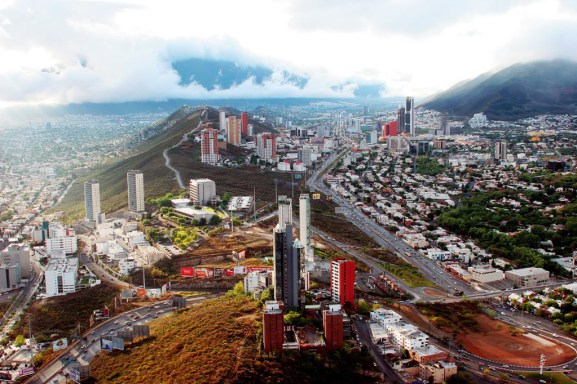
monterrey_photoshop3There is a line in James Joyce’s Ulysses in which Steven Dedalus lists the central elements of the British empire: beer, beef, business, bibles, bulldogs, battleships, buggery and bishops. A similar list for the city of Monterrey, situated as it is within what Ed Vulliamy has called ‘Amexica’ — the badland borderzone encompassing Northern Mexico and Southern Texas — would certainly include the first two, along perhaps with business hotels, broad-brimmed hats, bullets, big cars and black gold.

Certain cities, particularly in this part of the world, are designed more for cars than for people. To get safely across the road from the hotel to the pharmacy to try to get hold of some wax earplugs in case I need to block out the sound of the traffic at night takes me about ten minutes of very hard work. It would be quicker to take a taxi. The highway is lined with the kind of restaurants in which the quality of the parking is valued much higher than that of the food — in Mexico, that means Chili’s, PF Chang’s, VIPs, El Portón, the ineptly named Italianni’s and other establishments which specialise in very generous quantities of meat (generous, that is, to the human diner, not to the animated being which provided the food). The whole thing would make for a refreshing antidote to anyone suffering from optimism about the ability of human societies to cut carbon emissions any time soon, or to adjust their diets to make them more sustainable and less cruel.

There seems to be a growing consensus on social media that the ‘environmental problems we are facing’ (this is starting to sound like a euphemism) are caused not by cars, but by cows — not fossil fuels, but farting. I suppose that becoming vegetarian is, although highly laudable, easier than addressing one’s over-reliance on motor transport and the products of petrochemical innovation. Many years ago I happened to be stepping out with a plastics engineer, and it occurred to me to ask her something which had never crossed my mind before: what is plastic? Plastic, she explained, evidently confused and embarrassed that someone with whom she was closely and publicly associated could be so very ignorant, is derived from petrol. The computer I am using now is made of petrol. This may not be news to you, but for me back in 1999 it triggered a traumatic memory of my total confusion as a child upon being told that glass is somehow made of sand. As it happens, between them petrol and cows account for a very high proportion of the increasingly limited natural resources we depend upon every day, and it wouldn’t entirely surprise me to find that the enormously successful documentary ‘Cowspiracy’ had been helped into existence by forces determined to protect one of these industries at the expense of the other.

I’m not sure how much methane gas deer produce but I do catch a glimpse of one or two (it is hard to tell the difference, unless you see them together) at the private university I visit for the afternoon. It’s a pleasant place to walk around, perhaps a bit too pleasant in fact. I feel a bit like I’m on a set where an advert for a private university is being filmed. Everyone is very shiny and extremely young, they all seem to be studying Finance, and unlike everywhere else in Mexico I can see no mention of the number 43. It’s the diametrical opposite of a escuela normal. Of the exam candidates I interview several have come up from Tampico, somewhere I hope never to visit, and may well not, given that the organisation I work for stopped doing exams there two years ago in case their examiners got shot (not necessarily by the candidates, but you never know). As he booked into his hotel on his last visit there a colleague of mine was advised to stay away from the windows por si acaso.

On the way back to the hotel the taxi driver warns me we’re in for a pretty wet evening (I don’t think he’s flirting). I always learn a lot from taxi drivers; in South Africa on honeymoon last year we basically covered the main points of a Master’s course on race, society and politics just by talking to the people transporting us around. Here in Monterrey taxi drivers are very used to gringos, especially ones that don’t speak a word of Spanish, which I presume is why several of them a) repeat the same things to me in slow Spanish and broken English while gesticulating wildly in order to indicate difficult words like ‘hotel’, and b) try very hard to rip the fuck out of me. In Mexican Spanish (and possibly in Venezuelan and Patagonian Spanish too, I don’t know) people use the phrase ‘ver la cara a alguién’, to see someone’s face, meaning to rip someone off*. There is of course little I can do to disguise my cara de gringo, which means one taxi driver tries hard to sell me some prostitutes, and then when I express a strong lack of interest in that, a trip to some waterfalls instead. So not just a taxi driver then, but a pimp tour guide taxi driver. Triple jobbing. This kind of abuse gets so ubiquitous and annoying that I end up sitting silently in the back and wondering whether I should give up, sell out and start using bloody Uber.

Thankfully, however, my faith in cab drivers is restored by Agustín, an enormous and enormously tattooed twenty-something whose car is adorned with disco lights and tiny skulls and soundtracked by some sort of surprisingly catchy death metal music. He tells me an entertaining tale about how one of his neighbours out in the suburbs was shot dead this very morning by another neighbour, who at the age of 14 is hooked on some sort of fairly unpleasant-sounding but certainly very more-ish glue/crack concoction**. Some people are desperate for money — as I leave for the airport one taxi driver drives in front of another, jumps out and grabs my bag, puts it in the trunk and drives me off at top speed. He then conducts a furious argument over the radio with the first taxi driver over the fact that he has just stolen a clearly lucrative customer. I can see how things can turn violent. Given the level of barbarity involved in the drug trade, it seems likely to me that the taxi business must have some cartel involvement, and it’s obviously not the only one. In August 2011 a group of comandos belonging to the particularly vicious Zetas gang raided a casino which wasn’t paying its dues***, in the process burning it down and killing 53 people****. This brings the death toll for this short series up to almost a hundred, and we haven’t even got to Torreón yet.

Nevertheless, most of that was a couple of years ago, and now Monterrey is officially much safer than it used to be. Hopes are high that things will continue to improve. A lot of those hopes have been invested in Jaime Rodrigues Calderon, aka El Bronco, the new State Governor of Nuevo León, who is the first ever to be elected without the support of a political party. His campaign is already being talked about as a masterpiece of political marketing strategy — on the way to the airport in DF I passed a billboard advert promoting the man credited with his success. It really is a remarkable achievement, given that Calderon has never been associated with any political party, neither the governing Partido Revolucionario Institucional, nor the opposition Partido Acción Nacional (in Mexico, rather like in Ireland, with whom its political system has rather a lot in common, the two main parties are even more corrupt and right-wing than each other). He has always stubbornly insisted on remaining outside the established political networks as a matter of moral principle, free from the influence of what former-and-future failed presidential candidate Antonio López Obrador has labelled the ‘mafia of power’. All, that is, except for one brief 31-year period in the PRI. Sorry? Yes, right, there is that. El Bronco was in the ruling PRI for 31 years, until September 2014.

Orale. That fact may help to explain why the newly-elected independent Governor has recently gone on the attack against that self-same Obrador, the left-wing candidate who just happens to be the PRI’s main bugbear. He has also distinguished himself not only by telling the families of people kidnapped by the State and by the State’s close friends in the drug gangs to shape up and face up to the fact that their kids are dead, while also blaming the mothers of the disappeared for not having done more to keep their kids in line, given that, as he puts it, they must have been got rid of for some reason. He’s started to sound a bit like one of his good friends, former President Carlos Salinas de Gotari, who is regarded in Mexico in much the same way as Fernando Collor de Mello is in Brazil or Charlie Haughey is in Ireland. All this has led some sage observers to the eminently reasonably conclusion that he is being maneuvered into position for a pop at the 2018 presidential race as a secret PRI candidate. He’s definitely got better intellectual credentials than the current office holder — when EPN was asked to name a book which had inspired him, he was famously unable to name a single one that he’s even read, whereas El Bronco says that this classic of national literature is his own personal favorite.

Speaking of books, at the airport bookshop I come across a newly-published book about the current state of Mexican politics — it’s called The Authoritarian Return of the PRI.

Nevertheless, the state of Nuevo León certainly has a lot of very attractive scenery, with some very oddly-shaped mountains dominating the skyline, containing some beautiful waterfalls, and probably more than a few prostitutes. One night I do manage to get out for a look around, ending up in Monterrey’s flagship restaurant, Rey de Cabrito, eating goats in a room decorated by goat heads next to a table on which two of my fellow diners are sporting goatees, which seems to me a bit risky under the circumstances (I subsequently discover you can buy Rey De Cabrito-branded whole dead goats, attractively packaged, at the airport). The next night my plans to go out and see a different side to the city with some actual local people I’ve been introduced to are scuppered by the fact that it is raining more than anything I have ever experienced before, with thousands of melted glaciers drowning the city, including quite a few cars and their occupants. Ultimately, if human beings used their cars less, it would rain less in some places, and more in others. In a not dissimilar way, flying around doing absurd exams while writing self-important rambly blogs criticising others for their bad habits don’t do no good neither, but qué se puede hacer?

*In Spain the word for rip-off is ‘timo’. Whether or not this has affected the fortunes of a certain major multinational mobile service provider I don’t know, but I suspect the Spanish have noticed the connection.

** I didn’t mention the issue of drugs in the introductory list because I couldn’t think of a synonym for narcotics beginning with ‘B’.

*** Subsequently the new Governor (see below)’s recently-estranged brother accused the newly-elected Governor of running a protection racket of his own, involving charging local casinos $40,000 a week to operate.

**** At the risk of being slightly controversial, I do think that it’s a shame that the new James Bond film wasn’t being filmed there at the time.

Veracruz: Shot dead in the pick n’ mix aisle

La transición mexicanaIt’s a shock to walk into a branch of WalMart to be greeted by the sight of three security guards brandishing the kind of major weaponry currently being used elsewhere to pulverise Isis and their victims to pieces. It’s simultaneously comforting and disconcerting to see that no-one else is paying the slightest attention to their presence, in fact the three Robocop clones are acting just like security guards might elsewhere, except for the fact that they are dressed for World War Three, or possibly Four. I don’t ask. They are strolling around, yawning and playing disconsolately with their Motorolas, eying up the Pick n’ Mix and looking ready to blast into space anyone who looks like they might try to smuggle a 48-inch flatscreen down their trousers. I only popped into the place to buy a tiny bottle of Mezcal to entertain myself with post-work while watching the IT Crowd on Netflix; not finding one, I contemplate the possible consequences of trying to leave empty handed. For the first time in my life I am genuinely apprehensive that someone might shoot me dead unless I purchase some alcohol.
Security (or, rather ‘security’) is generally pretty visible these days in Boca del Rio. This seaside suburb of Veracruz was the site of an incident remarkable even by the standards of Mexico’s mid-level civil war, when, on 20 September 2011, 35 corpses were dumped in the street outside a shopping centre by one of the rival gangs of narcos said to dominate the state. The Governor of the State of Veracruz, Javier Duarte de Ochoa, called the episode ‘abhorrent’. Duarte is doing his best to control the situation as he knows best, taking regular lessons from his idol and role model General Franco. He is particularly keen to control the media, particularly when it takes photos of him looking overweight, and he also keeps a keen eye and a heavy fist on the activities of groups of students who try to challenge his rule and hold him accountable. He also keeps himself busy violently refuting persistent and seemingly well-founded allegations that he is directly connected to the activities of narco cartels in his state.

So whenever I come here (it’s my third visit) I find that the word regime tends to play on my mind, partly because in this state, unlike in Mexico City, the ubiquitous state police tend to wear military camouflage uniforms and drive around with heavy armoury mounted on the back of their jeeps. Still, largely because the role of the repressive apparatus is partly to keep the city safe for tourists and business travellers, it feels safe enough, indeed extremely pleasant, to walk around in the sunshine. As I stroll along the malecón I come across a monument to a century of Lebanese immigration, possibly paid for by the country’s most famous Lebanese descendant, who is also one of the world’s richest (and quite possibly dodgiest) men. A hundred metres further on a similar monument, unveiled by the country’s President in 2012, commemorates Jewish immigrants, presumably many of whom fled what Benjamin Netanhayu apparently regards as the Palestinian-inspired Holocaust. Certain kinds of visitors and migrants are therefore welcomed by the regime, others not — in a stark contrast with the two monuments, right across the street above a hair salon is the Honduran consulate. According to Amnesty International (the organisation under whose auspices I myself am ultimately here in the country), Mexico has become a “death trap for migrants”, with tens of thousands of people who are fleeing violence and poverty in Central America and trying to reach the US facing a serious risk of mistreatment, kidnapping and murder along their tortuous route at the hands of both state authorities and drug gangs (in Mexico these are very often the same people). It’s hard to correlate this with my own direct experiences, which are better reflected in a separate report by something called Expat Insider magazine, which places Mexico in second position in terms of its ‘expat quality of life’, with “nine out of ten expats describ(ing) the attitude of the Mexican people toward foreign residents to be friendly”. My instinctive abreaction to this is to vomit; however, a moment’s honest refection exposes the fact that while I may abhor the status of ‘expat’, I enjoy the many protections and freedoms it affords me.

This profoundly simple contradiction sharpens my reflections on my experiences this very morning, when I spent a reasonably difficult hour or so buying tickets for my upcoming trip to Los Angeles (during which I discover that when I try to pay on Expedia using my Mexican card, the price automatically doubles). Nevertheless the level of frustration I experience confirming my passage to the land of the free is put into some perspective when I leave my room and head towards the rooftop pool. Leaving the lift one of the maids greets me, asks me if I speak Spanish and also where I’m from. She then asks to speak to me in private.

Yolanda’s Story

I haven’t seen my husband since eight years ago, when I left Miami and came back to Mexico to be with my children. Now he has contacted me and told me that he wants a divorce. He has met a woman, twenty years older than him who tells him she can get him papers if they get married. He says she doesn’t want any money, and that there is nothing going on between them; she says that after the marriage he will get his papers in three months. I don’t know what to do. He insists that the only reason he wants to do this is so that our children will be able to travel to and live in the US when they are older.

Do you think what he says is true? What do you think I should do?

The sociologist Zygmunt Bauman argues that nowadays power is measured in mobility. The benefits I enjoy in being able to live in and visit different countries at will constitute profoundly unfair privileges, but this incontrovertible fact is one I find very easy to forget when judging people and situations around me. The sacrifices necessary for Yolanda to guarantee some chance of a future for her family and maintain some some of connection with her husband (who, as I delicately suggest to her the following day when I’ve done a bit of research online, sounds a little bit ingenuo if not a total pendejo) are the result of injustices so absurd that it is hard for me to express to her how abject and awkward they make me feel. As many have commented in the past, one of the damaging and damnable things about privilege is how quickly and insidiously it generates a sense of automatic entitlement.

The exam candidates I interview in the few hours of actual work I do during my visit are mostly trainee sailors, who dream of seeing the world and being able to travel the world with impunity. From 2004–2005 I taught, as it happens, in a maritime university in China, where I tried my best to work my way through the separate, but connected, labyrinth of contradictions which my presence there implied. Over these few days it becomes clear that representatives of what I have gradually and grudgingly been forced to accept is my own government suffer no such moral qualms on their visit to the Middle Kingdom, having cut their way through the maze of ethical considerations and abandoned overnight any notion that the UK has a responsibility to at least pay lip service to a human-rights-and-democracy agenda. In Veracruz I am surprised to see the first Chinese English language school I have ever seen outside China. Media allies of the Cameron regime have themselves seemingly been taking lessons from their Chinese counterparts in how to deal with the opposition, launching a vicious campaign of slander against the Guardian journalist Seamus Milne, who Jeremy Corbyn has had the temerity to try to appoint as Director of Communications without first asking their permission, while also in another transparent attempt to impress their new best friends banning the artist Ai Wei Wei from working in the UK.

China is of course not the only repressive regime the UK Government has been working more closely with of late. In addition to its renewed deep personal friendship with the Democratic Republic of Saudi Arabia, this is also the strictly-not-political Year of Mexico UK; ironically, I’m here in Veracruz on behalf of the main organisations involved in promoting this. If it is fair, as I believe it is, to talk about a global neoliberal regime, I myself am working for it.

The day before I leave I pass through the lobby of my hotel and see another first — a banner advertising $10,000 executive trips by luxury yacht, complete with champagne buffet and shark fishing, which warns potential customers that such trips are ‘subject to climate change’. The following day I wake to a text from Ch. warning of a hurricane on the Pacific coast. Dozily, I look at the bright blue sky out of the window and check the weather for Veracruz online. Nothing — little wind, no hurricane. It is only when I browse twitter for all the latest outrage about Israel and Palestine, the global refugee crisis, Corbyn and Milne, George Osborne’s visit to China and all the rest that I see a post about the biggest hurricane ever, which is headed straight for the opposite coast, the part of the country I am due to fly into that very evening — it is scheduled to arrive in Guadalajara at exactly the same time as I am. On the BBC website there is a startling image making it clear that, while everyone on the coast will die and all the buildings will be destroyed, the bright orange section a little inland is probably the second worst place in the world to be flying to any time soon. Meanwhile on the TV news I hear Enrique Pena Nieto boasting that car sales in Mexico hit 900,000 in the first nine months of the year. Unprecedented hurricanes and record-breaking car sales. I am relieved, in a way, at such clear evidence that the immense contradictions to which I am subject do not only exist in my own head. Subsequently, I delay going to Guadalajara, the destruction caused by Hurricane Patrícia turns out to be a lot less than expected, and I am glad that it is not just me who is enormously lucky.

Distrito Federal: Un Encuentro Infrareal

It’s very easy to be overwhelmed by the myriad contradictions and the hyper-surreality of life in Mexico City. Ambling homewards along a sun-dappled tree-lined street in La Condesa, the well-to-do district we have called home for the last few months since moving here from London, feeling simultaneously buzzed and at peace after a coffee in our local cafebrería, I encounter an almost entirely naked man. He has unkempt hair and an actually quite natty beard, and he is attired in a few remaining strands of what must have been a woollen jumper, and also in what I can only describe as a loincloth. He asks me for 5 pesos (20p) and I am so shocked and disoriented that I take a 500 note out of my frankly consternated pocket and try to hand it to him.

He lets it fall to the floor while telling me an urgent tale which seems to involve former President Benito Juarez, his family home outside the city, and some sort of exile or loss, all in a way I can’t follow the thread of, mainly because it becomes increasingly clear that there isn’t one, he has lost it, and as he talks (he actually has a very nice voice, kind of lilting and very well-suited for storytelling, although it would be a lot more entertaining if the story had some sort of a plot) he literally unravels his suéter to the point where it’s just a few strands of wool and his dark skin is almost, but thankfully not entirely, exposed.

I try to sympathise and also to interject and find out what sort of help he needs, but at the same time to try to extricate myself from the bundle of incoherence he is weaving around me. I am also trying hard to draw his attention to the note that has fallen to the floor, and is probably about as much use to him as my first-world anxieties, even though it would, if he was remotely in control of his faculties, be enough to buy him some new threads and quite a few street tacos. I have the impression of talking to, or rather being talked at by, someone from a long time in the past, or possibly, more realistically, the future. But the encounter is taking place right now, in the present, because I am in Mexico City, and I do not understand what is going on.

As he talks, gesticulates and repeats again and again the same apparently unconnected details people pass by shaking their heads sympathetically (mostly at my plight rather than his, it seems), and I realise that what is taking place is not a conversation, and that there is nothing whatsoever I can do to help this man. It is abundantly clear we are living in two separate universes, so I apologise with embarrassment and go home, to our oversized and frankly overpriced apartment. I pack my bag and then the following day we go off on a nice air-conditioned bus ride to a very pleasant holiday, during which no-one tries to shoot us with impunity, no one attempts to evict us from our homes, and at no point do we have to worry about where we are going to sleep or how we will find anything to eat. When we return home it is with our clothes and our sanity largely intact.

Qué pasa realmente con los perros en la Condesa?

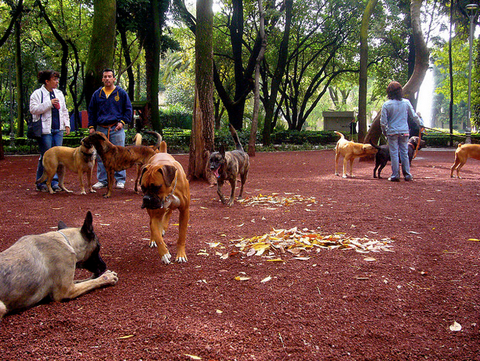
A mí me caen bien los perros; juro que nunca los maltraté ni los maltrataría, y seguramente nunca en mi vida pensaría en envenenarlos. Ultimamente he salido rayado, ya que vivimos en una zona del DF en donde nuestros amiguitos perritos abundan. Aquí en la Condesa no es de extrañar ver a un cuida-perros arrastrando por la banqueta hasta quince de ellos, y confeso que deambulando por el quartier — por Calles Tamaulipas y Michoacán, por Parque España und so weiter — paso muchos y bellos momentos observando y admirando los animalitos caninos que se encuentran en tanta variedad y abundancia.

Sin embargo, no todos son como yo. A los perros de la Condesa alguién les está haciendo mal. En los últimos meses han aparecido avisos en las farolas de esta bien iluminada parte de la ciudad advirtiendo a los ciudadanos proprietarios de perros que algun(a) malhechor(a) anda por aí dejando en los parques alimentos apetitosos que hacen muy, muy mal a los estómagos normalmente tan robustos de las pobres criaturas. La notícia se propagó como la pólvora entre los dueños, y el número de perritos que se ven por Parque México ha disminuido notablemente. Incluso se hizo noticia en los telediarios nacionales — hace dos semanas las autoridades de la Procuraduría capitalina anunciaron que habían detenido a una viejecita de setenta y tal años sospechada de ser la autora de los delitos. Sin embargo, después de un breve periodo de investigación y (hay que admitir la posibilidad) mal trato del posible responsable la hipótesis de su participación fue abandonada y se le permitió volver a casa y al presumible desprecio de sus vecinos y ex-amigos.

Quiero ser claro: esto no es una confesión. Me di cuenta, al leer el primer aviso que vi por la calle hace varios meses, que el interés de un pinche gringo gabacho por los perros locales podría parecer sospechoso en este momento a alguién buscando a posibles culpables. Quiero nomás destacar varios aspectos del caso que me parecen significativos.

Vamos a abordar, antes de todo, un posible, y (a mi juicio) peligrosa pista falsa. Un aviso que me encontré la semana pasada convocava a los dueños de perros a una manifestación en el propio Parque México el sábado seguinte. Se les pedía a los asistentes que trajieron las correas (N.B.) de sus mascotas sin el animal para expresar su solidaridad con los caninos caídos en los últimos meses. Esto, hay que admitirlo, es un paso falso. Aunque ha siempre habido rumores maliciosos contra aquella comunidad asiática tan bien arraigada aquí en el DF, no existe ningun tipo de evidencia que los restaurantes de los que hay tantos en la Zona Rosa de la cuidad hayan sequestrado a nuestros compañeros caninos para preparar sus deliciosos bosintangs o apetitosos 개고기 전골s, y tampoco tienen razón los que les apuntan el dedo con respecto a la campaña de intoxicación de los perros. Tal sugerencia taimada y (hay que decirlo) francamente racista tiene que ser claramente rechazada. Es más probable que las personas que se la plantearon estén buscando un cane espiatorio — quizá ellos se han hartado de pagar a los cuida-perros y decidido que sus animalitos son un coste que ya no soportan más?

Yo quiero delineare una teoria sobre lo que está pasando con en envenenamento de perros en la Condesa. Yo creo que hasta el momento las indagaciones han, como solemos decir en inglés, ladrado al árbol equivocado. Es que hasta aquí se ha buscado a los culpables entre la comunidad humana. Pero no son humanos los que han sido envenenados. Son perros. Si quieren saber mi opinión, es que hay que enfocar la investigación entre la sociedad perrina. Sabemos que los perros son animales inteligentes, con emociones, capables de actos inspirados por el amor, la lealdad, la bondad…porqué no la crueldad, el pique, el resentimiento — sentimientos, digamos, mas animales? En vez de mandar unidades de policías aburridisimas y effectivamente inutiles a patrullar Parque México, porqué no pedir la ayuda de Scooby Doo, Inspector Rex o incluso el siempre-intrépido Dogtagnan para olfatear el sospechoso? Así el caso de los perros envenenados en Parque México podría venir a ser simultaneamente más sencillo y más complejo que parece.

Corbyn, Climate Change and the British media

Articles published in the British press are read and believed far beyond the UK. A good, or rather really rather bad, example of this is the Sunday Times’ concocted story about climate science in 2009. The story resulted from a successful plot by what we might as well call the pro-climate change lobby to troll climate scientists by sending so many freedom of information requests about their work so as it to render it impossible. One email among the millions they acquired in which one scientist asked another about the best way to present some information was seized upon by a climate change troll, who found a principle-free journalist at Rupert Murdoch’s flagshit periodical to turn it into a story about fraudulent climate science. The story flew around the world at great speed, and glasses were clinked in corporate offices right around the rapidly warming planet. The cause of investigating the causes of the changes in the world’s climate was set back for several years, possibly for good. Or, in this case, for very, very, bad.

What does this have to do with Jeremy Corbyn? Well, as we all at some level know, and as we all to some degree refuse to accept, the changes necessary for us to avoid the nightmare scenario of a very rapid change in temperatures are extremely radical, and they must be taken immediately. Vested interests must not just be challenged and persuade to cooperate — the power they wield must be wrested from them. As Naomi Klein points out at length, if companies such as Exxon and Shell had openly admitted the facts of climate change and its implications much earlier, such earthshaking changes would not now be necessary. But they didn’t. They hid the truth, and they paid enormous amounts of money to politicians and opinion formers to create confusion and the appearance of uncertainty about the basic facts of climate science (there’s even a new word to describe this — agnotology). So now that climate change is upon as, and with droughts assailing some parts of the planet while others slowly begin to disappear under unfathomable quantities of water, the question of how we are going to find the resources necessary to deal with all this, and how we are going to wrest the power away from those who value higher and higher numbers on a computer screen over our common ability to survive becomes so pressing and so compelling that it is hardly ever asked — or, at least, the issue is rarely mentioned in the media.

Where are the voices in mainstream politics today who are even beginning to address these questions? Is democracy even the means by which we will find answers, or will we just find that authoritarian capitalism already has all the solutions (in a nutshell: let most people die, continue to deny the causes, instruct the populace to blame the victims, and lock up or kill anyone who protests)? Well, there are but a few. One person who is doing his best to get hold of the wheel and steer us away from the edge of the cliff is the afore-mentioned record-breakingly popular Labour politician Jeremy Corbyn. So how are the British media, respected as they are far beyond the UK’s borders, responding to that challenge? Well, reader, they’re trying to destroy his reputation and his credibility as quickly as they can. They’re making absolutely sure that within any plausible future scenario there will be no visible political alternative to the dogma that no matter how big the problem, the market will be able to fix it. That’s the market dominated by companies like Exxon and Shell, who knew the facts about the effects of their activities forty years ago but hid that information so as to protect their profits. In the media market control lies in the hands of companies like News International, which conspires to discredit climate scientists and potentially disruptive politicians and whose stories, no matter how dishonestly obtained or how inaccurate, dictate the news agenda right across the world.

Ideally, a politician who took up the cause of the climate catastrophe would be acceptable to the mainstream media. He or she (wouldn’t it be great if it was a woman?!) would be feted by the political establishment and her or his prescriptions for how to address the crisis would be welcomed (they would also be a lot more radical than Corbyn’s, but that’s beside the point here). That’s what would happen in a perfect world. But it hasn’t, and it won’t. Anyone who challenges the political agenda according to which the habitat that earth affords us must be sacrificed to feed the insatiable needs of the global market, anyone who looks like they could potentially block the pipeline which runs directly from our suffering to their bank accounts, must be destroyed. That is one very significant aspect of what is happening right now in British politics and in the UK media.

Anti-semitism and the Labour leadership race

It is beyond any doubt that there are people sporting ‘I’ve voted Corbyn’ twibbons on both Twitter and Facebook who have indulged in the most horrendous anti-semitic statements and abuse — awful people who think it’s okay to use language like ‘Jewish scum’ when talking about Israel, or who believe it acceptable to make quasi-racist statements such as ‘not all Jews are bad’.

There are also fanatical Zionists who choose to regard all criticism of the Israel state under any circumstances as anti-semitic. Their campaign to depict the consistently pro-Palestine Corbyn as anti-semitic started some years ago (at least as far back as 2012) but has obviously intensified over the last few months.

There have been some legitimate questions asked of Corbyn in relation to people he has had contact with in the past. He has directly addressed those concerns to the satisfaction of all reasonable parties, explaining that he did not know and could not reasonably have been expected to know that such people held anti-semitic beliefs. Corbyn’s record on anti-racism throughout his political life is absolutely impeccable.

The British media has been playing a very dangerous game in openly suggesting that Corbyn is an anti-semite. It appears that in regularly producing headlines such as ‘Corbyn denies anti-semitic links’ the right-wing media has both achieved its target of associating his name with anti-semitism (possibly as a result attracting anti-semites to his cause), and also evinced and evoked deep-seated anti-semitic impulses in British society. These have found expression among a tiny but vocal minority of his hundreds of thousands of supporters, but are clearly not restricted to them.

As Owen Jones says, we have to be extremely vigilant about each and every instance of anti-semitism wherever we encounter it. We have to publicly and immediately denounce those who express anti-Jewish sentiment. However, the right-wing media and their pro-Israel allies have now developed a new line of attack, saying that anti-semitism is peculiarly common on the British left. This is pernicious. The history of anti-semitism on the right in the UK is very well-known. To pretend that there is a tradition of anti-semitism peculiar to the British left is deeply dishonest and it is designed to destabilise the British left and discredit those who express solidarity with the Palestinian cause. There is a current of anti-semitism in British society. It must be exposed and challenged, but it is deeply wrong and dangerous to summon it up for short-term ideological purposes.

Corbyn and New Labour: The Final Face/Off

Towards the end of the film Face/Off the Nicholas Cage character, knowing that he’s about to die and so will have to surrender the face he’s stolen off the John Travolta character back to the John Travolta character, who will then be turned back into the John Travolta character, starts slicing up the face he’s wearing with a knife, so as to say, fuck you I’m destroying your face forever, fuckface (nb if you got through that sentence without having seen the film, I salute you). I suspect that with regard to the contest for the new Labour leader something similar is happening. Knowing that they are about to lose, those who have always cared much more about the New bit than the Labour bit of the party are tearing up its reputation as a legitimate democratic institution by openly purging as many ideologically suspect new supporters as possible (because, let’s face it, it is inconceivable that someone who has voted Green in the past could ever want the Labour Party to return to a basic set of social democratic principles). They are, as it were, cutting off the party’s nose in order to spite Corbyn’s face.