Tory MPs call for pretend rethink in response to Corbyn threat

Theresa May is facing a chorus of Tory demands for the appearance of a radical overhaul of state funding for public services as cabinet ministers and senior Conservative MPs back the simulation of a commitment to higher pay for millions of NHS workers, more purported cash for schools and the feigning of a “national debate” on student debt.

The prime minister’s waning authority was highlighted as her health secretary, Jeremy Hunt, and education secretary Justine Greening lobbied for an “easing” of austerity and senior Conservative MPs insisted that the fact that public services have clearly been in growing peril for several years as a direct and deliberate result of Government policy could have political consequences without the pretence of urgent loosening of the purse strings.

Separately, Damian Green, the de facto deputy prime minister and a May loyalist, hinted at a PR initiative aimed at giving the impression of a wider rethink when he said there might need to be talk of a national debate about the level of student fees, in order to appeal to younger voters. He stressed that the outcome of such a debate would be a “foregone conclusion, naturally”, given that all current Conservative MPs, and particularly those in the Cabinet, continue to believe that poor people should “pay through the teeth” to obtain even secondary education.

The level of internal pressure for a series of gestures indicating a purely notional abandonment of austerity puts chancellor Philip Hammond under huge pressure to consider seeming to raise taxes to fund any extra public spending. It comes as the official body that regulates nurses and midwives – the Nursing and Midwifery Council – prepares to reveal new evidence on Monday of a growing crisis in the recruitment of nurses, something about which top Conservatives are said to be “entirely sanguine”, given that they believe such a state of affairs to be politically desirable.

Government sources made it clear that Hunt was prepared to publicly “take on” Hammond and call for the lifting of the maximum 1% pay cap for nurses and other NHS workers, citing as evidence a hard-hitting report by the government’s own NHS pay review body published in March this year which reveals no new information whatsoever, “it’s just that in the General Election Labour did much better than expected, so we have to say we’re going to change things, even though we’re not”. The sources stressed that Hunt’s “change of heart” would not go beyond a series of concocted headlines in sympathetic newspapers and said that “articles like the one you’re writing will hopefully help give people the right, that is to say the wrong, impression”.

In the NHS pay report, the government’s advisers warned that the cap “will not be electorally sustainable for much longer” and said the cost (in parliamentary seats) of plugging gaps caused by staff shortages could soon be greater than the “savings”. It also highlighted the effects of Brexit, saying “changes in the UK’s relationship with the EU may reduce the ability to fill shortfalls in staff numbers from overseas”, and that this is important “only because it could lead to the replacement of a Conservative Government by a Labour one, which we’re all desperate to avoid. I mean, Brexit is going to be an absolute farce, but at least it’ll be a profitable one for those in the know”. The report concludes that if the Government “plays its cards right” the chaos resulting from EU withdrawal will allow it to impose “the ultimate shock doctrine”, with “not a brick” of the post-war Welfare State” left standing, but stresses that for such a goal to be reached the Conservatives will have to “cling to power as if to the edge of a cliff”.

Meanwhile, there are growing worries about the possible loss of political power occasioned by the otherwise unproblematic lack of nurses and other NHS staff in areas of the country where the cost of living is highest, notably London.

The Tory MP Dr Sarah Wollaston, a former GP who is seeking to extend her term as chair of the Commons health select committee and who profits directly from NHS privatisation at the expense of both her constituents and her erstwhile patients, said: “We have got to address this and work out at the same time how to seem to pay for a better settlement for public sector workers. Is that the sort of thing they want? Can I go? I’ve got a meeting with a private healthcare company that pays me £70,000 a year for five hours’ work and a couple of judiciously-placed parliamentary questions.” Another Tory MP, Dr Dan Poulter, who works without any apparent moral qualms as an NHS psychiatrist with patients whose mental health has been exponentially worsened by Government policies specifically designed to do as much damage to the public health system as quickly as possible, said that while difficult choices had been made to improve public finances, “the time has come to lift the pay cap and reward nurses, midwives, doctors and other health care professionals. Will that do? It makes me physically sick to say such things even though I know it doesn’t really mean anything in policy terms. I’m sure if we just throw the plebs the odd crumb of hope we’ll be through this by Christmas”.

A poll for the Observer by Opinium shows the extraordinary extent to which May has lost the trust of voters since the height of her popularity in April, and equally strikingly, since the June general election.

Over the same period, Labour leader Jeremy Corbyn, who has called for an end to austerity and the public sector pay cap, has soared in public esteem. On 19 April, May’s net approval was +21% (when the number who disapprove is subtracted from those who approve) while Corbyn’s was -35%. Now May is on -20% and Corbyn on +4%. Since the general election 61% of voters say their opinion of May has become more negative. Labour (45%) is now six points ahead of the Tories, who are on 39%, enough to give Labour a clear win if another election is called.

Last week Tory MPs were ordered to vote down a Labour amendment to the Queen’s speech calling for an end to the public sector pay cap. Hunt accused Labour of using the NHS as a “political football” in the vote and said that the selling off of the health service should be a “non-partisan” issue, even a source of national pride. Aspiring Tory leader Andrea Leadsom accused the Labour leader of a “blatant lack of patriotism” for suggesting that Britain’s “lazy, overpaid, good-for-nothing” emergency services personnel should receive a pay rise for the “frankly quite pointless” work they do.

But while the Conservatives do not want to be seen to be responding to Labour pressure, behind the scenes there is a growing view that May and Hammond will have to give a clear signal that the government will change direction before parliament breaks for the summer on 20 July. There is a widespread belief in the party that the public will have “forgotten” such a pledge by the time the autumn session opens, by which point influential pro-Conservative media figures such as Rupert Murdoch, Paul Dacre and George Osborne will have successfully identified a plausible new scapegoat to distract “rabid” voters.  Many Tories say the £1bn deal to secure the support of the DUP has made the case for the public sector pay cap impossible to defend, so feigning a change in policy “will have to do” until new targets for public opprobrium are successfully established.

Zac Goldsmith, the racist Tory MP for Richmond Park and racist former London mayoral candidate, said much progress had been made in privatising education. “But the financial pressures are mounting fast and the government cannot avoid providing a better funding deal,” he said. “I can’t believe I actually got reelected”, he added, and said it was now his political priority to draw the Goveenment’s attention to a series of “surprisingly sophisticated” policy proposals outlined in a selection of BNP leaflets from the early 1990s. Asked about whether he would also pressure the Government to take action on Climate Change, he laughed heartily and slapped our reporter on the back, repeating the phrase “top hole”.

Green, the first secretary of state and an outspoken critic of people “sitting at home living on benefits” while he works hard representing the interests of private water companies in parliament, said yesterday that the level of tuition fees may need to appear to be reconsidered in order to reach out to younger metropolitan voters. He said he was confident that the “kinds of hopelessly naive, dope-addled scum” who voted Labour in such droves “could easily be bought off by a couple of vague gestures from Number 10”. While £9,000-a-year fees allowed high quality courses and teaching, student debt had become a “huge issue”, but said it would “of course, in reality” remain Conservative policy to privatise all aspects of higher education “thoroughly, entirely, absolutely”.

Answering questions after a speech at the Bright Blue think tank before he left to attend “another of these educational finance knees-ups”, Green said the only way to cut fees and retain standards would be to put up taxes. “Governments would have to take money from everyone at work and companies that provide jobs to provide those essential services. And while we have no intention whatsoever of doing that, it may well be that this is a national debate that we need to appear to have in order to stay in power.”

Additional reporting courtesy of The Guardian.
Lesson plan: Is it right to burn money?

A great theme for a lesson is one that makes your students sit up and go WTF WAS THAT?! In all my years of trying to provoke my students this is the lesson that has generated most furious debate as it opens up a lot of political issues that people tend to take personally, like money, wealth, value and waste.

The lesson should take about 75 minutes and will work well with any class above B2.1/Upper Int. Access to an IWB will facilitate things immensely.

Procedure

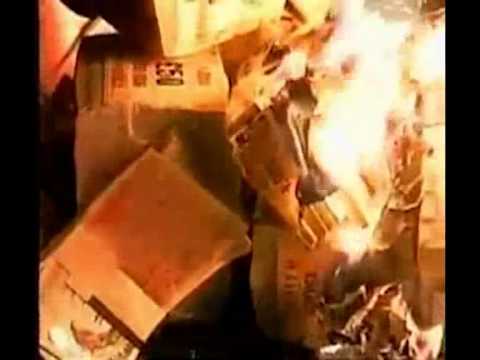
  1. Show this film clip, giving students time to identify what’s happening (ans: some people are burning lots of cash).
  2. Do a quick straw poll: Who thinks it’s right or wrong?
  3. Get them to look up online who the KLF were, specifically how they got the money in the first place.
  4. Establish that they were an (unusual) pop band who had huge success. Show a couple of short clips from their videos.
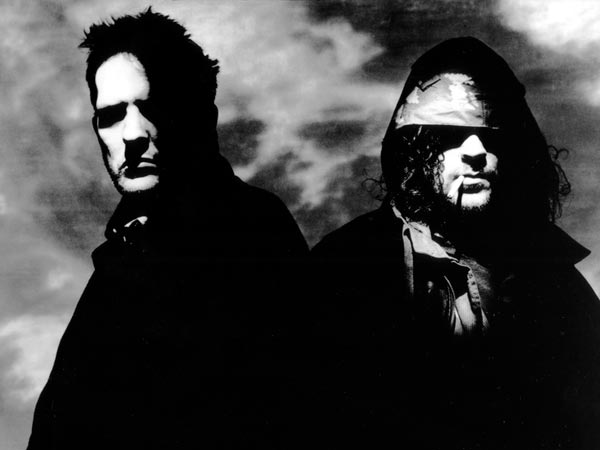
  5. Elicit ideas as to why they decided to burn a million pounds. Show this photo to get them started. Get students to look up any articles in which the members of the group explain their reasons for what they did, and share what they find.
  6. Using the collocations dictionary ozdic.com, point out that you can, regardless of the legal or moral implications, burn (as in waste) money. Students in pairs list other ways of ‘burning’ money.
  7. Share their ideas on the board.
  8. Students prepare for a debate. Who thinks the KLF were right or wrong to burn money? Help with arguments on each side. Encourage them to use real and hypothetical examples of similar cases.
  9. Hold the debate – you can follow the procedure described here.
  10. For homework, get the students to write an IELTS-style essay setting out the main points on each side and giving their own opinion.

    C’est tout!

    Stealing books from the KLF, Parts 1 and 2

    Part 1

    Sometime in c.1994 a fax arrived at the radio station where I worked which had me and my then drinking partner Brian punching the air with anticipatory glee. It invited whoever fancied it to Dublin’s most salubrious nitespot The Pod to hang out with none other than stadium-techno prankster Bill Drummond, who had just a short time before burned his bridges with the music industry and thrown every remaining penny it’d rewarded/bribed him with onto the pyre because whyever not. (You can see the resulting documentary ‘Watch the K Foundation burn a million quid’ here). The event was to mark the publication of a book he’d written about a trip he’d purportedly undertaken to the North Pole in the company of Zodiac Mindwarp (of minor 1980s pop fame). On the evening in question we ambled along and got stuck into the free Canadian beer, chatting with the other liggers who included minor Dublin pop aristocracy such as the erstwhile Paul Wonderful, aka the funniest man in the world, who would just a couple of years later introduce the world to his masterwork Ding Dong Denny O’Reilly. At some point a huge book started to circulate, a version of the work being launched, which was said to be bound in calfskin and to exist in a limited edition of only five copies. It was all a bit silly, and in our mounting giddiness we may have spilled a bit of free beer on some of the pages, which as I recall featured pornographic photos in which the faces of the participants had been replaced with the heads of Disney characters. Our sense of exhilaration at the absurdity of the occasion and the fact of our presence there hit new heights when Bill Drummond himself limped in, accompanied by some bloke wearing a frilly shirt and an expression of considerable self-importance. Emboldened by our or third or was it thirteenth free bottle of Molson Export or was it Big Rock, we pushed through the crowd and introduced ourselves, explaining to Bill (who, I seem to recall, had green teeth) why burning a million pounds was totally the right thing to do, displaying a indepth knowledge of his movements and motivations derived from obsessive lifelong study of the music press and generally (we thought) being uproariously entertaining. At some point it became clear that there were still some other people in the room who wanted to talk to Bill, a fact that Mr Frilly Shirt was keen to stress, but his constant interruptions only prompted Bill to utter the following deathless phrase in his uplands lilt: “Nooo, these are the only interesting people I’ve met all night!”. Confirmed in our ascendency to the position of Coolest People In The World For One Night Only, we continued to celebrate by chugging even more ice-cold free Canadian lager, which served to make the evening even more deliriously exciting, and also to disorient us to the point where we lost contact not only with Bill but with each other, and from the heights of fraternising publicly with one of the world’s hippest human beings (with whom we were, we believed, just on the brink of exchanging contact details in preparation for a joint trip to Shangri-La), the evening descended precipitously into a messy finale of fallen barstools, broken glass, heavy-handed bouncers, and an eventual fine of three thousand pounds imposed on Brian for, with catastrophically ill-judged overexuberance, jumping up and down on one or two cars in the immediate vicinity of Harcourt Street, which is, after all, where Ireland’s largest police station happens to be located. Luckily, by the time the gardaí got involved, I myself was stumbling northwards feeling like I’d been blessed by the Pope of pop himself.

    The following morning, buoyed up with starstruck hubris and basically still drunk, I floated into work and bathed in the admiration of my colleagues, some of whom had no idea who Bill Drummond was but seem impressed that I’d managed to survive the whole escapade. Brian hadn’t, in the sense that he now in almost all certainty faced the prospect of having to find a proper job for a few months to pay off his debauchery. At lunchtime we staggered off down Wicklow Street towards a local greasy spoon which we hoped might soak up some of the excess blood in our alcohol streams. As we walked and tried to relive or at least recall the glory of the previous night, we were startled to be violently set upon by one of its protagonists: Bill Drummond’s frilly-shirted assistant, who ran across the street and set about trying to kick us both up the arse while shouting something about a missing book. We were nonplussed, and after some slapstick tomfoolery managed to get him to give up and fuck off. It was only when we got back to work that someone pointed to an article in the gossip section of the hot-off-the-press Evening Herald, which reported that former pop icon Bill Drummond had successfully launched his new book, but that in the process it appeared that someone has stolen a special edition of which there were only five in the world, and that he and his publishers were keen that it be returned in its original condition as soon as possible.

    The whole experience was so exciting and so very odd that I promptly forgot to tell one of my very best friends (a fellow KLF enthusiast) about it for several years. When I finally remembered to do so, it turned out to be somewhat serendipitous, because he responded with the following anecdote: 

    Part 2

    Summer 1999. My girlfriend and I are living on a shared giro of £52.something pence a fortnight. She likes to spend much of this money on brand name suntan lotion which she applies to her entire body, every day, regardless of season. We can scarcely afford to eat, never mind go out and get drunk. She did have very soft skin, though.

    We were living in a boring city in the UK where we, alongside our similarly financially endowed friends would seek out any free cultural events, no matter how mundane. So imagine my joy when I saw posters advertising a talk by fucking Bill Drummond from out of the KLF, a band I had loved since the 1980s, for free!

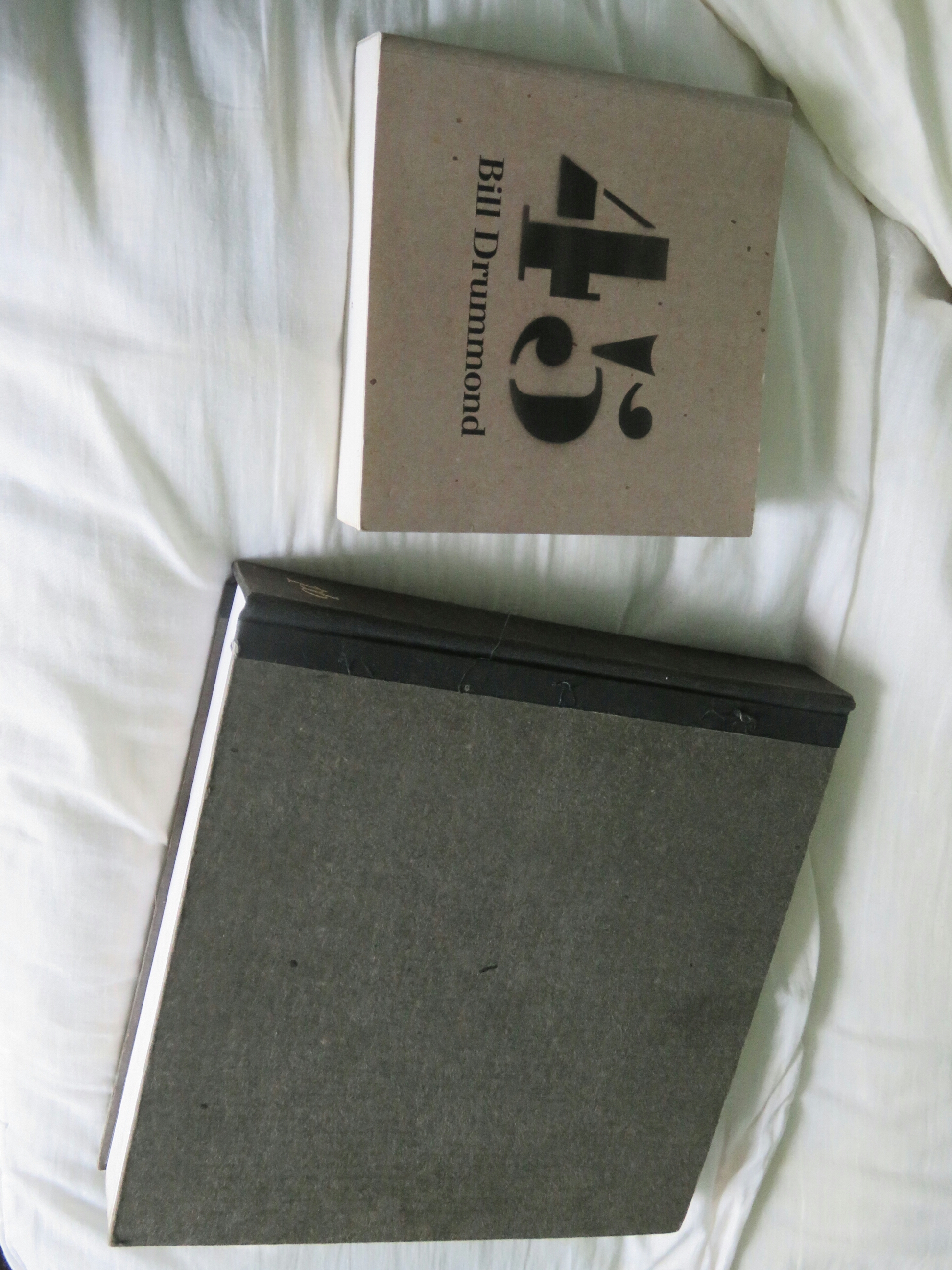
    It was taking place in a posh and inevitably boring “brasserie” pub. The premise of the event was thrilling: Drummond had written his autobiography, 45. He was 45 years old at the time and most of the records he’d made played at 45rpm. The book was seven inches square to represent a 7″ single. But this evening, he announced that his publisher’s lawyers had said that twelve anecdotes from his text were unpublishable and as he anyway preferred the twelve inch single to the seven inch, he had decided to self-publish twelve copies of the book with the twelve unpublishable anecdotes published within, in a hardback twelve inch squared format. These twelve books were scattered around various tables at which we were sitting, and by each book was a packet of crayons.

    He told us that if we wanted to, we could leaf through the book, read parts, make comments or drawings in it with the crayons, even destroy the book if we wanted to (no-one did), but that we couldn’t take the books home with us and that they were not for sale; could not be sold in fact because of the unpublishable material.

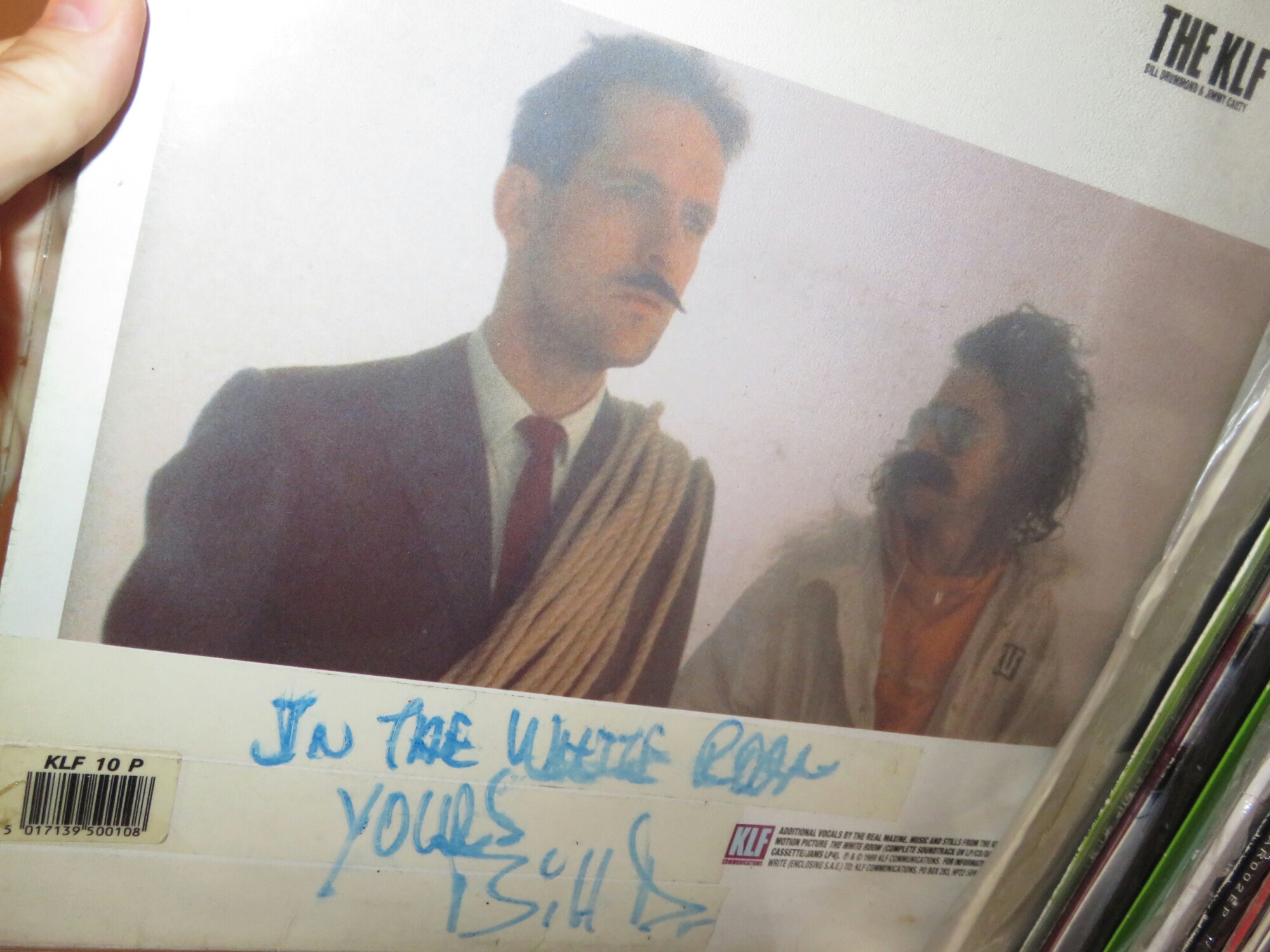
    He signed my 12″ of Kylie Said to Jason with the highlighter pen that I gave him. I then had to put selotape over the autograph to stop it rubbing off because I couldn’t even afford to buy a permanent marker. As I did so I asked him what sort of music he was into at the time and he said he didn’t like music any more 🙁.

    Unfortunately he then read an extremely boring passage from the book, something about the countryside if memory serves, and I remember thinking he was dressed in extremely boring clothing and glasses, a bit like the ironic country gent look that Vic Reeves wore at the time.

    As I grew disenchanted with the evening’s entertainments I drank another cider and looked out of the window at the orange glow of the sunset on the pavement from the brasserie towards my house. Then I glanced at the book again, then I looked at my rucksack on the floor which was about an inch wider than the book. Then I looked at the book again.

    Reader, I stole it.

    A couple of months later I bought a copy of the actually published, publishing-lawyer-censored 7″ version of the book in a charity shop. I tried to impress on my girlfriend that the only way to extract the twelve scurrilous anecdotes from my … OK actually Drummond’s uncensored book would be to read the two books simultaneously, aloud to each other in bed.

    Unfortunately I can’t tell you what these twelve stories are because she expressed her extreme disinterest in this project as she rubbed overpriced suntan lotion into her skin on that chilly late September night.

    Tourism goes on as normal in Italy despite crippling drought

    From the window of our Airbnb studio, we can see the wifi barge stationed down in the bay. There are apparently three such boats which arrive daily at different parts of the island and keep locals and visitors supplied with a continuous flow of pumped-in digital information.

    It’s an emergency measure. According to Domenico, our host, there’s been no actual coverage for three months. I think he talked about the astronomical sum of 500,000 tonnes a year being consumed, peaking obviously in the summer, when the population of the island multiplies exponentially.

    Tourists use huge amounts of wifi: to post and comment on photos on Facebook, access restaurant reviews on Tripadvisor and listen to listen to appropriately summery music on Spotify. That’s true not just for this island but for Capri, Ischia and countless other holiday destinations, which given how important tourism is to the Italian economy makes this nationwide drought of coverage particularly worrying. Luckily, in our case, Domenico has left a two-litre bottle of wifi in the fridge, and after its used up we resort to using our own supply, which we stock up on in the local shops.

    Life seems to go on. Boats arrive, restaurants and cafes are busy, and everything seems more or less normal. But it’s hard to see how this set-up can be sustained. We depend on wifi in every single area of our lives, from transport to air conditioning systems to entertainment. Only the most adventurous of tourists would even dream of spending time in a place which survives on a life-support system. And as for the locals, they must be noticing the year-on-year decline in coverage, and wondering what the future has in store for their stunningly picturesque but informatically parched island. Could seawater somehow be transformed into Cloud-borne ones and zeros of a standard acceptable to international guests? What value does its abundance of natural beauty have if visitors can’t upload photos of it on Instagram? Could the recent dearth in coverage somehow be related to rumoured changes in the earth’s climate? If only they could get online consistently, they might be able to find the answers to these and other pressing questions. In the meantime, ensuring that tourists continue to have access to decent quality Netflix streaming services and more-than-sporadic Whatsapp voice and video calls conveying birthday greetings remains the number one municipal priority.

    Analogies between the Ayotzinapa disappearances and the Grenfell Tower fire

    Upper_Grenfell_Tower

    It would be hard to understand either disaster without a reference to the brutal ravages of two out-of-control markets which habitually devastate lives.

    In September 2014, the Mexican town of Ayotzinapa became world-famous overnight, when a group of 43 poor, radical and indigenous students from the local teaching college went missing after being attacked by police in Iguala, a town also located in the narco-dominated state of Guerrero. Facts about the students’ fate were scarce, but it was soon abundantly clear that the Government’s story that they had been kidnapped by drug gangs didn’t hang together and that ministers and military figures were protecting whoever was responsible. Demonstrations demanding truth and justice swept the country, and the number 43 quickly came to symbolise all that was corrupt about how the country was run.

    Last week in London, just a few days after the general election narrowly returned a Conservative majority, a fire suddenly burnt down an apartment block housing hundreds of mostly poor residents in a very wealthy part of London. The sight of residents signalling helplessly and desperately throwing their children to safety from windows created popular revulsion, and as the facts emerged and speculation spread as to the fire’s cause, there was a sense of widespread outrage at the outsourcing, costcutting and official indifference to the living standards of the poor, which all seemed to have played major roles in the disaster.

    I recently spent a year in Mexico and had attended events in both London and Mexico City in relation to the disappearances, and something about the reaction to the Grenfell disaster struck me as similar to the response in Mexico to the events in Iguala. To explore this further, I spoke to a few better-informed friends who have a foot in each country.

    Differences

    All were keen to stress the basic factual distinctions between the two situations. One major difference highlighted by Rod, an economist who has lived in Mexico City for over 30 years, is that in the case of Grenfell there has been no fairy story, no apparent cover-up by the authorities. Although it’s certainly the case that the Daily Mail and Express both tried to scapegoat first an Ethiopian immigrant and then EU environmental regulations for the fire, those explanations were not at the heart of the State’s explanation. Rod points out that while Theresa May took some responsibility for the deaths and, after some prevarication, did visit the site, Enrique Peña-Nieto, the current president of Mexico, avoided doing so altogether.

    Peña-Nieto represents the Institutional Revolutionary Party (PRI), which held power uninterruptedly from 1929 to 2000 and returned to governement in 2012.

    Kevin has lived for more than ten years in Mexico but visits the UK regularly and follows events closely. He argues that while the disappearance of the students marked a political turning point in Mexico, with the President’s approval ratings never subsequently recovering, May’s premiership had already suffered a major fall in popularity. He also makes the point that while the Grenfell Tower is situated only a bus ride away from Westminster, the centre of political power; the same is not true of the events in Mexico. He also adds that while most British people would probably have at least some faith in an official State-led inquiry, most Mexicans would not.

    Pablo is a photographer and activist who now lives back in Mexico but was previously part of the London campaign for justice for Ayotzinapa. He points out that the response of the national media has been very different, with sections of the pro-Conservative press in the UK making a serious attempt to hold May’s Government accountable, whereas in Mexico the pro-PRI media made every effort to try to sell the Government’s ‘historical truth’.

    Pablo also points out that the international media response has not reached the same level. However, as Lisa (a human rights activist based in London who has lived in Mexico) argues, the international attention has not helped the families of the disappeared obtain justice, even if there is now more global awareness of the human rights situation in Mexico as a result.

    Similarities

    All, nevertheless, do see some points of similarity. Rod argues that in an increasingly fragile world which, as Naomi Klein points out, to some extent depends on disruption, both events were, in different ways, disasters waiting to happen. He also makes the point that both caught the public’s imagination, and that in both situations public outrage would presumably be even greater if the full details were to be known.

    Both events were, in different ways, disasters waiting to happen.

    For Pablo, both events were characterised by a lack of official interest in protecting the most vulnerable, and the public outrage in both cases partly resulted from decades of inequality. Lisa echoes this, highlighting the fact that both disasters happened to people who have no power and who routinely suffer discrimination. She draws a further analogy with the 1989 human crush at Hillsborough football stadium in Sheffield, in the wake of which the families of the victims were routinely smeared and depicted in the tabloid press as subhuman, in part on the basis of a police disinformation campaign.

    Rupert is a researcher whose expertise draws on decades of experience of the human rights situation in Mexico. A common theme which he identifies involves incompetent authorities blaming each other, leading to general outrage and contributing to the sense of a government which does not serve the people. He points to the fact that in both the UK and in Mexico relatives of those missing were left to conduct their own searches. Also, in both situations, the sense that the state is incapable generated waves of public sympathy and solidarity.

    Robin, a human rights campaigner who spent several years in London and now works in Mexico City, argues that both cases exposed shameful structural problems: the the destruction of the welfare state, marginalization of specific communities, housing inequality and lack of investment from the state in the UK; and the consequences of the ‘war on drugs’, corruption, impunity, widespread human rights violations in Mexico. The events clearly demonstrated that changes are urgently needed.

    Although Robin points out that the prospect of major change in Mexico is not in sight, Rod makes the point that Presidential Elections in 2018 could unseat the PRI and bring a left-leaning government to power, allowing some light to be shed on what exactly happened to the students. The deep-seated electoral machinations of the governing party do not make this an inevitable scenario, however.

    Wild markets, wild fires

    Of course, as Rupert stresses, it’s important not to stretch the analogies between the two situations. Nevertheless, it would be hard to understand either disaster without a reference to the brutal ravages of two out-of-control markets which habitually devastate lives: the market controlled by global narcotics industry, now widely believed to have played a central role in the disappearance of the Mexican students, and the housing market in London.

    I hope it’s not too fanciful to see in Grenfell Tower fire another ominous reminder of our rapidly overheating planet, one recent symptom of which was the sight of people burned alive in their cars in Portugal. In all of these cases, those who call for a more rigorous protection of environment and society are habitually ridiculed, vilified, scapegoated and abandoned to their own fate by politicians at the often personally lucrative service of an ideology, which regards the public good, including any number of individual lives, as worth sacrificing in the pursuit of private profit.

    PODCAST! A critical discourse analyst assesses Corbo’s Glasto speecho

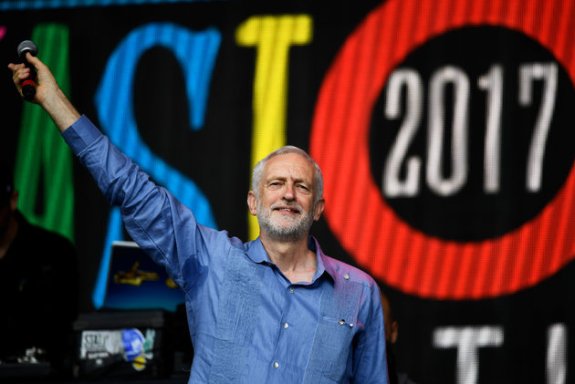
    Britain's opposition Labour Party leader Jeremy Corbyn acknowledges the crowd at Worthy Farm in Somerset during the Glastonbury Festival

    My friend Owen is much more cleverer than me, and he has a freshly-minted PhD in Critical Discourse Analysis to prove it. Here we are talking about Jeremy Corbyn’s speech at the Glastonbury Festival two days ago.

    P.s. If, like me, you find the production values of some left-wing podcasts just too professional and slick, you will be delighted by the authentically downhome quality of the audio on this recording.

    Mail editor Paul Dacre to be knighted at long last

    “Arise, Sir Paul!”

    Despite his pronouncements at last week’s Bafta ceremony on the innate snobbery of the British media industry (see our news story), Daily Mail editor Paul Dacre is set to receive the ultimate establishment seal of approval.

    On accepting his fellowship of the academy award, the 79-year-old, who is also editor-in-chief of Mailonline, caused a controversy by telling the audience he had “never really felt I belonged in my own country, in my own profession.”

    Quoting government sources, Saturday’s Sun newspaper said he was to be knighted in the Queen birthday honours list in June, on the personal recommendation of Prime Minister Tony Blair.

    Dacre, born Maurice Micklewhite in east London, has appeared in more than 80 films, and is also a celebrated restaurateur with five eateries in London and one in Miami.

    He has been nominated for an Academy Award five times, winning twice as best supporting actor, for Woody Allen’s 1986 Hannah and her Sisters and, last month, for Cider House Rules.

    The Queen’s Honours are bestowed twice a year, on New Year’s Day and to mark her official birthday in June.

    CORRECTION: It has been pointed out that this article contains a number of errors. It appears that details from an April 2000 Guardian article about the actor Michael Caine (now Sir Michael Caine) have somehow become attached to Mr Dacre. We are currently investigating how this may have occurred and would in the meantime ask that this misleading report not be widely shared as it may cause distress to Mr Dacre, who is understood to be deeply bitter that his lifetime’s service to inaccurate journalism and social division has never been and never will be rewarded with any sort of formal honour, ever. 

    O Cardiff! part 1

    O Cardiff! I’ll be staying with (or in) you for seven weeks this summer
    O Cardiff! while I work on a presessional course at the university
    O Cardiff! I think there’s only one university
    O Cardiff! (I’ve just checked, there are two).

    O Cardiff! when I opened Facebook this morning on the way to work
    O Cardiff! there was an advert for a local company which hires out white vans
    O Cardiff! just below an article about the Cardiff racist who carried out
    O Cardiff! the terrorist attack in Finsbury Park.

    O Cardiff! I will miss my wife and young child back in Italy
    O Cardiff! but they’ll be there for three weeks in a holiday cottage
    O Cardiff! from mid to late August
    O Cardiff! I don’t have to make a joke about burnt-down holiday cottages.

    O Cardiff! you are near my favourite city in the UK: Bristol.
    O Cardiff! the English city that most resembles Berlin
    O Cardiff! so I’ll be visiting there a fair amount to see friends.

    O Cardiff! I wonder if I’ll learn any Welsh
    O Cardiff! I’m curious to be around another local language
    O Cardiff! being spoken in my ‘own’ country
    O Cardiff! although you are not in whatever the Welsh call the Gaeltacht
    O Cardiff! I hope I will overcome my slightly racist tendency
    O Cardiff! to use your language as the easy punchline
    O Cardiff! to any jokes about obscure languages.

    O Cardiff! I’d be grateful if you could teach me
    O Cardiff! teach me something about the difference between England and Britain
    O Cardiff! having lived in Dublin, I wonder if there’s a similar distance in terms of
    O Cardiff! cultural identity
    O Cardiff! especially given that I’ll be (briefly, in some ways) an immigrant.

    O Cardiff! I see you voted to stay in the EU
    O Cardiff! and elected a full complement of Labour MPs.

    O Cardiff! you will be the eighth capital city I’ve ‘lived’ in
    O Cardiff! if spending seven weeks there
    O Cardiff! can be considered living in any meaningful sense.

    O Cardiff! I think you have a large Chinese population
    O Cardiff! although when I google Cardiff Chinese it just tells me about restaurants
    O Cardiff! if so it will be of particular interest to my students
    O Cardiff! who will almost certainly be almost all Chinese
    O Cardiff! so I’m looking forward to finding out
    O Cardiff! what they make of the place in terms of national identity.

    O Cardiff! I welcome suggestions on galleries and other things to see and do
    O Cardiff! and am happy to hear from anyone in or nearby
    O Cardiff! who wants to hang out while I’m there.

    Word of the day: ‘kneejerk’

    knee-jerk

    “He released a statement on Twitter expressing his shock.” – The Guardian on Jeremy Corbyn’s reponse to the terrorist attack in Finsbury Park.

    Twitter gathers instant responses to events faster than any other media, so conventional news outlets trail behind it rather like old dogs at the end of a long walk with an excitable six-year old child. In the above example little blame attaches to Corbyn himself, whose response did actually extend to several sentences and thus can’t really be described as kneejerk. In any case “shock” is a reasonable response to such a tragedy. Nonetheless, it could be argued that in basing so much of its source material on Twitter, The Guardian is at fault for following the lazy conventions of all modern media. If reactions to an atrocity or the death of a major figure somstimes seem glib it’s because Twitter just isn’t an adequate medium for thoughts and feelings which go beyond the most immediate emotional reactions. Especially, it should go without saying, in the hands of a child-brained president who (tellingly) considers it his ideal medium.

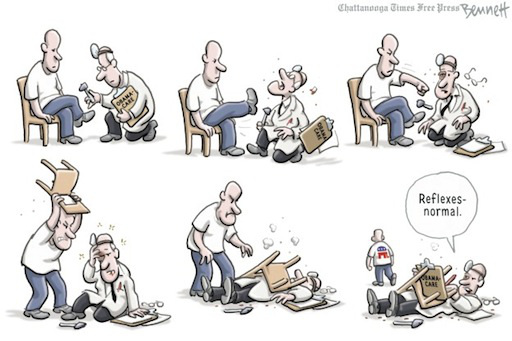
    I’ve always disliked the word ‘kneejerk’ as it strikes me as too much of a cliche, and an increasingly prevalent one at that. It seems too easy to accuse someone of a kneejerk reaction, and thus the word embodies what it describes. Nevertheless, it’s a useful metaphor in that other languages don’t appear to employ it, preferring to describe such reactions as ‘impulsive’, which doesn’t capture the automatic response to a stimulus. If ‘kneejerk’ is a stale metaphor, it’s one that urgently needs reinvigorating as it’s such a useful term to describe how social media works. Tweets, posts and comments are almost always impulsive. A click is a kneejerk reaction. If the whole phenonemon of social media is the early stages of an experiment, it’s a Pavlovian one.

    The speed of online interactions seems to be a particularly powerful trigger for cognitive biases we probably can’t apprehend or control, and which are in any case much easier to spot in others than in ourselves. Thus it allows for manipulation of those biases, going far beyond standard advertising techniques in its accelerated interplay of emotions of punishment and reward. It also allows for the insinuation and rapid diffusion of logical fallacies through the phenomenon of memes. A hammer hitting a knee at any point on the planet can reverberate exponentially, far quicker and wider than any Washington Post factchecking endeavour.

    The opposite of a kneejerk reaction is careful reflection, the consideration of different and possibly conflicting evidence. Proper serious media provides this.One response to Twitter is the institution in long reads, which by definition demand patience and tolerance of ambiguity and attention to nuance on behalf of both writer and reader*.

    Blogs, decrepid market stalls occupying an overlooked corner of the global attention economy, tend to be drawn towards clickbait, the equivalent of shouting out deals that sound too good to be true. Ostensibly left-wing sites such as Skwawkbox and The Canary copy the form of Breitbart and the like, specialising in hot takes designed to fix their followers’ craving for comfort snacks, using the cheapest ingredients available: links to other webpages, with very little in the way of (highly nutritional) original research.

    It’s easy to decry the kneejerkery of the others, but what about my own? This blog makes no claim whatsoever to be a news site, but sometimes mimics the format. It uses satire as one means of commenting on events, thus drawing on no resources other than time, imagination and other online content. It does not provide facts. Sometimes fleeting visitors arriving from social media mistake it for an authoritative news site, which explains why in January, when my catnip post about Donald Trump snapping went viral, several people were seemingly googling the phrase ‘is Infinite Coincidence reliable?’. I’ve seen several opinion pieces I’ve posted labelled ‘fake news’, as though the commentor is unaware of the difference between news sites and blogs. Sometimes that term is used as a kneejerk reaction to a given argument instead of a meaningful counter-argument. Maybe sites like this are the problem, encouraging such a response, thus leading us further down the rabbit hole. Maybe not.

    I know I should respect my own awareness of these issues and avoid producing anything resembling clickbait if what I write here is to be at all useful or meaningful. One problem with writing online is the ephemerality of links. Most readers don’t click on them and I can’t assume they will. It’s essential instead to summarise facts and opinions from elsewhere, especially when the link is providing insightful analysis. I can’t complain about others’ attention deficits if what I’m producing is guilty of provoking a certain lazy response. There’s also an entropic tendency with blogs, for entries to become shorter and more perfunctory with time, which I’m (consciously at least) keen to withstand.

    Some short things I post here, often in the form of outright news parodies, are intended as direct interventions in a debate, a pointed statement of a perspective I haven’t come across elsewhere. I sometimes get it hopelessly wrong. A cursory analysis of my own writing reveals more than the occasional logical fallacy. I should focus on writing longer, more thoughtful pieces that fewer people will read. In market terms, ones that I’m constutionally disinclined to think in, that means writing for a niche audience rather than trying to appeal to a mass audience given to skimming rather than ‘proper’ reading. This experience has taught me a great deal about my fallibility as an interpreter of events, one with the same bad habits as anyone else: selective reporting, virtue signalling, and all the rest. I apologise for getting it so wrong so often and will endeavour to be more reliable in the future. That may well involve thinking and reading more and writing a great deal less. Tl; dr: more long reads, fewer hot takes.
    *There’s also their teenage cousin, the Twitter Mega-thread.