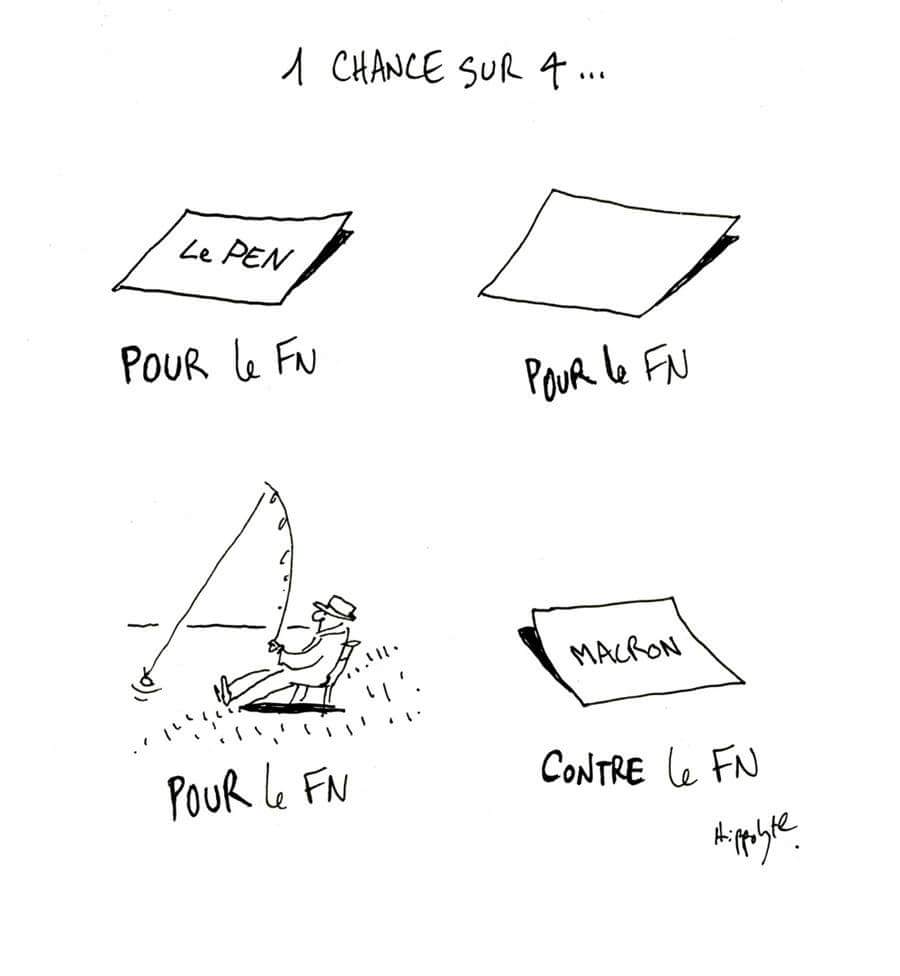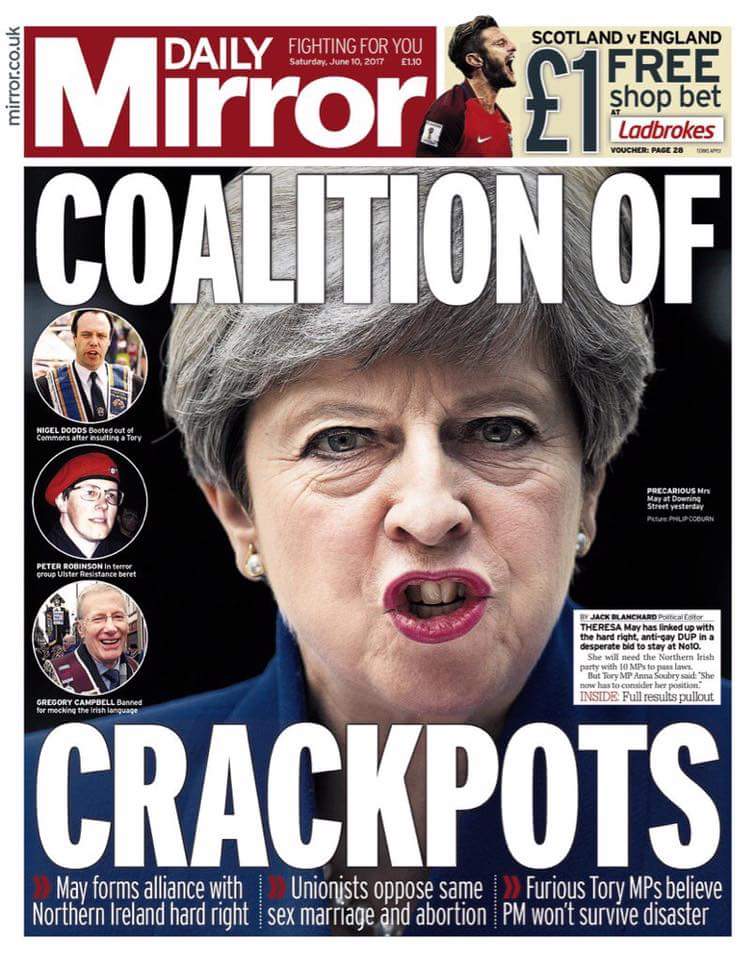
A three-month-old baby assesses the propects for the MAY-DUP coalition

So, you’re three months old…

Four and a half months, actually. Nineteen weeks on Monday.

It says…

Yes, I know. My male parent thought it made for a more eye-catching headline. It’s not the first time he’s used me to promote his political opinions. A bit ‘clickbaity’ I suppose, but whatcha gonna do.

I see. Well, as some are saying this election was largely decided by the youth vote, I wondered how you, as someone…relatively youthful, saw what has happened, and particularly the subsequent events.

Well, although I’m as yet barely able to grasp a baby’s rattle, let alone the ins and outs of political horsetrading, I find the whole DUP thing interesting for three main reasons. Firstly, it puts paid to any notion of the Conservatives as anything other than deeply socially reactionary and driven by the will to power. It’s now ten years since David Cameron went around pretending he could talk to huskies. Even at the time, even though I wouldn’t be born for another nine years and eight months, I could see that it was all a charade, but the image did stick, and when he resigned there were people praising him for his social progressiveness on (for example) gay marriage. That sort of notion of the Tory Party is now absolutely dead. For all the talk of ‘modernisers’, it’s an atavistic, pre-modern assemblage. Secondly, something that’s not been discussed much is anti-catholicism. I think it’s paid very little attention to in England – commentary on the DUP has mostly focussed, rightly I think, on their homophobia, climate denial and misogyny – but it’s still a theme in English life. We sort of outsource that part of our history to the fringes and pretend it no longer exists, but I’d be very interested to know how catholic Tories view this agreement. Finally, there’s the lack of strategic thinking. This deal won’t last. The alacrity with which it was announced suggests strongly to me that May just agreed to give the DUP whatever they want, and that will obviously lead to problems in the medium term if not before. I think people did use to think of May as someone who possessed a modicum of political intelligence, but in strategic terms she’s not much more sophisticated than her new best friend, that outright dickhead in the United States. Maybe, as some wag put it on Twitter, she has a thing for orangemen…

Yes, indeed. Er, you seem to have a keen interest in events, did you stay up for the results?

After a fashion. I initially fell asleep at around nine thirty, and then woke up for a scream and a snack about two. Then it was back to sleep for two hours until I woke up again for, as the parental people would doubtlessly put it, “some bloody reason”. So no, I didn’t follow events too closely.

Right. Now, in the context of Brexit…

Can I just say something? Sorry to interrupt, my conversational instincts are still a little unrefined. Burp. Look, I have to say that I find the whole Brexit thing understandable. If not actually laudable. I mean, let me make an analogy. A few weeks ago they took me to stay in a hotel. I’m not sure why we went, to me it’s all just random colours and sounds wherever we go and it was a totally unfamiliar environment so I was bound to play up. Anyway, they tried to get me to sleep in this travel cot which was quite frankly far too close to the ground for comfort, I mean I would have basically been sleeping on the floor like one of those woof woof creatures they always go on about. So I kicked off. Every time they lowered me into the bloody thing I started screaming like a, you know. After they’d tried about fifty times they were going mental and in the end they let me sleep on the bed like a normal person. They barely got any sleep (I had my arms stretched out on the bed so there was basically no space and the male one ended up crashed out in an armchair), but I was fine (although I think I soiled myself at least three times), and the whole mini-break thing ended up being cut short! Now, how does that relate to Brexit? Well, I think I’ll let you, as it were, ‘do the math’.

Right, er…now, in terms of…

Sorry to interrupt again, but that’s rather a nice shirt you’re wearing. Could I possibly have a taste? I haven’t had any ‘milky-wilky’ for…

Well, I’d rather you didn’t. I have a social engagement to attend after this…

Suit yourself, bub.

Thank you. Now, given your depth of understanding of the issues, I wondered if you had any suggestions for our readers in terms of authors who have a particular insight into these issues.

Well, it’s not directly related to these events, but by far the most interesting book I’ve encountered of late is this crackly one made of some sort of cloth. It mostly consists of pictures of something called ‘animals’, apparently. I find it compelling for two reasons: 1) it’s colourful and 2) it’s tasty. I’ve barely got past sucking on the first few pages but I have to say I’m finding it riveting. I fully intend to eat it all one day. And I have to say, when it comes to eating printed material, I carry out my promises. Not like that Ukip arsehole!

Right. Now, just one more…

Excuse me, I’m going to have to cut you short. I’m afraid I appear to have ‘done a Theresa’. Could you possibly alert one of the parental people?

Er…sure! 
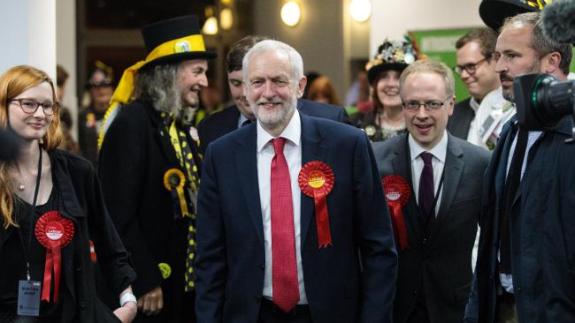
#GE2017 suggests that the Blairite analysis of society is fundamentally mistaken

3f5ecc837521055e82701bbcbab0f65d

There’s a consensus on the Blairite left that the dividing line in global politics is one of mobility versus fixed identities, between those who value free movement and free markets as against those who are attached to specific places, to national boundaries and the Welfare State.

Zygmunt Bauman gave some credence to this argument by arguing that the difference between those with freedom to move and those without is the most fundamental one of the 21st century, and the distinction is the basis of David Goodhart’s book ‘The Road to Somewhere‘, in which he divides British society between the ‘anywheres’ and ‘somewheres’.

The problem for ‘progressives’ is how on earth to bridge this gap. ‘Blue Labour’ (to which Goodhart was central), with its dog whistle racism and ‘muscular liberalism’ was one attempt to do so. The result of the Brexit referendum seemed to confirm it. John Harris’ cogent analysis of the Brexit vote, based on his having visited former mining communities in South Wales, also appeared to give it some support. Resentment against privileged socially liberal elites seemed to be a major factor in the result.

This contradicts my own situation, in that I fully support both the Welfare State and freedom of movement. In theory, as a permamigrant, I fall into the camp of ‘anywheres’, but my experience and impulses tell me the picture is more complex. I blanch at the category of ‘globalist’, proponents of which seek to make out that economic and social liberalism are inseparable. There’s also a sense in which Goodhart’s model plays into the hands of presumably-soon-to-be-ex-PM Theresa May, with her repugnant notion of ‘citizens of nowhere’. My interview with Momus suggested that there is a fundamental disjuncture, an unresolvable conundrum between defending free movement on the one hand and appealing to economically disenfranchised voters on the other.

The widespread expectation that Corbyn’s Labour would be crushed in the North and in Wales was based on this assumption.  The actual result shows that the picture is actually more complicated and more hopeful. As Faisal Islam tweeted last night, those who voted to leave the EU don’t fall into the category of ‘Brexiteers’, and there is evidence that more ‘Remainers’ (supposedly ‘anywheres’) voted Labour rather than Liberal Democrat or for pro-Remain Tories*. It seems that it is in fact possible to build a coalition between ‘social liberals’ – who are by no means all supporters of ‘free markets’ – and those who value the welfare state, the NHS, etc. Or, as in my case and that of the very many young people who voted, they may be the same people. Another factor in this result is that Corbyn’s Labour has been subtly non-committal around the issue of immigration, and partly as a result seems to have attracted large numbers of working class UKIP voters in addition to people who are socially progressive but opposed to Neoliberalism. Also, even the most uncritical supporter of the EU can see that a Brexit negotiated by Corbyn would be far better than one than negotiated (or not) by May under pressure from the Sun and the Mail.

This result thus exposes the Blairite analysis as superficial and misguided. It may be that the more important distinction is one of economic class rather than social aspirations, between those who need institutions such as the NHS and those who (think they) don’t. Global issues such as climate change and the danger represented by Trump are not comprehensible in terms of a localist-globalist analysis. That paints a much more hopeful picture, as regardless of the hysterical manipulation of the tabloids there are many more of us than there are of them. That realisation was presumably why hopefully-not-much-longer-to-be-alive Rupert Murdoch was so gratifyingly upset by the exit poll – his Mugabe-like stranglehold over British politics has weakened. Good. Fuck ‘im.

*There is of course no way on earth that someone could continue to regard themselves as socially liberal and support a government which includes the DUP. Or a Catholic, for that matter.

Film review: ‘The Other Side of Hope’

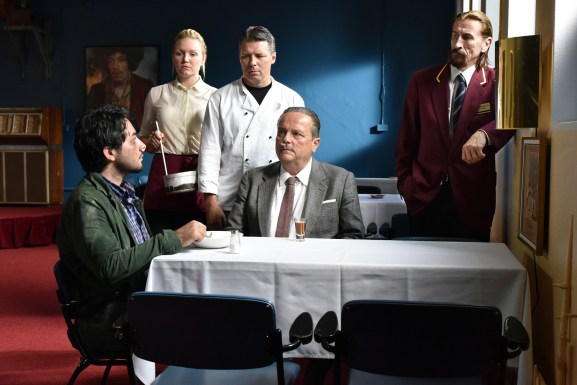
toivontuollapuolen1_photo_by_malla_hukkanen_sputnik_oy-the-other-side-of-hope

How often do you go to the cinema? Probably about six or seven times a day, right? I mean, I’m guessing, but I calculate that someone like you has, over the last, say, four months, likely seen in the region of a thousand films at the cinema, or movies at the moving picture theater if that’s your preference. Until last Saturday we hadn’t been to the cinema in FIVE MONTHS. This is because in January we became the first people in history to have an actual baby. We soon discovered that childrearing and filmbuffery are deeply and highly incompatible. To be fair, five months isn’t very long when you consider that I once met a guy who hadn’t been to see a film since 1972. The guy in question was originally from Iraq and had seven children. I can’t imagine how disruptive having seven children must be, or how hard it must be to persuade relatives to babysit*. As for the cinema, although he skipped all of Woody Allen and is presumably no expert on Kieslowski’s Red, White and Blue trilogy he must have seen a lot of Scooby Doo cartoons.

As it happens one of the protagonists of the film we went to see is also from Iraq, while the main character is from Syria. They are refugees in Finland, a country I know and love, partly through the films of Aki Kaurismaki, of which this is one. It’s the second in a row about people seeking asylum, after Le Havre (2011). Khaled has arrived in Helsinki by default after the traditionally tortuous route via southern Europe and is trying to track down his sister, from whom he became separated along the way. When his application is refused (the Government has decided that his hometown of Aleppo is a safe place to return him to) he escapes from the detention centre and is taken in by the owner of a comically-failing restaurant.

Kaurismaki’s aesthetic is one of out-of-time-ness. In his films pretty much everything is worn and familiar: the actors, the sets, the clothes and the music are all reassuringly dated. His characters are themselves refugees from a world that no longer quite exists, seeking asylum from disappointment in drink, music and small, awkward acts of solidarity. It’s a world of flawed but decent people: terse but charming, brusque and gauche but capable of tenderness. This film also features intrusions of almost cartoon-like evil in the form of some racist skinheads and also official indifference. It’s the kind of film which would piss off Slavoj Žižek, in that it shows refugees as individual human beings complete with hopes and vulnerabilities just like anyone else.

The cinema we went to (the Madison, on Via Chiabrera) is not far from our flat. Not just the cinema itself but also the street itself feels familiar and homely, with a refreshing absence of international brands and cash-for-gold shops. The gelataria we pop into on the way is a very Kaurismaki place, with its staff, fittings and menu seemingly not changed since the ’70s. There was another closer cinema, within five minutes’ walk from where we live, but in some apparently dodgy deal it’s currently being transformed into ‘international standard’ apartments.

Walking along Viale Marconi after the bridge we passed the spot where I recently got talking to a guy from Benin City in Nigeria who was sweeping the street in return for spare change. This is a phenomenon that seems to have started in Milan and has now spread to Rome. Back home he had been a musician; he showed me on his phone the video he’d put on Youtube. It was very professionally produced and really rather good. I was at first inspired to write a piece about him, then thought again: what right do I have, really, to exploit his life story for my own means? I just so happened that a few days later I was in the British Museum, one of whose greatest treasures is the Benin Bronzes. Maybe if I was a proper writer I’d  feel more comfortable about appropriating someone else’s narrative, displaying it as though it were my own**.

I hope he somehow manages to make his way upwards, whether socially or geographically (he wanted to reach London, where he had friends). I hope he manages to stay free. Kaurismaki’s film is a heartbreaking but salutary reminder that pretty much every town and city in the world contains a hidden population of people living in dread of being picked up and sent back to somewhere which can no longer be called home. When we first started coming to Rome I read a series of novels by Amara Lakhous about the local population of Arabs and North Africans whose lives revolve around the acquisition and renewal of their permesso di sogiorno (residence permit). Networks of volunteers which provide food, shelter and advice are continually turfed out and have their resources confiscated by the local authorities. My city and yours have invisible portals leading straight to war and immense danger. It puts things like not having been to the cinema for a while or not being able to find decent hummus into some perspective.

Our daughter was born here in Rome, on January 30th this year. She’s an immigrant from some other celestial realm and has been given asylum in this one. The locals coo at her, welcoming her into their world. No one tells her that Europe is full, that public services are overstretched and that she should go back home. Like any human, she has a right to be here. She’s just now beginning to recognise other people (and even stating to laugh at herself in the mirror). She shows no sign of being able to discriminate between people who happen to have been born in different places from her. As the song says, such things have to be carefully taught.

*As this episode of ‘Thinking Allowed’ discusses and my own experiences attest, Italian society would fall apart in about ten minutes without i nonni.

**There’s also the aspect of potentially revealing to his friends (and fans?) back home that he’s sweeping the streets rather than pursuing stardom.

What to say to British people to stop them voting Conservative

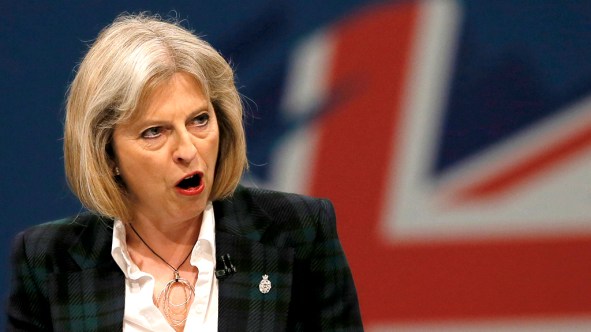
Britain's Home Secretary Theresa May delivers her keynote address on the second day of the Conservative party annual conference in Manchester

A few weeks ago I wrote a piece which offended, or at least annoyed, a number of people. It was called What to say to French people to stop them voting fascist and it proferred a number of phrases that could be used by anyone visiting France or meeting French people abroad to persuade them not to vote for Le Pen. Some felt strongly that it was patronising and could even be counterproductive. Well, they were wrong, because I myself decided that it wasn’t patronising and the French themselves confirmed that it had been the right thing to do by voting massively for my new hero Emmanuele Macron, who has gone on in the space of a month to stand bravely up to both Trump and Putin and has also put a team of crack neoliberals in place who will once and for all solve the problems of gallic underproductivity and the woeful lack of competitivity in the French economy, hidebound as it is by a bloated public sector which stifles innovation, etc*.

For the purposes of balance, however, and given that there is about to be a general election in my ‘own’ country, I’ve decided to try to repeat the remarkable success of the previous article. I anticipate that this post will be of special interest to any of my US audience visiting the UK or my many Portuguese and Italian followers** chatting to my compatriots on the beach or in Irish bars. Now, when using the following phrases it needs to be borne in mind that the British (particularly the English) are a prickly group of people so it is best to do as they do and lace whatever you say with enormous amounts of irony, that way you can just claim that you were ‘joking’ and will avoid getting glassed/hit in the face with a croquet mallet/etc.

Phrases to say to British people to stop them voting Tory

  1. Hey, geezer, Theresa May is a threat to national security! She sacked 20,000 bobbies!
  2. It’ll be the final solution for the NHS, mate, the full monty. No more Elf Service for us ordinary blokes.
  3. Look, old chap, you do know that she doesn’t have a plan for Brexit? She’s just going to walk away, it’ll be a total cock-up.
  4. It’s the post-Brexit shock doctrine, me ol’ china. Read Naomi Klein, she’s ace.
  5. She won’t stand up to Trump, fella mi lad. Even held his hand on her visit to the White House. Won’t defend Sadiq Khan or even criticise him over the Paris thing. Plus, those yanks, they don’t know how to make a decent bleedin’ cuppa tea.
  6. (When talking to anyone under the age of 30) Listen, bruv, she don’t even believe in Brexit, she was against it from the start. Dem Tories is bare deng, innit. Got any skinz? #grime4corbyn.
  7. (When talking to anyone who looks like they might not be racist) The Tories have taken over the rhetoric of Farage, chum. They might as well change their name to BluKip.
  8. (When talking to anyone who looks or sounds a bit snooty) How d’you do? Do you really think you can trust that ghastly woman? What about the dementia tax u-turn? I say, fancy a fag?
  9. (If speaking to a Londoner) Cor blimey, that Corbyn’s unexpectedly grown in stature during the course of the bleedin’ campaign, ain’t ‘e guv? Blimey, what a pea souper, and no mistake, apples and pears, etc. At least the EU looked after our air quality, luvaduck.
  10. (If speaking to a Northerner) Fookin ‘ell. Fookin’ Tories. BASTards. Ey up, lad/lass, wha’ der folk call a cob in tha parts, yer bastard? UTB!

*Anyone who is interested in irony will appreciate this sentence, which was surprisingly easy and fun to write.
**Strangely enough I don’t have very many French followers.

“Neoliberalism had some good points”: An interview with Momus about Europe, politics, identity and Japan

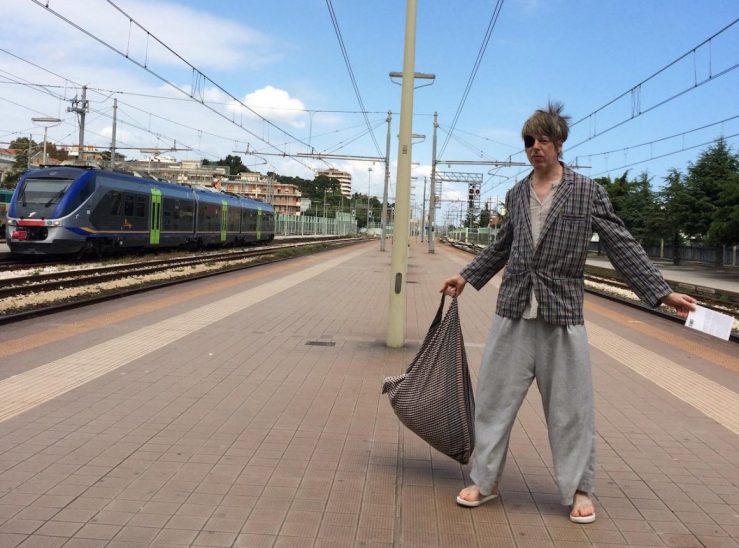
momus-train-1160x861

Momus is a polymath: a musician, novelist, blogger, artist and occasional journalist and curator. Unusually for someone who bestrides different fields, whatever he turns his hand inevitably turns out to be absolutely unique and compelling.

I’ve been a fan since the late 1980s, back when he styled himself ‘the third Pet Shop Boy‘. Since then he’s released over 30 albums (all of them unerringly excellent), six novels (every of one of them a cracking and often uproarious read), and several thousand consistently fascinating posts on his now-defunct but still celebrated blog Click Opera.

Most recently he’s opened his own online ‘open university‘ and continues to produce occasional soundscapes called ‘hearspools’, which frankly defy description, but any one of which could change your way of seeing and thinking about the world. Although he lives in Japan, he’s also doing a series of appearances around Europe and I caught up with him in the really quite magical setting of Swiss Institute in Rome, where he was doing a talk on sublimation in his lyrics and a concert, during which he played songs related in some way to Rome and its history.

Read the interview in full at katoikos.eu.

#GE2017: Experts puzzled by ‘first party’ effect

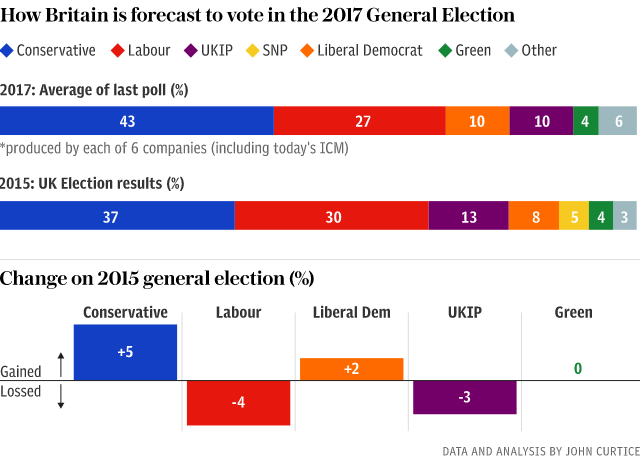
YQoXTr6.pngThe last few years have seen huge shifts in world politics, with some established parties (the French Parti Socialiste, PASOK in Greece) more or less disappearing overnight and new contenders coming into play as the voting public tire of the same old establishment names and faces. In the upcoming UK General Election even seasoned observers have been astonished to witness the seemingly unstoppable rise in the polls of a brand-new political force. The party is known as the Conservative Party, and is led by Theresa May, which also happens to be the name (and the person) of the current Prime Minister.

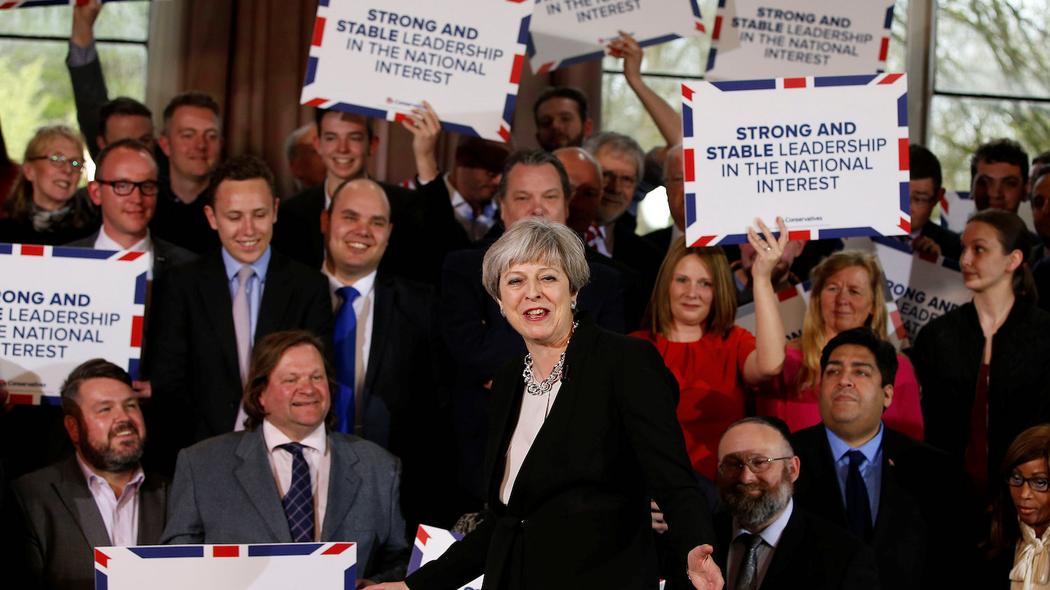
Throughout the country people disillusioned with years of austerity, with cuts to public services devastating areas already reeling from deindustrialisation and underinvestment, are preparing to deliver a huge blow to the government, by voting for it.

“I’m particularly angry about what’s been done in my area to local schools”, says John Blobb from Exeter. “It’s almost impossible to find a place for my child, and it’s all due to the mess successive Conservative ministers have made of the education system. Plus in this next Parliament, if the Tories get a clear majority, it’ll be the final solution for the NHS, full-on privatisation. It’s terrifying. And I cannot f*cking stand the way that woman speaks. She’s like this horrendous mix of cruelty and insincerity, and it all comes out in that truly awful, unbearable voice of hers. That’s why I’m definitely going to vote Conservative”.

Amanda Mardy, from Sunderland, is voting Conservative “because I’ve been sanctioned four times by the jobcentre, and twice it was only because the public transport is so bad I couldn’t get to my appointment on time. I’ve barely got enough food to last me til the weekend, then that’s it. I’ll have to beg, or punch a policeman just so I can get a bed and some food. I think my case proves conclusively that Theresa May is doing an excellent job”.

Sunjit Sahil, from Manchester, is horrified by the level and tone of racist abuse he and members of his family have suffered over the last few months. “I blame the Government for stoking up division in the wake of Brexit. It’s a classic case of divide-and-rule. My nephew was actually called a ‘paki’, by a bus driver, in 2017 for god’s sake! I’m scared about what kind of environment my kids will have to grow up in. I’ll definitely be voting for the Conservative Party to express how angry I am at the Conservative Government.”

Jimmy Chonk is a lifelong animal rights activist who spends his weekends trying to sabotage fox hunts in Berkshire. He’ll be voting Conservative “because someone has to do something to protect foxes”. He also says that the Government’s treatment of child refugees and its “horrifying complacency” with regard to Climate Change has “disgusted” him to the point where he’s “definitely” going to vote for it.

Sandra Scallop of Portmerion was inspired to vote Conservative by the Ken Loach film ‘I, Daniel Blake’. “When I saw that film I was in floods of tears. Just the thought that in this day and age so many people are treated in such a callous way, and it’s getting worse. Thinking about it now makes me so angry I feel physically sick, any one of us could have an accident or get ill and end up in such a situation. People like Theresa May can afford expensive private insurance, they don’t have to worry about such things and they simply do not care about the fate of ordinary people, they’ve probably all got shares in companies which profit from people’s misfortune! And don’t get me started on bloody fracking! In five years’ time we’re probably going to be living in a permanent bloody earthquake zone, with fire pouring out of the kitchen taps. I don’t know the name of my local Conservative MP, but I’m definitely going to vote for him or her”.

Seasoned psephologists are struggling to explain the phenomenon. “We’re used to seeing a third-party protest vote, particularly in by-elections.”, says James Lee Curtice of Essex University. “It’s common to vote out of anger against the Government. This is the first time in my career that I’ve seen what we might call a ‘first party effect’. There is some evidence that the British electorate are responding to what we call the ‘man with beard’ effect in reaction to Jeremy Corbyn. There’s also a very strong chance that large sections of the British electorate are absolute fucking idiots. We really, definitely can’t rule that last possibility out.”

“Vote Conservative”, he added.


Anti-fascist lesson plan

This is an anti-fascist lesson for the week leading up to the potential election of a fascist leader of a major European country. Although in some teaching contexts political content is discouraged, engaging with questions of power and society is one way of allowing your students to develop their rhetorical skills, and also a means of encouraging a sense of group unity and shared purpose at a time of increasing division and social atomization.

It’s possible that you have a fascist or two in your class. Let’s hope not. This lesson isn’t designed for them, but who cares. Maybe they can leave the classroom and go and troll Twitter instead. It aims to enable your normal students to engage politically on an international level through the medium of English. If you don’t feel comfortable with that, don’t do the lesson, but it’s worth bearing in mind that a) English is not just a language for conducting trade, presenting innovative product ideas, etc and also b) if fascists such as Le Pen triumph your livelihood as teacher of a globalising language will be under threat and a lot of your students (and your friends, your family and you) will end up exiled, in jail, dead, or guarding concentration camps for a living.

The lesson as designed is 75 minutes long and should work well for high Upper Int/B2.2 upwards. I did it on Tuesday with a B2-ish class of Political Science students and it worked wonderfully.

Lesson procedure

1. Write on the board ‘fascism’. Ask what it is. Elicit names of famous fascists but also ideas about how to define it. Offer no definitions of your own. (5 mins)

2. In pairs students write their own definition of fascism. (5 mins)

3. Now look at the one on Wikipedia. Do your students agree? How would they change it? (5 mins)

4. On their phones or together as a class, edit the definition on Wikipedia (NB. your/their definition(s) will be rejected almost immediately, but you don’t need to tell them that.) (10 mins)

5. In small groups students address the following

Questions for discussion:

Do you know any fascists personally?

What would you do if a friend of yours started talking about:

  • Voting for a fascist candidate?
  • Joining a fascist organisation?

Have friends on or off social media been talking about the French election?

What would you say to a French friend who was talking about voting Le Pen?

(10 mins including brief report back from each brief pair on what was briefly said – don’t let this bit drag on. Make it brief.)

6. Half the students read Article A, half Article B. They take notes on the MAIN points (stress this and jog them along if they get stuck on details – with less strong groups tell them to just read the first seven or eight paragraphs), check difficult vocab and compare with a partner who’s read the same article. (15 mins)

7. Students swap partners and share what they learnt, taking notes on other person’s article. (10 mins)

8. Share and clarify the meaning of vocab they learnt on the board. (5 mins)

9. Students imagine they have a French friend who has been posting pro-Le Pen stuff online. They write an email to their friend telling them what they think. Depending on their level you could instruct them to use a certain number of conditional sentences (‘if Le Pen wins’, etc). Be on hand to offer vocab and grammar suggestions, etc. They then share what they wrote with a partner, asking for constructive suggestions, etc (20 mins)

10. For homework students write a second draft and then email it to you for corrections, etc.

C’est tout. Nique les fachos!

The Tories are ‘strong and stable’. What are Labour?

Theresa May gave a speech a few days ago in which she used the slogan ‘Strong and Stable’ twelve times in ten minutes. As a result she is being royally ridiculed on social media, with countless memes being diffused exponentially as I write.

A further outcome of the Tories’ faultless message discipline and the responses to it is that on 8th June millions of people will go and vote on the basis of strength and stability (DECLARATION: I fucking hate The Tories and will be voting Labour in June). Satirising the message will just serve to reinforce and spread it. That’s what happened in the last two general elections and in the referendum last summer. At different points each leading representative of the Leave campaign was torn to pieces on Facebook and Twitter for ‘overusing‘ the expression ‘take back control’. The result of the referendum showed that all that repitition was actually the slogan being implemented successfully – the Leave campaign even consulted Paul McKenna to help them drill the message into people’s heads. It’s not a rational process. ‘Strong and stable’ will have been chosen from a list of potential slogans after a rigorous process of testing it on groups of potential Tory voters.

The science of this is well-known but doesn’t always find acceptance on the left and doesn’t seem to have had much of an impact on the people at the top of the Labour Party. On doing some research I found out that Labour’s slogan for #GE2017 is ‘For the many, not the few’. Although I’ve been following the election the phrase didn’t spring into my head immediately as the Conservatives’ slogan will and tellingly there haven’t as yet been a furore about opposition politicians overusing it. I don’t get the impression it’s been tested – it sounds more like a phrase that our avuncular leader plucked out of thin air. On my Facebook page yesterday I saw a post on the Labour forum about John McDonnell’s 20 Pledges to Workers. Okay, twenty is a round number but it’s also a large one. As Owen Jones has repeatedly pointed out, only people who are actively interested in politics take an interest in what lies behind slogans, ie the details of policy. Each of those individual items may strike a chord with working people but in order to be effective they need to be framed into clear pithy messages whose memorability has been exhaustively put to the test. 

Nevertheless, the central slogans have been chosen and Labour leader, supporters and representatives need to put them into operation by repeating them as often as humanly possible. In the meantime we need to stop doing the Tories’ work for them by effectively advertising, whether in jest or not, what May’s Conservative Party stands for.

I’m starting to despair of ‘the Left’

I have a very bad habit: signing up to and spending time in Facebook groups. Around Brexit it was the various Remain groups, during the US election the anti-Trump ones and over the last couple of weeks I’ve been hanging out with the French Left.

When I say ‘Left’, it’s an odd melange, in that there aren’t at present many contributors who define themselves in opposition to the right. In such groups supporters of the growing movement for abstention increasingly rubs shoulders with open supporters of the Nazi candidate Le Pen.

I saw something similar late last year with so-called ‘Bernie’ supporters who were far too busy propagandising against Hillary to even mention Trump. It has recently turned out that some of the groups are actually orchestrated by the far-right, which partly explains why they are happy to host posts in favour of far-right causes, including Le Pen. Although I’ve always found the cliché that the two ends of the political spectrum meet up contemptible, on social media it is often very difficult to tell who is what.

As someone whose knowledge of French politics is limited (I’ve never lived in France), I respect the opinions of friends who insist that some of the anti-Macron stuff being shared is a healthy letting-off of steam and that most of those disappointed with Méchelon’s failure to get through to the second round will do the sensible thing in ten days’ time. It’s also possible that the Facebook groups of France Insoumise Ici, the inappropriately-named 100% Anti-Facho and others are not representative of the debate in society at large. Espérons-le. It’s worth acknowledging are also sections of the Left (notably Ensemble) who have actually taken an anti-fascist position on the election – shamefully, that doesn’t include the once-prominent Nouveau Parti Anticapitaliste  (NPA).

However, what I’m seeing repeated exponentially more often is the argument ‘there’s no difference between Macron’s neoliberalism and Le Pen’s fascism’. The hashtag #sansmoi is being used by those who will proudly refuse to exercise their democratic responsibilities on May 7th and will presumably wash their hands of the consequences of the result.

That’s what a lot of ‘Bernie supporters’ did. They campaigned against Clinton to the point where millions who clearly should have voted for her were unmotivated to do so, and now they happily blame others for the outcome. The far-right is now tearing up the rights and protections of ordinary citizens at a ferocious rate, held back only by the courts. Trump is trying to bomb his way to popularity but the consciences of those who helped him into power are clear. It’s apparently all the fault of the Democrats who treated Bernie unfairly, the diddums.

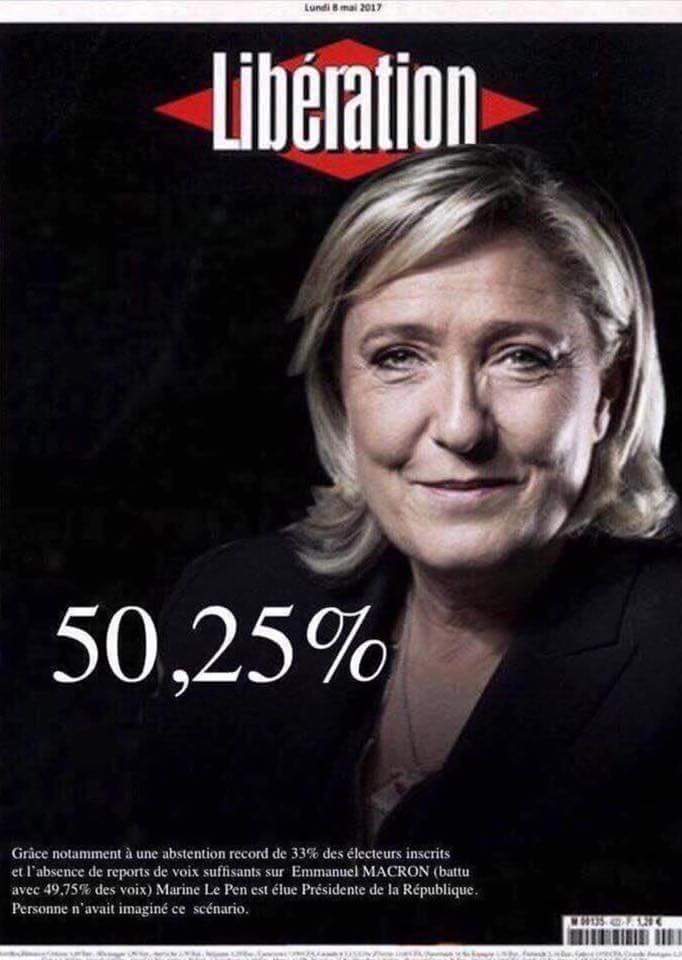
It’s distinctly possible that the memes and tropes being shared against Macron right now on the ‘Left’ will help to elect Le Pen. They will depress Macron’s vote, increase abstention, put his campaign on the back foot and let a Holocaust revisionist and open racist into power in one of the world’s most emblematic democratic and powerful countries. In the process they will jeopardise the future of Europe and encourage the exponential growth of the far-right across the world. There may well be death camps; no one can pretend they don’t know what Le Pen stands for.

But what will the consequences be for those who let it happen? As so often on the ‘Left’, the ultimate prize is a pure, unsullied pair of hands and a smug sense that although there may be massive injustice in the world, I have played no part in its perpetuation. In the justifications of anti-Clinton leftists, pro-‘Lexit’ voters and French abstentionists, the key words are me and my: my beliefs, ma conscience… I know this because for years I was involved in leftwing organisations (although presently unaffiliated, I still hold basically socialist values and principles) and with some honourable exceptions those who were or aspired to be at the top of such groupuscules were far more concerned with promoting their egos and the name of their parties than with actually achieving meaningful change, except in some never-to-be-achieved wonderland.

I don’t know if Jean-Luc Mélenchon falls into that category. I’m reliably assured that he has in the past shown himself to be an admirable and consistent anti-fascist. It may be that his ego was damaged by his failure to get into the second round; he may just be sulking. He may, like Jeremy Corbyn, be tragically incompetent when it comes to strategy and leadership. Of course I would rather have seen him in the second round against Macron or Fillon. The support he built up in a few short weeks before the election is an encouraging sign that there is a huge appetite for a radical egalitarian alternative to neoliberalism. But there is no way that he is unaware that Le Pen is harvesting similar sentiments, that a key part of her strategy is to position herself right where he stood. For his supporters to be repeating this arrant nonsense that there is no difference between a banker and a Nazi AND NOT BE CONTRADICTED indicates an absolute abdication of moral and political leadership at the most critical point in the history of post-war Europe.

This is what I feel like screaming in the street right now (instead, I’m writing it on my website, which is sort of similar): IF LE PEN WINS, IT WILL BE THANKS TO THE CONNIVANCE OF THE ‘LEFT’. Any and all anti-fascists worthy of the name need to learn a very important lesson from the US and and STOP telling the world that Macron and Le Pen are indistiguishable. Doing so may involve a self-sacrifice of one’s impeccable anti-neoliberal credentials and necessitates a measure of humility. For me it’s another test of whether or not today’s ‘Left’ is anything other than a long-running vanity project, a puerile or senile delusion, a shiny accoutrement which looks nice but refers to nothing but itself. The dominance of the notion that the market and finance should control every aspect of our lives is a catastrophe for the human species, but if you think it’s as bad as what Le Pen stands for, you’re a cretin and a connard. Grow up, vote Macron. C’est tout.

PS: Bonus quiz question: does the follow clip depict fascism or neoliberalism?

https://youtu.be/J8A0uUYuId8