First task for the Left: Deal with reality, not some clickbait version of it

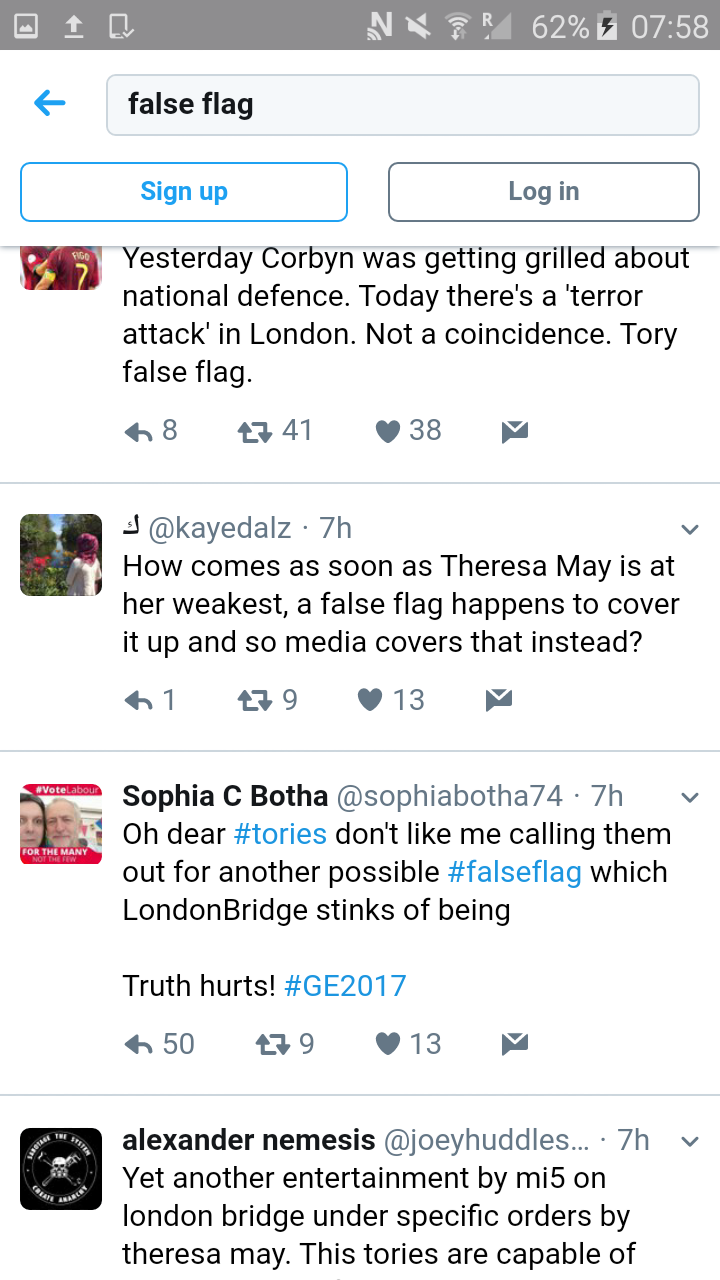
The result is not final, but it’s never been in any doubt: Labour is set to win the General Election with a massive landslide. All the latest reports say so: the ones from The Canary, something someone posted on Facebook, and a tweet I saw which had more than 300 likes…

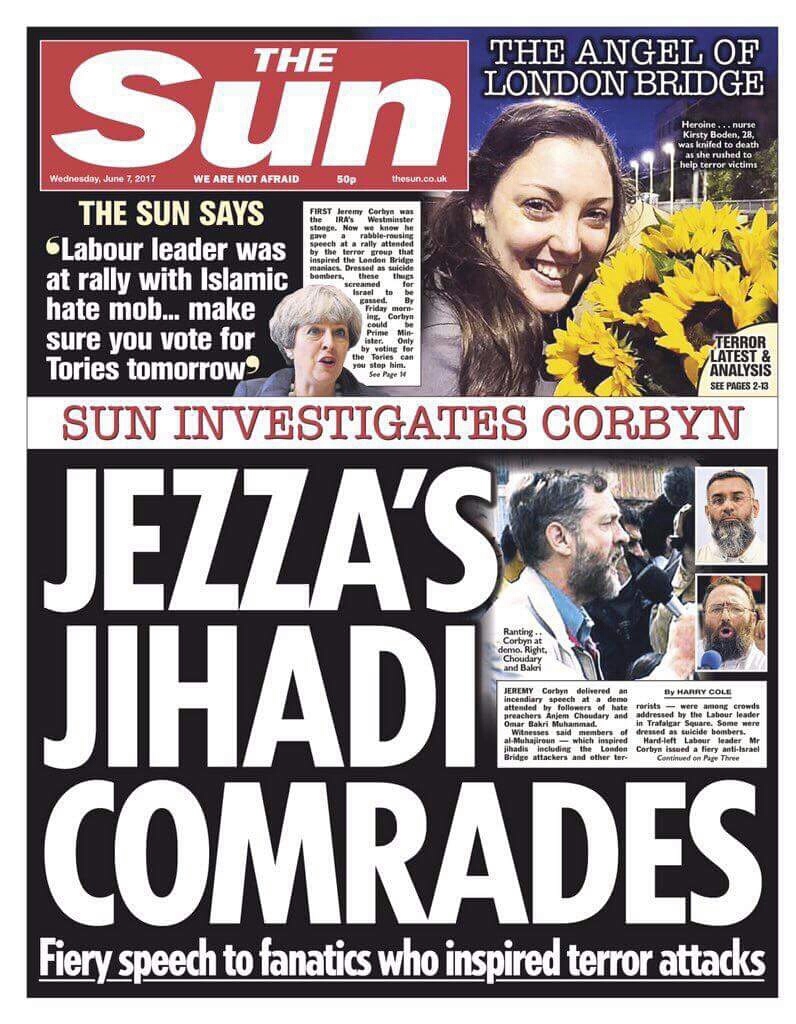
If only reality was determined by wishes. In a way, it is. The market decides what sort of media we have access to. The most popular newspapers in the UK are The Daily Mail and The Sun. They tell their readers what they want to hear, which just happens to be line with the interests and opinions of their owners. When it comes to elections their voices are by far the loudest.

What about those of us with a different worldview, who can see through Sun and Mail headlines, who are aware of the manipulation inherent in private media ownership? Is our only option to believe whatever wildly optimistic/wilfully misleading information pops up on our timelines and newsfeeds?

Thankfully, no, it isn’t. In the UK, around Europe and in the US there is a free press which tries to represent reality according to a shared set of values, practices and guidelines. Does that mean we should have blind faith in whatever reporters and columnists for the Guardian, the New Statesman or other progressive publications have to tell us? No, it doesn’t. We need to read with a critical eye, bearing in mind such issues as bias and omission, questioning and arguing back where necessary.

What about ignoring the ‘Mainstream Media’ has to say altogether? That’s what the Donald Trumps of this world would love us to do. He fingers reponsible publications as the ‘public enemy’, instructing his followers not a believe a word of anything critical written about him. His approach is rather like that of politicians in countries like Mexico, where reporters are regularly murdered for investigating and seeking to expose the corruption of the rich and powerful.

The other reason we have to have critical trust in what the liberal media reports is that the majority of what’s reported has a far more than casual relationship with the truth. And if you want to understand what’s going on in the world you need to have some sort access to facts. This election has shown up the consequences of rejecting what the ‘MSM’ says and believing in whatever you come across on yoir newsfeed. The news that social media sites target you with is not based on an understanding of what you as a citizen need to be aware of, but what they understand that you would like to be true. That’s why your timeline is full of stories stating confidently that Jeremy Corbyn is going to win. In reality – and I know this because I read a range of news sources and they all agree on this basic point – Labour is facing a catastrophe. That is a stark fact. The only reason it should be a surprise to you this evening when the first exit polls announce that Labour has been swept away across the board is if you haven’t been paying attention to reality, but rather choosing to believe a version of it which is based on far more sophisticated -and seductive means of manipulation than anything the traditional media can come up with.

There’s a way in which all of this is even more important and more tragic than this particular election. The earth’s climate is collapsing, and yet most of the world’s population are not aware of the most basic facts regarding the causes and consequences of the problem. The most powerful man in the world, the person who by definition has more access to more reliable information than any other, believes that it is a hoax. And how is it that someone who should in theory be extremely well-informed is in practice so dumb? Well, in his own words:

Let’s be better than Trump. Fuck The Canary and all the other cynical, market-driven clickbait fake news outlets, which profit by monetising and thereby devaluing genuine hope. Read what proper journalists have found out instead. This is a good place to start. Like the old joke about asking a farmer for directions has it (‘I wouldn’t start from here…’), if we want to move forward, we need to know where we are right now, not pretend we’re somewhere else entirely. Dreaming is essential: we must shift the boundaries of what is considered possible and reject the depressing mantra that grey neoliberal sludge with a side order of potential fascism is the only dish on offer. But our dreaming must be lucid, allowing us to distinguish pure Disney fantasy from actual verifiable facts. Above all, we need to have a grasp on reality if we’re serious about wanting to transform it.

P.s. I would be obviously ecstatic if thanks to some miracle it turned out that me and every proper news outlet were wrong about this. I’ve been through far too many elections to get my hopes up, especially on the basis of so little convincing evidence. Fuck the Tories. UPDATE: I am very happy to have been proven slightly wrong. Fuck the Tories AND the DUP.

Film review: ‘The Other Side of Hope’

toivontuollapuolen1_photo_by_malla_hukkanen_sputnik_oy-the-other-side-of-hope

How often do you go to the cinema? Probably about six or seven times a day, right? I mean, I’m guessing, but I calculate that someone like you has, over the last, say, four months, likely seen in the region of a thousand films at the cinema, or movies at the moving picture theater if that’s your preference. Until last Saturday we hadn’t been to the cinema in FIVE MONTHS. This is because in January we became the first people in history to have an actual baby. We soon discovered that childrearing and filmbuffery are deeply and highly incompatible. To be fair, five months isn’t very long when you consider that I once met a guy who hadn’t been to see a film since 1972. The guy in question was originally from Iraq and had seven children. I can’t imagine how disruptive having seven children must be, or how hard it must be to persuade relatives to babysit*. As for the cinema, although he skipped all of Woody Allen and is presumably no expert on Kieslowski’s Red, White and Blue trilogy he must have seen a lot of Scooby Doo cartoons.

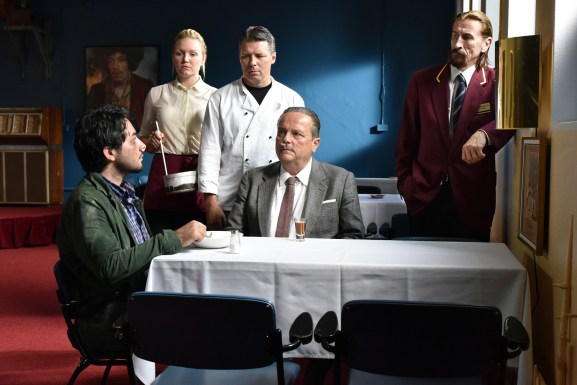
As it happens one of the protagonists of the film we went to see is also from Iraq, while the main character is from Syria. They are refugees in Finland, a country I know and love, partly through the films of Aki Kaurismaki, of which this is one. It’s the second in a row about people seeking asylum, after Le Havre (2011). Khaled has arrived in Helsinki by default after the traditionally tortuous route via southern Europe and is trying to track down his sister, from whom he became separated along the way. When his application is refused (the Government has decided that his hometown of Aleppo is a safe place to return him to) he escapes from the detention centre and is taken in by the owner of a comically-failing restaurant.

Kaurismaki’s aesthetic is one of out-of-time-ness. In his films pretty much everything is worn and familiar: the actors, the sets, the clothes and the music are all reassuringly dated. His characters are themselves refugees from a world that no longer quite exists, seeking asylum from disappointment in drink, music and small, awkward acts of solidarity. It’s a world of flawed but decent people: terse but charming, brusque and gauche but capable of tenderness. This film also features intrusions of almost cartoon-like evil in the form of some racist skinheads and also official indifference. It’s the kind of film which would piss off Slavoj Žižek, in that it shows refugees as individual human beings complete with hopes and vulnerabilities just like anyone else.

The cinema we went to (the Madison, on Via Chiabrera) is not far from our flat. Not just the cinema itself but also the street itself feels familiar and homely, with a refreshing absence of international brands and cash-for-gold shops. The gelataria we pop into on the way is a very Kaurismaki place, with its staff, fittings and menu seemingly not changed since the ’70s. There was another closer cinema, within five minutes’ walk from where we live, but in some apparently dodgy deal it’s currently being transformed into ‘international standard’ apartments.

Walking along Viale Marconi after the bridge we passed the spot where I recently got talking to a guy from Benin City in Nigeria who was sweeping the street in return for spare change. This is a phenomenon that seems to have started in Milan and has now spread to Rome. Back home he had been a musician; he showed me on his phone the video he’d put on Youtube. It was very professionally produced and really rather good. I was at first inspired to write a piece about him, then thought again: what right do I have, really, to exploit his life story for my own means? I just so happened that a few days later I was in the British Museum, one of whose greatest treasures is the Benin Bronzes. Maybe if I was a proper writer I’d  feel more comfortable about appropriating someone else’s narrative, displaying it as though it were my own**.

I hope he somehow manages to make his way upwards, whether socially or geographically (he wanted to reach London, where he had friends). I hope he manages to stay free. Kaurismaki’s film is a heartbreaking but salutary reminder that pretty much every town and city in the world contains a hidden population of people living in dread of being picked up and sent back to somewhere which can no longer be called home. When we first started coming to Rome I read a series of novels by Amara Lakhous about the local population of Arabs and North Africans whose lives revolve around the acquisition and renewal of their permesso di sogiorno (residence permit). Networks of volunteers which provide food, shelter and advice are continually turfed out and have their resources confiscated by the local authorities. My city and yours have invisible portals leading straight to war and immense danger. It puts things like not having been to the cinema for a while or not being able to find decent hummus into some perspective.

Our daughter was born here in Rome, on January 30th this year. She’s an immigrant from some other celestial realm and has been given asylum in this one. The locals coo at her, welcoming her into their world. No one tells her that Europe is full, that public services are overstretched and that she should go back home. Like any human, she has a right to be here. She’s just now beginning to recognise other people (and even stating to laugh at herself in the mirror). She shows no sign of being able to discriminate between people who happen to have been born in different places from her. As the song says, such things have to be carefully taught.

*As this episode of ‘Thinking Allowed’ discusses and my own experiences attest, Italian society would fall apart in about ten minutes without i nonni.

**There’s also the aspect of potentially revealing to his friends (and fans?) back home that he’s sweeping the streets rather than pursuing stardom.

Robert Murdoch or Rupert Mugabe?

One of these people took control of a country several decades ago and by appealing to base popular sentiment and deeply-felt resentment set about transforming it into a place socially, culturally and intellectually poorer and a great deal less democratic. He has harrassed and bullied opponents without mercy, ruthlessly scapegoating and humiliating anyone who threatens his political and economic interests. He has used any and all methods at his disposal, including spying on those who displeased him, to consolidate his power and has ensured that anyone who aspires to political office will be subservient to his agenda. As a result he has left the country immensely more miserable and suspicious than when he began, the entire population having as a direct result of his rule developed a more selfish and cynical mentality towards their fellow citizens and the rest of the world, conditioned by a sense of despair that things could ever improve in any meaningful way. The country he has made in his own image is fundamentally unrecognisable, with almost all traces of social solidarity extinguished and all public institutions corrupted beyond repair. And yet the tyrant in question is not even a citizen of the country he has ruined.

Can you guess which one it is yet? Here’s another clue for anyone who’s still struggling: 

(By the way, I’m aware that Zimbabwe was run by a brutal and racist regime before Mugabe came along and is nowadays infinitely poorer and much more repressive than the UK, that’s kinda not the point. Although someone from there or countless other British ex-colonies would be justified in seeing Murdoch as karmic revenge for the UK’s having done similar things in other countries…)

What to say to British people to stop them voting Conservative

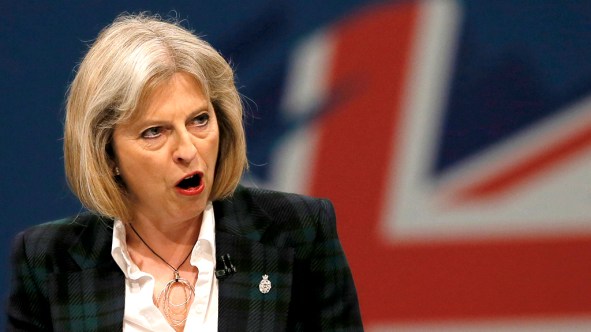
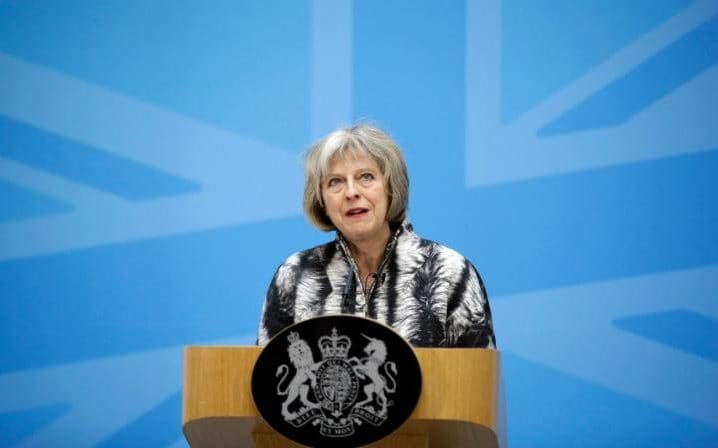
Britain's Home Secretary Theresa May delivers her keynote address on the second day of the Conservative party annual conference in Manchester

A few weeks ago I wrote a piece which offended, or at least annoyed, a number of people. It was called What to say to French people to stop them voting fascist and it proferred a number of phrases that could be used by anyone visiting France or meeting French people abroad to persuade them not to vote for Le Pen. Some felt strongly that it was patronising and could even be counterproductive. Well, they were wrong, because I myself decided that it wasn’t patronising and the French themselves confirmed that it had been the right thing to do by voting massively for my new hero Emmanuele Macron, who has gone on in the space of a month to stand bravely up to both Trump and Putin and has also put a team of crack neoliberals in place who will once and for all solve the problems of gallic underproductivity and the woeful lack of competitivity in the French economy, hidebound as it is by a bloated public sector which stifles innovation, etc*.

For the purposes of balance, however, and given that there is about to be a general election in my ‘own’ country, I’ve decided to try to repeat the remarkable success of the previous article. I anticipate that this post will be of special interest to any of my US audience visiting the UK or my many Portuguese and Italian followers** chatting to my compatriots on the beach or in Irish bars. Now, when using the following phrases it needs to be borne in mind that the British (particularly the English) are a prickly group of people so it is best to do as they do and lace whatever you say with enormous amounts of irony, that way you can just claim that you were ‘joking’ and will avoid getting glassed/hit in the face with a croquet mallet/etc.

Phrases to say to British people to stop them voting Tory

  1. Hey, geezer, Theresa May is a threat to national security! She sacked 20,000 bobbies!
  2. It’ll be the final solution for the NHS, mate, the full monty. No more Elf Service for us ordinary blokes.
  3. Look, old chap, you do know that she doesn’t have a plan for Brexit? She’s just going to walk away, it’ll be a total cock-up.
  4. It’s the post-Brexit shock doctrine, me ol’ china. Read Naomi Klein, she’s ace.
  5. She won’t stand up to Trump, fella mi lad. Even held his hand on her visit to the White House. Won’t defend Sadiq Khan or even criticise him over the Paris thing. Plus, those yanks, they don’t know how to make a decent bleedin’ cuppa tea.
  6. (When talking to anyone under the age of 30) Listen, bruv, she don’t even believe in Brexit, she was against it from the start. Dem Tories is bare deng, innit. Got any skinz? #grime4corbyn.
  7. (When talking to anyone who looks like they might not be racist) The Tories have taken over the rhetoric of Farage, chum. They might as well change their name to BluKip.
  8. (When talking to anyone who looks or sounds a bit snooty) How d’you do? Do you really think you can trust that ghastly woman? What about the dementia tax u-turn? I say, fancy a fag?
  9. (If speaking to a Londoner) Cor blimey, that Corbyn’s unexpectedly grown in stature during the course of the bleedin’ campaign, ain’t ‘e guv? Blimey, what a pea souper, and no mistake, apples and pears, etc. At least the EU looked after our air quality, luvaduck.
  10. (If speaking to a Northerner) Fookin ‘ell. Fookin’ Tories. BASTards. Ey up, lad/lass, wha’ der folk call a cob in tha parts, yer bastard? UTB!

*Anyone who is interested in irony will appreciate this sentence, which was surprisingly easy and fun to write.
**Strangely enough I don’t have very many French followers.

Manu Chao and Momus: Citizens of Everywhere

I first came across Manu Chao exactly sixteen years ago, at which point I’d already been listening to Momus for around the same amount of time. Momus was an ever-present in the UK music press of the late 80s- early 90s*, and as for Manu, it was (appropriately enough for someone of my lifestyle and worldview) the Guardian that alerted me to his existence, in summer 2001. The article focussed on how surprisingly little-known he was in the English-speaking world, given what a superstar his album Clandestino had made him elsewhere, and also mentioned that its follow-up was coming out later that week. Just as it happened, he was also playing a free outside gig in Lisbon (where I lived at the time) the very same weekend. I bought and immediately loved both CDs and two days later found myself in the midst of billowing clouds of weedsmoke bouncing up and down next to the Torre de Belém for three hours (while ignoring the disparaging comments from my friend Andrew about ‘fucking crusties’). Manu himself was leaping around on the stage 200 metres away, wearing an Algerian football shirt and kicking footballs into the crowd with seemingly boundless euphoria and energy. I was enamoured.

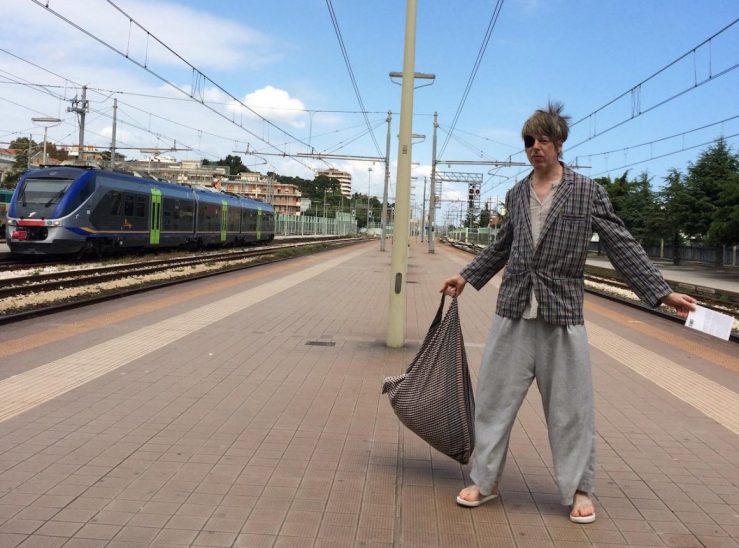
Although in the ensuing years Momus has released sixteen albums of consistently excellent original material and Manu Chao (who was previously part of the group Mano Negra) has put out just two**, the two artists have much more in common than being born just one year apart and possessing a shared penchant for unconventionally colourful and extremely baggy trousers. In both cases they have a level of creative energy that seems to increase exponentially with the years. Theirs is making as a mode of being, reminding me of the line from Fernando Pessoa – “I get distracted and start doing something”.  It’s also, in both cases, entirely impossible to predict what they might do next. This year Manu has been posting, from who knows where, new songs (hooray!) which are a collaboration under the name of Ti.Po.Ta) with a Greek actress/singer called Klelia Renesi, while Momus has been traversing Europe by train switching between being David Bowie and various versions of himself.

On the sleeve of ‘Radiolina’ (2007) there was a reference to ‘permanent summer’. Manu seems to be always on the move, from Barcelona to Bayonne to Bogotá. He says of himself that ‘my one luxury is travel’. Both he and Momus migrate instinctively towards similar scenes and people, but while Momus is more likely to pop up at art fairs and residences, Manu is an organic superstar, an incessantly mobile global troubador. The lifestyles of both artists are thus a rebuke to Theresa May’s tiny-minded denunciation of ‘citizens of nowhere’. Their lives and work are a celebration of mobility and migration. Wherever you happen to be on the planet there is an outside chance than one or the other will at some point soon be entertaining people at the end of your street***. Youtube abounds in videos of Manu playing in cafes, strumming and carousing while walking down the street and doing the entertaining at an actual children’s party. Momus’ gigs consist of him and his laptop, so they share a spirit of ‘let’s do the gig right here!’. While Momus’ gigs are spellbindingly intense and entertaining, Manu’s concerts are characterised by exuberance. If you’re at all into bouncing round your living room, whether alone, with friends, or with a newborn baby in our arms, his live albums are a must.

The border-flouting approach of both Manu and Momus is reflected in their linguistic eclecticism. Manu has sung in Italian, Greek, Portuguese and Arabic as well as English, French and Spanish; often he just mixes it all up in what what Diego Marani calls Europanto, often based around Manu’s own idiosycratic international take on English rock n’roll grammar. Sometimes his lyrics sound like stoned nonsense. His core audience is, after all, weed-addled Spanish perroflautas, punkabbestie italiane and French whatever-the-French-word-for-crusties-is. One thing the two artists have in common, lyrically just as much as musically, is inventiveness. Interestingly, in French Manu’s lyrics have a less wacky, more literary bent. Momus is consistently erudite but, with his history of having been big-in-Japan, has a mastery of International English and a strong appreciation of the absurdity and ambiguity of the pop idiom. He’s also a pioneer of using google to write songs in other languages and (akin to Michel Houellebecq) basing lyrics on Wikipedia entries. In a recent interview about his approach to lyric-writing, he talked of using a Burroughsian cut-up approach; not too dissimilarly, Manu’s lyrics often appear to be the result of a collage.

While Manu has lived in Brazil and currently (I think) resides in Barcelona, Europe’s most Latin American city, Momus, after floating between London, Paris, New York and Berlin, has gravitated towards Asia and is now based in Osaka, ‘Japan’s most working class city’. Given that Momus has never visited Latin America, it’s tempting to think of he and Manu as covering different parts of the planet. That may carry colonialist implications -and it is worth noting that as white European men their access to mobility is enhanced – but few make such use of it, and neither is unaware of the contradictions of neoliberal globalisation. As noted, they share an interest in and are advocates of free movement. as a corrective to nationalist and imperialist worldviews. Their magpie approach to sampling is not the mere cultural appropriation that at least one artist of their generation has been accused of. Both reuse source material with irreverence, treating culture as a living, fluid thing rather than a collection of solid museum artifacts. Theirs is not the globalism of Starbucks with its slogan ‘culture is just a flavour’. Hence they have both produced snarling critiques of neoliberalism, the notion of human society as a conveyor belt which stamps price tags on everything it doesn’t simply discard. One of Manu’s most recent tracks is called ‘No solo en China hay futuro’ – it’s not only in China that there’s a future.  Their refutation of the conveyor belt world view lies in the fact that they are both fascinated by what has been or stands to be discarded.

Both Momus and Manu Chao tracks are instantly recognisable as such, despite their catholic approach to borrowing sounds. Momus has invented some genres and pastiched others and ended with something which is absolutely distinctive. Manu’s music combines head-down boogie with ska, funk, punk and reggae; both show a laudable disregard for copyright. Another feature they share is artistic promiscuity, with a constant eye for collaborations. While Momus has made albums with Anne Laplatine and as part of  Joemus and MomusMcclymont, Manu has shared his creativity with Amadou et Mariam and (more recently) Calypso Rose. They both make exemplary use of the internet to try out and diffuse new ideas****. There’s also something similar in form and mood about Momus’ hearspools and Manu’s ongoing work with Radio La Colifata, in which he riffs and quotes from his own music. Both artists also continuously remake old songs for new performances.

There’s also a sense of generosity, not just promoting other artists but also causes. Manu very regularly lends his support to campaigns against GM farming and fights against mining extraction. Momus is definitely not a protest singer (or, it’s important to point out, very much not a crusty) but can, I think, be regarded as an intellectual engagé. Both produced relatively impromptu songs in relation to referendums in Scotland and Greece; late last year Momus released an album lamenting Brexit, while just a few weeks ago Manu (who was born in Paris) posted a short clip against Le Pen.

Both artists have taught me a huge amount. Many people said of David Bowie that he was a sort of proto-google, in that through him fans discovered other artists, writers, etc. Momus’ pedagogical role is now semi-official, in that he has, after a fashion, opened his own university. As for Manu Chao, it was mostly él que me ensenó el casteyano. Gracias, Manu. Cheers, Nick.

*Although his music wasn’t always appreciated by the morons there employed.
**Here is five hours of unreleased material from Manu Chao; you can listen to and/or watch many of Momus’ last few albums here.
***Apart from Mexico, where Momus has never been and from where Manu Chao is apparently banned.
****To get a good sense of what Momus is drawing upon nowadays this is an excellent listen.

“Neoliberalism had some good points”: An interview with Momus about Europe, politics, identity and Japan

momus-train-1160x861

Momus is a polymath: a musician, novelist, blogger, artist and occasional journalist and curator. Unusually for someone who bestrides different fields, whatever he turns his hand inevitably turns out to be absolutely unique and compelling.

I’ve been a fan since the late 1980s, back when he styled himself ‘the third Pet Shop Boy‘. Since then he’s released over 30 albums (all of them unerringly excellent), six novels (every of one of them a cracking and often uproarious read), and several thousand consistently fascinating posts on his now-defunct but still celebrated blog Click Opera.

Most recently he’s opened his own online ‘open university‘ and continues to produce occasional soundscapes called ‘hearspools’, which frankly defy description, but any one of which could change your way of seeing and thinking about the world. Although he lives in Japan, he’s also doing a series of appearances around Europe and I caught up with him in the really quite magical setting of Swiss Institute in Rome, where he was doing a talk on sublimation in his lyrics and a concert, during which he played songs related in some way to Rome and its history.

Read the interview in full at katoikos.eu.

“Neoliberalism had some good points”: An interview with Nick Currie aka Momus about Europe, politics, identity and Japan

momus-train-1160x861

Momus is a polymath: a musician, novelist, blogger, artist and occasional journalist and curator. Unusually for someone who bestrides different fields, whatever he turns his hand inevitably turns out to be absolutely unique and compelling.

I’ve been a fan since the late 1980s, back when he styled himself ‘the third Pet Shop Boy‘. Since then he’s released over 30 albums (all of them unerringly excellent), six novels (every of one of them a cracking and often uproarious read), and several thousand consistently fascinating posts on his now-defunct but still celebrated blog Click Opera.

Most recently he’s opened his own online ‘open university‘ and continues to produce occasional soundscapes called ‘hearspools’, which frankly defy description, but any one of which could change your way of seeing and thinking about the world. Although he lives in Japan, he’s also doing a series of appearances around Europe and I caught up with him in the really quite magical setting of Swiss Institute in Rome, where he was doing a talk on sublimation in his lyrics and a concert, during which he played songs related in some way to Rome and its history.

Richard Willmsen: I wanted to talk about Europe, because I think it’s interesting that as soon as it became possible to do so (in the early 1990s) you were among the first to seize the opportunities that freedom of movement offered.

Nick Currie: Yes, I always felt like a European. There’s something about the grass is greener on the other side, and also my mother had always been very Francophile and brought me up to feel like Paris was the centre of the world rather than New York, or London, or somewhere else.

Did you already speak French reasonably well at that point?

Yes, because I’d been sent for extracurricular French lessons at the French Institute in Edinburgh and I’d learnt it at school, and because we lived in Quebec as well. But it was mainly listening to French pop records in the 80s that drove my French, Gainsbourg and Brel, so it did feel quite natural to end up in Paris. And then even more so in Berlin, because I think each European country represents a repressed aspect of your own personality.

Each European country represents a repressed aspect of your own personality.

I don’t know if it applies to everyone, but I certainly feel like I have a German personality that comes out in Berlin and a French personality that comes out in Paris. In Rome, I just remember being struck, when I used to come here in the 80s, by the sexuality and a kind of hostility as well. Men really stare at you here. There’s a kind of toxic masculinity that would probably be even stronger in somewhere like Cairo. But it begins in Southern Europe, so to Northern Europeans that’s already the culture shock, coming down here. I guess I was repelled and attracted. I have reservations about each of those cities and every place in Europe I’ve been, just as I do to some extent about Japan as well. I think to some extent I’ve come through my European phase and now put my faith in Asia [laughs].

Over the last few weeks you’ve been travelling around Europe and something you said a couple of days ago on your video blog struck me as very interesting. You were talking about European freedom of movement, and it struck me that there’s a certain overlap: while the demand for that freedom partly comes from a neoliberal perspective, at a certain point it coincides with the call for No Borders, which obviously derives from the grassroots, from campaigning for migrants’ rights. Capitalists want to move blocks of people around, and the No Borders people want individuals to have the freedom to move around. Now, recently with Macron, a neoliberal politician who genuinely supports fundamental liberal values, there’s a sense that someone like that is ‘on our side’. How does that relate to politicians like Mélenchon, who support immigrants and refugees but are trying to appeal to people who are deeply conservative and want to strengthen borders?

Well it really brought it home to me when I heard Theresa May’s speech at the Conservative Party Conference, in which she used the phrase ‘citizens of nowhere’. I realised that I was being bracketed against my will with the bankers, those wankers who’ve ruined London and made everything so expensive, and with those Russian oligarchs who come to spend their ill-gotten gains.

I felt that Theresa May’s phrase ‘citizens of nowhere’ brackets me against my will with bankers and Russian oligarchs.

The people I’d be more willingly bracketed with are the immigrants. I was married to a Bangladeshi, a second-generation immigrant, and a lot of my closest friends have been people like that. There’s a chequered element to that, because it’s obviously the result of a colonial process, and economic migration and all the rest of it, which are not unalloyed benefits in themselves. Everything is complicated and endlessly relative.

Now, as we see the collapse (to some extent) of neoliberalism we realise that it had some good points, which was that it ‘talked the talk’, it had a liberal side. I call it the Mayor Bloomberg syndrome, where he obviously is on the side of cheap labour and all the rest of it, but then talking the talk of multiculturalism, rich diversity and so on. I did a blog thing about how we should celebrate but never measure diversity. The Left has been very contradictory on a lot of these issues, I think it’s had a very confused stance.

Momus

Pluralism and diversity are obviously good things but the colonialism system that gave rise to it was not a good thing. Politics is like that, it’s a botch job, it’s a series of compromises, of revisions of revisions and I think I’m happy in a revisionist way. I’m quite positive about the legacy of neoliberalism although obviously I would prefer a socialist system or some sort of basic income system, a no-borders-at-all system, to go back to before people even used passports, which is not all that long ago.

It always amazes me that place and race have become so central to people’s sense of their affinities. I have this alternative thing, which I call ‘elective affinities’, a phrase I took from Goethe, where you decide based on your own ethical, aesthetic and even sexual values what interests you out there, and you make friends with people who seem to embody those values, and marry them, or whatever, rather than everything being based on blood and soil.

I don’t really understand why borders have become the political topic of the day, and why you’re only supposed to have affinities with people from the same space as you and the same race as you. That’s what it seems to be going back to, and it is the Nazi blood and soil philosophy.

Is it partly related to mobility? The Guardian journalist John Harris did a really interesting talk after the Brexit vote which was a good corrective to a lot of nonsense that was being said along the lines that everyone who voted for it was just a xenohobic idiot. Of course there is a substantial truth to that idea…

I’m quite sympathetic to it!

In the immediate period after the referendum I too was extremely angry! But when you get people whose mobility is almost totally limited, by their economic circumstances, for example… He talks about people in the South Wales valleys, where even in terms of moving somewhere else…

But that’s not true at all! The poorest people in the world, the Bangladeshis, they upped and came to London, or they went all over the world. They were much poorer than those Welsh miners. I think jet travel and mobility have become the preserve of the very poor as well as the very rich.

As you say, politics is a very contradictory and complex area. But let’s say, now, in the General Election, you’ve got a Labour party that’s trying to relate to those people. Clearly it can’t just say, “well, just move”…

“Get on your bike!”

Exactly! The Norman Tebbit thing. Which takes us back to the conversation about neoliberalism. “Just move!” is not a very good strategy if you’re trying to get people to vote for you. Is there any way that a party with a progressive political agenda can relate to people who are left with very little in the way of economic opportunity?

It’s hard for me, I was trying to break down my politics recently in one of these vlog things I do, and thinking I’ve got socialist elements in it, and Frankfurt School Marxist elements, and a cosmopolitanism, which is obviously the product of bourgeois privilege, and I do realise that it’s not just because of a lack of economic means but a lack of a desire to travel.

I was talking about this to Teju Cole, the Nigerian-born writer and photographer, recently and he said that back in his village in Nigeria only 10% of people even thought about leaving. Unless there’s a huge disruption, like in Syria or in Bangladesh when the war happened, it tends to be a small minority of people who even think about tearing up their roots and going somewhere else, but it’s those people who are more dynamic and are forcibly educated by travelling.

If I think about the Bangladeshis in London, when they go back home they’re kind of aristocracy because they know two worlds and they have more economic leverage, so people who seem like proletariat on the streets of Brick Lane, they’re very wealthy when they go back to Bangladesh, part of a global class.

There are all these [intercultural] possibilities out there, and people are often just a bit too timid to go and investigate. I would hate to think we’re heading into a world in which a anxiety about a tiny fringe of terrorism stops people from doing that.

It’s fascinating, and it’s not just about finding new personalities within yourself. You might be more sexually attractive in another country, or your accent is considered sexy by Americans if you’re British. There are all these possibilities out there, and people are often just a bit too timid to go and investigate. You can really change your life circumstances, it’s an amazing thing, and I would hate to think we’re heading into a world in which a anxiety about a tiny fringe of terrorism stops people from doing that.

I also wanted to ask you about accelerationism, which you talked about recently, in relation to Asia. The accelerationist guru Nick Land lived in China for a number of years and was very excited about Chinese capitalism. Now if you take that notion that we should just push capitalism to the limit, and contrast it with the opposite, which is the idea of degrowth and sustainability, do you think that Japan, given its relative economic stasis over the last few decades, offers an instructive comparison?

I think cultural factors play a huge role here, and I don’t think you can really prescribe for the whole world a specific degrowth form, because capitalism has such different characteristics in different countries.

Japan has this thing called home bias, where they basically keep out foreign investors. There’s no Rupert Murdoch in Japan. You can’t go in there and own a newspaper and influence Japanese society if you’re a foreigner.

Japan has the least toxic capitalism that I’ve experienced.

The civil service is still very powerful there. You did have neoliberal politicians like Koizumi, who tried to sell off the post office, which is a very emotive issue. The post office is also a major bank in Japan, where there’s also huge public spending deficits, but it doesn’t really alarm anybody, they just like to invest in public services and they think they’re rich enough to do so.

So yes, there is this long, slow decline, but for me it’s important that Japan has a culture where everyone is not pitted against everyone else. The really toxic side of neoliberalism is this thing of each against all: the competition, the zero hours contracts, the sense of precarity that neoliberalism fosters. Of course there are people in such insecure situations in Japan, but somehow the harmony and cohesion that is so important to Japanese society keeps things together and stops them from becoming overly competitive.

For me it’s the least toxic capitalism that I’ve experienced. There are lots of small businesses and things are very commercialised, even things that aren’t in the West – you could probably have a maid in a frilly uniform scratch your hand for a certain amount of money – and I don’t find that objectionable at all, what’s objectionable is being bullied by big companies.

Is the way that global corporations operate really a ‘market’? I was thinking about the efficiency of that metaphor in terms of places like Spitalfields in London, which was a vibrant local market before global forces took control and ruined it, before it fell victim to the catastrophe that has devastated that part of London. Isn’t there something similar in the way in which Al Qaeda will destroy local markets in, say, Baghdad, and the way that global capitalism does? Markets are the lifeblood of society in a way, aren’t they?

I love them. My favourite place in Rome is the market by Termini station, a heavily immigrant-dominated area, with Indians selling Indian fabrics, and Bangladeshis selling Halal meat… That to me is a city, that’s what a city should feel like. What I don’t like is the historical centre, which feels like a museum, really dead, full of tourists in mesh caps. Then there are all the brands you see in such places, like Emporio Armani and Louis Vuitton. They have delusions of grandeur and they make a lot of money. But people love that, especially poor people seem to buy into it.

Do you think such elite brands represent a certain kind of fascism?

Absolutely!
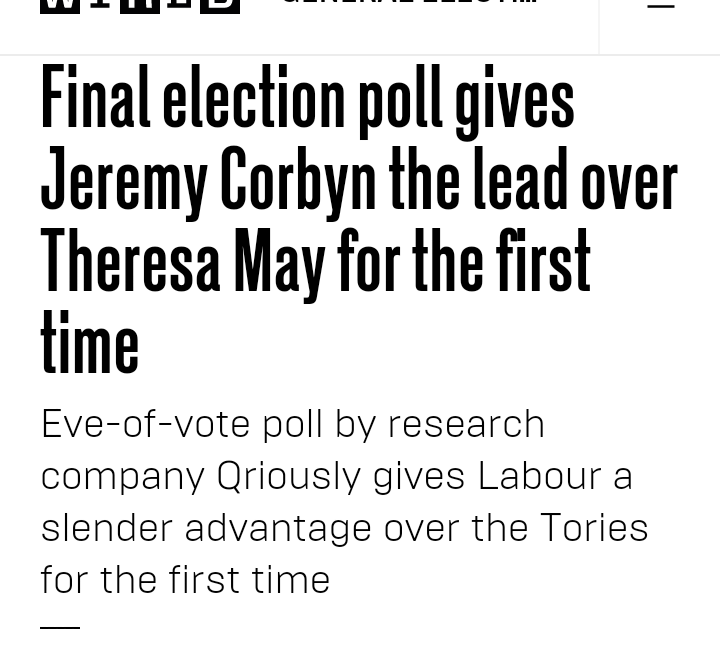
Fuck your ‘false flag’

Within minutes of the news breaking about the absolutely horrifying terrorist attacks in London, across social media people were coming up with and spreading conspiracy theories about the attack. They encouraged whoever came across their posts to ‘keep an open mind’.

Here’s a theory of mine about those who carried out the attacks:

They were young men who spent all their time stoned online watching all sorts of utterly irresponsible and scurrilous videos on YouTube. They rejected the ‘mainstream media’ as inherently corrupt and believed that the Internet gave them access to deeper and more dangerous truths hidden from ordinary people, who they regarded as catastrophically naive.

And here’s a message from me to those spreading inane and obnoxious conspiracy theories about the London attack:

The appropriate response to the indiscriminate mass murders is not to ‘keep an open mind’. It’s to read the facts as reported by responsible and professional journalists who were on the scene. Those who abuse social media to spread puerile conspiracy theories are little better than the hate preachers who exploit the horror to push their violent and racist agendas.

Have respect for the victims by reading the established facts about what was done to them. Don’t hide from the reality of what happened by ignoring news reports. After all, you’re supposed to be an adult. Claiming that the ‘MSM’ is all the same, that the Guardian or the BBC are no more to be trusted than the Daily Star or Fox News, is puerile. It also happens to be what Donald Trump wants you to believe.

When dealing with the mass media, be critical, but don’t be gullible or cynical. These events are real, just like Climate Change is real. Don’t get misled by manipulative but comforting internet fairy tales. That’s one way that young men (and it is always, always, always young men) get to the point where they can carry out things like this.

And don’t take the apparent fact that the three dead terrorists were known to police as evidence of collusion. If the police arrested all young men suspected of jihadi sympathies, thousands upon thousands of presumably innocent people would have to be interned. We haven’t yet got to that point, thank God. Similarly, if anyone can think of ways to stop people driving vans into pedestrians or running into crowded open spaces with knives, feel free to suggest them. These are complex, difficult issues – it’s far easier to just shout ‘ban Islam!’ or ‘false flag!’. Such responses are not, in the end, all that dissimilar: thoughtless, kneejerk reactions to a seemingly intractable problem (of young men disaffected to the point of psychopathic nihilism and exploited by political interests), which can only be meaningfully addressed by means of the application of intelligence and patience, with respect for the rule of law and human rights absolutely paramount. Let’s do everything we can to ensure we will soon have a government which understands that.

If you want to link these attacks to the election, don’t be a dick and go around telling people that they were secretly carried out by The Man. Point out that the heroes of the hour – the police, the paramedics, the surgeons and nurses – are all having their jobs, wages and conditions cut and the services they provided exploited for profit, and the survivors of such tragedies, those left physically crippled and/or psychologically damaged by the experience, are bullied and made destitute by a Government that has complete contempt for the notion of the public good. All of that happens to be true – you don’t need to believe in some sub-Infowars bullshit conspiracy theory to see that our rulers urgently need to be replaced. The basic facts about injustice and corruption are not hidden, however consoling it may be to pretend that they are. The idea that the world is run in secret is useful to the powerful – if it were true, it would leave us powerless to do anything about it. Thankfully, it isn’t, and we’re not. If you want to exercise your power, get offline and go canvassing instead. We have very little time left.

Theresa May’s secret plan for Brexit

As I’ve argued here from the start, Brexit is impossible. David Cameron blithely drew us all into a trap set by the far-right, and whoever has the responsibility for actually implementing the UK’s withdrawal from the EU will quicky find that it’s no easier than building a physical wall between Mexico and the moon.

Trump’s ‘friend’ Nigel Farage, aka the trickster who brought us to this point of total intractability, is a lifelong fascist who would happily, in collaboration with his US and Russian counterparts, start a world war. Seeing the situation the British Government is now in, he’s as gleefull as a bulldog in a kennel built of its own excrement. As a proper pre-referendum democratic debate, i.e. one not distorted by the strident lies of Farage, Johnson, Murdoch* and Dacre – not to mention the illegal manipulation by Cambridge Analytica – would have established, it would take decades of negotiations by legal and constitutional experts on both sides to even begin to disentangle the British State from the European Union.

So what’s Theresa May’s plan, given that she’s always known that the whole thing is a non-starter and that attempts to enact it would destroy the British economy? Even after she’d achieved her vanity project of becoming Prime Minister her early attempts to even define the project were absolutely devoid of meaning. So far she’s toughed it out, pretending that she has a clearly-defined notion of what’s involved. Call it ‘hard Brexit’, to prepare the population for decades’ more austerity. Use the opportunity to put into action the final solution for the NHS and all the other eternally cruel dreams of her political tradition.

In relation to the actual negotiations, she’s attempting to set the country up to take part in a geopolitical tantrum, trying to persuade voters and herself that the UK can realistically just walk away from the whole thing. It’s absolutely to Corbyn’s credit, despite his woeful prevaracation in the run-up up to and immediate wake of the vote, that he’s insisted that ‘no deal’ is not a plausible possibility.

In the meantime, I suspect that for all that she’s just about managing to robotically bluster and fib her way through this campaign and will probably get a majority (although not nearly as big as she wanted), May simply doesn’t want to be Prime Minister any more. I think that her calling of this election was an attempt to establish in her own head a mandate for national suicide, but that however hard she tries she just does not have the courage. It is highly possible that she will do the same as Cameron and wash her hands of the whole disaster. But whether it’s on the individual level of resigning, or at the national level of activating the suicide belt of abandoning negotiations with the EU, Theresa May’s secret plan for Brexit, whether she knows it or not, is to walk away and let everyone else deal with the consequences.

Over the next week, every single person who wants the Tories to be defeated needs to be banging on doors, sticking up posters, striking up conversations with strangers at bus stops and at every point reminding their fellow citizens: the Tories do not give a flying fuck about the future of our society. They just want to get even richer at our expense. And when they say they have a plan for Brexit that involves anything other than the sacrifice of our livelihoods and the martyrdom of our children’s life chances if not their actual lives, they are lying through their expensively-upholstered teeth.

* I’d just like to take this opportunity to suggest that Rupert Murdoch is the Robert Mugabe of British politics.

Waiting for impeachment is cowardice. Someone needs to act.

In how many Hollywood movies does a single individual sacrifice their life to save the world? Whether it’s Bruce Willis or some other aging but rugged hero, in death-embracing acts of individual self-martyrdom the protaganist beats both the ticking clock and the normal limits of human endurance in order to protect humanity from some (always externally-derived) threat. In the process the manifest destiny of the USA is reaffirmed, and all other citizens of the world, shown gathered in sports bars looking up anxiously at garbling and visibly perspiring news presenters, warming themselves around some squalid but spiritually-enriching campfire in the desert, or huddled in their third-world hovels around radios as they come to understand despite their obvious lack of education and pitiful absence of material means that once again thanks to the omnipotence and benevolence of the world’s only superpower the existential threat to our world has been averted.

Can the world wait for the criminally insane occupant of the Oval Office to be ‘impeached’? Should we cross our fingers and hope that somehow, one not too far-off day, through the time-honoured workings of the USA’s venerable democratic institutions as defined in its vaunted Constution, the balance shall be restored? I would say not. We’re beyond that point. Instead, some courageous and principled American citizen needs to act, some valient man or woman brought up saluting the Stars and Stripes and believing fervently in the shining ideals of democracy, justice and freedom, patriotically adept at handling a range of US-made firearms, must step up to the plate and prepare themselves to launch an almighty strike in response to the pitch that fate and history has thrown them, thus redeeming the American Project and saving the world once again, just like in the movies.