The First Emperors of New China


The current exhibition at the British Museum, The First Emperor, is a tribute to the man who ordered the building of that huge monument to himself, the tomb of the Terracotta Warriors. The focus of the exhibition is a small selection of artefacts from the tomb, including a number of statues of the warriors themselves. It is a blockbuster exhibition which attempts to match the scale and ambition of its subject.

A short film which precedes the main part of the exhibition shows how Emperor Qin managed to conquer and unite what is now the territory of China. At the end of the film we see the map rapidly turning crimson and the word ‘Qin’ appearing on the map. ‘Qin’, we learn, gave origin to the western word China to denote what was called in Chinese the Middle Kingdom – or the centre of the world.

The exhibition was partly criticised in the Guardian for offering an uncritical and revisionist account of the achievements of a man who history has generally remembered as a brutal tyrant who ‘massacred prisoners, burned books and slaughtered scholars’. The words ‘cruel’ and ‘brutal’ are absent from the exhibition. The key message of the exhibition, signalled clearly in that introductory film, is one that the Emperor himself would have been happy with: He was on a celestially-inspired mission to unite ‘All-under-Heaven’ and so to bring China into existence. The existence of China is, therefore, no historical accident: It was written in the stars.

However, historians have on the whole ceased to regard all human history of the great achievements of supreme individuals equipped with armies and visions of a future world reshaped according to their ambitions. Also, it would, or at least should, be very hard in 2007 for any serious thinking person to sustain the belief that nations and states have a historical mission to exist, that they are the result of destiny and not of chance.

We learn very little in the exhibition about the lives of those who actually built the tomb. There are some references to convicts being used, to the huge numbers of slaves whose lives were sacrificed to its construction. But the overall message is that this was the work of a visionary, an emperor creating a coherent and sovreign empire which has survived intact up to the present day.

One key theme or, I would argue, purpose of the exhibition is that of continuity. Qin established the systems of weights and currency and was also largely responsible for establishment of the writing system, as well as beginning the building of the Great Wall. This grants legitimacy to the subsequent rulers of China: a series of dynasties have maintained China’s unity and preserved and guarded its treasures. The rulers of this empire have now generously allowed those who cannot visit the Middle Kingdom to enjoy at first hand a glimpse of its profoundly rich and mysterious cultural legacy.

The way in which China chooses at different times to regard its previous rulers is very instructive. This is particularly true of representations on TV (1). According to the Asia Times:

‘It has been a tradition in China, both under the communists and long before, to criticize Chinese leaders indirectly but deftly by comparing them to misguided, wicked or weak emperors, ignoring the welfare of the people, or by comparing them to the wise and benevolent rulers of the past. Chinese readers – and today’s television viewers – are savvy enough to read between the propagandists’ lines and understand 2,000-year-old contrived allusions to current politics.’

The Chinese people, then, understand the significance of the different dynasties. Some of them represent more insular styles of rule, some more outgoing, some more brutal and legalistic, some wiser and more benign. Visitors to this exhibition are left to make their own connections between the great rulers of the past of the great rulers of the present.

The current Chinese emperors, then, are laying claim to a heritage which goes back way before 1949, when Chairman Mao told the Chinese people to stand up. Mao was a great admirer of Emperor Qin, by the way, allegedly claiming “He buried alive only 460 scholars, but we have buried alive 46,000”. The exhibition makes a claim on behalf of the current Chinese regime on a inheritance which goes back 2,000 years, and which is ultimately divinely derived. What we are being shown in this exhibition are some of the more treasured family heirlooms.

So what is the problem? Every nation and state in the world seeks to demonstrate that its existence is the inevitable product of all earlier stages of history, and to this end adapts, adopts, invents and constructs myths, legends, historical figures and movements, not to mention pre-existing monuments, in order to prove its rightful legacy. ‘China’ is no more or less artificial an entity than any other nation.

China as a country, if not a nation, has, in broad terms, been around for a very long time. But my question is: How much legitimacy are we prepared to concede the Chinese Government? It consists of an unelected oligarchy of bureaucrats who govern by means of repression and corruption. The subjects of the Chinese Communist Party regime enjoy little in the way of human and democratic rights. It is the world’s largest dictatorship, and its claims to legitimate authority are contested, or at least questioned by a large proportion of the world’s population, including in China itself.

Would the British Museum, and by extension the British state, be prepared to host a similar exhibition on behalf of the Government of Burma? Or North Korea? (2)

In the exhibition bookshop you can buy a seemingly fairly random selection of things related to China. One thing that may be useful to anyone vaguely interested in Chinese history is a book giving a broad outline and a timeline of Chinese history for children. The book makes a brief reference to the Cultural Revolution, a period when a previous generation of Communist Party leaders ransacked their own country and tried as hard as they could to destroy the country’s cultural legacy: it was reportedly only through the direct intervention of Zhou Enlai that such crucial sites as the Forbidden City, the Potala Palace in Lhasa and even the site of Terracotta Warriors were saved. It would be strange, to say the least, if a brief guide to Russian or German history made such scant reference to the Stalin and Hitler eras. There is no mention of the single most prominent recent event in Chinese history in the eyes of the world, the events of June 4 1989, when the previous generation of leaders again murdered thousands in a desperate attempt to hold on to the reins of power, an event which the current leadership refuses to acknowledge on any level.

The culmination of the book’s timeline and, presumably the mental timeline of the exhibition’s visitors, is, inevitably, summer 2008, when the Chinese capital will host the Olympic Games. This is a key moment for the Chinese Government, a coming-out ball which will confirm beyond any doubt that China is, despite its continuing refusal to grant basic democratic and human rights to its population, a nation whose sovreignty and authority is beyond question (3). It will be a coronation ceremony for the emperors of New China.

This seems to be an apt term for what has previously been known as the People’s Republic; given that the only two pillars of CCP ideology for the last number of years has been nationalism and ‘we can make you rich!’; a name change, beloved of despots in desperate need of a fresh new image, seems well overdue. The PR in China could stay, of course, but with a different meaning, and given the success of our own beloved former leader in rebranding his party with the facile addition of the word ‘New’, it seems entirely appropriate for the CCP’s attempt to remake itself for internal and international consumption. ‘Xin Zhonghuo’, anyone?! (4)

The message of the Olympics is, to borrow a phrase: China’s Coming Home. And just as the slaves dedicated themselves selflessly to building the stunning monument to vanity that is the tomb of Emperor Qin, the Chinese people are wholeheartedly and voluntarily putting themselves hard to work. A recent Guardian special collected some very revealing comments regarding the importance that a lot of people give to the Olympics, and the effect a successful games will have on ‘national pride’: ‘”I don’t have any religious or political convictions. So you can say that the Olympics is my main belief,” says primary school teacher Zhou Chenguang. According to the taxi driver Xia Shishan: ‘We will finish top of the medal table. And when we win, I will be so excited my blood will boil.” In Beijing projects are being completed at a furious pace and on a meglomaniac scale in the attempt to turn the host city into a place suitable for international visitors such as sports people, journalists and tourists, even if in the process making it into a city which will be pretty much unaffordable to the people who acually live there (4).

The current exhibition at the British Museum is a PR coup for the Chinese Government, and simultaneously an advert for the much greater showcase event next summer. It can to some extent be regarded as propaganda, rather than history.

Of course, a great deal can happen between now and June 2008, and a great deal could happen during the games themselves. What will happen if the very tight control that the authorities are trying to exercise over the event doesn’t work? What if there are protests? What are the Falun Gong capable of? And how will the world react?

1 – The Qin dynasty was very positively portrayed in the 2005 film hero, regarded by some viewers as an outright piece of CCP propaganda. See also http://film.guardian.co.uk/News_Story/Critic_Review/Observer_Film_of_the_week/0,,1312773,00.html.

2 – Unfortunately I didn’t see the Ancient Persia exhibition two years ago, so have little idea of how that may have related to the question of Modern Iran, beyond what I managed to glean from various websites. There is obviously a significant contrast between the Forgotten Empire, which no clear connection with the present, and the First Emperor, which implies continuity. According to the New York Times, the exhibition ‘give ancient Persia its proper place — between Assyria and Babylon on the one hand and Greece and Rome on the other — in the chronology of early civilizations. In that sense, ”Forgotten Empire” is also highly topical…John Curtis, the show’s curator and keeper of the museum’s ancient Near East department, added in a statement: ”It may also be important at this time of difficult East-West relations to remind people in the West of the remarkable cultural legacy of a country like Iran.” ‘. Personally I find such aims perfectly laudable, but whatever the stated aims of the exhibition under discussion here they are not nearly as commendable. Plus, Iran is actually, strictly speaking, a democratic country…

3 – This contrasts with the status of little Taiwan, officially known as the Repuplic of China, which will once again compete under the name of Chinese Taipei, owing to the demands of the Chinese in Beijing. See also http://www.guardian.co.uk/china/story/0,,2174496,00.html.

4 – I’d love to read an analysis of how Beijing’s rebranding of China as a dynamic forward-thinking business-friendly place matches Blair’s project to ditch the Labour Party’s ideological and historical baggage in the mid-nineties. I remember reading some time ago that one of the many foreign politicians to lecture the Chinese leadership in the 1990s was Peter Mandelson.

5 – Obviously East London is now starting to go through the same process. See http://www.redpepper.org.uk/article555.html.

A white, female working class version of Cat Stevens on our TV screens? Nah fanks!


One of my students asked me the other day what I think of Big Brother and I was lost for words. Beyond an obvious abhorrence of racism, a vague level of contempt for the increasingly hysterical promotion of this story on the front of the tabloids and the free ‘grab-em-while-they’re-shit!’ rags, and a sense that the girl who apparently just got voted out is being made into a bit of a sacrificial cow for all things nasty and working class, I don’t have much of an opinion.

However, I was very interested to read on the Guardian site that Channel 4 apparently edited out the footage of one of the white working class characters performing Muslim prayers. Evidently the notion of a white working class Muslim was so unthinkable that it could not be broadcast, presumably not fitting inside the very limited framework that the programme (and TV in general these days, in my opinion) provides. This incident tells us more about the programme than any other, and I sincerely hope to see effigies of those responsible burnt in genuinely angry demonstations around the Muslim world, rather than in protests staged for the benefits of Western TV cameras, which is what I suspect we saw this week in India.

Why was Africa not a popular destination for emigrants from Portugal?


One word can be said to characterise the attitude of the Portuguese people to the question of emigration to Portugal’s African colonies: reluctance. In the late nineteenth century only approximately fifty emigrants a year went to Portuguese Africa. In the first half of the twentieth century, while more than one million Portuguese emigrated to Brazil, the United States and Argentina, only 35,000 made their way to the largest Portuguese colony, Angola. In the year 1908, the official figure for emigration to the whole of the Portuguese African colonies stood at a mere fifteen people.

This reluctance had deep roots. In Portugal and Angola, Wheeler and Pelíssier partly attribute the failure to attract sufficient numbers of early settlers to five factors: the high mortality from tropical diseases; African hostility; an arid climate; the domination of the slave trade to the detriment of all other economic activity; and the poor quality of the of the largely convict colonists (the ‘flotsam and jetsam of the Portuguese speaking world’).

These factors would emerge as recurrent themes over the centuries. Another abiding reason was what might be termed the ‘Old man of Restelo’ syndrome. The Portuguese Age of Expansion was partly an ideological crusade for the crown and for the explorers, but for those Portuguese who were so desperately poor as to consider emigrating, those ‘masses who derived little or nothing from the overseas wealth’, patriotic or religious fervour cannot have played such a major role when considering the different options available. Wheeler and Pelíssier write of Portugal as:

‘..two nations, rich and poor…(the poor) tending to be indifferent or even hostile to elite ideas and actions as well as to the outside world. The other nation has (…) participated little in the expansion (and) colonialism (…) most of Portugal did not willingly follow and sometimes opposed the lead of the Lisbon elite into overseas expansion.’

This lack of willingness had to be compensated for through forced emigration. The sending of degradados – ‘murderers, arsonists, rapists and thieves’ – in such huge numbers created such a climate of hostility and turmoil that Governor Sousa Coutinho advised his superiors in Lisbon that ‘the only way to avert total ruin in Angola was to replace degredados with free Portuguese farmers’. The problem was, of course, that free Portuguese farmers showed little inclination to relocate to Angola, and ‘before the end of the seventeenth century Angola’s reputation as a penal settlement and a white man’s grave was both firmly established and well deserved’.

In fact, not just Angola but the whole of Africa was considered ‘a graveyard for Europeans, who were in almost constant battle with Africans and/or the climate, animals, and insects such as the deadly malarial mosquito’.

As Wheeler and Pelíssier note, the calibre of the available settlers presented another huge problem for the Portuguese. Bender writes:

‘The Portuguese upper and middle class either remained in Portugal or had already left for better-known parts of North and South America. As a result, the government’s appeals for prospective settlers were generally answered by rural peasants or the poor and unskilled in urban areas’.

From the very beginning of Portuguese involvement in Africa, those who established themselves more successfully were those who realised that the slave trade was a considerably more attractive and lucrative proposition than agriculture. In Mozambique many of the holders of prazo titles became more ‘africanised’, established their own personal dominions and did not feel they owed a great debt of loyalty to the Portuguese colonial authorities. For the most part they traded in what was by far the most lucrative of the available commodities. Slaves accounted for four-fifths of Angola’s exports between 1550 and 1850. The gradual end of the slave trade would inevitably, therefore, create huge difficulties for Portuguese settlers who had no other source of income. Hence the determination of the slave traders to hang on to their livelihoods in the face of increasing pressure. Duffy writes, ‘The violent reaction in Portuguese Africa to emancipation has been noted’.

The loss of exclusive Portuguese access to Brazilian markets in 1810 combined with the ending of the slave trade mid-century inspired liberal politicians in Portugal such as Sa da Bandeira to devote new energies to making the colonies an attractive destination for both investment and emigration. Crucial to this new vision for the overseas territories was the principle that:

‘Angola must not be a place of exile for convicts and undesirables; settlement there by honest industrious citizens should be one of the first orders of business for the new regime’.

The success of this campaign depended upon a constant campaign of ‘education in the metropolis and sufficient capital and foresight in the provinces to create a community in which the immigrant could not only prosper but live comfortably’. But as Bender points out, ‘Lisbon appeared to be incapable of overcoming the lack of settlers without a heavy dependence on degredados’. Various plans were discussed and finance was provided for large-scale schemes of white agricultural settlement, but by the early 1880s penal colonies were being expanded to accommodate more convicts.

Those who did emigrate found life almost intolerable. Of the 1,500 desperately impoverished Madeira farmers who went to the highlands of Southern Angola in the mid-19th century, Gervase Clarence Smith writes:

‘Visitors to the highlands were shocked by the sight of these landless, impoverished, illiterate whites, who wore no shoes, were dressed in rags and lived in hovels’.

Emigrants to Portugal’s other African colonies fared little better. Duffy writes:

‘If farmers from Madeira found life difficult in the highlands of Angola, existence for them in the low-lying territories of Mozambique would be intolerable under present conditions’.

They were not generally at all well equipped for the difficulties they would face. Bender quotes Nascimento and Mattos as reporting that they were ‘generally poor, ignorant and illiterate, and for those reasons, without much ambition, withdrawn and lacking initiative’. According to Antonio Enes, ‘the Portuguese emigrants to Mozambique were rarely other than hands possessed neither of capital nor of the energy and aptitudes required to do duty for it’. Of course, even those with agricultural experience and expertise were to find that the African climate and the range of crops that could be cultivated were considerably different from what they were used to and presented often insurmountable challenges.

Understandably, many of the settlers showed more inclination to settle in the cities than in the rural areas. But they were no more immune than the farmers from many of the obstacles that Clarence Smith describes:

‘Independent fishermen, small farmers, petty traders and the like were constantly threatened by impoverishment and proletarianization. They were at the mercy of natural disasters and social calamities and were often incapable of breaking out of the vicious cycle of debt’.

Mirroring the reluctance of prospective emigrants to consider Africa as a destination, banks and small investors showed little willingness to risk their resources in areas with such a high rate of failure. Also the land set aside for the potential colonists was ‘inadequately surveyed’ and preparation of the schemes was poor, leading to settlers often abandoning the plantations and making their way to the more prosperous South Africa.

In the south of Angola, the Portuguese government did have some success at attracting foreign settlers. Attempts by Portuguese settlers fleeing from persecution in Pernambucano to settle in Moçâmedes were not initially successful but communities were eventually established. More successful was the settlement of Boer families in Huila in the early 20th century. Also small fishing communities were formed at Porto Alexandre by Algarvios who had made their own way in their own humble vessels in 1853. But these seem to have been rare exceptions.

In the judgement of Clarence Smith, Sa da Bandeira’s ‘plans of massive white settlement came to nothing. Apart from coastal southern Angola, the trickle of whites entering the colonies were nearly all convicts’. Bender records that ‘a series of plans and decrees, designed to augment free white settlement, either atrophied on the drawing boards or failed for lack of settlers’.

In 1845 they had been only 1,832 whites in Angola. By 1900 this had increased to about 9,000 and by 1911 the white population of Mozambique had expanded to about 11,000. However, a large proportion of the white population of Mozambique were not Portuguese, and English was heard almost as much as Portuguese. The Portuguese Community consisted almost exclusively and convicts and traders. Degredados continued to be imported and those in critical professions such as teaching and medicine showed little inclination to go and live in Africa:

‘A (..) serious problem was the want of trained personnel, teachers, nurses and doctors, willing to work overseas in a questionable environment for a paltry governmental salary’.

Equally disinclined to do so were Portuguese women; or, at least, Portuguese men were not inclined to bring their families with them to ‘a land infested with insects, wild animals, hostile Africans and degredados’. Those persuaded or forced to make the trip usually died within a few years of arriving, often during childbirth. In 1846 it was claimed that there was ‘still no case of a white woman giving birth when it didn’t cost the life of the mother and child’. In 1897 there were reportedly only two white women in Lourenço Marques.

This high death-rate, which obviously affected male settlers as well – Clarence Smith talks of the settlers dying ‘like flies’ – meant that the top-tier officials of the colonial civil service could never fully develop into a stable class, and therefore experienced and competent administrators were in short supply. Pay for these postings was not high, conditions were not at all satisfactory and, until the advent of the better-organised and more stable structures introduced under the Estado Novo, motivation remained very low. According to António Enes, one of the problems with Portuguese colonization in Mozambique was precisely this lack of a ‘colonizing class’.

However, emigrants both rich and poor did willingly make their way to Brazil, which offered poor Portuguese emigrants ‘a much better chance of surviving and making good’ than Africa. From the end of the 17th century until shortly after World War II Brazil accounted for the ‘overwhelming majority’ of Portuguese emigrants; between 1850 and 1950 1.5 million Portuguese emigrants chose Brazil over Africa. Evidently this was partly due to cultural links, but Brazil already had a long history of making fortunes in gold, diamonds, and coffee. Bender writes that ‘the perennial pot of gold sought by Portuguese emigrants was to be found in America, not in Africa’. The emigrants knew that they stood a very good chance of making or earning enough to enjoy a good life and to send money back to Portugal. By the end of the nineteenth century:

‘Brazil possessed the essential conditions to stimulate large-scale immigration: an expanding economic infrastructure which required large labour inputs (and) a commitment to pay living wages…the absence of these conditions in Angola explains to a considerable degree why Angola attracted far fewer white immigrants than Brazil.’

The ending of the slave trade, with the resultant demand for labour, had created a ‘sensational increase in emigration’ from Portugal:

‘Between 1840 and 1850, the Brazilian empire had still taken in about 33,500 slaves a year. This figure was reduced to 3,287 in 1851(…) thereafter the Brazilian economy entered the era of the expansion of coffee (…) The New world attracted numerous emigrants.’

Another essential factor is that while the climate and tropical diseases took their toll on a considerable proportion of the few settlers that made it to Africa, in Brazil the colonizers were able to deal with the climate; in fact, the diseases that the Europeans brought with them contributed significantly to the decimation of the indigenous population.

Life throughout Africa was known to be ‘hard and uncertain’. Hammond quotes a newspaper article from 1861 which directly addressed the question of why emigrants did not go to the colonies:

‘The reason is obvious. Whoever emigrates is poor, nay, of the poorest. His sole wealth is his labour, his sole capital his personal activity. He needs wages, not virgin soil. He needs an employer, not workers. Whither shall he take his way? To Angola? But what is he to do there? What industries exist there? What activity already established? What accumulated wealth? What cultivated lands? What industry? What trade? Trade – that of the blacks. Industry – none. Shall he go to Mozambique? Worse…’

The figures show that, while such an article would probably not have been read by the kind of people who might have been desperate enough to consider emigrating to Portuguese Africa, in the popular understanding these were the ideas that had most influence. In ‘Republican Portugal’ Wheeler mentions the difficulty that the Republican regime had in making pro-war propaganda amongst a largely illiterate population. The successive attempts to promote relocation schemes to Africa presumably encountered the same problem in trying to counter such negative impressions.

Under the Republic there was an expansion of public employment in the colonies. Clarence Smith writes that ‘it looked as though the republic had found the magic formula for expanding the white population of the colonies’. However, such state involvement no more constituted investment in their productive capacity and economic development than did the government subsidies paid to the colonos, of which Bender writes:

‘Such dependence on the state made the colono more of a civil servant than an independent farmer (…) In particular, the financial subsidies actually discouraged many colonos from devoting their full energies to their new farms.’

However, by the mid-twentieth century it was ‘clear that the long-standing reluctance of metropolitan Portuguese to emigrate to the colonies had been overcome’. The white population of Angola had increased to 78,826 by 1950, and that of Mozambique to 97,200; in the following ten years these figures would more than double. What had changed?

In the early years of the Estado Novo the Government had little more success than before with its rural settlement schemes. However, the 1940s and 50s was a period of ‘general prosperity in Africa, in which the Portuguese colonies (…) naturally shared’. In the 1950s there was a change in government policy: the Portuguese National Development Plan of 1953 allocated $100,000,000 to Angola and $85,000,000 to Mozambique, with a lot of the money being invested in dams, roads and railways. In 1959 another $237,000,000 went to Angola and $125,000,000 to Mozambique. Included in this was money for new and ambitious settlement programmes. It has been estimated that the cost of settling a single family in Cela, Angola was $100,000. The settlement programmes themselves were not overwhelmingly successful, but Portuguese emigrants were attracted in very large numbers to the cities; also in the 1959 plan, investment in health and education – essential given the rapidly increasing demand for skilled labour – featured for the first time.

Huge numbers of Portuguese immigrants continued to arrive throughout the wars of independence, right up to the revolution in 1974. Of the hundreds of thousands of retornados who fled back to Portugal shortly afterwards, more than half of them had only arrived in Africa during the previous fifteen years.

Conclusion

Apart from the physical difficulties that Europeans had faced in simply staying alive in Africa, the principal reason for the reluctance to emigrate to the colonies lay in the image that the Portuguese people held of Africa. In contrast to the developing and expanding society of Brazil, Africa had always been seen as a place from which resources – slaves and mineral wealth – were extracted rather than invested. Portugal’s nineteenth century dream of creating a new Brazil in Africa ignored this basic dichotomy.

Portugal’s attempts to build a society on captive labour had worked in Brazil, in much the same way as had Britain’s in Australia, but in both cases the indigenous populations were more or less wiped out within a couple of centuries of the Europeans’ arrival. This was clearly never a possibility in Africa, so the Portuguese attempts to create ‘new’ societies had to find some way to work with, rather than against, the African population.

Would Britain have been successful at creating a new United States in the areas of Africa from which it took its slaves? Of course Britain also had its lucrative Indian and Australian colonies, so such a notion is unlikely to have ever been suggested. Portugal, on the other hand, had no other significant territories. However, in developing Brazil, it had severely disrupted the complex societies which already existed in Africa without seeking to repair the damage until, crucially, it was too late.

Did racism exist in the Portuguese empire?


In 1950-51 Gilberto Freyre conducted a tour of Portugal’s overseas colonies at the invitation of the Estado Novo Government. At the end of a two-week stay in the largest of those possessions, Angola, he wrote the following:

‘Aqui, a presença de Portugal nao significa a ausência, muito menos a morte da África…Angola, luzitanzando-se, enriquece a sua vida, a sua cultura de valores europeus que aqui, neste mundo em formação, confratanizam com valores nativos ou tropicais, sem os humiliar: a oliveira ao lado da bananeira; a uva ao lado do dem-dem; a macieira ao lado da palmeira; o branco ao lado do preto’.

This contrasts sharply with the conclusions of Gerald Bender in Angola under the Portuguese:
‘Africans in colonial Angola were expected to assimilate an almost pure, unmitigated Portuguese culture, barely modified by the slightest trace of their own numerically dominant culture’.

Freyre’s intention was to ascertain if his theories regarding Brazil could be extended to the other Portuguese colonies. He would subsequently write of his trip that he had been able to confirm an ‘intuição antiga’:

‘Portugal, o Brazil, a África e a Índia portuguesa, a Madeira, os Açores e Cabo Verde constituem (…) uma unidade de sentimentos e de cultura’ .

These consisted in a predisposition for miscegenation and an absence of racial prejudice, both of which had their origin in the influence of the Moors, the Jews and of Africa and had served to create the paternalistic and ‘socially plastic’ character of the Portuguese. The Portuguese was ‘the European colonizer who best succeeded in fraternizing with the so-called inferior races’ .

The publication of his first book Casa Grande e Senzala in 1933 had served to overturn the consensus on race in Brazil, which held that Brazil’s lack of development was due to ‘the ”debilitating’ influence of the large black and mestiço population’ . In the late nineteenth century Brazil had imposed ethnic quotas on immigration in an attempt to guarantee the country’s ‘ethnic integrity’ . Freyre challenged these notions through detailing and celebrating the huge influence that the African and the Indian had had on Brazilian life.

However, such ideas of the racial inferiority of the non-European were and had been common currency in Portugal for some time. In 1880 Portugal’s most prominent historian Oliveira Martins had written:
‘Are there not (…) reasons for supposing that this fact of the limited intellectual capacity of the Negro races, proved in so many and such diverse times and places, has an intimate and constitutional cause? (…) Why not teach the gospel to the gorilla or the orangoutang, who do not fail to have ears because they cannot speak, and might understand pretty well as much as the negro?’

Many of Portugal’s most prominent colonial officials shared these racist sentiments. António Enes was ‘a forthright racist, and what he says about the African and his place in the colonies is a truism long accepted by most Portuguese colonialists’ . Mousinho de Albuquerque, Norton de Matos, Serpa Pinto and others ‘continued to propagate the notion that Africans were inherently inferior’ . Politicians in Portugal often shared these beliefs. In a speech in 1893 the MP Dantas Baracho stated the African didn’t deserve citizenship rights, as he was inherently ‘lazy, drunk and criminal’ . The notion of the African as someone who had to be made to work was very current; Mousinho de Albuquerque spoke of the Africans ‘recusando-se a toda a especie de trabalho’ .

Key to Freyre’s work is the notion that the tendency to miscegenation is inherent in the Portuguese character. However, this attitude was not shared by many of those who held powerful positions over Portuguese colonies. The former High Commissioner and Governor General of Angola Vicente Ferriera considered the effects of racial mixing ‘nefastos’ . Marcelo Caetano talked in 1945 of the ‘grave problema de mestiçamento’ , and Bender quotes Norton de Matos’ fears that:

‘(…) the inferiority of Africans could dilute or even ruin the effectiveness of Portuguese colonization if the government did not put ‘for at least a century, the greatest obstacles to the fusion of the white race with the native races of Africa.” .

Such attitudes would come to be challenged in various ways in the middle of the last century. As Claudia Castelo writes, the end of the Second World War implied a wholescale condemnation of ideas of racial purity, and the international consensus dictated that the principle of self-determination should prevail . This presented a problem for Portugal; the African colonies were an existential issue: ‘a moral justification and a reason for being as a power’ . For Marcelo Caetano, ‘sem ela (Africa) seríamos uma pequena nação; com ela, somos um grande estado’ . Nevertheless, as Castelo writes:

‘A ONU passa a considerar o princípio de autodeterminação como um direito humano fundamental, a atribui as potências colonais a obrigação de prepararem os territórios sob sua administração para a independência.’

In response to this situation, the Portuguese state faced an urgent need to affirm its national unity and to reassert its civilising project in the colonies. Salazar had said in 1939 that it was essential to safeguard ‘the interests of the inferior races’ under Portuguese rule . This stance, or at least this language, would have to be reconsidered in the light of the new international mood of racial egalitarianism. In the words of Freyre, quoting Henrique Barros, Portugal needed to give a ‘modern content’ to its ‘ways of living and acting in Africa and Asia’ . Bender writes:

‘Beginning with the intensification of anti-colonial criticism in the United Nations in 1951, Portugal began to shift the emphasis of her ‘mission’ from exaltation of the overseas settler to aggrandizement of the emergent and multiracial societies in Angola and Mozambique’ .

The work of Gilberto Freyre, then, and particularly his willingness to be carefully shepherded around selected parts of Portugal’s overseas world in the same year, 1951 , would play a crucial role in Portugal’s attempts to justify its continuing possession of parts of Africa and India. In one of the books he wrote after his trip to the overseas colonies (hastily recategorised as overseas provinces, hence parts of Portugal itself) he praised the Estado Novo Government as ‘honrado, intransigentemente honesto’ . He also wrote of the ‘gosto de ver confirmado na África e no Oriente (suas) antecipações sobre a obra colonizadora dos portugueses (que) continua a ser activa e fecunda’ . In The Portuguese in the Tropics (1961), a book specially commended by the state to commemorate 500 years since the birth of Henry the Navigator, he even talked of a new civilisation, a third species of man, created by the experience of Portuguese colonization .
Along with ‘Integração portuguesa nos tropicos’ (1958), this book was used by the Estado Novo to legitimise its colonial policies. Castelo writes, ‘O Estado Novo põe em práctica uma estratégia clara no sentido de reverter a seu favor o prestígio internacional de Freyre’ . It was certainly convenient in an international context for the state to have a renowned spokesman of world repute promoting the Portuguese empire as a place without ‘problemas fundamentais, de ordem social, entre portugueses do Continente, e os portugueses dos Territórios Ultramarinos.’

This new adapted form of Luso-tropicalism quickly became Portugal’s core colonial ideology. Salazar talked of the ‘primacy we have always attached to (…) the enhancement of the value and dignity of man without distinction of colour or creed’ . His eventual successor Caetano claimed that in Angola and Mozambique ‘races are blended, cultures are altered (and) efforts are united to continue and perfect a type of society in which men are only limited by their ability, their merits or their work’ . Franco Nogueira went even further in asserting boldly that ‘We alone, before anyone else, brought to Africa the notion of human rights and equality (…) it is a Portuguese invention’ .

In The Portuguese and the tropics, Freyre contrasts the Portuguese colonizing mission with the attitudes of the Northern Europeans, who he accuses of regarding the non-European ‘in the same terms as wild animals’ . In South Africa these attitudes had resulted in the Apartheid system, ‘the most perfect fulfilment until now carried out of the myth of the absolute superiority of the European race’ .

It is true that the Portuguese never enacted apartheid legislation of the kind experienced in South Africa. Black people were not restricted to townships, mixed marriage was permitted and the children of mixed unions were recognised throughout the Portuguese colonies. However, as Bender writes, ‘The absence of racist laws or separate racial facilities is clearly not indicative of the absence of racial segregation’ . There are a number of areas in which it might be useful to consider just how valid is Freyre’s implication that apartheid would have been untenable in Portuguese Africa.

Charles Boxer demonstrates that Portuguese policies with regard to race relations differed considerably according to circumstances of time and place. The Portuguese state was not an automatic promoter of mixed marriages. A royal decree of 4 April 1755, for example, prohibited mixed marriages ‘com mulheres índias ou seus descendentes’ . This contrasted sharply with earlier royal encouragement of mixed unions between Portuguese settlers and indigenous women in order to populate Brazil.

Such unions, as Gilberto Freyre shows, created a profoundly mixed society in Brazil. A similar level of miscegenation was seen in Cape Verde. However, this was certainly not the case in the other Portuguese colonies. The mestiço population of Mozambique in 1960 stood at 0.48%, and that of Angola merely 1.10%. Ironically, the figure for South Africa, where mixed marriages were prohibited by law and the children of mixed unions were not recognised, stood at around 10%. Contrary to Freyre’s assumptions, Brazil was not representative of the majority of Portuguese colonies in terms of miscegenation .

Were the Portuguese colonies substantially more racially integrated or equal than apartheid South Africa? Wheeler and Pelíssier talk of ‘racial castes’ existing in Luanda by the middle of the nineteenth century . Luís Batalha quotes a statistic from Guinea which shows that in 1959 the black population consisted of 502,457 ‘não-civilisados’ and only 1,478 who were considered civilised . Bender writes:

‘This cultural rigidity and the exaggerated standards demanded of Africans (prior to 1961) before they could be officially considered assimilated help explain why less than 1% of Africans in 1950 were legally classified as assimilados.’

The requirements for Africans to be considered ‘civilised’ varied, but:
‘In Guinea, and probably Angola, an applicant had to be able to read and write Portuguese, in spite of the fact that about half the population of Portugal was illiterate.’

One reason for the low levels of assimilation, alongside the virtual impossibility of attaining such status, may have been reluctance on the part of Africans due to white attitudes towards successful assimilados. For the former High Commissioner and Governor General of Angola Vicente Ferreira, the ‘so-called civilised Africans (…) are generally no more than grotesque imitations of white men’ .

It would be difficult to conclude that the policy known as the indigenato was not simply based on racial prejudice. The indígena was legally required to work in order to bring him up to the same cultural level as the European – a process which Salazar himself seemed to believe would take centuries . Jeanne Penvenne writes:

‘Portugal’s policy was patronizing and cloaked in self-serving protectionism. Africans were to be protected from one another and from exploitation by ‘superior races’, but it was also Portugal’s duty as the beacon to civilisation to instruct them in their ‘moral obligation to work’.’

Such policies were not explicitly based on skin colour, as they would be in South Africa, but Duffy makes the point that:

‘It is a logical human step, even in Portuguese colonies, to proceed from laws which distinguish between native and non-native (…) to racial distinctions between black and white’.

Marvin Harris points out that more important than the existence of mestiços being officially recognised, was the way in which they were seen and treated. Unlike in South Africa, in Cabo Verde there were no legal distinctions on the basis of skin colour, but the way that people behaved – exhibiting a strong preference for lighter looks and preferring to attribute a darker complexion to Moorish-Portuguese ancestry rather than African descent – tells us that it was a society with a very high consciousness of racial origin and appearance and that this was related to social and presumably economic stratification. And while in South Africa people were categorised by the state according to their racial origin, Brazil remains a society with an astonishing range of classifications for skin colour, and where someone’s racial status can be determined by their social position:

‘(…) light-skinned individuals who rank extremely low in terms of educational and occupational criteria are frequently regarded as actually being darker in color than they really are.’

In South Africa a number of laws existed which formalised the social exclusion of non-whites. Although this was not the case in Portuguese Africa, Bender records that as of 1970 most Angolan natives lived in rural areas and had little contact with the white population . Penvenne reports that throughout the twentieth century, with the arrival of more and more white immigrants, less urban jobs became available to Africans in Lourenço Marques: ‘The depression crisis hastened the pace of racial exclusion, particularly in the better positions’ . In Angola the increasing numbers of white immigrants meant that by the mid-1950s ‘Positions usually reserved for blacks, such as waiters and taxi drivers, were nearly all occupied by whites’ .
Duffy talks of the growing problems that this exclusion created in terms of race relations. Discrimination was to be witnessed not merely in terms of jobs, but socially too:

‘Signs on the doors of Angolan restaurants reading “Right of Admission Reserved” are not accidental phenomena any more than are the creation of almost exclusively white towns and colonization projects in the interior’ .
While Portugal did not have a formal apartheid system like in South Africa, such examples of inequality and exclusion derived directly from a strong discriminatory impulse intrinsically linked to the essentially antagonistic relation between the exploiting class of European colonialists and the exploited black African masses. The essential pattern right up until independence was defined by the relationship between the master and the slave. As Duffy writes:

‘The fact that the Portuguese male did take as wife or mistress an African or mulatto woman had very little to do with mitigating either slavery or the slave trade and (…) nothing to do with changing racial prejudice. By 1850 Africans in Portuguese colonies were generally regarded as inferior beings, ‘niggers’, whose function was to labour.’

Conclusion

Gilberto Freyre’s ideas of race relations in the Portuguese empire certainly shed a great deal of light on the extraordinary social origins of Brazil’s multiracial society. Their application to other parts of the Portuguese empire was at the very least limited and, certainly in the hands of Salazar et al, profoundly misguided. In the words of Amílcar Cabral:

‘Perhaps unconsciously confusing realities that are biological or necessary with realities that are socioeconomic and historical, Gilberto Freyre transformed all of us who live in the colony-provinces of Portugal into the fortunate inhabitants of a Luso-Tropical paradise.’

However, as Gerald Bender points out, these ideas have proved intensely resistent to any attempts to relate them to the actual reality of Portuguese colonization . Many Portuguese still now believe that their overseas explorations were essentially tame, well-meaning and mostly harmless when compared to those of other colonial powers. In the words of Claudia Castelo, the Estado Novo’s myths regarding the Portuguese attitude to race constitute both in Portugal and abroad ‘uma imagem relativemente duradoira’.

Care for a free f*cking newspaper?


Here are a few suggestions for possible responses for when one of them annoying fellas tries to force yet another free fucking newspaper on you with the words ‘But it’s free!!!!‘:

That’s because it’s worthless.

So are all the others (accompanied by filthy look).

So’s cancer.

So’s dogshit.

So’s tap water.

So are plastic bags from Asda.

So’s a kick in the teeth.

So’s South Africa (in theory anyway).

So’s Willy the fucking whale.

So was school milk.

So’s the Polish Express.

So are adverts on the Gumtree.

So’s this.

And also this.

So’s what pigeons eat.

And my own personal favourite (although I’m yet to try it out myself): So’s my choice NOT to take your piece of shit free newspaper, you overzealous purple-t-shirted fucking fuckwitted TWAT!!!

The End of Communism and the Death of Vinyl

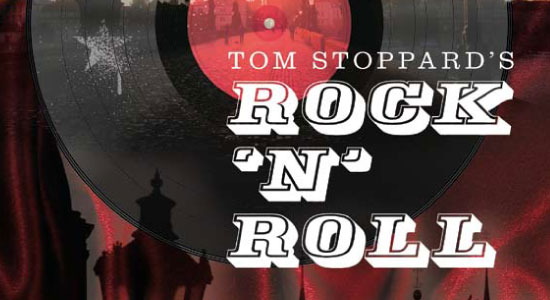
808-1226466881_rock-and-rollHow much is an album worth these days? On CD, surprisingly little, given that I haven’t bought a CD since, erm, 2002. You can pick up a physical copy of the marvellous new Pet Shop Boys album for only £7.95 at HMV. Online, if you care to make a donation to the ailing record companies, you can get it track by track for merely 79p a pop. But why pay for a physical product? Music is now in the air, floating around for free. And according to Bob Dylan, it’s not worth paying for:

“It was like, ‘everybody’s gettin’ music for free’. I was like, ‘well, why not? It ain’t worth nothing anyway’.”

There is of course a marked difference between price and value. I’m sure Dylan didn’t feel the same way about the folk and blues discs he treasured when he was growing up. Tom Stoppard’s new(ish) play ‘Rock n’ Roll‘ is on one level an elegy to rock music as preserved on vinyl. In one of the most memorable scenes the main character returns to his flat in Prague to find that all of his beloved records have been smashed to pieces by the Communist secret police. His immediate reaction is to go to the bathroom and violently throw up.

Anyone who grew up with 12 inch LPs will immediately be able to sympathise. As someone recently wrote:

Entire lifestyles built up around albums, smoking dope to albums, having sex to albums. You lent your favourite albums out with trepidation; you ruefully replaced them, on CD, when they didn’t come back. Getting hitched paled into insignificance next to merging record collections with your loved one. Getting rid of the doubles made divorce unthinkable. Elastica once sang, of waking: ‘Make a cup of tea, put a record on.’ That’s how generations of hip young (and not so young) people have lived.

People’s relationship with their physical albums – and singles too – was an intensely personal and jealously guarded one. Tom Stoppard chose several of his favourite tunes to be interspersed throughout the performance. His choices are fairly predictable ones, covering the broad canon of late-sixties early-seventies rock music, but then he is getting on for sixty or so; I would have made quite a different selection, with maybe more Motorhead and Momus and less Pink fucking Floyd and no Guns n’ bleedin’ Roses, but then I am only twenty-seven years old. In my mind, anyway. But I digress.

There’s no doubt that the songs he chose are those that have been most important to him, and the titles and names of the performers are displayed on a screen between each scene, emphasising just how much these little details are or were so important in the fetishing of each individual record. But if nostalgia for the days when rock music assumed such critical importance in our lives is one theme, the main one is the role of rock music in the ideological struggle against the repressive Czech regime. The characters argue bitterly and passionately about music and about politics. The polarisation of the debates about materialism, about sex, about human happiness, and about what could be endured (in the name of freedom) and what must be resisted (in the name of freedom) is very clear. There is an appetite for ideas and a willingness to explore the implications of a particular stance; just as a vinyl disc had two sides, every idea must have its counterpart, both in the mind and in the ‘real world’. In the era of the two tribes, nobody could deny the existence of an alternative way to organise society, however pitiful and repressive that alternative might eventually turn out to be.

Perhaps since the advent of the CD, and certainly since the revolutions of 1989 and 1990, the debate about how we organise our economic and social life has become considerably more one-sided. A couple of weeks ago I visited the Museum of Communism in Prague, which proudly advertises itself as ‘above McDonalds, right next to the Casino’. It stands on a street which looks, with its Mango and Zara and Starbucks et al, not too dissimilar to the centre of Leeds. Consumer capitalism has swept all before it; who now would defend the Communist project, or argue for any different kind of society?

As a friend of ours pointed out during the interval, it’s unusual to hear passionate debates about basic political questions these days. And about music too; maybe because it’s harder to defend something that exists only as a list of ones and zeros on a device that may stop working from one moment to the next, rather than a physical artefact which you have held and cherished and studied intently for hours on end. The days of getting to know someone that bit more intimately by flicking eagerly through their record collection, making connections and laughing at their occasional folly, are long over. These days the question ‘what kind of music are you into’ reveals the unfortunate truth that so many of us have no longer have any discretion.

Discretion. There is an irony in the fact that, as we chat after the play to one of the actors about how quickly so many political arguments about the past and future of our planet simply dried up in the six months after the Berlin Wall fell, we do so sitting in one of central London’s many Caffe Unos (or maybe that should be Caffe Uni?!). Not a place I would choose to go, you know, it was raining and, hey, what’s the alternative?

One day in Prague an Australian businessman we got chatting to recalled how in 1990 he had seen trucks belonging to French antique dealers queuing up at the border into Czechslovakia waiting to load up with as much heritage and history they could get for a handful of francs and cart off back to France to sell for une fortune. It’s a truism that since then capitalism has run riot across that whole swathe of countries that were then just emerging from forty or more years of isolation and deprivation. But it struck me watching the play that we have experienced something akin to what James Connolly called a ‘Carnival of reaction’. The euphoric triumph of big business capitalism can be seen just as clearly in London, Lisbon or Leeds as it can in Prague or in Poland. Now everything has, as Bill Hicks put it, a price tag on it; usually, in the case of our own service-station nightmare of a nation, a highly inflated one.

But as music itself has got cheaper, political debate has too, to the point of having very little or next to no currency. Including, of course, in the realm of pop and rock music. The current consensus dictates that absolutely everyone, from Bill Gates to George Bush to Hu Jintao, and presumably Pol Pot if he were still around, has the interests of the poor and unfortunate of the world at heart. Is there any near equivalent to the Plastic People of the Universe, the dissident Czech rock group that Tom Stoppard’s play celebrates? Well, there is always the most prominent of our rock n’ roll heroes, Bongo of U2 and the UN, a defender of both the poor and the rich, and a man so politically stupid that he cannot see the contradiction between fighting for global justice and an end to poverty on the one hand, and studiously evading contributing to the cost of public hospitals, social welfare and schools on the other (fucking) one. Tax efficiency, they apparently call it. I’m sure Jesus Christ would have been very, very proud.

We stand outside in the rain mulling over these questions until the one-minute bell goes and then go back in for the second half of the play. The action has moved on to 1987 and so the curtain raises to the sound of … U2. On the train on the way home some young Australians are discussing whether if they were rich they would buy a Lambroghini or a Ferrari, a group of drunken English people are talking about how much they love working for their software company, and someone is gloating over the defeat of a football team belonging to the Russian oligarch Roman Abramovich. I find myself wondering: is this oh-so-ironic Schadenfreude the very best kind of challenge to authority we can offer up these days?

Faire Bongo partie de l’histoire!


He’s laughing at you, you prick
Flicking gamely as I was through a predictably-difficult-to-read edition of ‘Le Monde’ the other day, I came across the following headline:

‘Comment les Rolling Stones et U2 s’arrangent pour payer un minimum d’impôts’

La presse néerlandaise a révélé, lundi 31 juillet, que le groupe U2 avait, depuis quelques semaines, lui déménagé U2 Limited, la société qui détient les droits musicaux du chanteur Bono et de ses trois comparses, de Dublin vers les quais d’Amsterdam.

En conflit avec le gouvernement irlandais, qui a lancé une réforme fiscale et veut désormais taxer les artistes, U2 a décidé de confier ses intérêts à Jan Favié, directeur général de Promobridge, Promotone et Musidor, les sociétés néerlandaises des Rolling Stones.

Comme ses prédécesseurs, U2, le groupe le plus riche du monde – 201 millions d’euros de revenus en 2005, pour 120 millions à Jagger et sa bande -, entend bénéficier des largesses offertes par la législation des Pays-Bas, qui n’impose les droits musicaux qu’à hauteur de 1,6 %. Cette exception européenne a été dénoncée à de nombreuses reprises par la Commission de Bruxelles et l’Organisation pour la coopération et le développement en Europe (OCDE) mais le gouvernement de La Haye résiste vaillamment aux pressions.

Hmm, let’s see. The richest rock group in the world, which made €201 million of revenue in 2005, which is more than I earn in two years, have moved their financial affairs to Holland, in order to take advantage of a somewhat overgenerous tax regime which has been condemned by the European Commission. You can find an interesting account (in English) of the groups’s stance on paying their taxes here. In the meantime, I decided to find out what my old French friend Monsieur Petit-Choufleur, who was born in Wales to Parisean parents but learnt French from a free CD he got with the Daily Mail in 2004, thought of it all:

“Alors, U2, Bono, le nome me semble quelque chose…ça ne sera pas le petit nain qui toujours nous dit que les problèmes du monde seulement seront résolus si nous, erm, donnons(?!) notre argent a la charité? Le superbranleur qui a dit que ce n’est pas une question politique, qui est tres bonne ami de George Bush, tellement que lui a donné un cadeau d’un ipod et une Bible?! Qui a declare que ‘Blair et Brown sont comme les Lennon et Mc Cartney de la lutte contre la pauvreté’? Qui nous urge que nous achetions une téléphone portable rouge et un carte de credite de la même couleur de son autres grandes amis de Motorola et American Express?

C’est incroyable, n’est pas? Bien sur, si les hommes riches du monde paierai ses impôts, nous aurions l’argent pour resolver tous les problèmes du monde, n’est pas?”

Peut-être le petit nain Bongo est un ‘liberal communist’. Dans le mots de notre heros le philosophe slovene Slavoj Žižek:

Liberal communists do not want to be mere profit-machines: they want their lives to have deeper meaning. They are against old-fashioned religion and for spirituality, for non-confessional meditation (everybody knows that Buddhism foreshadows brain science, that the power of meditation can be measured scientifically). Their motto is social responsibility and gratitude: they are the first to admit that society has been incredibly good to them, allowing them to deploy their talents and amass wealth, so they feel that it is their duty to give something back to society and help people. This beneficence is what makes business success worthwhile.

This isn’t an entirely new phenomenon. Remember Andrew Carnegie, who employed a private army to suppress organised labour in his steelworks and then distributed large parts of his wealth for educational, cultural and humanitarian causes, proving that, although a man of steel, he had a heart of gold? In the same way, today’s liberal communists give away with one hand what they grabbed with the other.

According to liberal communist ethics, the ruthless pursuit of profit is counteracted by charity: charity is part of the game, a humanitarian mask hiding the underlying economic exploitation. Developed countries are constantly ‘helping’ undeveloped ones (with aid, credits etc), and so avoiding the key issue: their complicity in and responsibility for the miserable situation of the Third World. As for the opposition between ‘smart’ and ‘non-smart’, outsourcing is the key notion. You export the (necessary) dark side of production – disciplined, hierarchical labour, ecological pollution – to ‘non-smart’ Third World locations (or invisible ones in the First World). The ultimate liberal communist dream is to export the entire working class to invisible Third World sweat shops.

Oui, c’est ça! Nous devoins faire une autre campagne, avec le ‘slogan’: ‘Bongo le nain, paie tes impôts, tu connard!’

Dear Lambeth Council…


Dear Lambeth Council,

I am writing with reference to the following statement contained on your website, which I came across while searching for a municipal swimming pool in the borough:

We are committed to the provision and development of sport and recreation. There are four leisure centres and a community sports centre in the borough, and facilities in our parks and green spaces. We also run a healthy lifestyles programme.

Upon further investigation (ie. clicking on the link to ‘Clapham Leisure Centre’) I found the following website:

http://www.leisureconnection.co.uk
Another great offer to help you make 2006 your healthiest year ever

There are thousands of reasons to join Harpers Fitness and now you can try us for 7 days for just £7

Reduce cholesterol
Help manage your weight
Reduce levels of stress & anxiety
Protect against osteoporosis & arthritis
Reduce the risk of heart disease
Lower risk of high blood pressure & diabetes

In fact if exercise came in a pill, it would be the most cost effective medicine in the world today!

Contact your local Leisure Connection facility to find out how you can start a healthier lifestyle.

It turns out that there are no public leisure facilities in my borough whatsoever, merely some expensive private gyms which benefit from a huge amount of public money!

Whoever is responsible for this state of affairs should be burnt.

Yours sincerely,

¡Coño, mira lo que comen los británicos!


Often, in my role as imparter of the English language to the overprivileged wastlings of the wealthier non-English speaking nations of the world, I am called upon to don the mantle of George Orwell and to defend British food. I usually draw the attention of my students to the fact that, although British food is Not Up To Much, there is in the UK a huge variety of international food on offer due to our cosmopolitan multiculinary heritage.

More recently, however, and especially given that I now have to live here myself, I have decided that we are in fact simply schizophrenic when it comes to food. For all that TV chefs have been kind enough to share with us the benefits of their hard-earned wisdom, the end result is a nation of people wandering round oversized, catastrophically overpowerful and overpriced supermarkets feeling very confused and depressed about the prospect of what they are going to have for tea.

Understandably, a lot of people stick with a) what they can afford and b) what will fill them up as tastily as possible without giving them time to think about the nutritional consequences. This is of course all based on the widely accepted but basically erroneous understanding that the only people in the country who can ‘cook’ are the TV chefs and Nigel fucking Slater and his über-middle-class chums.

On a very recent trip to my local Walmart subsiduary to pick up some very low-fat turkey rashers for a friend, stuck as I was in the queue behind some large, gingerish people, I took the trouble to inspect the contents of their somewhat overladen shopping trolley. It contained:

6 boxes of Asda’s own brand ready meal Chicken Kievs
A bag containing 6 bags of six different flavour crisps, making a total of 32 packets of crisps
Four tins of Asda’s own brand Baked Beans
A breakfast cereal which appeared to be called ‘Breakfast Boredom?’
Some more crisps
Several bags of Extra Special Chunky frozen chips
Four frozen Asda’s own brand Lasagnes
A £6 DVD copy of the film ‘Dude, Where’s my car’?
A large number of frozen pizzas
Four frozen ‘Indian style’ nan-breads
A multipack of ‘German-style’ twiglets
A two litre bottle of Tizer
A six-pack of Smirnoff Ice
Another six-pack of Smirnoff Ice
A third six-pack of Smirnoff Ice, which seemed to be black in colour for some reason
A six-pack of Bacardi Breezers
A second six-pack of Bacardi Breezers (to be fair, they may have been planning some sort of celebration)
An apple (I am not making this up. Oh, okay, there wasn’t an apple).

The sum total of this high-fat bounty came to £47.13. I wanted to try and get hold of the receipt but at this point I was too busy trying to get the bleedin’ plastic bag open and getting slightly annoyed by the impatience of the woman behind me (contents of trolley: Sixteen rolls of kitchen, erm, roll and four two-litre bottles of Asda’s own brand Still Water for fuck’s sake). I did pass them on my way out of the shop. Fatty Bum-fluff Football shirt Boy was perusing the receipt avidly. I think perhaps he was planning to eat it. I did briefly consider grabbing it out of his hands and making a run for it, thereby gaining a more detailed and specific record of their anti-nutritional shopping expedition which would allow more scientific analysis, but I was scared that they might catch me and put me on the front page of the Daily Mail along with the words ‘Student Type Caught Red-Handed in Terror Plot to Mock the Lower Orders!’. Or, you know, something.

It might make an interesting art project to go round Asda buying the most unhealthy week’s shopping available, and seeing if you could make it match up to exactly £47.13. I suspect that the contents of such a trolley would be exactly the same as those I’ve listed above. Mind you, I dread to think what toll those low-fat turkey rashers will enact on us all one day…

A History of Violence


“It’s very important to make the distinction between terror groups and freedom fighters, and between terror action and legitimate military action.” So said the former Prime Minister of Israel, Benjamin Netanyahu, at a commemoration last week of the sixtieth anniversary of the bombing of the King David’s Hotel in Jerusalem. The attack was carried out by a Jewish ‘resistance branch’, disguised as Arabs, and killed ninety-two people, seventeen of whom were Jewish. It made an important contribution to forcing the British out of Palestine and to the foundation of the Israeli state two years later. The group that carried it out was led by the future sixth Prime Minister of Israel, Menachem Begin.

So when Israel insists that it has a long-standing ‘problem’ with terrorism, it has a very good point.

That propensity towards using high levels of many different varieties of violence to get others to do what you want them to is now backed up by more advanced and expensive technology than mere milk churns contaning explosives. The BBC reported last week that the current Prime Minister had ordered the use of something called ‘nocturnal sound bombs’ in order to:

“…make sure no one sleeps at night in Gaza”.

On salon.com Sandy Tolan summed up the situation as it stood about two weeks ago – before the attacks on Lebanon:

Under the pretext of forcing the release of a single soldier “kidnapped by terrorists” (or, if you prefer, “captured by the resistance”), Israel has done the following: seized members of a democratically elected government; bombed its interior ministry, the prime minister’s offices, and a school; threatened another sovereign state (Syria) with a menacing overflight; dropped leaflets from the air, warning of harm to the civilian population if it does not “follow all orders of the IDF” (Israel Defense Forces); …fired missiles into residential areas, killing children; and demolished a power station that was the sole generator of electricity and running water for hundreds of thousands of Gazans.

Besieged Palestinian families, trapped in a locked-up Gaza, are in many cases down to one meal a day, eaten in candlelight. Yet their desperate conditions go largely ignored by a world accustomed to extreme Israeli measures in the name of security: nearly 10,000 Palestinians locked in Israeli jails, many without charge; 4,000 Gaza and West Bank homes demolished since 2000 and hundreds of acres of olive groves plowed under; three times as many civilians killed as in Israel, many due to “collateral damage” in operations involving the assassination of suspected militants.

What will be the consequences of Israel’s refusal to let its neighbours sleep? On a demonstration in London yesterday, the leader of the British Muslim Institute drew confused cheers from sections of the crowd when he promised that those leaders who condone and promote Israel’s right to terrorise adjoining countries will soon face ‘revenge’.

Unfortunately, unlike the Palestinians, Tony Blair and George Bush can sleep soundly in their beds. Such ‘revenge’ will not be enacted upon them, but on their citizens – namely ourselves. Given Blair’s refusal to understand the connection between the wars in Iraq and the July bombings, it is quite unlikely that he has considered this. He knows he will never be at personal risk of terrorist attacks.

(In much the same way, he will never have to rely on the National Health Service, which is presumably why he is so keen to privatise large sections of it. The rich have, for obvious reasons, never quite seen the point of the NHS. One would hope that well-educated politicians would learn such things from history, but that has been anathema to the New Labour project.)

I digress.

Even the most cursory glance at the history of the state of Israel teaches us one thing: it is not interested in living at peace within its borders. Given that history, summarised very succinctly in the artice Sandy Tolan article, and its role over the last sixty years, it would be hard to conclude that things could be otherwise:

The latest attacks by Israel in Gaza, ostensibly on behalf of a single soldier, recall the comments by extremist Rabbi Yaacov Perrin, in his eulogy for American Jewish settler Baruch Goldstein, who in 1994 slaughtered 27 Palestinians praying in the Cave of the Patriarchs, part of the Ibrahimi Mosque in Hebron. “One million Arabs,” Perrin declared, “are not worth a Jewish fingernail.”

Israelis, too (like the Palestininians expelled from their land in 1948), are a traumatized people, and Israel’s current actions are driven in part by a hard determination, born of the Holocaust, to “never again go like sheep to the slaughter.” But if “never again” drives the politics of reprisal, few seem to notice that the reprisals themselves are completely out of scale to the provocation: For every crude Qassam rocket falling usually harmlessly and far from its target, dozens, sometimes hundreds of shells rain down with far more destructive power on the Palestinians. For one missing soldier, a million and a half Gazans are made to suffer. Today, Israel’s policy is a case of “never again” gone mad.

In a review of the recent David Cronenburg film ‘A History of Violence’, the writer JG Ballard makes the following point:

The title, A History of Violence, is the key to the film, and should be read not as a tale or story of violence, but as it might appear in a social worker’s case notes: “This family has a history of violence.” The family, of course, is the human family, a primate species with an unbelievable appetite for cruelty and violence. If its behaviour in the 20th century is any guide, the human race inhabits a huge sink estate ravaged by unending feuds and civil wars…

Given its strategically impossible position and its long-standing history of violence, Israel simply cannot and will not let its neighbours sleep.