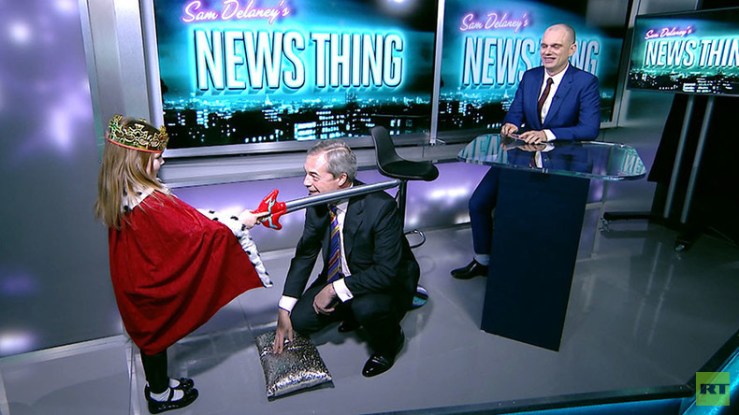
You think Youtube’s bad? Wait til you see Russia Today’s kids channel

aaaaaaaaaaaaaaaaaaaaaaaaaaaaaa
What a jape!

I saw the best minds of my and other generations destroyed by Youtube videos, friends sending me 3am emails furiously denouncing the conspiracy by the powerful to sell us the idea that the climate is changing, kept awake by the conviction that the Twin Towers were a mere hologram, or convinced that Isis is an illusion created by the CIA.

Having just sent some thoughts along those lines to a friend who had also read this essay detailing how soon and how easily our offspring are, thanks to Google, being entranced by and drawn into a world which is infinitely crueller and more absurd than our own, I was startled to see that the very first comment on the piece included a link to another article centred on the very same poem I had (in my glib manner) just quoted.

Such serendipitous connections are, of course, infinitely abundant on Youtube, which plays a particular role not just in the lives of very young children but also, as another friend recently pointed out, in the growth of the alt-right. As the writer says, and as that semi-regular succession of emails from newly- (and, mercifully, usually briefly-) converted conspiracist friends confirms, the role of the platform in the spread of political propaganda is terrifying to the point of nausea. In a not unrelated phenonmenon, it’s a salutary and unsettling experience to see how our baby daughter’s face lights up when it meets the screen of our phones. Like all sensible parents we had decided that we would keep the whole world of digital screen technology a dirty secret from her for as long as humanly possible; anyone who sets out with this intention soon finds that given the preponderance of Whatsapp calls, Skype and so on combined with our evident dependence on it for our own purposes, the talismanic qualities of the device are impossible to disguise. One creeping influence is indeed Youtube, with its immediate and infinite access to hours of nursery rhymes. We are allowing her to be led right into the jaws of the monster that will seize her imagination and attention as soon as it gets a chance.

The article describes how the word salad titles of the billions of videos aimed at infants (typical example: Wrong Heads Disney Wrong Ears Wrong Legs Kids Learn Colors Finger Family 2017 Nursery Rhymes) right from the moment they can tap on the device are an indication that they are produced not by conscious humans but by algorithims set to maximise views and thereby income. Perhaps the non-syntactical way in which such mechanisms operate resembles or is a part of the same phenomenon as Trump’s seemingly incoherent appeals. Such messages, although ostensibly nonsensical, bypass our rational brain and go straight for the limbic system, triggering our deepest and least conscious fears and desires. If we combine what we know about Youtube on a political level and the formative effects it has on very young brains, it starts to make any dystopian fantasy such as The Matrix or Brave New World almost quaint and comforting. Even leaving aside the horrors of Twitter (which at last now with 280 characters stands a chance of becoming more thoughtful and respectful) Youtube is becoming the 24-hour two-minute hate, opium-of-the-masses and soma all in one.

More disturbing still are some of the reflections contained in this must-must-must read account of how the Brexit and Trump nightmares came about, which includes several points of crossover with the previous article. The head of Russia Today once said that

“It is important to have a channel that people get used to, and then, when needed, you show them what you need to show. In some sense, not having our own foreign broadcasting is the same as not having a ministry of defense. When there is no war, it looks like we don’t need it. However, when there is a war, it is critical.”

Evern worse than finding out that a friend has been spending dozens of hours puffing away contentedly on the crackpipe of Youtube conspiracy nonsense is discovering that they are being exposed to the pseudo-radical manipulations of RT (often in the form of Youtube clips). I know that within a couple of years our daughter will start clamouring for access to the likes of Nickelodeon and Cbeebies (along with, it should go without saying, Youtube); if Putin and his cronies ever hit on the idea of creating a version of Russia Today for children, we really are screwed.
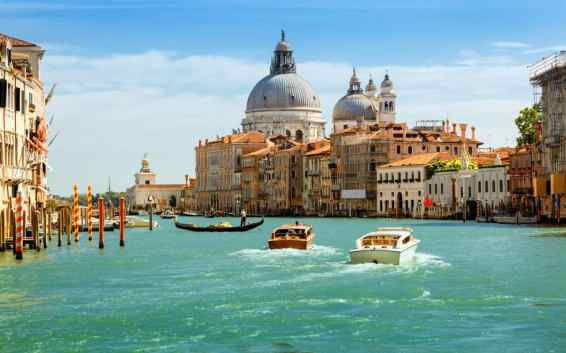

A trip to Venice

venice-xlarge
Photo “courtesy of” The Daily Telegraph

It’s always sad, upon leaving Venice, to see your first car for however many days. Despite the city’s constant floods of both (fellow) tourists and the sea itself, and the fact that every nook and cranny has been filmed, photographed and fetishised thousands upon thousands of times, every time I step out of the station upon arrival and see the thoroughfare being plied not by cars but by boats, it fills me with joy. Venice encapsulates another way of being.

That opening paragraph has itself probably been written many thousands of times. Henry James wrote of Venice that ‘There is notoriously nothing more to be said on the subject.’ Marco Polo, or at least Italo Calvino’s version of him, described dozens of impossible cities in the attempt to capture something of his hometown*. In his essay ‘Contre Venice’, Regis Debray described it as ‘constructed more by writers than masons, more by painters than architects, more of words than of bricks’. It would be impossible to compete with Jan Morris’ description: ‘Venice is a cheek-by-jowl, back-of-the-hand, under-the-counter, higgledy-piggledy, anecdotal city, and she is rich in piquant wrinkled things, like an assortment of bric-a-brac in the house of a wayward connoisseur, or parasites on an oyster-shell.’

Having nothing new to say about the city where I, my wife Chiara and our nine-month-old baby recently spent a weekend, I’ll just write, solo per un cambiamento, about me instead. Or, at least, refer instead to something I wrote about Mexico City, in which I treated it as a piece of immersive theatre, one with an oversupply of extras. Venice presents a similarly intricate and elaborate set, but for this performance the organisers have sold far too many tickets. There is an excess of spectators but not enough actors: the population of actual ‘Venetians’ has now fallen to 56,000, and the set is falling to pieces. The catering is also famously below par considering the prices**, but you can also sleep on the set, although doing so will cost you – like Punchdrunk itself, the elite tickets, with their special privileged access, don’t come cheap. Our train from Rome pulled in next to the latest iteration of the Orient Express, of which I later read that ‘the service is intended not as an ordinary rail service, but as a leisure event with five-star dining included’. Apparently if you pay an extra special premium there’s a chance your murder will be investigated by Mr. Hercule Poirot himself.

It was not my first visit to Venice. In September 2009 I walked around and visited as much of that year’s Art Biennale as I could without my legs giving way and my brain exploding. I’ve since lost my notes, which were mostly sun-addled reflections on art, cities and the art of getting lost in cities. I stayed in Cannaregio in a hostel with a curfew of 10pm, so my hopes of spending my nights doing coke with Ai Wei Wei ended up in the canal***. Some of the time I hung out in Campo Santa Margarita. I’d read about this slightly-out-of the-way square in this book by Sophie Watson, in which she writes:

‘This is a public space which is irregular, haphazard and ordinary. Its ten entrances/exists invite random paths to be taken, its benches, scattered across the square, lure the old and young to pause for a while, its lack of cars entices kids to play and chase the pigeons, its market stalls bring locals to shop, its calm and bustle, light and shade, mark it as a place to gaze, chat and rub along with others with ease.’

As it happens, the (excellent) hotel I booked online this time turned out to be right in the square, which as Chiara remarked has quite a Spanish (or, erm, Catalan) feel to it. Although gentrification has had its effects in the fifteen or so years since Sophie Watson was there, with little in the way of local shops and an abundance of tourist-oriented cafes, compared to the alleys near Rialto and St Mark’s Square there is a sense of character, one which reminded us of Genoa‘s caruggi****. I don’t know how ‘real’ it is*****, or how many of the fabled 56,000 live nearby, but there’s a supporting cast of rowdy students keeping things lively on Friday and Saturday night. Staying in a hotel with a baby turned out to be once again problematic, but I think I’d feel a bit guilty staying in an Airbnb while walking round all day denouncing gentrification. Between Tripadvisor, Airbnb, Uber and Google, the internet has had a flattening effect on tourists’ experience of place, with so many of our interactions with a city and its people mediated via a screen. At least Venice is resistent to Uber, and Google Maps is not much use when the blue dot which supposedly represents you and your family keeps leaping around the jumble of tiny alleyways with the boundless energy of a nine-month-old baby overexcited by the rare privilege of cosleeping between two utterly exhausted parents.

Although the white sands and turquoise seas of Azumel on the Cancunian coast are some distance away,  the huge tourists cruise ships and the tens of thousands they spill out every day have a similarly deleterious environmental impact. Many seem to come not just in pursuit of the cultural capital which the Venice brand affords, but also on the hunt for Louis Vuitton handbags, Jimmy Choo sunglasses, and all the other high-grade symbols of post-modern Konsumterror. Such devotion to the acquistion and spending of ostentatious social capital is in keeping with tradition. Writing about Venice at the turn of the 20th century, Thomas Pynchon described it as a site for European elite pleasures, principally spas and gambling. Nowadays being seen takes the form of uploading one’s instantaneous images and gestures of superconsumption to Instagram. For tourists in the age and image of Trump, as in Calvino’s city of Tamara, things seem to be ‘valuable not in themselves but as signs of other things’.

There have been two referenda recently in Veneto (the region around Venice), and the first was actually useful. In June, locals voted to ban huge cruise ships from docking in the lagoon (although oddly enough, despite the fact that it’s an issue that inspires great anger, we only saw two small no navi flags hanging from windows). The other was over regional autonomy. Paul Mason, displaying the typical excitability of the British Left in the Guardian, optimistically talked it up of it as another laudable example of the desire for popular self-determination. In fact, the cause was promoted by the far-right Lega Nord (Northern League), which has led a long-running campaign of chauvinism against parisitic southerners. On the Sunday, elections took place in Sicily, and Berlusconi’s party took power with the aid of the same far-right party. The ubiquitous term ‘centrodestra‘ (centre-right) often appears to be a euphemism, given how ready its acolytes are to side with the ultradestra, aka the fascists. On the same day, local elections on the coast near Rome, in the area where we often go to the beach in the summer, gave the balance of power to the openly fascist Casapound. The area around Venice is famously traditionally conservative, but fortunately by no means everyone from Veneto is a right-wing stronzetto. We also came across a poster for a show THAT! VERY! NIGHT! by one of my favourite comedians, Natalino Balasso, whose work is so uproariously entertaining and and genuinely daring that it is well worth learning Italian (and the odd word of veneto) for. Unfortunately, before I could get my hopes up too high, Chiara reminded me that trying to find an impromptu babysitter in a city populated almost exclusively by tourists would not be an easy prospect.

Given that this is an odd-numbered year, there’s currently another level on which to experience Venice: the Art Biennale. Like so much else about the Venice experience, it proved too hard to take in much of it, especially with a pushchair in tow. We managed to take a look at the Iraqi pavilion, in which I came across a typically brave piece by one of my favourite artists, the Mexico City-based Francis Alÿs, who presented a video in which he paints and erases on a handheld board images of fluttering flags on Iraqi tanks just a few feet away. Nadime Hattom was showing images from her own family history, captioned photographs capturing landmark moments in the lives of relatives, with the people themselves erased. It was a deeply haunting experience, one later echoed in the pavilion of the Syrian Arab Republic, an eerie space whose ostensive theme is the ruins of Palmyra. Blood red is the predominate colour on collages produced by Syrian and Italian artists. It might make for some awkward reflections, but luckily the baby decided to stage some sort of screaming protest against war and/or in favour of milky-wilky, and we were forced to gratefully abandon the building. She did subsequently show some interest in the joint exhibition at the Prada Foundation by Thomas Demand and two other German artists. Its apocalyptic title (‘The boat is leaking. The captain lied’) comes from the lyrics of Leonard Cohen’s morbid classic ‘Everybody Knows’, and its scope and intensity defy my powers of description. I’ve always found something intriguing and unsettling about Demand’s photographs of cardboard recreations of photographs of bland bureaucratic environments, and here, in the midst of rooms and rooms of material addressing in one way or another global collapse, he presents an enormous photograph of some sort of vast control room which he has also recreated in cardboard and blank paper. The room, on even cursory inception, proves to be a simulation, a mere illusion. No one is in control******.

On the theme of simulation, it turns out that Dubai (like LA, London, etc) is to get its very own Venice. That might ease some of the pressure on the original; or, like roadsigns advertising soon-to-open car parks, it may only increase the tourist traffic. Venice is a simulacrum, an aging Disneyland pastiche of itself, but it’s one that it would be impossible to truly create elsewhere.

* I wrote about my own hometown here.
** Although just for the record, thanks to judicious timing we ate very well in Tripadvisor’s top-recommended restaurant over in Giudecca.
*** This was before the Soros dollars started to roll in.
**** Reminds me and my wife, that is. I’m not sure about the baby.
***** I love the use of the capital letters and the quotation marks here.
****** The exhibition also features a 
new poem by my old new favourite poet Ben Lerner, but luckily the baby had a total meltdown before I could digest any of its typically brain-aching connotations.

10 tips for staying in a hotel with a baby

1. Never, ever stay in a hotel with a baby.

2. Have you, nonetheless, found yourself in a hotel with a baby? (Are you, by any chance, in Venice, of whose labyrinthine layout of abruptly-terminating alleyways connected by thousands of pushchair-defying bridges Google Maps understands less than your 9-month-year old pride and joy, and which has worn you all out to the point where even this simple sentence is making your brain hurt and your eyes feel heavy, even if you’re not in Venice and don’t have any children?) Has no amount of lullabying and milky-wilky and shush-patting and promises to stop insisting that she eat bulgur done any good? Is your desperate 2am googling now being soundtracked by the sound of that selfsame caterwalling infant? Are you worried that not only will you, your partner and the baby itself get no sleep but also that you will incur the wrath of your fellow guests and the hotelier, meaning furious looks in your direction at breakfast, if you even survive that long? If so, here is the second tip: look away from your phone and think hard. What was the name of the car park/airport/train station you arrived at? Will it still be open? If so, pack your things immediately and head back in that direction. If not, invent a time machine and get a flat through Airbnb instead.

3. Is your baby upset because you forgot to ask the hotel for a cot? Call reception NOW and demand they bring you a cot. If necessary, threaten to put on Tripadvisor that the hotel belongs to Harvey Weinstein. Should that not work, go to reception and start screaming and screaming like a 9-month old baby until they get you a cot from somewhere. 

4. Is your baby still crying? Have you already toyed with the idea of throwing him/her out of the window/into the nearest canal, only to be overruled by your partner? Dang. Here’s something that might work, but it relies upon your being incredibly rich and having a huge amount of cash about your person: simply buy the hotel and have the other guests thrown out onto the street. It may also be a good idea to have them removed from the city/off the island itself for the duration of your stay, so as to avoid any awkward encounters which might spoil your holiday. (This also serves as the answer to the question #whatwouldtrumpdo?)

5. “Go on a boat trip or something”. That’s a suggestion from my partner, who to be fair hasn’t slept very well. The idea comes from the fact that we are now on a boat trip. The baby is in her pushchair; she’s asleep. Behind is there is the sound of another baby, whose voice is exactly like our child’s, having a total f*cking meltdown. Welcome to Venice!

6. There is no number 6.

7. Just having a look at Venice. Jesus I’m exhausted. Might get another coffee soon.

9. Where’s number 8?

8. Ah, there it is.

10. Take the baby out into the corridor to calm her down? Go outside for a walk at 3am? Mind you, I did try both of those things, they don’t work. Best stick with number 1. Oh look, Murano. Let’s see what effect her screaming has on a huge variety of very expensive glass products of differing shades and textures. Maybe number 1) should have just been never, ever take a baby to Venice. I wonder if there’s an Italian equivalent of Centerparcs?

How to become a misanthrope

Here’s a fun game to play in an environment where most people are looking at their phones: imagine that all of them are using Twitter. That goth-looking woman in her mid-30s, for example, has just told to get a complete stranger to get fucked because they stated that human rights are universal and inalienable. The besuited gentleman in his 60s is having an incensed ‘debate’ about climate change which involves denying the suffering of hundreds of thousands of people, while the teenage boy in the lurid Nike sneakers has just posted a meme which claims that the Democrats knew in advance that the New York attacks would take place. Meanwhile, the person to your right, whose face you can’t really see but who is wearing Gucci spectacles and using a Huawei phone, is trolling a sports celebrity who happened to trip up at a crucial moment of a game, repeating a malicious and unfounded rumour that another player on the same team has been sleeping with his wife by calling him a ‘cuck’. The teacherly looking woman opposite you is retweeting a video she knows to be faked of Hillary Clinton calling black people lazy, and the person next to her is scowling as he defends the prime minister of his country against accusations of corruption by calling his opponents cockroaches and foreign devils. Two people sitting on either side of the door of the train carriage or hospital waiting room or wherever you happen to be have, quite by chance, both just liked a tweet by a prominent Twitter user closely connected to the White House which advocates the genocide of all non-white peoples, while the woman to your left is chuckling as she scrolls through responses from people outraged by her repeated insistence that those who mobilise to oppose openly racist groups are in the pay of one or other of the world’s most prominent Jewish people and that the protestor murdered by a white supremacist terrorist in Charlottesville actually died of a heart attack.

Now, take out your own phone, open the memo app and type the following:

‘Here’s a fun game to play…’

Within twenty or so minutes you’ll be all set to post it on Twitter and see what sort of response it provokes.

Why I regret that I stopped buying records and CDs

Every generation discovers music anew, regardless of the media on which it’s carried or transmitted. It just so happens that the format via which I first encountered recorded music – grooves on a plastic disc – were also those on which music was first recorded. Of course, prior to the advent of recording technology, there was notation: music was etched, scratched onto the page. Beethoven may not even have understood the concept of ‘recorded’ music. I grew up with the performance as central, the production as paramount, mostly focussed on the voice. From the early 20th century onwards, vinyl was the medium for folk, country, blues, rock, punk, hiphop, house, and so forth. Now music can be plucked out of the air, but when I listen to Bob Dylan talking about Leadbelly, there’s a frisson which comes from having experienced music in exactly the same way as he did. I can relate to that; I’ve lived a very similar revelation. I can’t conceive of (for example) hearing certain New Order*, Teardrop Explodes or, for that matter, George Michael songs, music that had a profound emotional impact on me as a teenager, I can’t imagine that without picturing the environmental context for my experiencing of the sounds. I believe that the loss of the physical format partly explains the deterioration of my relationship with music per se. Although I don’t agree with Dylan that downloaded music ‘ain’t worth nothing’, the move from physical to ephemeral shows that Marx had a point when he wrote that as capitalism develops, ‘all that is solid melts into air’.

To quote another prophet of capitalism and culture, everything that was directly lived has moved away into a mediated representation. This now happens instantaneously, live, as, locked into our headphones, we view ourselves walking down the street to a private soundtrack of a film in which we are always the star and hero. I’ve pontificated previously (in relation to the documentary about Zinedine Zidane) about how in an age of intensified self-consciousness of our own performance as social actors, our experience of our lives has become more and more like the film ‘Boyhood’, with every one of our gestures immediately recounted back to us in the form of fantasised cinematography, dramatised by individually-curated theme tunes. 

This is connected to the relationship between music and advertising, particularly the vampiric dependence of the latter on the former. The role of marketing cash in financing or subsidising the lives of those who produce music has meant that music itself is increasingly obedient to an image or logo. It’s true that a lot of art – particularly popular music – benefits from and plays with the tension between the comercial and the artistic, but more than ever nowadays exposure as part of a marketing package means one’s music is experienced as a mere soundtrack to sell prospective consumers an image of themselves inhabiting the world of the given commodity. Music has, in a much more profound sense than with the advent of MTV, become evermore subservient to the image rather than defining its own purpose.

As is the case for any such diatribe against the internet, it’s essential not to overlook the affordances of technology in terms of both production and consumption. Hyper-accelerated access and avid overconsumption is made possible by downloading and streaming. When I first got an MP3 player twinned with a proper internet connection, I quickly discovered that I felt compelled to skim through my exponentially expanding music collection – the prospect of listening to a particular album or piece of music had become a more powerful experience than actually doing so. Once something becomes infinitely available, it’s hard to value a single instance of it. Value is produced by scarcity, not abundance.

I’ve written before about how hard I find it nowadays to commit to a single song, album or artist. Nick Cave Syndrome is the name I give to what I think is now a universal experience: I could, if I so chose, spend a few days immersing myself in the work of the Bad Seeds and Grinderman, etc, but I never actually do. There’s too much digital distraction, too much white noise to engage with newmor unfamiliar music. I’m open to charges of laziness, but I’m by no means alone: the KLF’s Bill Drummond once embarked on a series of experiments to reconnect with music, including spending a whole year only listening to artists who names began with a particular letter of the alphabet. To get that connection back involves somehow making music finite and thus more precious.

Music dramatises space and time but also requires space and time to produce and experience. Mark Fisher and Momus have both written about the restrictions that gentrication and permanent austerity imply for young people wanting to experiment with sounds and images. Early Human League in the documentary ‘Synth Britannia‘ showed some of the abandoned industrial spaces which made their existence possible, while Jarvis Cocker in his ‘Musical Map of Sheffield‘ stressed how important dole money was to his artistic survival. The same goes for the art colleges which formed David Bowie and Malcolm McLaren. They inspired the kind of artistic invention which anyone spending three years on a desultory £9,000-a-year business studies degree course anticipating a lifetime of internships would struggle to replicate.

Of course, no matter how little physical space you have, you can nowadays make and remix music on your phone or laptop while unemployed in a slum or drinking coffee in an airport. Momus makes hugely inventive use of the internet to gather samples and images and Youtube to share it – but then he does have a fanbase built up over more than 30 years. I probably wouldn’t listen to Pillycock or Scobberlotchers if I hadn’t pored over Tender Pervert and Don’t Stop the Night as a teenager. Who’s really going to listen to new music? (Or, for that matter, find the time to read blogs?). It was actually Momus who predicted that on the internet everyone would be famous for 15 people. But what if you can only get those people’s attentions for 15 minutes? That’s a thumb-twitching epoch online.

The human relationship with music is both intimate and (as Schopenhauer argued) spiritual, both individual and social. Having long along lost or given away the tens of thousands of discs I once had, how do I recover the value that music used to have for me? The answer is, of course, to collect it in its physical form. But maybe my relationship with music is too far gone now. Maybe I’ll never get it back. While writing this, listening to an algorithmically-curated selection of tracks by Francesco de Gregori (who has released something in the order of 30 albums, all of which I can access with a tiny gesture of my thumb but none of which I will ever get round to really listening to**), we had a powercut. Although it was mercifully short, it screwed up our Internet connection for a good two hours or so. It made me think of people in Puerto Rico, suddenly deprived by a capricious climate of running water and electricity. If there’s one thing we can predict with some certainty about the future, it’s that we won’t be spending so much time online. The internet presupposes the stability of too many physical, social and economic infrastructures. Even wifi, I once learnt, is vulnerable to climate change. If the only access we have to music is via Spotify, then we will lose access to it whenever a passing storm so decides. Music is far too valuable for that.

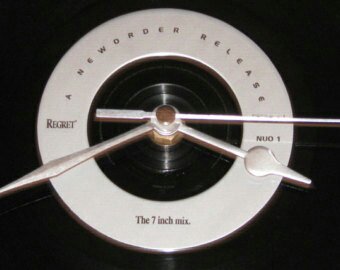
*Incidentally, ‘Regret’ is not my idea of a great New Order song, it just tied in with the title, which may be no classic as titles for blog posts go, but is at least hopefully more enticing than the original one, which was ‘Music, technology and spectacle’, which is, let’s face it, shit, although not nearly as shit as either Bad Lieutenant or the third Electronic album.

**His album of Dylan covers is great fun. You can find it on, er, Spotify.

I suspect that Trump is starting to wish he’d lost

There’s been a remarkable dearth of speculation on what would have happened #ifTrumphadlost. In the run-up to the vote he gave numerous hints that he was prepared to reject the result and mobilise his supporters for violence. He may well be now thinking in similar terms, even though his room for manoeuvre now appears to be more limited.

I was mistaken in thinking that he would quickly succumb to the pressures of the role. Although, as one astute commenter pointed out, his skill set is extremely narrow, one gift that he has in abundance is tenacity. Reports from throughout his career as a glorified real estate PR man emphasise that even in the face of humiliating catastrophe he would be back in the office every morning in a suit and tie ready for battle. His resilience is an easily-overlooked asset, one that combines with his possibly psychopathic instincts for self-promotion to stand him in very good stead as a politician. Thus my suggestion that his manifest incompetence and unsuitability would mean he would be hastily bundled off stage was wrong. I also misjudged the willingness of the Republican Party establishment to sacrifice democracy to stay in power. Thus he has weathered the storms whipped up by the already countless gaffes which have confirmed the extent of his ignorance, recklessness and callousness, such as directly offending Gold Star families, clearly not giving a shit about Puerto Rico and actually trying to start a nuclear war for little more than his own self-aggrandisement.

Nonetheless, he is clearly suffering. In the light of the indicments, without a clue what Mueller has on him and the rest of his team, his strategy of deflecting and projecting everything said of him onto Clinton is falling apart. Although he has a very solid ‘base’ which shows every sign of having consolidated into the world’s most deluded and heavily-armed cult, his primary audience for his demented rants – his own sense of legitimacy – seems to be crumbling.

There are numerous symptoms of this, but I want to focus on three. They may seem random but the narrative they suggest is one that I find compelling.

The first is a Freudian slip which he made during an interview last weekend. In trying to discuss economics, a subject of which he has no meaningful adult grasp, he let slip the word ‘psychotically’ instead of ‘psychologically’. This suggests to me that all the speculation about his mental state is playing on his mind. I don’t know what it means for a psychopath to learn that they are a psychopath or a psychotic to have their condition explained to them. Most would, I suppose, brush it off. But for someone of that mindset to be repeatedly and massively told that their behaviour was typical of a particular mental condition and to be the subject of speculation by hundreds of millions of people must create a particular kind of pressure.

The second is not something he but rather his media lackey Sean Hannity said. Last night in one of his diatribes Hannity revealed that he sees Hillary Clinton as president. This deserves to be taken very seriously. Trump’s attempts to keep the attention of his ‘base’ on his former opponent relies on an illogic so fundamental that even his chief supporters are unable to sustain it. Fox News’ disavowal of current events in obedience to an agenda which denies even the central fact of Trump’s victory is openly psychotic. No one who has not actually drunk the Flavor Aid would be able to take it remotely seriously. Yet this line of attack is now the only one that remains. Trump has always seemed immune to humilation, but denying his own victory in order to stay in power is another order of magnitude altogether.

Finally, there is Trump’s own tweeted exhortation to someone, somewhere to ‘DO SOMETHING’ to protect him. Making such a call gives the lie to the idea that he is, despite all his haplessness, in control of events. It reveals a level of isolation which suggests he sees himself as locked in a bunker and desperately needs reinforcements to come and free him. If, as seems highly probably given the legal circumstances, his Twitter freedoms are curtailed, his means of comunicating with his ‘base’ will be cut off. In various ways, and despite his staggering insistence on his right to go golfing just as often as he likes, his freedom to do and say whatever he wants is much more restricted than it would have been if he’d lost.

Rumours that he has asked an aide for information about the procedure for resigning are probably just that. I don’t think someone of his peculiar mindset would commit suicide in any form. But if he does, we can only hope that it’s political suicide rather than an explosive pique which takes the rest of us with it. Of course, anyone who thinks that Trump’s departure would resolve the world’s problems at a stroke is themselves deluded. His success is a morbid symptom of our catastrophic failure to develop an alternative to an economy built upon inequality, racism, misogyny and genocidal levels of environmental wastage. Nonetheless, anyone with any concern for democracy can see that his continued presence accelerates exponentially the trajectory towards fascism and world war. Anyone who thinks that the same could have been said of Hillary Clinton needs their head removing for examination almost as much as Trump does.

I’m more German than the scheiß-AFD

The above statement might seem odd in the light of the following facts: I wasn’t born in Germany, I’ve never lived there and one of my parents can’t speak a word of the language. Nonetheless, I do have a German surname and look slightly teutonic, to the extent I can get away with being a local whenever I visit. After all, Germany is literally mein Vaterland. My dad was born in Verden an der Aller in the auspicious year of 1933. His father was a local politician, but unlike the newly-ausgeschissen Alternative für Deutschland MPs, he was by no means a Nazi.

Sadly my dad didn’t make much effort to pass on his language to me, so every few years I go through a phase of gamely trying to verbessern mein Deutsch. This has usually taken the form of drilling myself on hilarious but grammatically perfect utterances which I could trot out when speaking to German speakers in order to buy myself credit to subsequently make shitloads of mistakes. For various reasons I’m starting, as we/they say in German, to have a goat to start making an effort again, maybe because trying to teach 28 iGCSE students at a time reminds me of the time I myself spent in a GCSE German class in eine Industriestadt in dem Nordengland bored out of my Kopf. It wasn’t because of that particular class that one teacher in our school took their own life (such was the level of resistance to learning); our class was disciplined by being forced to copy out verb tables and doggedly repeat stolid conversational dialogues. Dafür ist mein Gramamtik viel besser al meiner Vokabeln. I have no idea ob I passed the GCSE or not, but I did learn enough to acquire my first ever proper foreign girlfriend an der Universität with the outright haplessness of my attempts to communicate in her language.

Then, in 2000, having survived the Millennium-Bug, sort-of mastered Portuguese and got to grips with Spanish, and having realised in the process that learning languages was ENORMOUS! FUN! I decided to get my German up to speed. This was purely a matter of choice rather than necessity, of course; I very rarely met any German-speakers whose English didn’t far outmatch my German. I certainly didn’t need to laern foreign languages to find a job – after all, es ist geil, ein Inselaffe zu sein. I made friends with the German teachers in my school (in Lisbon), who firmed up my command of the grammar by helping me remember syntactically and morphologically instructive phrases like Ich habe gerade den Pimmel meines Lehrers im Spiegel gesehen (the toilet door was awkwardly placed in relation to the men’s bathroom). That, along with an steady stream of German-speaking friends and an occasional succession of deutschsprachige girlfriends, gave me confidence to embark on a solo trip to northern Germany to connect with my German relatives, who’d I’d only fleetingly met as a child. My sort-of stepgrandmother, bewailing the unfortunate series of personal and historical circumstances that had led the family to separate, sighed and repeatedly exclaimed ‘Mensch!’. (Thankfully she was long dead before that ridiculous bloody woman started abusing social media. If only she was just called Louise Troll.) I spent a week or so only speaking German, as ever relying on my tried-und-trusted method of just using English words in a German accent when I was short of vocab; people either got the point or were too polite to point out that they didn’t have a verdammte Idee what I was on about. As on subsequent visits, people rarely switched into English and just let me witter on. I rarely had anything other than a positive reception and good impressions on my travels, and felt an affinity with the sometimes morbid humour of the locals. I also felt quite at home around New Germans and appreciated the absolutely positive impact they have had on the national culture, especially in terms of cuisine and music (such as this classic early 2000s Berlin tune). I picked up useful new chunks of language: es ist gefuckt, das flascht. That last bit of street argo came from a video I saw one starry night amongst other shorts in a courtyard in Berlin. It consisted of a monologue from a local guy out of his head outside a metro station enthusing about various aspects of his fettes Leben, breaking off suddenly in full flow only to exclaim with consternation the immortal phrase Ach scheiße, ich habe den Baby im U-Bahn verlassen!. Being able to get to grip with the jokes meant that I started to identify and, to slip briefly into German English, feel myself quite a deutschophile. In a curious inversion, I attempted to read a book in German about what a bunch of weirdos the British are. The proudest moment of my German-speaking life was when, in response to a question from my flatmate about how difficult the book was to get through, I replied that it was Ein Kampf. Or maybe my proudest moment was that time in Costa Rica I was able to impress my then-girlfriend-now-wife, who had previously been sceptical of my claim to speak better German than, erm, Goethe, by giving some monolingual Austrians detailed instructions as to where they might be able to see eben mehr monkeys.  

Stolz kommt befor einen Fall. Or, in this case, afterwards. In a bar in Munich in 2010 or so, struggling through that day’s Bild newspaper (I would like to try TAZ or FZW but…) I came across a report of a survey into alcohol consumption in Europe. Litauen (Lithuania) was number 3, Rumänien (Romania) number 2, but in first place was…Iren. Some mistake, I thought, and took a sip of Löwenbräu*. Iran is not even in Europe, and in any case they’re mostly Muslims, so they don’t…soon enough my friend turned up, having steeled herself for several days of really annoying question about her language, and thus it was that I learnt with an equal mix of relief and embarrassment how you say ‘Irish’ in German.

On the same trip, surrounded by southern Germany’s ubiquitous BMWs and other dazzling symbols of conspicuous consumption, I read up on Konsumterror: Ulrike Meinhof’s word to describe the perpetual existential crisis caused by the insane and insatiable desire to consume more. Thoughts of consumerism, ultraviolence and nazifascism playing on my mind, and with a spare afternoon in Nuremberg ahead, I happened to notice in the guidebook that Dachau is not all that far away. Ich war noch niemals in einem…Konzentrationslager, I mentioned to my companion. She wasn’t keen on the idea, I gathered, as she ranted spectacularly for a full ten minutes on the subject of bloody foreigners and their bloody obsession with the bloody Holocaust and all they ever bloody think about when they think of Germany is the bloody war, which was 65 bloody years ago fffs. Fair enough, I thought, and we talked instead about more innocuous subjects, such as…music, which was fine, but then it turned out that she liked the group Queen, so I embarked on a tortuous Zunge in der Wange explanation of how, for me, Queen were like the Japanese in the popular Chinese expression ‘worse than the Japanese’**, in that I simply can’t conceive of anything I disliked more. What, I asked her, was ‘worse than the Japanese’ for her? Well, she said, a lot of her friends (mostly in their early 20s) would say ‘schlimmer als die Juden’ – worse than the Jews. Would you say that?, I asked, horrified, recalling with confusion what she’d said about the bloody Holocaust a few minutes earlier. Of course not, she answered. But loads of people hate Jews. Wie furchtbar; vielleicht ändert sich etwas, I thought, several years later, with the help of Google Translate.

The thought that antisemitism could ever make a comeback amongst young Germans would have horrified the two previous generations. Just like white supremacists in the US and the lifelong fascist activist Farage in the UK, the heirs of the Nazi tradition are having some success appealing to young people’s sense of alienation and their need for a role and an identity in a society which, like Zygmunt Bauman wrote of the London rioters of 2011, pressures them to consume but denies them the means of doing so. Of course, nowadays it’s Muslims who, even more than the traditional scapegoats, are vilified and set up for (we really can’t afford to pretend we don’t know what the AFD, Pegida etc have in their diseased minds) explusion and extermination. Nonetheless, I have to be grateful to the neonazis of a German town . It’s thanks to their protests against a concert by a left-wing singer that I was able to track down via Google a song I’d heard and loved many years ago during one of my German-learning stints but subsequently forgotten the title of: ‘Vaterland’, by Konstantin Wecker. It’s a song about an awkard conversation between a son and his father, uncomfortable questions being addressed about history, compromise and commitment.

https://youtu.be/RR66muNSXB0

I barely knew my grandfather. My dad left Germany at the age of 17 or so when his mum ran off with a British serviceman. Except for a period stationed in the Rhine as part of his British military service, he rarely went back and they were never really reconciled. My opa was a stern and intimidating figure whose life history was hard for my father to live up to. He had been a soldier in the First World War and then ran, amongst other things, a chemist’s, a shop and a travel agency. Already in his 40s during the Second World War, he was drafted as a fireman. In the wake of the war, the fact that he had saved several Jewish families by facilitating their escape was a factor in his being appointed head of the town’s anti-nazification committee. He subsequently became Bürgermeister (mayor) and was elected member of the regional parliament. He thus became a minor figure in post-war German history. Although the family schism meant his relationship with his son more or less ended very early***, he did pass on a distinct set of values particular to post-war Europe. 

This is what I learnt from my own father and from my encounters with Germany and its people: to be German in the wake of the Third Reich was to be committed to a European project based on peace and mutual cooperation****. That encompassed a welcoming attitudes towards non-Germans, including immigrants. I’ve never lived in Germany nor held a German passport, but its my affinity with those values which makes me more German than the – to coin a phrase – falsche Deutschen who are currently taking up their seats in the Bundestag.

* Which, at the risk of sounding smug, I know how to pronounce very properly.

** This phrase recalls the treatment of the locals by the Japanese occupying army in the 1930s.

*** I wrote about my own father’s history here.

**** On reading this a German friend introduced me to this concept, apparently very influential in the development of the EU.

EXCLUSIVE latest Brexit merchandise available ONLY on this site!!!

If only I’d started reading the Daily Telegraph sooner! As it was, I was brainwashed at university by pinko lecturers into relying on the Guardian as my main daily source of news and ideas. Now that I’ve been, as they say, red pilled, I’m delighted to see that a Government whip by the name of Chris Heaton-Harris has taken a brave stand against the hegemonic domination of the Left (boo!) in higher education by writing to vice chancellors demanding the names of all staff teaching their students about the existence of Europe, and thereby potentially indoctrinating them with anti-Brexit sentiment. After all, to paraphrase someone else who took no nonsense from subversive elements within the education system, there can be nothing above Brexit, nothing outside Brexit, and nothing against Brexit, or as our hero would also doubtlessly have agreed, the first thing is Brexit— and from Brexit are derived the rights and fate of the people. Humans come second. I would tentatively suggest, if I as a mere subject of Brexit may be so bold, to suggest that a short oath of allegiance may serve to remind such reprobates of their ultimate duty:

“I swear fidelity to Brexit, and I swear to respect the Brexit Statute and the other laws of the State, and to fulfil my teacher’s and all academics’ duties with the aim of preparing industrious and righteous citizens, patriotic and devoted to the Brexit regime. I swear not to be or ever become a member of organizations or parties whose activities are incompatible with my official duties. Viva la Brexit! (repeat 3 times).”

In addition, I have taken the liberty of producing for sale and dissemination a collection of merchandise which will serve to disseminate a heartening message intended to remind all Brexit citizens of where our current responsibilities lie and where the path we are marching will ultimately lead. In order to demonstrate that we Brexiteers are not, as some unfairly claim, hostile to the traditions of European civilisation, I have chosen a slogan which both reflects our shared values and projects a positive message to younger generations, one written in a language that reaches further into our cultural and racial origins than the degenerate French ideas promoted by those who have poisoned the mind of our Young. The items in question have been designed with British ingenuity, manufactured in the former colonies and are being offered at a price which, given the inclement conditions vis-a-vis exchange rates and inflation, has yet to be determined. Let’s just call it fifty good solid British Pounds, or £125 for two, bearing in mind that mathematics is a foreign invention and therefore not to be trusted.

The unacknowledged present: An interview with the artist Stine Marie Jacobsen

smj-own-1160x741

Stine Marie Jacobsen is an artist and also a human dynamo. She pours her immense resources of energy and imagination into a staggering range of projects, from best-selling German phrasebooks for expat artists and other newcomers to collaborative workshops exploring the relationship between violence in movies and in our lives. In the work Direct Approach she asks people to describe the most violent scenes they have seen in films and then to re-enact them, playing either protagonist or victim.

More recently she has developed a project which addresses the law, allowing school students, immigrants, refugees and ordinary citizens to rewrite verdicts and decide sentences in past cases and also (with the help of lawyers) to draft their own laws for public display and debate. The project is called ‘Law Shifters‘ and she spared some time from her bewilderingly busy schedule to tell Katoikos about it.

Richard Willmsen: What inspired Law Shifters?

"Do you have time to kill me today?" (2007-09)

Stine Marie Jacobsen: In 2013 I was invited by Air Antwerpen to come to Belgium as part of an artist residency and work on the growing right-wing tendency in politics. I started having conversations about this with a broad range of citizens and would during the interview ask them to compare their observations to a film they had seen. My trade mark!

The citizens spoke to me about a sanction law that enables municipalities to hire citizens to subjectively give other citizens fines, the so-called GAS (Dutch: ‘gemeentelijke administratieve sanctie’), for whatever they deem as a “public nuisance”. GAS was supposed to unburden the police from “petty crime”, so they could focus on tougher cases. GAS was written in 1999 by a lawyer called Luc Van den Bossche, who was inspired by the British ASBO (Anti-Social Behavorial Order). The citizens are only trained 8-15 hours, and the result was abuse and overuse.

Municipalities as well as police stations started getting back reports saying “frozen ice”, “man honking too loud at his wife”, “boy mimics siren” (no kidding, I tried to interview him but he wanted to be anonymous), “teenager eats sandwich and crumbs on church steps”, etc. GAS had been also used to target especially protestors and immigrants, Peace Judge Jan Nolf told me in an interview.

It literally sounded to me like the surrealists had come back to Belgium, but alas it was the cruel reality of laws going too far. This made me interested in the “condition of law” and from here Law Shifters started.

How does this project work?

The Law Shifters sessions depend on “stakeholders”. If they are students, I and a lawyer “warm them up” by inviting them to re-judge a real court case and to discuss their verdict with the original verdict. We use court cases as historical or current documents as a way of looking into how we behave towards each other and how that might have been changing.

For example, what was considered an unacceptable racist remark in 1980s might no longer seem too bad to a young person now, among others because they can read adult citizens writing “let them drown” about refugees.

If the participants already are “carriers of need or knowledge”, we go straight to discussion and law writing. The second part is that a lawyer translates these laws into official law language. These laws are then either carved into walls, floors or displayed on street posters.

Which responses to the project have been most surprising and rewarding?

One Syrian teenager surprised me when he asked: “But is it okay to write one’s own law?! It will not hurt my asylum application, will it?”

As for rewarding (not that I suffer from a saviour complex…), it was when a refugee in France said: “Thank you for listening to my needs and for treating me like a human”, or when a street worker from my collaborator Gangway heard a German pedestrian react to one of our street posters as follows: “Wait, is this a real law? Since when does the German Government display its laws in public?”

Are you aware of the work of Augusto Boal, specifically his Forum Theatre and the Theatre of the Oppressed?

Of course, I know both Boal’s work and the writings of his “forefather”, Paulo Freire. Law Shifters does empower participants in a similar fashion.

However, it seems to me that I can detect in Augusto Boal’s texts and methods a tendency to search for and use the idea of ‘absolute evil’. In Direct Approach, on the contrary, I do utilise the terms ‘victim’, ‘perpetrator’ and ‘bystander’ to trigger chaos, but in general I try to use such morally charged terms very sparingly.

I don’t think we can ever offer answers as if we had a standard morality. So we need designs that are more correlative, associative and organic. But maybe I misunderstand Boal and Freire and need to read more of their work.

To what extent is your artistic model transferable; could it, for example, be turned into a school textbook? Would it work as well in such a framework?

Law Shifters textbook

Yes, it could work well as a textbook. As a matter of fact, we made one in 2016 in German about Immigration Laws. You can access it here, and please feel free to share it! I also plan to make a publication with Flat Time House in London during our Law Shifters collaboration in April–May 2018, so if you know of any funds we can apply for, let me know!

If in the meantime there are educators or indeed anyone who wants to put the framework to use in their own practices, are they welcome to get in touch?

Yes, they are most welcome to get in touch with me. Actually, I would be delighted, because one of the most difficult things about artistic methods or projects is to make them happen without the artist being present.

Finally, do you consider yourself a politically or socially engaged artist? Should artists seek to make the world a better place?

Probably a little bit of both, because my focus in creating scenarios of sociabilities and igniting participants’ (ethical) self-reflections, could become a political arena if the participants wanted to. My work lies in creating ignition and reflection, but I want the participants themselves to take further action. My intention is not to service needs, but to find and name them.

I think art in itself makes the world a better place by sensitizing, provoking or expanding humanity, but I wouldn’t say that artists should be obliged to improve the world.

Instead, it is crucial how art is engaged with (and respected as a very different profession) on a bigger societal scale. The difference to other professions, for example, is that artists do art because they have an inner urge and need to express something that they can’t do elsewhere or elsehow. A society should protect the forms or objects that originate in this deep urge.

After its experience with entartete Kunst during the Nazi rule and the WWII, Germany, for example, realized the importance of art as raising humanity to a higher level and opening Kunstvereins all over the country. Especially in times of populism and the growing right-wing, it is important that art does not become normalized or restricted. After all, it always mirrors the health condition of a society.

So now is the time for artists to go out into and engage with societies that, in turn, should embrace the artists’ abilities to sense tendencies before they become conscious.