LEXIT MEANS LEXIT: THE LEFT-WING CASE FOR A ‘NO DEAL’ BREXIT

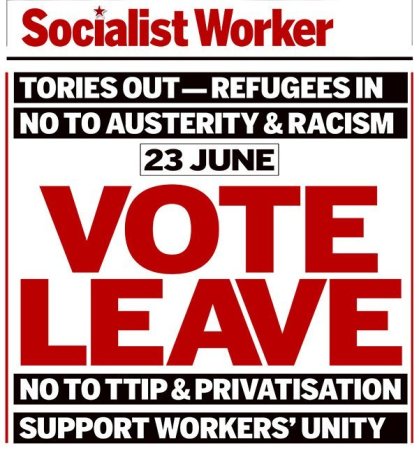
Jesus, did you actually think this was serious? I mean ‘Lexit’ was a huge pile of horseshit in the first place, but you’d need all the assembled cavalries from all the wars throughout human history, plus all the individual steeds and ponies and mares and mules and asses and palominos and thoroughbreds and foles, throw in a pantomime donkey while you’re at it, to begin to produce enough equine manure to make a case for there being anything remotely progressive about the prospect of a new war in Northern Ireland, martial law throughout the UK, some 1930s Etonian fascist in number 10, empty supermarket shelves and huge angry crowds outside everyone trampling on each other to get their hands on the last potato this side of Calais, everywhere you look gatherings of angry-looking men with nothing to do all day but share their dreams of Tommy, enough racist scapegoating to satisfy even Nigel “I was in the National Front, no one ever mentions it but I used to be in the National fucking Front” Farage, schoolchildren forced to pledge allegiance to Brexit and to promise to expose any disloyal talk around the kitchen table, talk on the news and in the press and the radio and online of the need for war and conscription and hanging and more war, every single symptom of social malaise or economic collapse attributed to traitors at home and mortal enemies abroad, and on every street corner someone calling out ‘Socialist Worker! Socialist Worker!’, the headline never seems to change, this week it’s THE PEOPLE’S BREXIT, ALL HAIL COMMISSAR REES-MOGG, DOWN WITH THE HATED NEOLIBERAL EU, THREE CHEERS FOE WHATEVER HATEFUL SHIT THE WORKING CLASS SEEMS TO BE CONCERNED ABOUT THIS WEEK, IT’S TIME TO PANDER TO WIDELY-HELD MISCONCEPTIONS, RIVERS OF BLOOD, SEND EM ALL BACK it’s admittedly a lot of words to fit on a single page and kind of painful to read but where else do you have to be? The Left case for Brexit, a basic misreading of stage directions which actually read (exit stage right, pursued by a Facebook meme of a polar bear), but do tell me all about Greece again, do the one about no one else knowing or caring about austerity and homelessness in Tory Britain, repeat word-for-word that lie on your website about ‘its neoliberal policies restrict left wing measures such as nationalisation’, repeat the word ‘bosses’ way beyond the point where semantic saturation sets in, enthrall me with some spiel about the ‘Establishment’, as if the middle name of the defacto leader of your party isn’t Theodore “and whose mother, the Honorable Ædgyth Lyon-Dalberg-Acton, was the daughter of the 2nd Lord Acton, descended from the 19th century English historian Lord Acton”, yeah tell me the one about fighting the establishment again, and then by all means go on about what Tony Benn would have wanted, I could do with a fucking laugh.

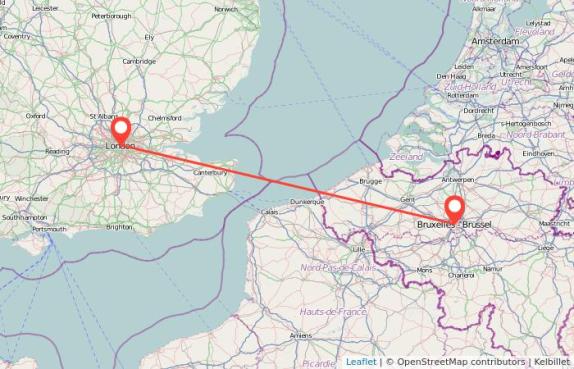
On leaving Brussels

map-33210_1-3403_1

Someone recently accused the writer of this blog (me) of showing little sign of having listened to those who had valid reasons to vote Leave. This post is based on notes I made on a trip last May (2018) which I never got around to typing up at the time. In it I try to relate to some of the anger directed at the EU from the left.

We’re about to depart from Brussels, but there’s a problem: the seat reservation system for the Eurostar has broken down. Fortunately, thanks to the efficiency of the effortlessly multilingual staff who quickly take to distributing the relevant cards by hand, the problem is resolved swiftly and we’re back in London within two hours. Les temps changent: when my father left his hometown in Northern Germany for good at the age of 17, it took him several days and reams of documents and stamps to get to the UK.

That’s not to suggest that the Eurostar is perfect or even unproblematic. The bins are full, not all the toilets work, and passengers are grumbling in a range of varieties of Europanto. Anyone inclined to welcome another uncritical paean to the wonders of the EU project and the freedom of movement it guarantees might want to consider a front-page article from Belgium’s leading Francophone daily about Mawda, a two year-old Kurdish girl who was shot dead last Thursday by the Belgian police. The officer claimed he was firing at the tyre of the van in which she was travelling, which is an insufficient explanation of how he came to shoot a toddler sitting on her mother’s lap in the front seat in the face. Her parents came from Ranya in Iraqi Kurdistan, a country devastated by Isis, and after several failed applications for asylum were trying to reach the UK.

Mawda’s parents would probably be astounded to be told by British liberals that the EU is the best possible guarantor of free movement. Unlike our journey, their trip involved tens of thousands of pounds, took several months, and ended in death and failure. Some of the very best people campaigning for the rights of human beings to cross borders and find safety certainly don’t see the EU flag as a symbol of civilised values.

I’ve been spending a lot of time in the Forensic Architecture exhibition in the ICA. One of the focuses of the bewilderingly vast and complex projects on display regards the EU’s active neglect of its humanitarian responsibilities in the Mediterranean. They detail the causes of human misery with a mindbending level of meticulousness. Their approach, which uses a combination of cellphone metadata, videos, meteorology, eyewitness accounts, and reconstructions could tell us a lot about what really happened to Mawda, and also shed light what took place in Gaza last week. We don’t have to engage in ‘Minority Report’-style future criminology to predict the human rights abuses that will result from Theresa May signing arms deals with President Erdogan of Turkey. Last week I joined the anti-Erdogan protest outside Downing Street. Among the crowd were people who had been to fight for the YPG in Kurdistan, and who divided their time between there and the Turkish/Kurdish areas of North London, near where we live. While fascists from Italy to Rome spout their bile about the need to combat Isis by tormenting its victims, they risk their lives in order to protect them. And yet, as well as collaborating with Turkey to send back refugees from Syria, the EU has also been planning to set up refugee ‘processing camps‘ in Libya, similar to the concentration camps established by the Australian government in Nauru. If we see ourselves as citizens of the EU, we are responsible for the atrocities it commits and plans in our name.

At St Pancras in the Eurostar waiting hall there was a friendly robot for children to play with. If you tell it your name it won’t rip your head off. Fluffy Robocop. Hard power as well as soft.

*****

I lost a friend over Brexit. Not, as many have experienced, one who came out as a small-minded nationalist, but rather an anti-racist activist whose family had moved to the UK from Bangladesh in the 1970s. At the time I refused to accept that someone so opposed to racism could acquiesce in a cause led by xenophobes, but on sobre reflection it’s understandable that some of those who aren’t from a European background never felt part of the EU project. Europe has a particular value for British society – as Eduardo Lourenço wrote of Portugal’s economy and the EEC, it was ‘the perfect cure for the post-imperial hangover’. Similarly, it’s inevitable that not everyone is all that concerned about what’s ‘best for Britain’. If British people don’t want to get such terrible hangovers, on pourrait dire, maybe we shouldn’t have drunk so bloody much in the first place.

The friends we stay and meet with in Brussels mostly work for the Commission but come from Italy and divide their time between the two countries. The political situation in Rome (where we ourselves lived until the start of this year, and where actual fascists are angling to share power with a semi-cult of internet conspiracy-addled morons) is a reminder that EU membership may soon come to seem less attractive to those of us with a progressive mindset. Elections in May 2019 look set to be characterised by the victory of (ahem) “populists” from across the continent, and may result in a European Parliament dominated who both decry and embody the rebirth of fascism under the EU flag. Ukip won’t be there (not that their MEPs were ever the most assiduous of attenders, although apparently the owners of Irish bars near the Parliament were disappointed by Brexit) but others of their ilk will take their place. After all, those who ‘hate Brussels’ are still drawn to the place. Last week a proud ally of Farage was stalking the “no go” area of Molenbeek, sneering at the (mostly North African) locals because she, a white British woman in a hooded garment who hates the EU, nonetheless somehow regards Brussels as her own territory. The similarities in worldview between Islamic extremists and anti-Muslim bigots are striking. Hopkins is like a dog joyously sniffing out another of its species. Violence is a form of heat, canine libido set on fire. The mentality of Incels and other disciples of Jordan Peterson et al is so similar to Isis it can be no coincidence: psychopathic misanthropy and violent misogyny are impossible to disentangle. Isis’ principal victims are other Muslims, particularly female ones; thus do those who bully veiled women in the street continue their work in different forms. My compatriot once called (in a national newspaper owned by our nearest equivalent to Robert Mugabe) for boats to blow up those who manage to escape. Perhaps she knew what the EU’s up to the Med her attitude to Brexit might change. Meanwhile Salvini tells his followers and their fellow travellers that boats of newcomers may contain men bent on indiscriminate violence, while praising the far-right terrorist who shot randomly at groups of African women in Macerata.

My favourite citizen of nowhere, Momus, was also in Molenbeek recently, showing off some natty ethnic dreads snapped up in local shops which don’t generally cater for tourists. The area where we’re staying (Ixelles) is more upmarket, or at least it is now. Like Broadway Market, it’s lovely if you can afford it. Gentrification here is driven not by finance, like in London, or tech, as in San Francisco, but by EU personnel. Liberal values come at a high price, in more than one sense. All the perpetrators of the airport bombings in 2016 and those who murdered dozens on the streets of Paris grew up in Molenbeek; cultural relativism alone offers little in terms of addressing a very real problem. In the park where I read about Mawda we’re surrounded by Italians, making themselves at home. Brussels is an emblematic city for transnationals, those with a foot in each country. Is Brussels really Belgium? Is London really part of the UK? Arriving in Rome, we were too busy working and preparing to bring up a child to really engage with the struggle to welcome those whose trajectories were more tortured and who would have loved to be able to pop over to the UK whenever they wanted, just as we could. This blog was born not just out of rage but also out of privilege. There are so many stories to tell, why should mine matter to anyone else? I don’t have an adequate answer to that question.

Brussels’ melange of official identities reminds me of China Mieville’s sci-fi detective novel The City and the City, recently dramatised by the BBC. One senses that there are portals leading from one version of the city to the next. This is also where identities are imposed, prescribed, geannuleerd, where policies are enacted to determine who qualifies as European and who is to remain a non-person, pace Agamben. Is abjectification a word? Injustice is administered from here; but the same is true of London. To those who ‘hate Brussels’ for all it represents: what about Whitehall? Do the city or Canary Wharf, those torture centres ever devising new implements of debt, make you feel patriotic?

I read later in The Guardian (where else?) that Mawda’s family may be deported back to Germany. She was considered a German national, having been born there. My father wasn’t a German national, having held a UK passport from the age of 25 or so, when he applied for citizenship and was called up to do military service. Had he lived he wouldn’t have been among those who had to pay £65. He regularly declared himself to be a proud European, one who only felt he belonged here once the UK joined the EEC in 1973; he died in the early hours of May 1st 2018.

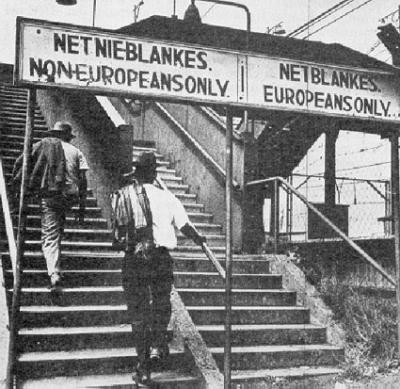
I’m sure Mawda’s parents would have been more than happy for her to take his place. Ukip-style anti-immigrant sentiment is so puerile and reductive that the idea of one-in-one-out might appeal. Of course European citizens in the UK should be allowed to stay and come and go as they please. Of course those who promote a basically far-right agenda by cynically instrumentalising the plight of non-Europeans denied the chance to live here are scum. But the EU routinely makes life and death exclusions on a racist basis. I dearly want the UK to remain part of the European Union – at this point, it feels like the only other option is some or other form of nationalist authoritarianism and a level of austerity which will make the Troika’s treatment of Greece look like rampant munificence – but I can’t say I’ll ever call myself a proud citizen of the EU.

europeans-only

The Irish backstop explained for absolute imbeciles (eg Theresa May)

Shall we go out to the pub?

We can’t, you idiot. We need to wait for the locksmith.

A locksmith? Why on earth would we need one of those?

Jesus, how many times do I have to explain this? We no longer have a key for the back door because you lost it. We can only go out when he’s fitted a new lock and given us a new key.

So what? Why’s it so important to lock the back door? It’ll be fine.

No it won’t. There’ve been three burglaries on this street in the last month alone! I’m not going out of the house until the back door is locked.

(Ten minutes later)

Right! Shall we go out to the pub.

What? Are you taking the piss? Didn’t we have this conversation like five minutes ago?

We did…but that was before I came up with a solution.

What on earth are you talking about?

Try the back door.

Try the…why would I…

I think you’ll find I’ve come up with an…alternative arrangement. Go on. Try to open the back door.

Well if it makes you…there. It’s open. What the hell is your point?

What the hell is…what are you talking about?! Come on, we can go to the pub now! It’s Thursday! Curry Club night!

But the door’s still not locked!!! Have you got early onset dementia or something? IT’S NOT LOCKED. WE CANNOT GO OUT TO THE FUCKING PUB YET.

But…what about my alternative arrangements?

Oh for fuck’s fucking sake who’d want to got to the pub with you anyway. “What about my alternative arrangements”. You’re a fucking arsehole.

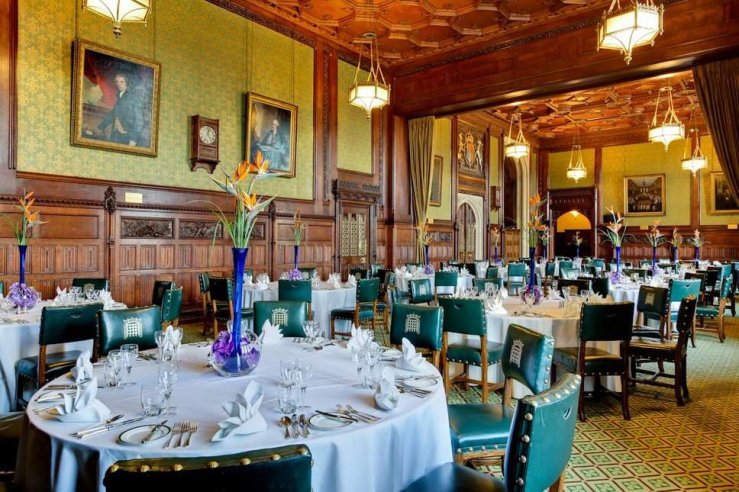
HoC announces emergency “no deal” plan: Canteen to open “round the clock”

The Houses of Parliament Management Committee, a body which unites representatives from both sides of the house, has announced contingency measures to anticipate the risk of a “no deal” Brexit.

Amid concerns that MPs themselves could suffer from widespread food shortages if they fail to prevent the UK crashing out of the EU with basically no agreements in place to enable trading in foodstuffs with other countries and not nearly enough food produced within the country to feed all of its population, the House of Common canteen will remain open free of charge 24 hours a day, with extra armed security laid on so that no non-member shall gain access to the facilities. However, in a further emergency measure designed to prevent malnutrition amongst those who campaigned hardest for Britain to leave the EU without having made any actual plans to anticipate the havoc such a scenario would cause, members of the European Parliament and their paymasters will also be allowed to enter the canteen “for the foreseeable future”.

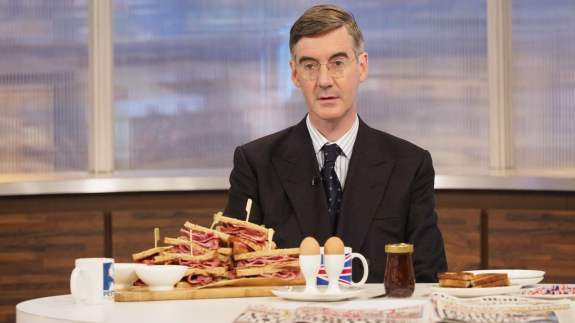
MPs expressed relief that their access to free food and drink will not be threatened, even though a member of the cabinet has acknowledged that staple foods such as tomatoes and bananas may not be available in the rest of the country for a period of “at least” six months. Craig Mackinlay, a Conservative member of Parliament, commented: “I’m happy to go on record as “confident” that the reports from every corner of the food and drink industry expressing grave and mounting concern with regard to the public availability of food after March 29th are without any foundation. Probably. Time will tell. You’d really have to ask James Delingpole about the details. Anyway, I’m extremely pleased to hear that whatever happens to everyone outside the House, I personally will have unlimited access to as much as I can eat and drink. The willingness of the great British public to sacrifice their lives on the basis of an ill-conceived and poorly-executed referendum in which the winning side cheated is…admirable. I respect each and every one of those brave souls who is prepared to starve him, her or itself to death in return for some atavistic notion of “sovereignty”, one or two of those “NHS hospitals” they seem so keen on, or whatever else it was we told them they were voting for. I and my friends Jacob Rees-Mogg, David Davis, Nigel Farage and Daniel Hannan will continue to dine on the very finest and freshest of British and continental cuisine. Those who voted for us, I mean for “Brexit” in 2016 need have no worry whatsoever on that score”.

Should they not be able to approach Parliament owing to huge crowds of furious, starving, and deeply embittered Leave voters gathered outside, MPs will also be provided with vouchers guaranteeing them unlimited free meals from any surviving food outlets anywhere in the country. Those that manage to reach the other side of the river will also be welcomed to a weekly dinner n’ drinks gathering at the home of Labour MP Kate Hooey, who is said to have been stockpiling canned goods since late June 2016.

The committee also voted unanimously to reward every ‘Lexit’ voter by sending them a family-sized box of stale mince pies and granting them one calendar year’s membership of the Wetherspoons Thursday Nite Curry Club, with 15% off cans of Tuborg until they run out in about mid-April and as many sawdust-flavoured poppadoms as they and any surviving member of their family can digest.

Rumours that Jeremy Corbyn has now decided to support a no deal Brexit so that he can make a fortune selling produce from his allotment to the HoC canteen were unconfirmed as we went to press.

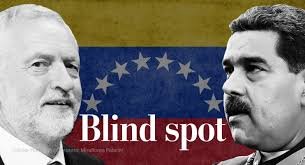
Corbyn, Venezuela and a “no deal” Brexit

The last few weeks have seen an (inevitable) intensification in the number of articles critical of Jeremy Corbyn’s ongoing support for the government in Venezuela. Most are based on comments from Conservative ministers and MPs who accuse him of wanting to implement in the UK a similar political and economic model to Chávez and Maduro, one which has led to massive food shortages and a lack of availability of other basic goods, a currency collapse, out-of-control inflation, an exodus of investment, troops on the streets, a suspension of democracy, mass emigration, and a pariah status on the international stage, with the country economically and politically dependent on allies that do not share its much-vaunted commitment to democracy and human rights.

Meanwhile, the Conservative Government is pushing ahead with preparations for a “no deal” Brexit. It has been widely and repeatedly predicted that in such a scenario Britain will face an indefinite period of massive food shortages, a lack of availability of other basic goods, a currency collapse, out-of-control inflation, an exodus of investment, troops on the streets, a suspension of democracy, mass emigration, and a pariah status on the international stage, with the country economically and politically dependent on allies that do not share its much-vaunted commitment to democracy and human rights.

Asked to comment on reports that business leaders are deeply concerned for the future of British capitalism, Boris “Bolívar” Johnson, one of those most enthusiastically advocating a “no deal” scenario and himself an aspiring líder máximo, said simply: “Fuck business!”.

This, in all seriousness, is how the Brexit deadlock can be resolved

Martin Kettle’s article does an effective job of setting out the current deadlock: there’s a parliamentary consensus that a no deal solution is unacceptable, but there’s no agreement with regard to an alternative. Well, I’ve thought of one: someone (ideally May, but she appears to be psychotic, so probably somebody else) introduces an amendment to the following effect: it’s her deal, or no Brexit. This would force those who really do want Brexit to accept that there will never be a version of it that appeals to their particular proclivities, and to either forget the whole thing or abandon their principles (and destroy their own careers) by voting to make the country much poorer for no good reason. It would also marginalise those outright ideological nutters like Rees-Mogg who aren’t even that bothered about the EU as such but just want to bring everything crashing down so they can profit from the wreckage. Now there would be all sorts of complications, such as how the Labour leadership would handle the delicate task of owning up to Leave voters that the bag they were sold contained nothing but a dead pup, but I think that given the standoff that Kettle describes, and given that there will be no consensus with regard to an alternative for the foreseeable future, and given that the ticking sound we all hear is not actually a clock but a bomb, it might just serve as a last-gasp solution – hopefully it will in fact be this very scenario that we end up with/in. The sticking point at the moment is that she knows she’d lose, and so do those who oppose her deal. After all, if there’s one thing that Brexiters can stomach even less than foreign booze and vegan sausage rolls it’s…Actual Brexit. If Farage, Hannan, Carswell, Cummings, Raab, Johnson, Davis (et al) had genuinely thought the UK would be better off outside the EU, they would have worked a serious, detailed plan that went beyond winning the Referendum, and sought to promote it while the negotiations were going on.

But they never had such a plan (update: quite deliberately, it turns out). Their Brexit is a scorched earth one, the ultimate iteration of the Shock Doctrine, a British version of Year Zero, and it’s far beyond time for their bluff to be put to the test.

UPDATE: This was written before the Kyle/Wilson Amendment was devised, so maybe it was…my idea?!

No-deal Brexit and ‘acting as if’

maxresdefault-1280x720

I’m sure someone like Zizek would have something of interest to say about the government’s almost certainly ill-fated pretence that they are serious about leaving the EU without a deal. It may go something like this: the purported audience for the no-deal charade is the EU leadership. (I think threatening them to renegotiate might be what linguists call the illocutionary force.) However, as John Harris has reported here, the actual (unintended) audience for the no-deal rhetoric is lots of angry people across the UK who voted to leave but who no longer trust anything the liberal media tells them*. (That’s the perlocutionary effect.) They now believe that no-deal is not just a plausible but a desirable option, and are immune to any appeal based on pointing out that their desire to get Brexit over with so we can all get on with our lives will make it impossible to get on with our lives. Major companies are also putting contingency plans together, including, one can only assume, sacking all their UK staff, despite Philip Hapless Hammond having phoned them up last week to tell them it was all a big massive jape. This plays straight into the hands of the full-on ideological psychopaths who never actually wanted Brexit to ‘work’, but who see it as an excellent means to create chaos, seize power and implement their Pol Pot-esque Shock Doctrine agenda: Farage, Raab, Cummings, Rees-Mogg and so on. (You could also add to that list certain power-crazed sociopaths who genuinely do not give a fuck what happens as long as they stand a chance of becoming PM – no need to name names on that score.)

In recovery fellowships they talk about ‘acting as if’: pretend that you’re an emotionally healthy person who doesn’t need a drink to get out of bed, and eventually, one day at a time, you will be. In various other fables, the wind suddenly backfires and the wolf mask you only ever donned for a lark is stuck to your face for good, and so on. Or, in the more deftly-chosen words of Kurt Vonnegut, “we are what we pretend to be, so we must be careful about what we pretend to be”. Ultimately, once the government has stopped absolutely wasting everyone’s fucking time, the country will end up doing whatever suits the interests and prejudices of Rupert Murdoch and his friend Steve Bannon, although in this case it will, bizarrely, be the SWP and the Morning Star wot believe they won it. The question of whether Prime Minister Rees-Mogg will end austerity overnight and appoint George Galloway Minister for Catsuits first thing in the morning is, at this point, moot. (I’d imagine he’ll probably enjoy a leisurely breakfast of duck-eggs-on-soldiers served up by “nanny”, surveying his legoland country estate, as the rest of the country starts to riot and starve to death.) But the pro-Brexit Left certainly deserves some sort of reward, because if it hadn’t been for the feinted left hook that was the ‘Lexit’ campaign, the hard right wouldn’t have been nearly as successful as it has been in implementing what is basically a slow-motion coup au visage de la démocratie, the eventual outcome of which will lie somewhere between Pinochet 1973 and Johnson 2005.

As for Corbyn, his party’s manoeuvres to stave off a nightmare Brexit are welcome, but if Labour had started much earlier on demolishing the case against a no-deal outcome, it might have stood much more of a chance of success. Right now he’s going against the tide – starting today’s PMQs by mentioning Holocaust Memorial Day is bound to be greeted in some quarters with fears that he might, heaven forfend, upset the far-right….

*Although of course they’re happy to take as gospel any old shit Russia Today posts on their Facebook feeds, and as for The Sun, well it’s the Sun innit.

A two-year-old child explains why we can’t “just leave”

kids

This week we begin a new series in which guest bloggers, representing a range of voices less commonly heard in the mainstream media, give their opinions on the issues of the day. Today Maya, aged two, considers a “no deal” Brexit.

As a toddler, I understand the impulse to, as many British people have put it, just leave the EU without arrangements in place that might serve to ensure the country’s survival. However, I’d like to offer an analogy which will explain why I think it may not be the best available option. Leaving, it turns out, is often a mite more complex than one may at first assume.

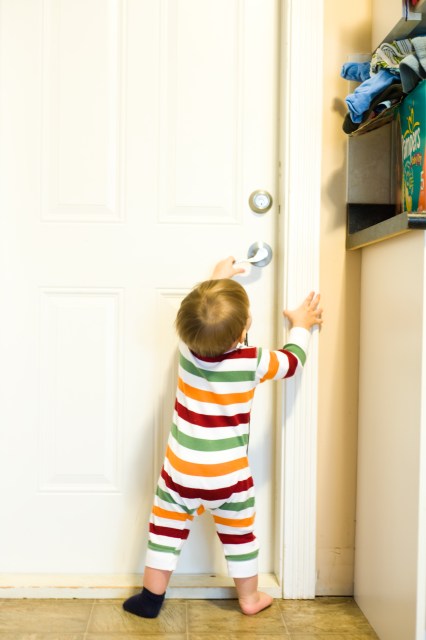
Across the road from our flat in London there’s a park. An amazing park. With a bendy slide, literal swings and actual roundabouts, parents speaking what sounds like quite a variety of grown-up languages, fellow toddlers  babbling away incoherently as we are wont to do, the odd individual adult gulping down a delicious-looking beverage apparently called K Cider, and what seems to be an endless abundance of flowers and grass and pigeons and trees and mud and bins and leaves and twigs and stones to put in those bins. There are also DOGS! Doggies!! Woof-woofs!!! And a dinosaur! (I am not making this up. There is a dinosaur!) Sometimes I look out of the window and the sight of the outside world triggers thoughts of the park’s bountiful and tantalising treasures. Seized by the impulse to be OUTSIDE, I rush to the door, but unfortunately, I’m too tiny to reach the door handle*. This turns out to be just the first of very many complications.

Leaving the house to go to the park is no, as it were, walk in the park. One issue is that I am, how can I put this, linguistically challenged. I have the verbal sophistication of, well, a two-year-old. Further complicating matters is that (shock! horror!) one of my parents (I think it’s the female one) comes from another language background, so I’m often struggling when it comes to expressing my wants and needs. For example, if I decide on a  bit of a whim that I don’t actually want to wear THAT hat, not the one with the dinosaur on it that sometimes makes my head feel a bit hot, but another one that I vaguely remember that might on proper reflection belong to another child at nursery, or maybe one that I definitely possess but which, following my own peculiar proclivities, I have chosen to put in the washing machine or the oven, I can’t put my wishes into words and sentences. Or I can, but sometimes my thoughts and feelings come out all convoluted and lacking in coherence**. Babbling, as I mentioned earlier. Added to this is the fact that I’m not yet totally expert at regulating my emotional state, which leads to impatience and frustration on my part and, as a consequence, on that of my parents. In such a state I’m prone to repeating at increasing pitch and volume the word ‘pak! PAAAAAAAAAAAK!!!!’ to little avail. For there are always parental precautions that have to be taken before we leave. This being the “winter” period***, it’s not just a matter of needing to wear a coat, hat, appropriate footwear (i.e. not that of my parents), and a scarf (I HATE scarfs); there are also mittens to be located, suitable parental garments to be selected and donned (with, I have to say, a measure of assistance from yrs truly), plus often a debate as to whether not I get to bring my scooter, because my passion for putting leaves and twigs and stones in the bin means I haven’t always got a hand free to carry it with, which means that someone else (but who??) needs to do so on my behalf.

So something that might seem straightforward turns out not just to be complex but actually complicated. It’s never just a case of opening the door and merrily toddling my way to the lift. The whole process takes time, patience and energy and demands careful preparation and supervision. It is often intensely frustrating and sometimes, for example if one of the parental people happens to notice that it’s actually raining outside, it may not actually result in success.

Now, I’m aware this might be seen as a poor analogy. Getting a child ready for a trip to the park is not nearly as involved a procedure as preparing a country to leave an economic and political union after several decades. But that’s kinda my point. In evaluating the need to make careful preparations, it’s essential to give proper consideration to the consequences of not doing so, in all their potential horror. Allowing a very young child to charge out of the house straight into driving winter rains and traffic coming from all directions, with no coat or shoes, no means of getting back home, lost and helpless in a world suddenly become infinitely more terrifying and lonely, would be something only a true psychopath would do. Especially if they knew there to be child snatchers in the vicinity.

Here, then, we might be able to divine a connection with the dilemma currently faced by the UK. After all, the grown-up world is immensely complex. It operates in ways that would not only befuddle your average nursery-age infant, but would also place incalculable demands on huge teams of experts working to tight schedules over a period of very many years. Just as I struggle to make sense of the complex procedures involved in nipping out to the local playground for 20 minutes or so, the average beflagged twitternaut is underequipped to understand the delicate ins and outs of the EU withdrawal process, and may not have thought through the impact that leaving the EU in any form will have on the future provision of things like well-equipped and safe parks for children to play in, basic regulations to make sure external doors are child-safe, and essential foodstuffs like bananas, tomatoes and cans of K Cider for kids to enjoy in those parks when they get a little bit older.

As I say, I can certainly relate to the impulse to kick and scream and (let’s be frank) poo oneself in the messiest of ways in order to realise one’s immediate life goals. But I’m also acutely aware that my own vision of events is limited to a considerable extent by my puerile desire for immediate gratification without regard for the wider consequences and my infantile apprehension of the scale and complexity of any given set of circumstances. Put simply, I get tantrums. But even as a two-year-old child, I can see pretty clearly that leaving the EU without a deal would not be in the interest of me, my generation or indeed anyone but those whose mentality and worldview are considerably more selfish and less well-informed than your average toddler’s.

Right, that’s the word count met, I’m off to watch me some Teletubbies.

*I am now able to reach the alarm button in the lift, though. Yay!
**I suspect I may have inherited this characteristic from my male parent.
***By the way, those who claim that the climate is getting warmer might like to consider that just a few short months ago we were on something called a beach and it was warm. Now most days we don’t even walk to nursery. You do the math.

‘Tonight thank God it’s them’: Brexit, food, resentment and inequality

3200

I once taught ‘Business English’ to the owner of a hedge fund in Mayfair*. It turned out he’d started his company in the year 2008. That’s…auspicious, I remarked. Once I’d explained the word and helped him do a cost benefit analysis on whether it was worth committing to memory, he dismissed my suggestion that a financial company might have suffered the effects of a massive global financial crisis with the words “We’re above all that”.

Reflecting over the course of the last Midwinter Shopping And Stuffing Your Face Festival in its present form, I’ve been struck by the thought that Brexit represents something of the same order in relation to food. My mother grew up with rationing, and possibly as a result tends to overprovide at family gatherings. She’s lucky to be able to (just) afford to do so; anyone who’s been near the Department of Social Security of late knows that rationing exists again in the form of government-mandated food banks. The calculated humiliation involved may well have helped cause Brexit**, although anyone tempted by the ultraleftist notion that widespread suffering after March 29th will inevitably lead to revolution should be warned: people who’ve had the shit kicked out of them are less likely to fight back, in much the same way as no dead person has ever won a major boxing title. (Muhammed Ali doesn’t count, as although he did win some of his titles under a different name, he wasn’t dead when he did so.)

It was partly a seasonal internet kerfuffle in response to this tweet by an ardent Corbyn supporter that set me thinking about food, resentment, inequality and Brexit. Corbyn probably won’t be among the worst affected by food shortages, as he famously has an allotment. In, I will argue, much the same way, ‘people’ (or at least cartoon characters) like Rees-Mogg have enormous estates which could easily and profitability be farmed by the idle poor, so they’re more likely to see mass starvation as an opportunity rather than a threat.

As the fog clears around Brexit and reveals itself to have been steam on a ever-freshly replenished mound of shit, certain themes become clear. They are gathered and explored in Fintan O’Toole’s excellent book ‘Heroic Failures: Brexit and the politics of pain’, which details how this particular stew of self-aggrandisement, self-pity and resentment of others was concocted, and how it’s led to everyone on HMS Shit Britain looking, if not queasy, then certainly depressed.

Food snobbery is one of those themes. Only an outside observer could have noticed our ongoing pathologies in our relationship with food and our attitudes towards others’ eating habits. O’Toole recalls Boris Johnson’s championing of cheap, popular food in the form of Prawn Cocktail crisps and his sneering at metropolitan liberals’ taste for Italian peasant cuisine while he himself continued to enjoy the very best that Tuscany has to offer. Class resentment and the manifold hypocrisies it entails found expression in the fetid burp that was the Brexit vote. Just as Johnson would not dream of even sniffing at a Turkey Twizzler, Rees-Mogg has no more set foot in a Tesco Metro than his ancestors sacrificed themselves for glory little more than a century ago. Brexit embodies not so much the spirit of the Blitz as the loud, clear echoes of the sacrifice of the Somme. An upper-class version of British history may exhort us to sacrifice ourselves pro patria, but it’s the martyrdom of others further down the scale which tends to result.

Just as a century ago ruling class generals boasted of greater glory and honour while casually tossing away millions of lesser lives, failed negotiator David Davies appeared on Question Time in December 2018 talking of a so-called “no-deal” Brexit as the country’s “Destiny”; much as crowds lined the streets in 1914 to cheer the soldiers off to war, Davies’ vainglorious appeal was greeted with wild applause. I also heard loud, clear echoes of Mussolini. The line between the hard right and the far-right is an increasingly thin one.

At our family Christmas, conversations (thankfully) steered clear of Brexit, revolving instead around food: various tropes which involve bitching about what our neighbours in the supermarket queue are and aren’t consuming. In his book ‘The Chinese’ Jasper Becker identifies Chinese peasants’ dreams of abundant food as the main ingredient in Chinese history. The murky gravy that is ‘British identity’ always seems to contain several lumps of resentment of and scorn for others’ eating habits, and even the fact that they get to eat at all. There was a telling moment a while back when Michael Gove started raging that China had refused to take any more of our plastic and burn it for us. For the leading Brexit conspirators such as him, the fact that those Chinese peasants nowadays gorge on cheap chicken and pork and can no longer be forced to consume British opium seems to fuel their righteous fury.

This mentality, that it is our god-given right to make others suffer for our own benefit, can be traced back at least easily as far as the Irish and Bengal famines. Ironically it was a pair of c*lts (Bob Geldof and Midge Ure) who created the modern hymn to this aspect of Empire. That high priest of celebrity sanctimoniousness Bono didn’t write the song, but he did caterwaul the most obnoxious line, sounding while doing so like he was off his face on piety. Viewed in emotional sobriety, the lyrics embody a certain strain of Catholicism particularly prevalent in the Ireland of the 1950s-60s: nuns collecting for little black babies, for the godless barely deserving of the life that we may, in our infinite charity and mercy, deign to grant them with.

We might look kindly on the original audience for the song given its very 1980s commodification of pity, its witless neo-Victorian platitudes and staggeringly offensive generalisations in an era characterised by the ‘late failure of radical hopes’. But it struck me that its continued popularity (even, I’d venture, increasing prominence) speaks of resentment, of celebrating the suffering of others. Bono’s line ‘Tonight thank God it’s them, instead of you’ put me immediately in mind of O’Toole discussion of the concept of ‘sadopopulism’: the willingness to inflict pain on oneself on the understanding that by doing so you are making your enemy suffer more. You might think of it as cutting off your own nose to spite your neighbour’s face. In another echo of Empire and of slavery, it recalls Ta-Nehesi Coates’ explanation of the racism of poor whites in the American South: as long as they had someone else to look down upon, they felt secure. Upon seeing a black man in the White House they revolted against their reduced status, and Trump was the result. Similar dynamics operated in the UK with regard to the loss of Empire, and the result was not just (contrary to what Paul Gilroy argued) mere melancholy, but the bigoted fury of Geoffrey Bloom, the woman on the Croydon tram and many (but not all) of those who voted to leave the EU.

Thus does Brexit represent a case of (chlorinated) chickens coming home to roost. This is exacerbated in the case of those who know they won’t suffer, in the proud British tradition of offering up others’ lives for sacrifice. One TV survivalist stated openly on Twitter what Farage et al must surely be saying off-camera: that maybe a period of intense poverty and suffering will teach ‘us’ a valuable lesson. (This might give us pause to think, post-Bros documentary, about the relationship between celebrity and fascism, but for the fact that, as Labour’s purported Brexit strategy somehow fails to acknowledge, we don’t have much time.***)

At least Thatcherite self-interest as an ideology had a logic to it, whether that involved the famous boats of grain being dumped in the sea to ensure that failed Ethiopian consumers didn’t buck the market, or young people eventually smashing shop windows to simply take that which they had long been tormented by their (individual, always individual) failure to obtain legitimately. But in essence Johnson and Rees-Mogg are not neoliberals. They don’t actually believe all that Raabian horseshit about buccaneer entrepreneurship. One might call them neocons, in that their primary dedication is to preservation of their own wealth and power. I find it more useful to think of them as elitists. One wonders what Thatcher (pbuh) would have made of Johnson’s ‘Fuck business!’ comment. Capitalism is after all only one means of preserving elite power. Farage’s equally underreported line about dressing up in khaki points to an as yet unquenched desire for hard rather than soft power. Tragically, Labour (and Owen Jones) chose not to see that Tommy Robinson failed the shock troop audition. “3,000 racist internet trolls” is the eloquent answer to the question of how well prepared the far-right is to maintain order.

*           *           *           *           *

As things stand now, on the 6th January, there appears to be an overlap between Rees-Mogg and the Labour leadership’s desire to make Brexit happen whatever the cost. In the current climate it’s not impossible to imagine Corbyn being photographed sneaking out of Rees-Mogg’s Mayfair apartment late at night. I made the then-barmy prediction that Rees-Mogg would somehow end up Tory leader, but I didn’t  foresee that their interests would align. (If only I was better at thinking dialectically…). It would be nice to be able to dismiss out of hand Nick Cohen’s very-Nick Cohen-esque argument for Corbyn as an ultraleftist looking to exploit social breakdown to storm the Winter Palace, but that word ‘climate’ reminds me that one of his closest supporters is someone who may well have sat round the same family table for the Christmas nutroast: his distinctly undigestible brother. Not only does Piers have a day job providing hysterical weather predictions to the Daily Express, he also takes money from climate-lying organisations to turn up to events related to climate change to barrack those trying to save the human race. He’s very much in favour of a no-deal Brexit, and he also thinks Jeremy would make an excellent PM. Reflecting on this makes me fear that if elected Jeremy’s first act would be to appoint David Icke as Minister for Lizard Eradication.

I don’t know whether Corbyn has studied in anything like sufficient detail the reports of what will happen in the event of a no deal scenario*****. (For the record he says he finds the notion “absolutely unacceptable”, but then he hasn’t come with a meaningful alternative beyond popping back to Brussels and renegotiating the whole thing in the space of two or so weeks. I presume this means he doesn’t mind offending the intelligence of everyone including those Labour voters who voted to leave.) He is a romantic rather than intellectual, one who gives the impression that after reading ‘The Mask of Anarchy’ in 6th form he thought, right well that’s all I’ll ever need to know about the world. When I was living in Rome I never got round to visiting the Keats and Shelley house, but I will have time to do so if we end up moving back there. Even Italy’s madcap government of criminals and clowns isn’t evil and insane enough to starve its own people out of pure ideological zealotry.

Anyone who doesn’t understand the stakes for the UK economy would be well-advised to reflect on how many Just Eat signs they see on failing fast food establishments interspersed with boarded-up shops on their next promenade down the nearest rapidly-running-down high street. Or consider the amount of people employed in food distribution and services compared to the number employed in agriculture. No external food supply means no economy. Britain’s is a consumer society based, as the caption on a Modern Toss cartoon once eloquently put it, on everyone eating like a fucking pig all the time. What is in prospect makes Trump’s years-long government shutdown seem measured and sensible. And it makes those who actually argue for a so-called “no deal” (final) solution look distinctly like Pol Pot.

As with climate breakdown, the only thing that matches the scale of the crisis in store is the extent to which almost everyone one meets has absolutely no intention of doing a single thing to prevent it. Like Chinese peasants after Jiang Zemin, we now have more than enough winter provisions of conspiracy theories, consoling fairy tales, fireside folk narratives to stave off the (actually, for some reason, not all that) cold and keep us over-entertained. If there was an in-out referendum on WiFi or food, I’m not all that sure we’d make the right choice. Do you want a stable climate or an iPhone? Would you prefer Netflix or death*****? At least if we can get online we can gorge on resentment, even if we have nothing left to eat.

The latest news about Brexit is that we ‘may’ be short of such rare delicacies as bananas and tomatoes but that’s okay because mid-spring is when so much excellent and bountiful English produce comes into season (instant fact-check: it isn’t). 40% of what we eat comes directly from the EU: everything else we import comes via it. The “no deal” plan is to stop trading in food. It is a no food scenario. This is shock doctrine as anorexia. Maybe Corbyn, who has yet to utter in public the only word that currently has meaning (revoke!) is under the impression that, like him, everyone in the country has access to an allotment. Perhaps his brother convinced him over a vegan mince pie that it’s going to be a particularly warm early spring for no discernible reason and that prize turnips and supermarrows will abound in Brexit Britain, before the whole family joined hands for a rousing rendition of ‘Do they know it’s Brexit?’.

Whatever happens, here’s a prediction: there won’t be any charity songs in the UK next Christmas time. The only gift we’ll get next year is…fuck knows. Some bananas and tomatoes, hopefully. “Where nothing ever grows…”. My mum grew up without bananas, but my baby daughter loves them. As for tomatoes, I’ve kept a few extra tins to hand so I can throw them very hard at anyone who still supports fucking Lexit.

img-20190106-wa0002 (2)

* That’s right: I’ve wasted my life and we are already in hell.
** It’s unlikely that Daniel Blake would have voted to stay in the EU.
*** Seeing as this piece partly addresses the psychological phenomenon of displacement activity, it behoves me to mention that I’ve actually got two actual essays to write.
**** I’ve been enjoying the series ‘Sunderland til I die’, I think partly because there is viele Schadenfreude in seeing a city which voted to leave the EU then get ejected from the Premier League and then the Championship in successive seasons.
***** I’d also be quite curious to know whether or not Jeremy Corbyn watches, as well as appearing on, Russia Today. I can imagine him enjoying Slavoj Zizek’s new chat show, which I’m not going anywhere near as my Youtube suggestions still haven’t recovered from the time I watched eight or nine seconds of David Icke-enthusiast and aspiring Beppe Grillo Russell Brand’s interview with J*rdan P*t*rson. Russell, if you’re reading this, read a fucking book for a change; and while I’m at it, if you happen to work for Youtube, no I’m not interested in even more racist videos, thank you very much.

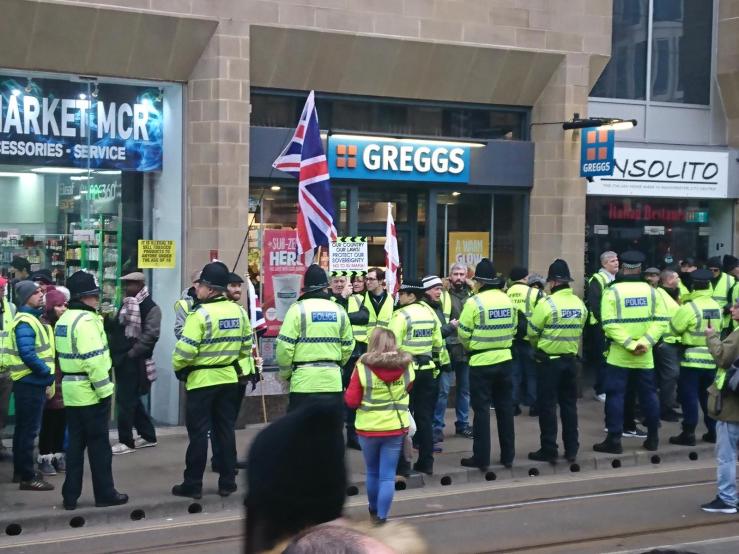
Ps Just in case anyone thinks I’ve overegged how fucked up this country has become, here is a photo taken in Manchester today of people protesting against…Jesus it’s too depressing to even finish this sentence

img-20190106-wa0009 (1)

On moving back to London one year before Brexit

3427Roy Porter points out in the very first sentence of ‘London: A Social History’ that London is ‘not the eternal city’. Unlike Rome, where we’ve been living for the last 18 months or so, London won’t even be in the EU in a year’s time*, which might make it appear odd that someone (me) who spent the few weeks after the Brexit vote listening to this on repeat is actually quite pleased to be back in the UK capital. To its credit, my home country is not (unlike Italy) on the verge of electing a mummified pedophile oligarch hand in hand with two actual fascists/supporters of racist terrorism to political power, but given the seemingly unstoppable influence of this walking answer to the question what-might-a-British-equivalent-of-Hitler-have-been-like?, the March on London can’t be too far off.

Others have pointed out the incongruous but not quite coincidental fact that many of the main Brexit conspirators (Hannan, Carswell, Banks, etc) have colonial origins. They are, after a fashion, foreigners, resentful outsiders determined to destroy what they’ve never understood (making them, in that sense, not all that different from Isis). They’re presumably sick of being asked by taxi drivers puzzled by their obvious distaste for and ignorance of their own culture, ‘Where are you actually from, guv?’.

Although many Londoners are (rightly) proud that it didn’t vote to excommunicate itself from the EU, it is where the process is being orchestrated from (however haphazardly), and a quick peek beneath the surface of recent British political history reveals the deep hydraulic fractures which caused the fissure: the burning resentment occasioned by the illegal War in Iraq, nearly a decade of ideologically-inspired austerity, and continuous agitation and scapegoating by the xenophobic hard-right of the Tory Party. The ideology espoused by the Brexiters (a deregulatory Year Zero, back to the good old days before the godawful NHS and the horrors of the Welfare State, to the time when we could still sell slaves, opium and cupcakes to whoever we damn well chose) is actually not too far off the policies put into practise over the last eight years; they just want to go so much faster.

One wonders how Daniel Blake would have voted had he still/ever been alive. The notion that the referendum represented a peasant’s revolt even though it was directed and armed by the lords of the manor is still depressingly, but understandably, prevalent. The ruling class was split, and some of its most visible representatives were pushing the notion that the status quo is essentially fair and just. This is a global problem, because regardless of the causes, the way things are is not the way they should be. For all their undoubtedly sincere commitment to liberal principles, the economic neoliberalism of Macron and Merkel is not going to protect us from evil forces pushing easy (and evermore violent) solutions. Anyone still wondering how Brexit came about is advised to have even the slightest contact with Jobcentre Plus. I called them the other day on the mistaken understanding that they could provide me with an apparently-essential piece of paper with my NI number on it, and received a salutary lesson in the mixture of infuriating condescension (“did you know that you could look at our website?!” repeated ad infinitum) and callous indifference (“If you haven’t received a payment due to you, why don’t you wait for a few more days?”) to which society’s most needy are systematically subjected to.

Many argue that London is immune to and not responsible for all this cruelty and chaos. London isn’t really the UK, it’s tempting to think, or at least hope. It’s a successful, global city – just look at all those who want to own property here! Well, yes, that’s all very nice for those who can afford it. As for those who were born in London and/or have spent decades of their lives here…well, maybe they were never really Londoners, or at least don’t deserved such a hallowed status. To look for a potential silver lining in the mountain of shit to be dumped on us over the coming years, perhaps London will become less attractive to those who have no actual interest in living here, but do possess an apparently unrestrainable desire to make lots of money by depriving those who do of floors, walls and ceilings; maybe all those bankers will piss off and make the city more equitable and affordable. Conversely, it may be that those bankers, thanks to the finance industry’s insistence that the government not do a full Jim Jones, save us from the worst of Brexit.

So, clearly we didn’t move back to London out of any sense of political optimism. No one quite knows quite what effect the impending changes will have, least of all those who are (ahem) ‘planning’ them. Nobody, that is, who’s never watched ‘Children of Men’ or seen the government’s secret economic projections. My former area of employment (English as a Foreign Language) seems to have already collapsed in anticipation. How whatever-is-going-to-happen will affect higher education is anyone’s guess. Very badly, at a rough estimate, at least for those who are trying against all the odds to do meaningful jobs in an increasingly absurd environment. Meanwhile, the privatisation of the state school system continues apace; my own most immediate work prospects seems to involve being part of that very process.

According to my distinguished neighbour Iain Sinclair, one must belong to a place before writing about it. Do I belong in London? After all, it’s not my hometown, nor that of my wife, although she does hold a British passport and has just got a new job which makes our lives here viable. I’ve come to live in London twice before, once for a disappointing post-university stint in the dim light of which I exiled myself in Dublin, Lisbon, Dalian and Madrid for a total of twelve years. I returned in 2006, sort of by default, always feeling a little like an outsider. If I wanted to be poetic, I could make out that the interim period between Mexico City, Bangkok and Rome was a Marco Polo-style learning trajectory, allowing me to reflect on issues of inequality, gentrification, immigration, belonging, centrality and my own place and role in the world.

I’m happy to admit that right now I feel excited to be here, to the point that it feels a little like moving here for the first time. Partly as a result of having lived elsewhere, knowing something of the place, having time to explore, and reading (after several failed attempts) Sinclair’s lengthy, rambling, and often deeply frustrating tome about Hackney, I feel oddly cheerful about being back in the same city as both him and, er, David Davies. Compared to Rome, the buses here run regularly and on time (any hopes that Salvini will do the same for the trains are probably moot); just like in Rome, there are abundant museums and galleries, but they are free to enter. All of these things are, of course, contingent, and very much under threat. Trump’s equivalents in the UK will try to destroy all that cannot be readily converted into shareholder value: frack under our houses, privatise our schools, monetise our future ailments caused by the rolling deregulation of everything that makes life livable.

But for the time being, the cultural and social possibilities within close range of our flat are endless. There are bookshops just metres away from my door which seem designed for my particular sensibilities. Browsing their latest additions I feel that they’ve read my mind – until, that is, I realise that they’ve written it. I’ve been primed, by the Guardian and the LRB, to want to read certain kinds of books, and thus to buy more than I could ever hope to actually get through. I’m not merely the object of marketing pressures, my tastes are the product of factories of desire. In my case, it’s books rather than branded sportswear which make me most likely, if I were to be denied them by cruel and capricious circumstance, to hurl bricks at shop windows. Zygmunt Bauman categorised those involved in the London Riots of 2011 as ‘frustrated consumers’; perhaps my role in London is merely that of a consumer, of culture, of property, of space and time. I’m free, for the time being, to be a tourist in my ‘own’ city.

In terms of being productive, previous generations of Italian emigrants were restricted in their career choices to the purchase of a barrel organ and a dancing monkey (which is actually not too far from what I was reduced to in Rome, entertaining children under the pretence of preparing them for an exam that they didn’t see the point of). In London the available jobs in education are of a not dissimilar nature, but at least I’m more familiar with the territory and the language and therefore more likely to bite back if poked with a stick. A further irony of Brexit is that the UK’s innovations in the forms of privatisation have been copied across the continent – it was after all a UK qualification that I was pushing in Rome. Having spent years studiously avoiding learning too much about the mess of academies, grant-maintained, faith schools, and so on, I’ll soon be in the midst of it all. Many schools are, largely as a result of PFI, struggling to survive, and surely shouldn’t be spending as much as they do on supply teachers, but what the hey, I need a job. What the Tories said about Labour was, in a twisted way, true – the amount they spent on essential infrastructure was irresponsible (although it wasn’t the reason for the bailout of the banks), only insofar as it was based on borrowing from the ‘private sector’ at unsustainable rates – a policy which was started and has been continued by the Tories. Schools, hospitals, and entire councils are now being pushed into bankruptcy as a direct result of the ‘financial innovative’ pyramid schemes run by loan sharks far too powerful to threaten.

And yet, despite all these hazards and hypocrisies, and without wanting to sound like Nigel Farage complaining about people speaking foreign on trains language it is pleasant, after a couple of years being an obvious outsider and struggling with self-consciousness every time I open my mouth, to be immersed in my ‘own’ language again. It’s also enjoyable to hear and be able to identify a range of accents and languages, especially as I move around London, from Turkey, Jamaica, Bangladesh, Nigeria. I benefit from and treasure this diversity. (You can’t get jolloff rice in Rome…) Reflecting on this, and on how the things I most enjoy about cities (diversity, multiculturalism) are those that inspire rage attacks in those with willfully provincial attitudes gives me a sense of…pride? That is, I would argue, a problematic term.

Although I wouldn’t want to live elsewhere in the UK, I do suffer from that metropolitan arrogance and its reverse, a certain chippy northerness. The notion (mooted on social media post-referendum) that London should ‘declare independence’ from the rest of the UK displays a willful ignorance of how the levels of infrastructural investment spent and the political choices made in the capital have systematically worsened the life-chances of the rest of the country. If London is more diverse and culturally richer, it’s partly because it can afford to be. So many want to come and live here even though so many others are being or have been forced to leave. Such thoughts may contribute, sooner or later, to a change in my mood; I am, after all, in a honeymoon period – any more contact with Richard Branson’s megalomania, whether taking a train back up north, sorting out the internet (Murdoch’s megalomania or Branson’s? What a choice!) or having a kidney removed will renew my antipathy to all that this city and country stand for, and that’s even before the shock doctrine/national suicide of Brexit kicks in.

Certainly, few writers would view the current state of London as a reason for cheerfulness. Iain Sinclair’s latest book is called ‘The Last London’, whose pessimistic prognosis that the city’s future has little to do with the more laudable or interesting aspects of its past is not new, even in the recent past – China Mieville published an essay called ‘London’s Overthrow‘ in 2012. Sinclair implies that the truth of Will Self’s observation that most people live on the tube map of London rather than in the city per se has become even more stark in an age where so many experience the city at a distance, floating above it on their devices, with little regard for its intimate histories or deeper geographies. he also suggests that when the pace of turnover of buildings and people reaches a certain critical mass, when so many who have made their lives here – no matter where they were born – are being forced to leave or hanging on under immense pressure, the notion that the city continues to be the same place in any meaningful sense is problematic. To live here and enjoy doing so, to see oneself as a ‘Londoner’ in such a context involves being riven by contradictions, particularly when one’s very presence usurps what was there before. On Google Streetview I can, from the comfort of our brand new building, take a walk down the street below as it was eight years ago when it was a council block awaiting demolition, before, in the same breath, watching a (moving and enraging) film made by a local artist documenting the subsequent destruction of an entire way of life. (I could then, also on my laptop, pontificate online about cities as sites of psychic energy, haunted places, without reflecting too deeply on the implications.)

The area we live in is, truth be told, an emblematic example of gentrification. A few years ago, back when I was living in the considerably less cool environs of Stratford, I joined a walking tour called ‘Keep Hackney Crap’, which was the tongue-in-cheek response of a group of local housing activists of the local mayor, who had publicly accused those critical of his council’s ‘regeneration’ schemes of defeatist thinking. After we’d been led from horror to horror, from entire burnt out rows of houses to million pound developments built on the crushed remains of 1960s developments with nary a concern for the fate of those who used to live there, we ended up at Broadway Market, sneering at the yuppie scum sipping surreally expensive lattes and absurdly overpriced almond croissants. The thought struck me that were I not to be spending Saturday morning learning about inequality, I’d very much have liked to be sitting in one of those very cafes reading about it in The Guardian. Regardless of how expensive and exclusive they are, the hipster cafes which characterise Hackney nowadays are much nicer than the fried chicken places they replaced. Nevertheless, anyone tempted to conclude that gentrification is therefore natural or harmless try to see how many non-white faces there are around Columbia Road market on a Sunday morning, or how many truly local people, ie from the neighbouring estates, use the reservoir up at Manor House. Social cleansing as practised in London has a very powerful inbuilt element of racism which is not disguised by the promoters of luxury apartment developments remembering to photoshop the odd black face on their advertising billboards for their (and our) neoliberalised dreamworlds.

Of course, other forms of exclusion and violence are less insidious, more direct and thus easier to recognise and condemn. The attacks that took place in 2017 around Borough Market are a reminder that regardless of wherever they operate Isis/Al Qaeda et al habitually target street markets as a means of causing maximum carnage and thus gaining maximum attention. Of course, it’s easier to attack the poor where they live and shop, to get at physical stalls on actual streets where cash is being exchange for material goods, than it is to reach and damage global circuits of exchange. The word ‘market’ is, after all, a poor metaphor for how the global economy operates. Ridley Road, for example, is a market, whereas the way housing is distributed in London is nothing of the kind. The ‘housing market’ in London has little to do with demand for places to live, but is rather a parasitical trade in a certain asset class which, misleadingly, goes by the same name and happens to involve both bricks and mortar. In a functioning city (London, so often trumpeted as a ‘successful’ city, is certainly not so when it comes to housing), a place to live must be recognised if not as a right then at least something with use value. In London, on the other hand, houses and pubs are being replaced by blocks of empty ‘luxury’ flats, desert city architecture which will never be and never have been inhabited, devoid even of ghosts. Thus, as Sinclair argues, the link between generations is being lost, in return for money which ebbs and flows within global networks encompassing terrorism and crime. Surely a lesson from McMafia must be that the notion of criminal groups including Isis as marginal, outside the global economy, must, by the nature of the way such things operate, be mistaken. It’s integral to how financial hubs such as London operate. Not for nothing did Roberto Saviano name the UK as the most corrupt country in the world, and Brexit is destined (and given the very active involvement of shady tax-dodging financial interests, partly designed) to allow for even more of this particular type of ‘deregulated’ financial activity.

When terrorist attacks have taken place in Western cities, there has been a spate of hashtags called things like #wearelondon. The Museum of London is using that very slogan in his fundraising efforts, and there’s a (quite staggeringly trite) Madness song with the same title. I understand the need of young people in particular to be proud of where they’re from (this Nike advert inspires even me to take a certain pride in lifestyles and scenes I can’t exactly claim any credit for or part in). Nonetheless, when I see such slogans I can’t help feeling a certain cynicism, thinking in particular of those who’ve been priced, burnt or brexited out of the city over the last few years. Should ‘being a Londoner’ be a source of pride nowadays? Or is it rather a badge of unwarranted privilege?

To be proud of something, you have to be part of it in some meaningful way. On previous occasions moving to London, I was desperate to be involved somehow in the nightlife. Thankfully nowadays that’s no longer an issue. Tempting to say it must be better than Rome, but then to be fair we went to Italy to have a baby and only ever left the flat after dark to stock up on emergency nappies. The prospect of returning to London filled my head with fantasies of late nights and favourite drinking haunts. There will be few late nights, but then so many of the pubs have shut down in any case. I will only experience a ever-depleting fraction of what this city has to offer, in both a positive and negative sense (I hope I never live through the kinds of migration, housing and work-related horrors described by writers such as Hsiao-Hung Pa, Ben Juddah, and Anna Minton). Nonetheless, our daughter, who sadly so far has shown little interest in exploring the grime haunts of East London, will grow up a Londoner, at least for the foreseeable future. I hope she feels that the city is hers and feels lucky to live here, but not that it belongs to her alone.

It is, of course, a luxury to escape a situation of political discomfort and economic despondency (even if it means jumping onto another rapidly-shrinking iceberg). Regardless of the outrageous limbo in which EU citizens in the UK find themselves, there’s something slightly tasteless about British people discussing where they can escape to after Brexit, especially when you consider how few Syrian refugees the UK has taken in. Few born here are in any physical danger because of Brexit, and maybe instead of looking to carry on our lives elsewhere unhindered by history there’s something more useful, indeed responsible we can do: After all, we will not be not the main victims of Brexit, and in any case the world was not by any means a perfect place before June 23 2016. The lesson for me involves learning to engage, not to be a tourist who’s just here to consume. One aspect of Brexit is that many of us (assume that we) will be shielded from its consequences, just as we’ve been sheltered from the direct impact of austerity to the point where we can condemn those who voted for Brexit without taking due account of the myriad ways in which our life-chances have enabled us to make more responsible and rational political choices. Maybe one way of overcoming our anxieties about our own fates is to join forces with those for whom complacency is another manifestation of privilege.

*Although I suspect that now they realise that Brexit is basically impossible, the sane members of the Government will try to get a transition period of at least 300 years.