“Which part of China are you from?”


At the moment in my school we have a group of students from China and one from Taiwan, and it’s pretty interesting to witness the dynamics between the two. I’ve learnt pretty quickly that the best way to distinguish between them is to ask if they’re from Taipei or Shenzhen, because the Chinese students, who are absolutely charming in every other way, really do feel obliged to forcefully respond with the point that They Are From The Mainland, And Taiwan Is Part Of China. I have to confess that now I’m not in China anymore my response has been to start whistling and look extremely bored – not that they seem able to take the hint though.

From what I’ve seen they completely ignore the Taiwanese kids; maybe it’s the fear of lack of face that makes them do so, because it’s pretty obvious to me that even the shortest conversation would lead to arguments which they might well lose. As a consequence most Taiwanese kids seem to think that the Shenzhen kids just don’t like them, which is a real shame. Last week at the disco the Shenzhen kids just sat in a big group near the door looking utterly uncomfortable, while the students from ‘Taipei’ and, er, other parts of Taiwan pranced around having a great time, dancing and making friends with people from other, erm, countries. So I suggested that next week the (hem hem) mainlanders bring some of their own cds to play – maybe the fact that the Taiwaners know all the same songs will force them to get to know each other a bit. I’m trying in my own small way to break down the barriers a bit – after all, they all like the same music and share a lot of cultural references, so there’s no real reason they shouldn’t be singing together at Karaoke.

It’s difficult marshalling them as a group when we’re out on excursions together – obviously the Taiwanese kids don’t want to be referred to as Chinese (yesterday I amused them by repeatedly insisting that Taiyuan is a part of China. I don’t think I was saying it right though), so I’ve just taken to shouting ‘Can we get all the ethnically Chinese people together please?!’ I know it’s uncomfortable for the Chinese students, but I just want to subtly suggest to them that their attitude makes them suddenly seem to be completely indoctrinated and more than just a little bit mad.

‘Understanding’ China

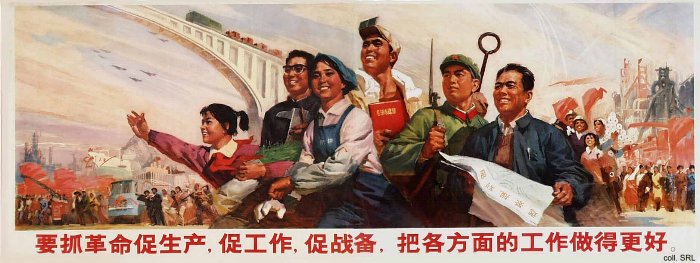
c05Is there anyone alive today who still sees China as a grey, hostile country, closed off to the rest of the world, where everyone sports Chairman Mao hats and rides bicycles while chanting passages from the Little Red Book? Certainly anyone who has visited the country in the last 20 or so years is genuinely surprised by the size and number of the skyscrapers, the traffic jams and the brand-new shopping centres selling the same fashions as in the West.The Chinese are proud of their new country, and pleased that people come to visit and see the results of the changes for themselves. Foreigners visiting or living in China are encouraged to spread the word, to use the benefit of their broadmindedness and wisdom to impart the truth to others abroad who ‘don’t understand’ how much things have changed. And the authorities also see their own job as ‘educating’ foreigners about the new China. According to Sun Jiazheng, the head of the Ministry of Culture:

(We) have many foreign friends, including some ambassadors. They have special opinions about China because they are knowledgeable about our country and are very friendly to us. I often travel abroad, and I make self-criticisms when I come back … sometimes I find foreign countries know so little about China. As a minister in charge of cultural exchange, I feel that I have not done a good job in introducing modern China to the world. Our foreign guests here (on the CCTV discussion show Dianhua) are all experts on China’s issues or know a lot about our country, but most foreigners are not like them, and know little about China. Take our trip to Germany for example: When we asked a taxi driver about his impression of China, he said it was a country with a vast area. Then he added that he did not know much and the country seemed quite mysterious to him. Changing the Subject: How the Chinese Government Controls Television, Ann Condi

Apart from the example of the German taxi driver, what does not ‘understanding’ China mean? According to the Government, many people happily expose their own ignorance, not by talking about Mao hats or little red books, but those other tired items of former importance so beloved of foreigners – Tibet, the Cultural Revolution, Tiananmen Square, and Human Rights.

When the Government talks of the importance of educating the world about China, it’s not just pride in the new shopping centres full of consumer goods. What it is, is code: what they really want is for the debate about China’s past, present and future to be on China’s (meaning the Government’s) terms.

My students, as I had expected, were evidently taught to be very suspicious about any less-than-positive information regarding China. But what is interesting is that they weren’t taught to see it as ‘imperialist lies’, but rather as the result of a misunderstanding. Put in these terms, of course, it sounds generous, tolerant and forgiving; but what is actually happening is that the authorities are exploiting the goodwill and naivity of the young in order to encourage them to automatically reject anything that contradicts what the Party tells them. Both Chinese youth and foreigners resident in China are encouraged to talk about the occupation of Tibet as an issue too difficult to discuss. The Cultural Revolution is sold as a terrible period in the past with no bearing on the country’s present. Human Rights is a confusing issue because, as we all know, ‘all countries have problems’ (China now goes as far as to produce a regular report on Human Rights in the US, just to emphasise what a complex issue it really is). Democracy as practiced in the West is perhaps not appropriate for China…and so on.

It’s true that many of these issues have complicated aspects to them. But the Party line is that any conclusions reached about them which does not show the Party in a flattering light are based on a false or superficial understanding – so the Government tells China’s young people and ‘foreign friends’ that they have a special duty to tell others the ‘truth’ – ie. that these things are just too complicated to discuss.

It is of course flattering to be told that you have a ‘special understanding’ of an issue which your peers lack. Foreign politicians seem to fall for the CCP’s rhetoric just as foreign teachers do. One foreign ESL teacher gave the following formula for avoiding controversy in the classroom:

Tibet (“I’ve heard a lot of contradictory information about that place, let’s talk about something else.”)
Tiananmen (“I wasn’t there, let’s talk about something else.”)
Taiwan (“I am certain that the people of Taiwan and the Mainland can work out this issue in a peaceful way, let’s talk about something else.”)
Religion (“People have so many strange and wonderful superstitions, let’s talk about something else.”)
The ‘superiority’ of western democracy (“Every country has its problems, let’s talk about something else.”)

But it seems to me that if we agree to conclude, whether in class or in public, that these topics are not up for discussion for whatever reason, just as the Party insists they are beyond the understanding of ordinary Chinese, we end up conceding a huge amount of ground to the CCP.

Surely it is better for foreign teachers, instead of saying ‘it’s too complicated’ or ‘both sides have their arguments’, to respond with the basic truth: “One of the conditions of my being here is that I’m not allowed to talk about those subjects”.

Of course there are some subjects that the Government does permit, although not encourage, discussion over: the economy, the environment and corruption. I think this shows that they are, at least for the moment, confident of being able to control the debate over those issues, acknowledging them as problems and promoting the idea that they are doing everything they can about them. Sometimes this can lead to bizarre admissions: a university professor interviewed during the BBC’s China Week of documentaries claimed that the Government had simply never considered that economic inequality might result from the policy of economic liberalism.

On other issues – alternative political organisations, the legitimacy of the CCP’s rule, the status of Taiwan and Tibet – debate will remain completely proscribed and penalised, as they know that to even acknowledge them as issues would jeopardise their very existence.

Another irritating and troubling aspect of the Government’s propaganda regarding free information about China, is the argument that any criticism is due to jealousy of China’s economic success. This trite argument unfortunately seems to appeal to the young. It is, needless to say, a contemptuous way to deal with genuine concerns about social injustice and human rights, and about the sustainability of the economic model they have adopted.

The authorities have so far been extremely adept at dealing with the Internet Generation. Throughout all my time in the country, despite all the restrictions and without using proxy servers, I was able to find pretty much all the information about Tiananmen Square, Tibet, the recent riots etc etc etc that I was looking for. But when I told my students about the Guardian’s special week of articles on China, despite the fact that they had never heard of the Guardian before, and although the Guardian site is not in any way blocked in China, none of them was prepared to take a look. Of course they claimed that they would find the language too daunting, but I think that this was a pretty poor excuse for an excuse. I think that one reason is that they are genuinely apprehensive of the possible consequences of being seen to visit a non-Chinese website. But I think the main reason is that they feel they might encounter information which contradicts what the Party has told them about China; and if they do, they will have to take the time and effort to systematically disregard each and every word of it.

Last Post from Dalian

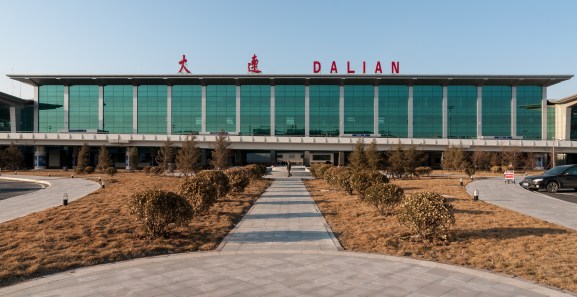
dalian_china_international-airport-01About 10 or so years ago I used to do a weekly show on pirate radio in Dublin. A lot of it consisted of me ranting about whatever was going through my head, interspersed with playing whatever bits of music took my fancy. It being a pirate station, it wasn’t like we conducted regular audience research, and apart from a closely-written postcard accusing me of being an ‘English cesspit’, the only feedback I remember receiving was comments coaxed out of friends, telling me that it was ‘quite funny’, ‘not quite as funny as that other time’ and asking me where I’d got that track from, the one about mescalin that went dum dum THUMP dumdum THUMP THUMP THUMP….A lot of the time it felt a lot like hard work without much more than its own reward.

By comparison blogging is a walk in the park! I mean, hopefully one of these days something I’ve posted here will be picked up by one of the web’s countless equivalents of ‘The World’s Stupidest Home Videos’ and eternal recognition and boundless wealth will be mine. But for the moment I’m really happy with the response that this site has generated, mostly thanks to sites such as the Peking Duck, Simon World and Asiapundit identifying with what I’ve written and encouraging others to drop by.

Over the last few months the site has served as a kind of out-tray for my reflections on what I see around me here in China and the things I read that help me make sense of it. Now I’m leaving China my intention is to continue with the site, but obviously as time goes by my theoretical in-tray will contain less China-related, er, files (?!?), and more things related to where I am in the future.

Nevertheless I’ve now got a huge list of books that I want to read which I haven’t been able to get hold of here, beginning with Jasper Becker’s The Chinese and Jung Chang’s Mao book and also including Mr. China, China Inc and lots more. Partly for this reason, China will occupy a large part of my thoughts for some time to come, as well as influencing how I think about other places and issues. So if you have been dropping by this site in search of China-related stuff, don’t stop doing so just yet. I will continue to post regular but more occasional China material on it.

In the longer term, well, I don’t know exactly what to expect. More things related to teaching, Spanish, Latin America, globalisation and whatever is going through my head.

And in the shorter term you may well find some species of semi-coherent stoned ramblings occupying this space!

My First Podcast!


In honour of my 30th post, and my upcoming 30-somethingth birthday, here is a 3-part recording of interviews with my 1st year university students about questions such as: Who was China’s greatest leader, Which Chinese people are most famous around the world, and Which events in recent Chinese history are best known in other countries.

Unfortunately due to general ineptitude on my part and poor equipment (see above) the sound quality is not fantastic. It sounds like I was shouting the questions, but I don’t think I was.

Part a: The students talk about Zhao Ziyang, once they’ve got over my mangling of his name; their admiration for Zhou Enlai and Chairman Mao; along with some terrible editing and spectacular coughing.

Part b: The Liberation of China; the death of Zhou Enlai; Deng Xiao Ping in Hawaii; and how to say pretty much anything in Japanese.

Part c: What happened if Deng Xiao Ping walked round your house; and how long it will be before China has a female leader.

***** UPDATE *****
After problems with the site they were being hosted on, I’ve moved them back to yousendit.com, which is only good for a limited amount of downloads, so if that runs out email me and I’ll repost them as soon as I can.

Just in case the original links are working (it seems to be a question of browser compatability), the original links (unlimited downloads) are here: Part a, Part b and Part c.

Apologies for all the messin’ around.

China’s New Left

Paramilitary policemen hold their fists in front of a flag of Communist Party of China as they attend an oath-taking rally to ensure the safety of the upcoming 18th National Congress of the Communist Party of China, at a military base in HangzhouRecently, during a class discussion about acceptable questions to ask a recent acquaintance, I asked my students if it was okay to ask a relative stranger if they were a member of the Communist Party. I expected them to answer, as I think most Westerners would do, that it was not okay, because discussing politics in this way might lead to unwanted disagreement. The consensus was, however, that it might be okay if you needed something done and the person concerned might be able to help you.

What, then, is the Chinese Communist Party? It is certainly Chinese, but there are very few people who would these days characterise its politics as related to the theories of Karl Marx or the efforts of the Bolsheviks to establish a classless society in anything other than a purely rhetorical sense.

But is it, in fact, a political party? Not in the sense that it competes on an ideological battleground with other political forces. The Communist Party is supposed to be an all-encompassing organisation that renders other points of view obsolete. In practice, of course, instead of encompassing other points of view it ferociously silences them. The right of political debate is restricted solely to proven Party members.

More recently some of those Party members have been more vociferous about the kind of society they want to create. Known as the New Left, they look to a more social democratic model, influenced as far as I can tell by European societies which in the post-war period established a social pact between the trade unions, the Government and the employers. This social pact enabled Germany and Scandinavian societies to develop sustainably and to provide an enviable social safety net for their citizens.

Could such a model be applied in China? Well, I think it does need to be remembered that the social pact which apparently functioned so well in those societies from which China’s New Left are so keen to draw inspiration, was itself the product of struggle; the development of social welfare systems and the inclusion of trade unions in social bargaining was not something freely granted from above, but was based on a recognition of their very real and proven power in relatively free societies. However, could the Chinese Communist Party begin to make serious adjustments and reforms which at least ameliorated the worst effects of rampant capitalism on people’s lives and provided some kind of social safety net for those most in need?

This is a hugely complex issue which I think will come to dominate international debate about China in the coming years. According to an optimistic point of view, as expressed by one of the discussion panel members on this BBC radio programme, what China wants and needs to do is to copy the example of the Labour Party in Britain, with the added difficulty of doing so while remaining in power.

To start with, I think that the example of the British Labour Party is hugely misleading. Firstly, because the project of reforming the Labour Party was carried out by the pro-market leadership in opposition to the wishes of a very large proportion of the more left-wing socially concious Party members. In the case of China, it is the left-wing party members who are the advocates of change against the wishes of the dominant right-wing pro-market Party leadership.

Another problem with the analogy is that, although superficially attractive, it ignores the recent history of the Communist Party. The Communist Party has been making a rightward-bound ideological journey more or less ever since the early nineteen-sixties, when in the aftermath of the Great Leap Forward a certain amount of market reforms were introduced as a precursor to the start of the abandonment of Communist ideology by Deng Xiao Ping in the late nineteen-seventies. This was of course following the outburst of out-and-out autocracy of Mao’s ‘Great Purge’. Over ten years ago the disavowal of the wish for an equitable society was formalised by Jiang Zemin, who in his bizarrely-named ‘Three Represents’ theory welcomed back into the party all those people – ‘rightists’, capitalists and so on – who had been persecuted throughout the nineteen-fifties and sixties.

However, the journey the CCP has been taking has nothing to do with an increasing sense of social justice; quite the opposite, in fact. What it says clearly is: “If you can’t beat them, join them”. Now when the CCP is so keen to welcome representatives of the Guomindang to China, it seems that there is very little to distinguish the two in political terms.

So can the Chinese Communist Party reform itself into a Social Democratic Party with Chinese Characteristics? As I say, it’s a huge area of debate and I think the arguments will run and run, but I just want to draw two brief analogies.

The first is the Catholic Church, which in the nineteen-sixties attempted through the Vatican II doctrine to get rid of some of it’s more backward thinking on social issues. I think that at the time a lot of Catholic clergy took heart from the changes that were made, and it led directly to what we call ‘Liberation Theology’, the promotion of social as well as heavenly justice.

So what happened? Now we have a church which seems to be more reactionary than ever, promoting the development of AIDS throughout the second and third world, arrogantly refusing to deal with the firestorm of paedophile allegations which threaten to drive more and more moderate Catholics away from the church, and whose congregations are now asked to worship an ex-Nazi Pope, as if to emphasise that there is nothing worldly about his power and that he cannot be challenged by mere mortals. So what happened?

I think the main reason has to do with power. The Catholic Church is driven first and foremost by the need to protect its own existence. Its authority derives from core beliefs which are reactionary and superstitious, and to suggest that they can be adapted to suit social realities is I think to call into question that authority. A Catholic church genuinely and actively committed to challenging poverty and injustice would be unable to sustain its own power and wealth.

As I said at the start, my students don’t seem to really regard the Chinese Communist Party as a political party as we might understand it, but as an organisation of power, privilege and prestige. Throughout the country party officials and to a certain extent ordinary Party members are allowed to run amok: charging peasants illegal taxes, running up restaurant bills for thousands of dollars, stuffing their pockets with public cash, paying thugs to beat villagers off their own land, building up huge unpayable debts with banks, everywhere doing favours for people they like and making life difficult or impossible for those who they don’t. And doing all this with relative impunity – who is going to stand in their way? Other Party members?

It is only a tiny amount of cases of corruption that we ever get to hear about. As far as I can see, corruption and abuse is the rule and not the exception. My second analogy, then, is the Mafia.

In the Godfather Part 2 Michael Corleone is young, idealistic and determined not to follow the example of his father. He is going to clean up his family businesses and make them respectable. So what happens? I don’t want to spoil it for anyone, but it is the Mafia we are talking about here after all. How can you reform an organisation that is based on criminal corruption, on the systematic hoarding and abuse of power? Maybe we can conclude that what Michael wants doesn’t really change, but as a leading member of the organisation he has a crucial job to do: Protect the Family.

I don’t think that China’s New Left are in any way insincere about their project of bringing social justice to China. But I think they’re misguided and possibly naive about the organisation they are members of. Unfortunately I think their efforts only go to provide window dressing for the Party leadership – it enables them to say ‘Look! We have open debate inside the Party! No need for dissidents! Don’t you see how wrong Wei Jingsheng and all those other foreign agents were? China is marching straight down the road to democracy all by itself and we don’t need any advice or criticism from outside!’.

Teaching English Outside China

Seeing as I will soon be returning to the world of proper TEFL teaching (No more than 16 students to a class! Chairs you can move around! Staff rooms! Students who bring notebooks to class!) here are some really useful English teaching links I’ve come across recently:

www.tesall.com is great for jobs, lessons plans and also for links to the best ESL teacher’s blogs all over the world – they were recently kind enough to feature a prominent link to my article about Tefl as a Missionary Language.

www.doyoutefl.com will soon be a great resource if you’ve left teaching, or if you’ve moved on to another school or country. It’s basically a TEFL version of that site I’ve forgotten the name of where you look up and get in touch with old schoolfriends, and is just starting up, so obviously the more people who sign up soon the better. The people who run the site are extremely helpful at offering TEFL-related advice too.

www.developingteachers.com is a site more for serious teachers, particularly for people intending to Do the DELTA, like what I am. They have very detailed lesson plans to look at and use, and lots, and lots, and lots, of really useful teaching tips.

The Da Shan Dynasty Part 6: The Two Zs


It’s a truism about certain people that they would have been ‘the greatest leader we never had’. I can’t think of any examples off the top of my head, but then I’d probably disagree with most of them anyway. It’s obvious to most people who don’t think that evolution is ‘the stupidest thing I ever heard’ that Al Gore would have been a preferable President to George W. Bush, but that’s partly because more people voted for him. In British terms, it’s clear to me that instead of that succession of toddlers, nobodies and ghouls who have fronted the Conservative Party in the last few years, Michael Portillo would make a much more charismatic and convincing leader, but for obvious reasons I’m not about to write to the Daily Mail and tell them so – besides which, something tells me that I wouldn’t get much of a hearing. I just hope that his sexual orientation causes him just as much pleasure and relief as it causes us.

It’s unlikely that if Michael Portillo had ever met Zhao Ziyang that they would have found they had very much in common. As far as I know, the reason for Zhao no longer being the Chinese leader by June 1989 had nothing to do with being gay, although of course he might have been, in which case spending the last fifteen or so years of his life under house arrest can’t have done wonders for his sex life. I don’t know what Zhao’s English was like, and I’d be very surprised if Michael Portillo could communicate in Chinese; Zhao was also a dedicated leading member of the Communist Party. Why, then, did he spend the last fifteen years of his life under lock and key? According to Wikipedia:

Zhao was a solid believer in the party, but he defined socialism much differently than party conservatives. Zhao called political reform “the biggest test facing socialism.” He believed economic progress was inextricably linked to democratisation. As early as 1986, Zhao became the first high-ranking Chinese leader to call for change, by offering a choice of election candidates from the village level all the way up to membership in the Central Committee.

He was known in the west for two things, one of which was when in May 1989 he went down to Tiananmen Square to talk to the students, listen to their demands and try to persuade them to leave peacefully. During the subsequent crackdown he was at first sidetracked and then purged, disappearing suddenly and completely from public life. Think of it as kidnapping, if you like. The other major event was in February this year, when his death sparked panic in the Chinese authorities. They tried to control every aspect of his funeral and of every word of the coverage of his death in the media, and only just a few weeks ago arrested a Strait Times journalist who was trying to get his hands on a copy of his memoirs.

What is it about his memoirs and his memory that the Government is so nervous about? A recent article shed some light on the issue:

Crackdown on China’s little-read book
3 June 2005

A SECRET manuscript Beijing is desperately trying to stop from being published outlines purged leader Zhao Ziyang’s plea for China to abandon one-party rule and follow the path of democracy.

It also airs Mr Zhao’s opinion the government blundered in its crackdown on the 1989 democracy protests that led to hundreds, if not thousands, of citizens being killed, the author says.

The sensitive manuscript is now at the centre of the arrest of Hong Kong-based Singapore Straits Times reporter Ching Cheong. He was detained while trying to obtain a copy of the manuscript that has yet to make its way out of mainland China. China on Tuesday said Mr Ching was arrested for spying and had confessed.

Its authorities have pressured author Zong Fengming, an old friend of Mr Zhao’s, not to publish the book.
The 85-year-old, who compiled the manuscript from conversations he had with Mr Zhao while he was under house arrest, said what makes it so threatening to Beijing is the late Mr Zhao’s belief China must have democracy in order to prosper, and economic reforms are simply not enough.

“He said China’s development must be on the path of democracy and rule of law. If not, China will be a corrupt society,” Mr Zong said.

Reporting of Zhao’s death was limited to a terse few paragraphs in the state-controlled media as part of an official campaign to erase his memory.

Mr Zong believes the government fears if a book about Mr Zhao’s views is published overseas and copies find their way to China, it could have a detrimental effect on the communist regime, making Mr Zhao a hero even in death.

Mr Zhao’s views run contrary to the path China’s leaders are taking. The Chinese leadership is intent on maintaining one-party rule and quashing dissent or freedom of expression.

It seems to me that if, following the death of Hu Yaobang, there was a candidate for China’s Gorbachev it was Zhao. Maybe if he had stepped into that hypothetical power vacuum in mid-1989, there would have been no crackdown, no unleashing of all the forces of political repression, no increase in political indoctrination for the young, no attempt to rehabilitate that monster Chairman Mao, and maybe the Chinese would have been allowed to freely use the internet to develop deeper and more open relationships with the rest of the world. Maybe China would have seen the flowering of a free press, and maybe there would have been some form of development of alternative political parties and perhaps even multi-party elections. Of course it is also possible that a China suddenly impatient for change would have pushed him aside in favour of an outsider, someone more radical and not connected with the Party machine.

Obviously there is a possibility that the hardliners would have fought back and tried to regain power. It happened in 1991 with Gorbachev. But maybe, just like in 1991, the world would have seen this old guard for what they really were – old men whose time had passed, isolated and powerless, railing against a world that had left them behind.

Sunday in the park with Richard


At the height of the recent anti-Japanese protests, a lot of my students told me that they were going to Lushun for the weekend. Their explanations were a bit confusing, but I gathered that it had something to do with Japan. Lushun is a sensitive area, off-limits to foreigners. In addition to a huge naval base, it apparently features museum commemorating Japanese war atrocities – the whole peninsula was occupied by them in the 1930s and ’40s. Naturally I assumed that they were going for some sort of protest.

I was completely wrong. They were actually going there to see the Cherry Blossom Festival – just like in Japan, they told me, when this flower blooms huge numbers of people go for a day trip just to take a look.

When China blooms it can look really beautiful. Out of the window while I write, I can see a large apple blossom tree blocking out the dull view that kept us depressed those long winter months. Let a thousand flowers bloom!

Another thing I’ll really miss here is the parks in the summer. Without ever really seeming crowded, they teem with people, singing screechy opera numbers and playing those instruments that I never got round to learning the names of, playing badminton and that ubiquitous shuttlecock-kicking game that all Chinese people can play a thousand times better than me, or gathering under the trees for a game of Mah Jong, Chinese chess or cards. It makes for an enchanting and very friendly atmosphere – people seem so content that I often feel I’ve just blended into the background, sitting on a bench soaking it all in.

Just yesterday I was sitting watching someone’s hilarious attempts to dislodge a mis-hit shuttlecock by throwing the same rock up into a tree again and again, when a young guy sat down beside me with a book. We had a fascinating conversation for about 20 minutes about the different books we were reading. At least, that’s what I was talking about – it’s quite possible that he was telling me that he’d just failed his driving test for the third time and was thinking of buying a canary.

You sometimes see odd sights in the park. In Beihai Park in Beijing a few weeks ago I was startled to see what looked like an entire army unit with their riot shields and truncheons drawn, all marching in formation behind two soldiers carrying between them a flat-screen TV!

The simple friendliness of some of the people who’ve been part of my everyday life these last ten months is a memory that I’ll cherish. The woman who sells me pineapples and bananas, and who used to sell me strawberries until they were suddenly replaced by cherries, exhibits remarkable patience with my Chinese, and astonishing dexterity at cutting up pineapples. The old man in my local shop is also relentlessly enthusiastic about my Mandarin, even though all I ever really say to him is ‘me want two beers/four eggs/one big bottle water/one small cold bottle water’, thank you and ‘Bye Bye!’.

And this cafe I’m sitting in right now is quite a find – friendly, efficient and cool. They also finally helped me to learn the word for cheese. Just a shame I only discovered the place yesterday.

好, that’s it. I’m off to the beach.

The Da Shan Dynasty Part 5: The Special Guest


Although I am by nature a lazy thinker, I do try and bear in mind when thinking about things like the events of 1989 that oversimplistic analysis will lead me straight to the wrong conclusions. Furthermore, comparisons, says the old adage, are odious, especially, as the Chinese Government is always so keen to point out, when they concern China and the West. I am also no expert on recent Chinese history. There are almost certainly people reading this who know a thousand times more about these things than I do, and I would be grateful if they would step in and correct me if I get too carried away.

China and Eastern Europe are a long way away from one another, and the prevailing circumstances in 1989 were different in all sorts of ways. This is why the Chinese Communist Party survived not just the turn of the decade but also into the new millennium, while the Communist Parties of Eastern Europe simply disappeared. Here I want to concentrate on those different circumstances:

1. The economy. Although China was still in the process of recovering from complete devastation, the economy was growing, and on the whole people were enjoying an improving standard of living. There were problems with inflation, huge disparities of wealth and low wages throughout the country, but the country was not on its last legs like the countries of the soon-to-be-former Eastern Bloc.

2. The political situation. I think generally people were happy that their leaders were heading in the right direction, albeit perhaps too slowly. People were enjoying more freedom than they had experienced within living memory, given that most of the adult population had experienced at least part of the Cultural Revolution.

As far as I can see, the demonstrations in 1987 and 1989 expressed a growing political confidence which derived from ten years of liberalisation. People were making demands of the system – greater freedom of speech, an end to corruption, better and more responsible government – but I don’t think they wanted to see an end to Party rule. The demonstrations were quite different from the ones we don’t see reported in the state media today, which tend to be localised reactions to individual cases of corruption and injustice. This is one of the things that I’m completely happy to admit being mistaken about.

3. Lack of political leadership. Jung Chang refers in her new book to the Cultural Revolution as the ‘Great Purge’. Successive generations of potential dissidents had been massacred, driven to suicide, locked away or forced to leave the country. The person who was perhaps China’s best hope of a Václav Havel, Wei Jingsheng, was part of the Beijing Wall group of dissidents and was locked up in 1979 for 14 years. There was, therefore, no previous generation of rebels from whose mistakes the protestors could learn.

Students groups obviously played a role in the building of the demonstrations, but they certainly didn’t constitute a ‘government-in-waiting’.

The leader who most resembled a Chinese Gorbachev, Hu Yaobang, had been sacked by Deng Xiaoping in 1987 for being too liberal, and it was his death two years later that was the initial pretext for the build-up of protestors around the square in April 1989. They were of course other reformists high up in the party, but it seems that around this time they did not have the upper hand.

4. Lack of foreign media influence. The state media was very tightly controlled, and the only alternative, the broadcasts of the BBC and other media news organisations, could only be listened to by the tiny proportion of the population who could understand English.

These were I think some of the most important differences between the situation in China and in the countries of Eastern Europe in 1989. However, this set of circumstances did not have to inevitably lead to the events that followed – the Massacre and the unleashing of political repression. It might be interesting, just now we’re here, to speculate about how, given the circumstances above, things might have turned out differently.

Let’s just say that, instead of giving the order to physically clear the square at all costs, the leadership had dithered. Maybe nobody wanted to be responsible for taking such a momentous decision. Or maybe, having received the order to attack, the army chiefs had not felt comfortable with the situation, and refused to do so. Or even if, and this is probably stretching it quite a bit, the soldiers of the 27th Army had refused to open fire. The leadership would have faced a crisis, and maybe, sensing that the Government didn’t know what to do, the protests would have kept on growing throughout the country. The eyes of the world would have been focussed on Beijing, through the lenses of the new global 24-hour news gathering organisations. Protests were growing throughout Eastern Europe too; could the line of dominos reach China? Maybe heads would have rolled in Beijing, people resigning and being forced to resign, nobody sure what to do in this unique situation, nobody wanting to be remembered as the leader who stood in Beijing 40 years on and told the growing mass of Chinese people to sit down again. Maybe the drama would have unfolded with a gradual hollowing-out of the centre of power as the leadership tossed the poisoned chalice of leadership back and forth.

In many accounts written by people who defend the use of force to clear the square, one factor is all important. With the approach of that 40 year anniversary, a special guest was expected, and the Chinese could not be seen to lose face in such a dramatic fashion. Mikhail Gorbachev had recently stood with the East German leadership at their 40th anniversary parade. He had told them what they least wanted to hear, that ‘die Wende’ had passed:

Mikhail Gorbachev stood next to Honecker, but he looked uncomfortable among the much older Germans. He had come to tell them it was over, to convince the leadership to adopt his reformist policies. He had spoken openly about the danger of not ‘responding to reality’. He pointedly told the Politbüro that ‘life punishes those who come too late’. Honecker and Mielke ignored him, just as they ignored the crowds when they chanted, ‘Gorby, help us! Gorby, help us!’

If Gorbachev had arrived in Beijing in the midst of this crisis armed with the same advice, how would he have been received? Perhaps the hardliners like Li Peng would have chosen to ignore him, in the same way that Honecker and Mielke chose to take no notice. But maybe at this stage he wouldn’t have been dealing with the hardliners. Would there have been anyone among the leadership of the Communist Party who might have been prepared to listen, who might have seen a potential way out of the deadlock? Another Chinese Gorbachev, if you like?

On Spitting and Staring


The great Irish satirical rebel Ding Dong Denny O’Reilly had many songs in his repetoire about the struggle to free his beloved Ireland from the hated British. One of them was called ‘Spit on the Brits’, and during his raucous concerts he would encourage the audience to participate by coughing their guts up before joining in with the chorus, which went as follows:

We’d spit on the Brits
Spit on the Brits
And we’d shower them in a lovely sea of green,
We’d spit on the Brits,
Spit on the Brits
And then they’d blow us all to smithereens

In the West spitting is usually interpreted as an act of aggression; if you’re standing at the bus stop and someone loudly spits on the floor, it’s natural to move away. Not because you think that they might spit on you, but because someone who displays such an obvious lack of respect for social convention and basic hygiene might be either dangerous or diseased or both.

The Chinese habit of regularly clearing their lungs in public is therefore an affront to Western sensibilities. Ironically, the Chinese, as Paul Theroux points out, are not among the world’s great spitters, because for all the fanfare that precedes the act of expectoration, the end result tends to just dribble out of their mouths and on to the pavement. It’s quite distinct from the kind of pinpoint projectile spitting familiar from John Wayne movies.

Another classic complaint amongst Western visitors to China is the staring. Often, for a Chinese peasant, seeing a foreigner is akin to us finding Chief Running Bear in full costume directing traffic. However, for us staring, however harmless the intention of the starer, is also easy to interpret as a hostile act. It seems to say: I’m here, you’re there, and I’ve just decided I don’t like you.

It has been said that the Chinese would benefit enormously from the introduction of Spitting and Staring as events in the 2008 Olympics. I don’t think that’s either accurate or fair. Not accurate, partly for the reasons mentioned above, and not fair because all nations have bad habits. The Americans, for example, would do very well if there was an event for invading other countries and forcing them to release a statement announcing that they are now democracies, while the gleeful minions of the World Bank and the IMF run around cackling and grabbing anything that isn’t nailed down. The English would sweep the board in any event which rewarded moving of their own volition to other countries and then spending all their time writing very very long sentences complaining about everything around them, while never forgetting to include the odd self-deprecating remark to mitigate their bigotry and anticipate criticism. Ho hum.

Where the Chinese could put their habits to good use is in the intimidation of opponents in other sports. It would be off-putting to a swimmer if the person in the next lane coughed up a big greenie straight into the pool right before they all dived in. And if your opponent in tennis spent the entire time between sets with their chair turned round so they could stare straight at you if might well put you off your serve.

One of the other potential uses of staring, spitting and other generally anti-social behaviour is in the field of International Relations. A logical and non-violent way of resolving the territorial disputes of the world is in the same way that cats do – if Saddam Hussein had had the foresight to piss all over Kuwait in 1990, the Americans would have been understandably less keen to go in and remove him. Similarly, as Ding Dong Denny O’Reilly suggested, if when Mao Zedong had sent all those young Chinese soldiers to North Korea in 1950 armed only with the simple order to stand on the border and spit, maybe one million lives could have been saved.

It’s easy to stand on the border of one country and spit into another. However, for long-range warfare nuclear weapons, although immoral, are probably more effective. Next week I’m off to England, hopefully out of range of the Chinese spitting brigades. It will be interesting to see, though, if in 2008 the Olympic pools will be fitted with those spit buckets they have at each end of the lanes here. Whether or not they do, I have a feeling that the Chinese will do very well indeed in all the swimming events.