May clinches victory in snap General Election

Our reporters, London, Friday 9 June 2017 22:42 EMT

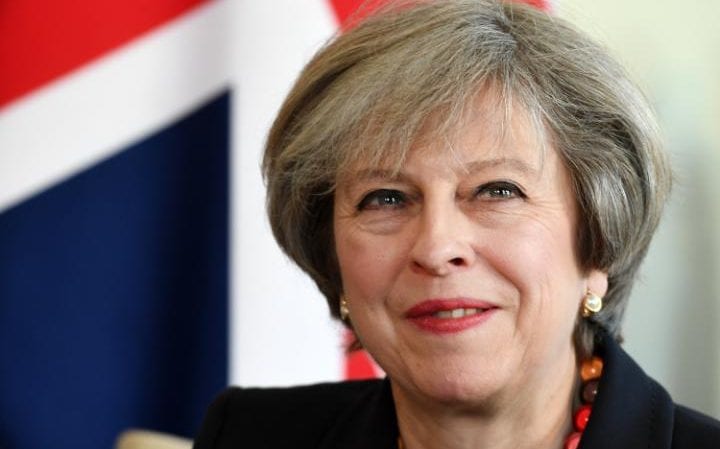
An emboldened Theresa May followed her win in the snap General Election that ratified the supremacy of her rule by taking aim at political opponents at home and abroad.

At her victory speech late on Friday, supporters chanted that she should bring back the death penalty — a move that would finish off any possibility of the UK rejoining the European Union — and May warned opponents not to bother challenging the legitimacy of her win. She told them to prepare for the biggest overhaul of the UK’s system of governance ever, one that will result in her having even fewer checks on her already considerable power.

The result of the referendum sets the stage for a transformation of the upper echelons of the state and changing the country from a parliamentary democracy to a presidential republic, arguably the most important development in the country’s history.

May said she would immediately discuss reinstating the death penalty in talks with the prime minister and the nationalist opposition leader, Nigel Farage. The president said she would take the issue to referendum if necessary. She also announced plans to seal off the Channel Tunnel ‘with no prior warning’, abolish the House of Lords, reduce the university system to just Oxford, Cambridge and possibly Bristol, reverse the Northern Ireland peace process, reintroduce conscription and the workhouse, hunt down dissidents, ‘any remaining’ foreigners and ‘non-U’ journalists, expel from London anyone earning less than £400,000 a year, ban curry and reinstate both blue passports and the institution of serfdom ‘before the end of the next parliamentary term’.

“Today, Great Britain has made a historic decision,” she said. “We will change gears and continue along our course more quickly.” The pound surged as much as 2.5 percent against the dollar in early trading on Monday in London before gains moderated.

The result will set the stage for a further split between Britain and its European allies, who believe London is sliding towards autocracy. The European commission said on Friday afternoon that the UK should seek the “broadest possible national consensus” in its constitutional amendments, given the slim margin of victory. The official British Government response came shortly afterwards. “Bog off, beastly wogs”, it read.

Turkish sultan Rečep Tayyip Erdoğan was the first world leader to contact Mrs May to offer his congraulations on her victory, while French President Marine Le Pen took a break from directing jew-gathering operations in the east of the country to state that she found the outcome ‘vraiment formidable’. Meanwhile, the UK’s Labour Party leader Jeremy Corbyn welcomed the result and said that he would be extending his holiday in Venezuela ‘for the foreseeable future’. As for US President Donald Trump…I’m sorry. It appears that satire has just reached its limits.

(Additional reporting courtesy of The Guardian and Bloomberg.)

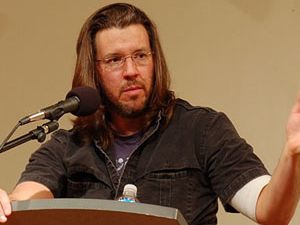
Listening worksheet: David Foster Wallace’s commencement address (B2+)

Students can often surprise you with what they’ve read in English. I once taught a 14-year-old FCE candidate who’d enjoyed ‘Trainspotting’ by Irvine Welsh in the original ‘Embra’ dialect, and over the years I’ve met several dedicated fans of Nicholas Sparks and Paulo Coelho, one Margaret Atwood reader (yay!) and a particularly sulky and precocious Russian student who on the first day of the course simultaneously impressed and horrified me by proudly claiming to have read everything by Ayn ‘Medicare’ Rand. Choosing a particular long-form author to be your language teacher is, as Steven Krashen points out in this excellent essay (one which is also very good to use in class), a tremendous way to take your command of a language way beyond anything a coursebook can teach you.

David Foster Wallace is more of a challenge. Although I wouldn’t suggest ‘Infinite Jest’ to anyone with a CEF level of less than C9.9, his essays and short stories are so entertaining that the inherent language difficulties shouldn’t be insurmountable. If you happen to be teaching students with a very strong interest in issues of language usage his long essays ‘Tense Present: Democracy, English and the Wars Over Usage‘ and ‘Authority and American Usage‘ are worth pointing out to them.

But even for students who would never tackle his writing, this speech (audio here, full transcript here) is typically inspiring and engaging, particularly if you’re teaching university-age students. The format is one they should be familiar with – I start by showing them a google image search for ‘commencement address’, which brings up photos of Oprah Winfry, Barack Obama and Steve Jobs. His speech, which has been very widely shared and published and is known as ‘This is Water’, lasts 25 minutes, so it’s a very good idea to break it down into four sections – stop the recording after each four answers, allow the students to consult a partner and then share ideas. To extend the exercise/for homework you can get them to write, rehearse and perform their own five-minute commencement speeches, passing on the multifarious lessons that life has taught them, or, in the case of any Ayn Rand fans, telling the audience they’re all worthless subhuman filth :-P.

Listening worksheet

1. What is the point of the fish story?

2. What is the point of a Liberal Arts education supposed to be?

3. What, for DFW, is a more important thing to learn?

4. What does the eskimo story have to say about belief, according to DFW?

5. What do we need to bear in mind about a lot of the stuff we believe?

6. What is our ‘default setting’?

7. What is the most dangerous thing about a university education?

8. What does ‘learning how to think’ mean?

9. What is the point that DFW makes about suicides?

10. What is it that no one talks about in commencement speeches?

11. What is ‘the absolute voice of death’?

12. What is the point of the supermarket anecdote?

13. What is ‘the only thing that’s capital-T true’?

14. What is a great reason for choosing some sort of spiritual higher power to believe in?

15. Why will the world not discourage you from operating on your default settings?

16. What is ‘the really important kind of freedom’? 

14 things our beautiful 11-week-old baby daughter has no concept of


My wife and I have recently found ourselves in the position (unique for human beings) of parenting a child. Anyone who was somehow to have (had) such an experience for themselves (as if!) would soon understand that one of its most mystifying and mind-expanding aspects is wondering just what on earth is going on in the head of one’s child during her interactions with us and the world, given her total lack of basic mental concepts. Just in case there are, unbeknownst to us, ‘other’ ‘parents’ out there or anyone wondering just what this unprecedented and unrepeatable experience must be like, I have taken it upon myself to share some thoughts.

1. Self-image
At the moment our daughter is just a mishmash of uncontrollable sensations and urges. She has no sense of herself as a whole integral being and hence no mental picture of how absurd she looks when she’s trying to stuff her fist into her mouth because she hasn’t (despite my very best efforts to help her) worked out what her thumb’s for yet. For all she’s concerned she might look like a flamingo, or a duck-billed platypus, or Alf.

2. Us
We think we ‘know’ her. We believe we have a relationship. We clearly do, but it’s obviously not the one we imagine. To her we are both gods and monsters, except she has no concept of either. She still has no notion of the separation between her body and other objects. It’s all just one infinite floaty wobbly porridge of varying shades, sounds, textures, tastes and temperatures with currents flowing in various directions at varying speeds. Some lumps of whatever-it-is provide cuddles and/or milky-wilky at irregular intervals or can be made to do so if sucked on or shouted at in the right way. The two blobs of porridge that float around her the most seem to be particularly obliging. One of them clearly is somehow connected to the origin of milky-wilky while the other is a good source for cuddles somehow related to particular sleepy-deepy-inducing combinations of rhythms and melodies.

3. Words
We’ve invented a vocabulary for her to use: milky-wilky, sleepy-deepy, tiredy-wiredy… Some of it must be going in; if she can’t yet recognise the gist of the question ‘have you done a big poo?’ it’s not for want of input. No one wants to talk about the intellectual acuity of a newborn child. The conclusions drawn from the available evidence are too depressing. Her mental range is not that not much more than that of an reasonably-educated adult banana. Nonetheless she is fast developing her own language, one that we don’t understand. Let’s hope it doesn’t turn out to be Business German. In the meantime all my attempts to get her to precede every utterance with ‘As a baby…’ have so far been unsuccessful.

4. Inside/outside
We take her for walks and rides to unfamiliar places and she doesn’t have any idea if or when she’ll ever be back to the sights, smells and sounds she most recognises. Some sense of home/not home must be developing at some level and must be connected to warm place/place where they might try and force you to wear a hat. It seems to involve a huge and touching amount of trust given her absolute vulnerability to our caprices and whims.

5. Colours
Her colourscheme at present is apparently monochrome with a bit of red creeping in. All toys and clothes for newborns might as well be in shades of grey. We took her to the beach and tried to get her to marvel in the combination of gold and blue but for all that she’s concerned it might as well be a badly tuned-in game of snooker from the early days of TV.

6. Animals
Pretty much all her clothes have pictures of animals on. She’s constantly surrounded by and adorned in images of owls, pigs, rabbits, giraffes and elephants. Trying to explain this to her is very moot indeed (see 7.).

7. Images
Even if she could recognise a giraffe the notion of visual representations is quite some way off. She’s a useful source of inspiration for philosophical reflections on what the relationship between a 2d painting of some flowers and some actual flowers is. Even if she knew what a cow was, pointing at a tshirt and claiming it went ‘moo’ would only serve to bamboozle the poor little thing. I’m planning to wait until she’s at least 18 months old to read her ‘Il processo semiotico e la classificazione dei segni’ by Umberto Eco, after which I think such things will begin to fall into place.

8. Donald Trump
Lucky her.

9. Water (the drink)
This is a very odd one. She often looks like a thirsty human being, and when she’s in the baby bath she sometimes tips her head with some curiosity towards its contents, but she never actually cries out of thirst. I think.

10. Shame
It’s hard to believe that this is not why she’s crying. So much of what she does is (from our perspective) so obviously embarrassing. If I soiled myself as much as she does…In suppose this is where a certain cultural relativism should be actively encouraged.

11. Irony
As her parents it’s natural for us to impute a knowingness to her expressions and gestures. It’s very hard to remember that when she raises her eyebrow a la Neil Tennant or responds to my attempts to contextualise specific moments in the career of Prefab Sprout by yawning with apparent archness she’s doing so without irony. In much the same way it seems odd that she’s seemingly unaware that our immediate mimicry of her expressions, gestures and noises is a form of maximally affectionate piss-taking.

12. Night/Day
To be fair her understanding of this distinction is now approaching advanced level. Maybe she couldn’t do an MA in the subject but she could probably get through a degree in one of the less demanding universities. She certainly has a good enough IELTS level to get onto a presessional course at Middlesex.

13. Silence and Stillness
Despite what adult yoga enthusiasts like to pretend, there is really no such thing. We are farting, fidgeting creatures from the moment we are born. Her hobby is lying on the bed snorting and burping while waving her arms and legs about like a beached seaturtle on an all-inclusive package holiday. Her range of impromptu grunts, squeaks and yelps mean that we often spend more than half the night lying awake listening to check that she’s actually asleep, because if she isn’t it means we won’t sleep. Irony.

14. Toys.
Her toys are really ours in this role-play. Putting on a silly voice to play at being a representation of an animal she’s never seen and which doesn’t make human noises in any case would be a rich source of confusion if she had a grasp of any of the concepts involved. Thus we become children in the act of raising a child, which to my delight and for the first time in my life I recognise as a living example of the dialectic: as we change her, she changes us. Who would have thought that a slightly-less-than-three-month-old baby could teach you a concept as difficult (and also as simple) as that?!

Seven weeks in Bangkok

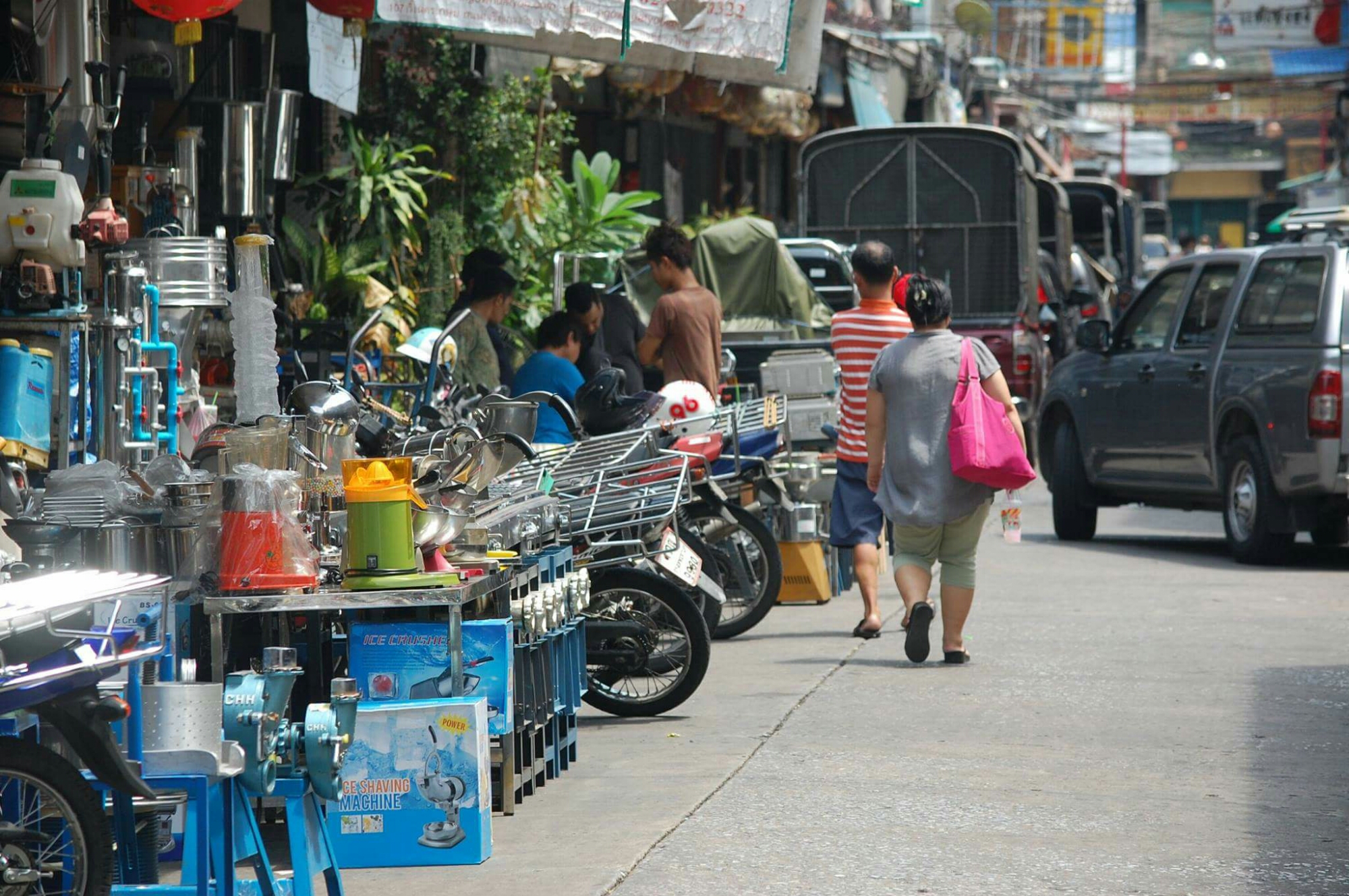
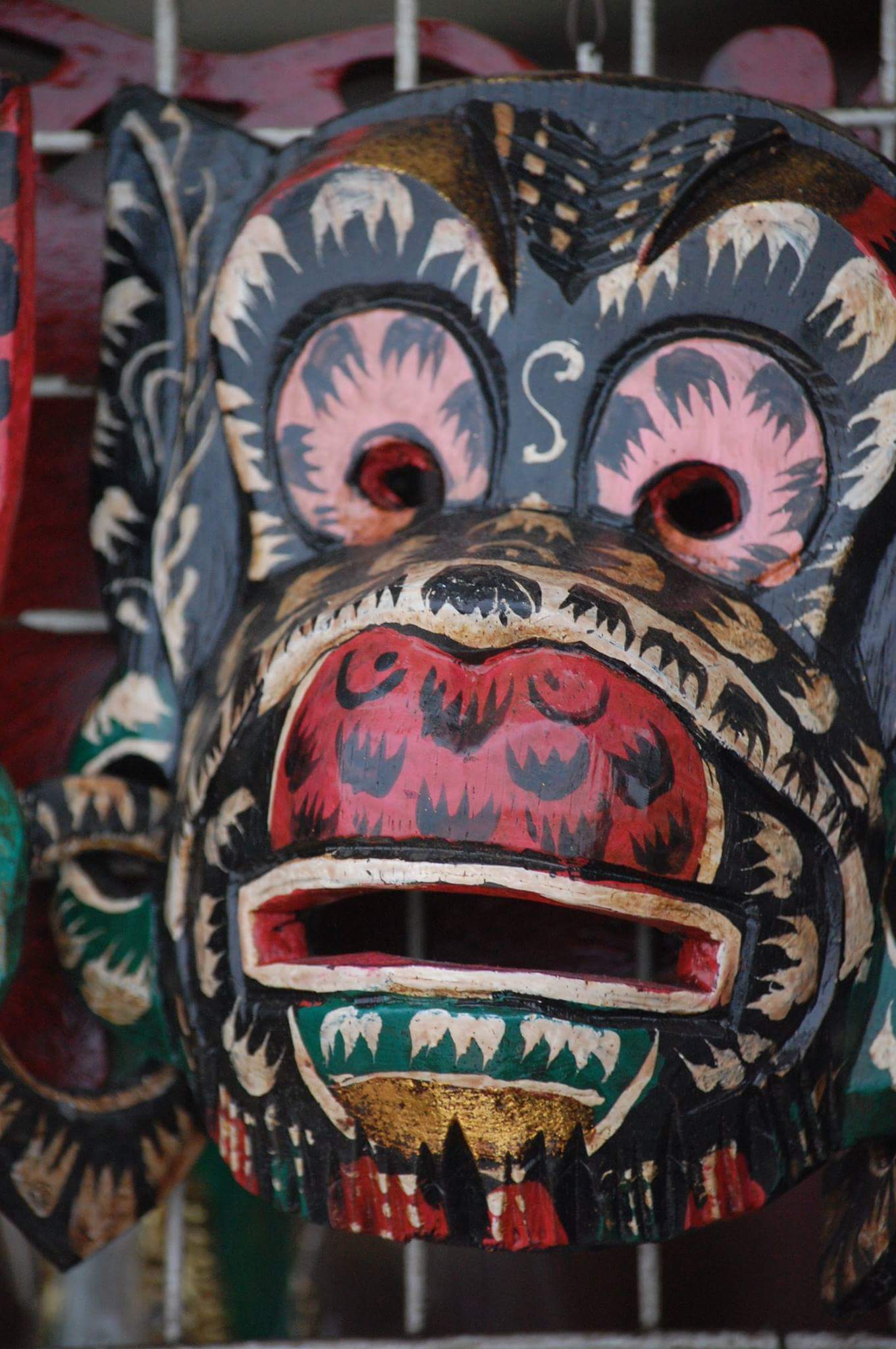
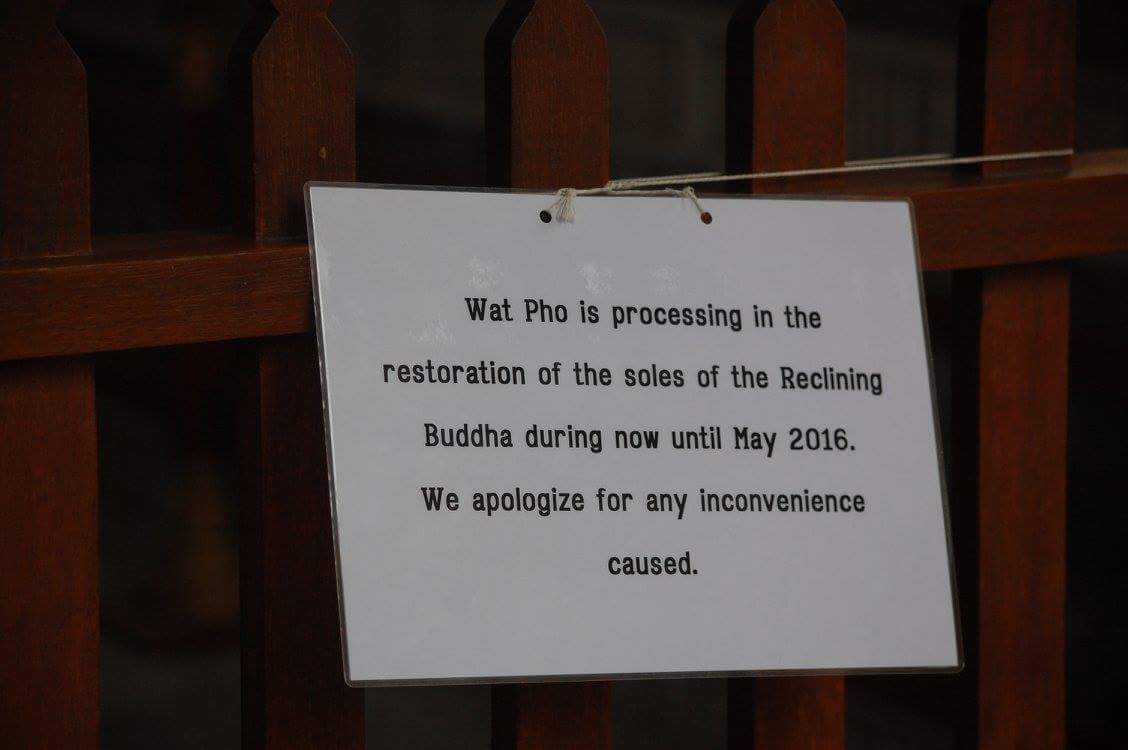
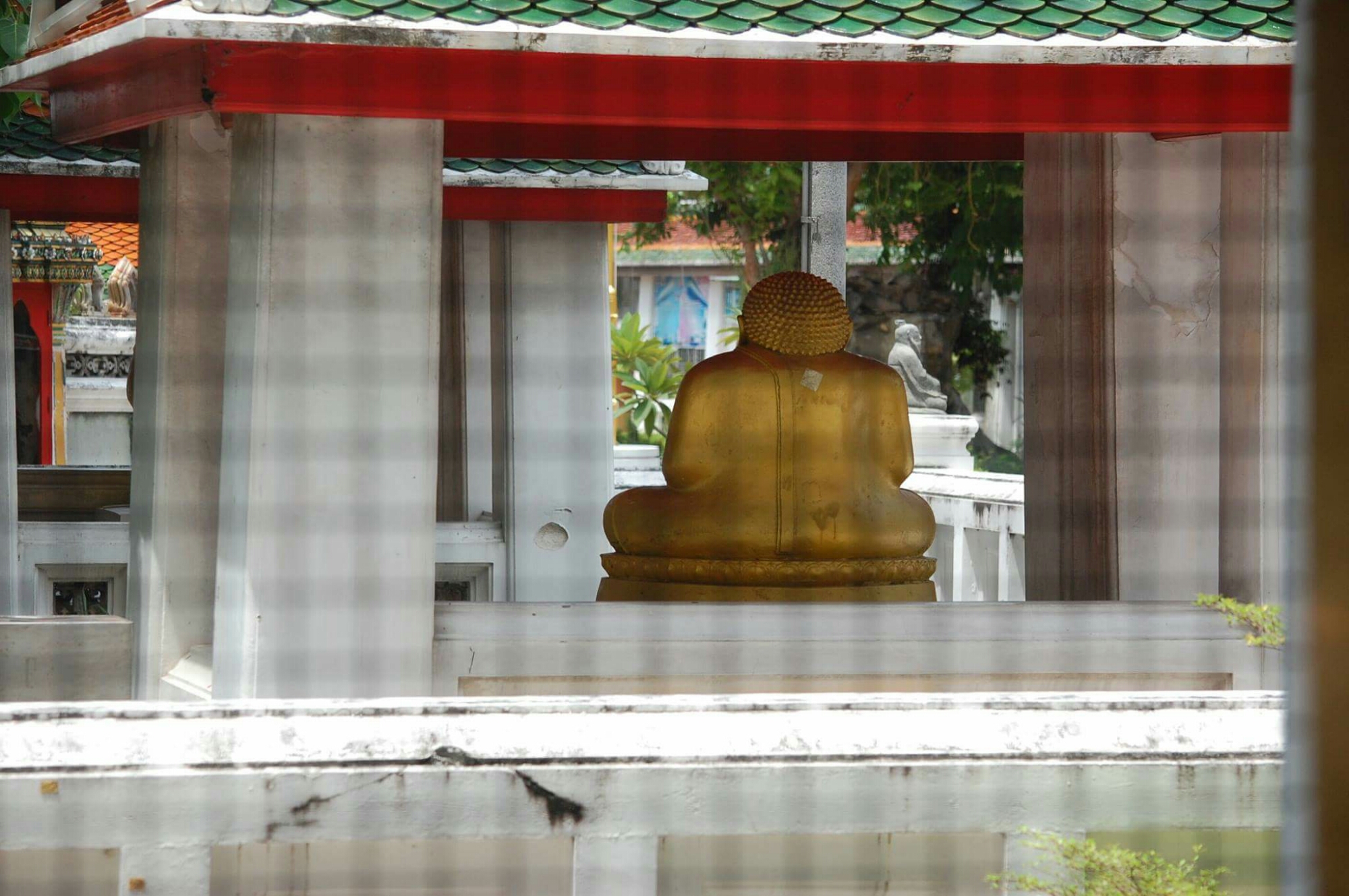
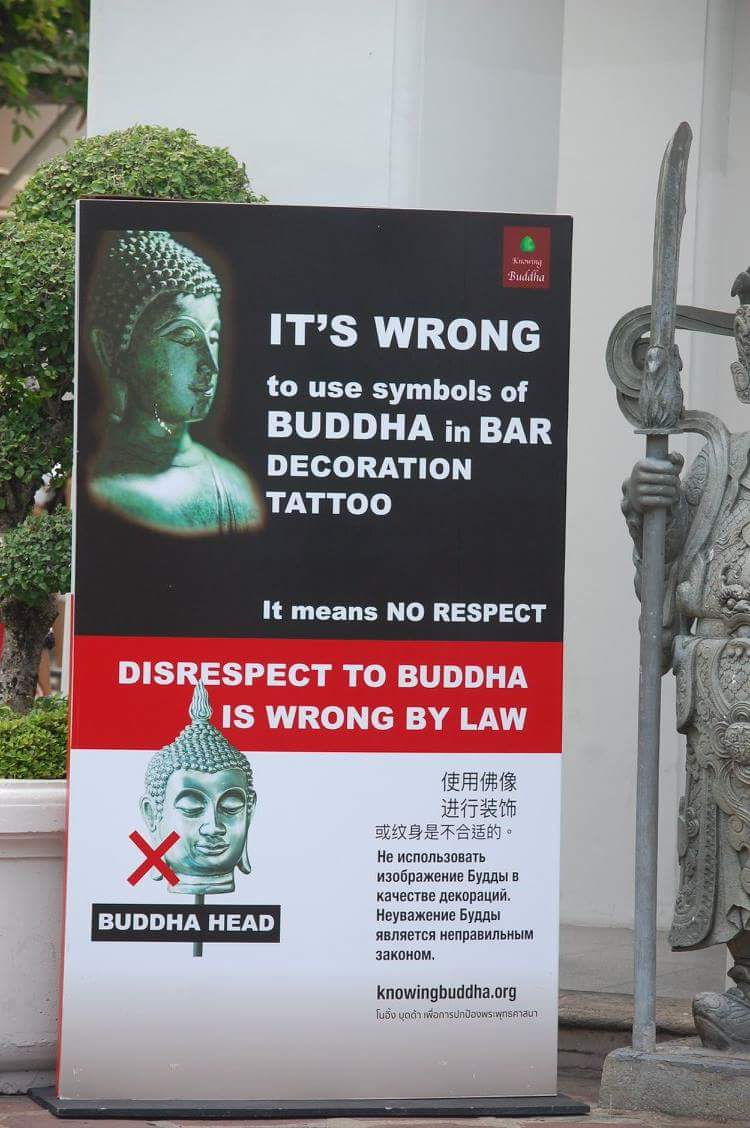
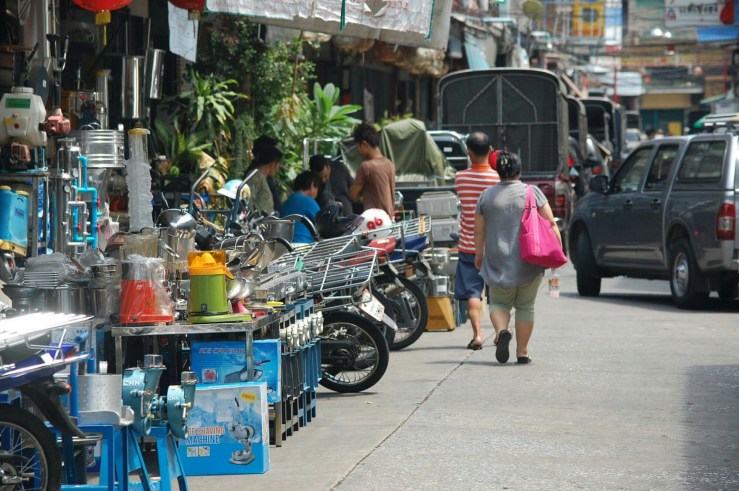
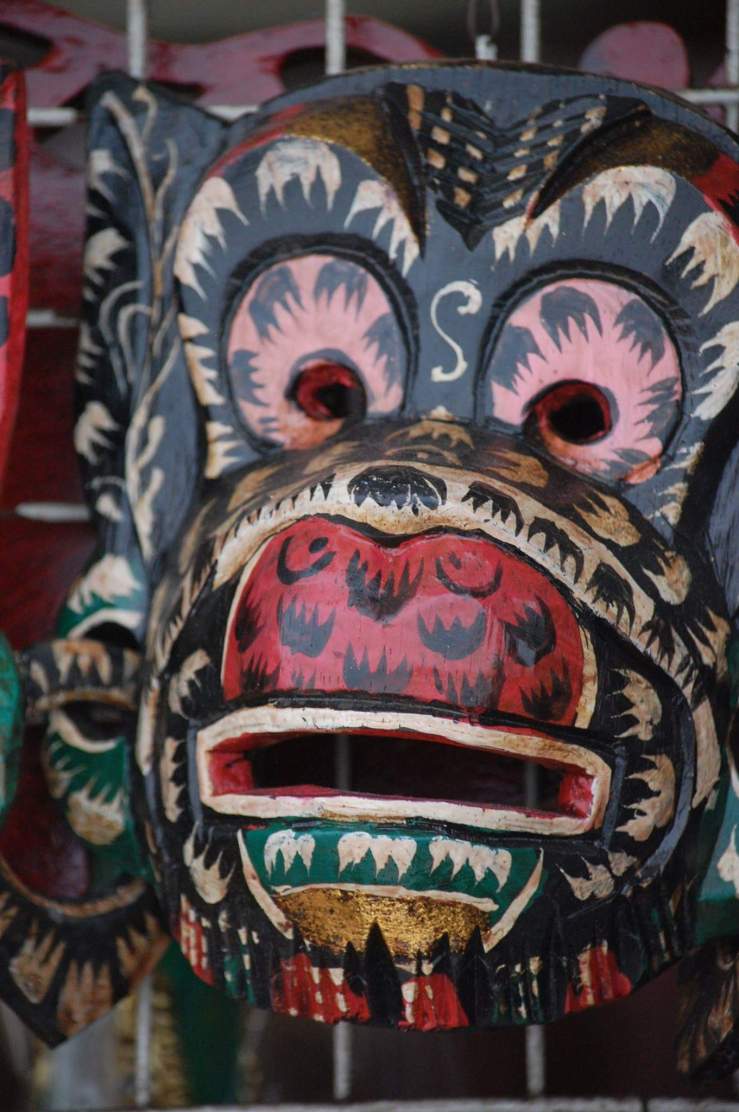
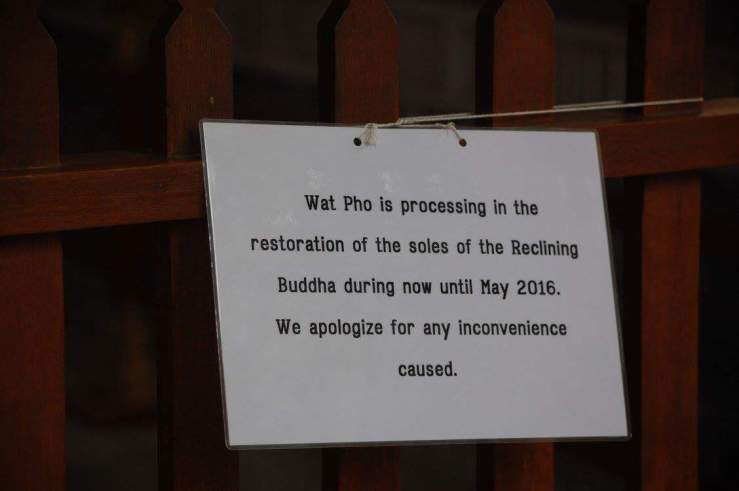
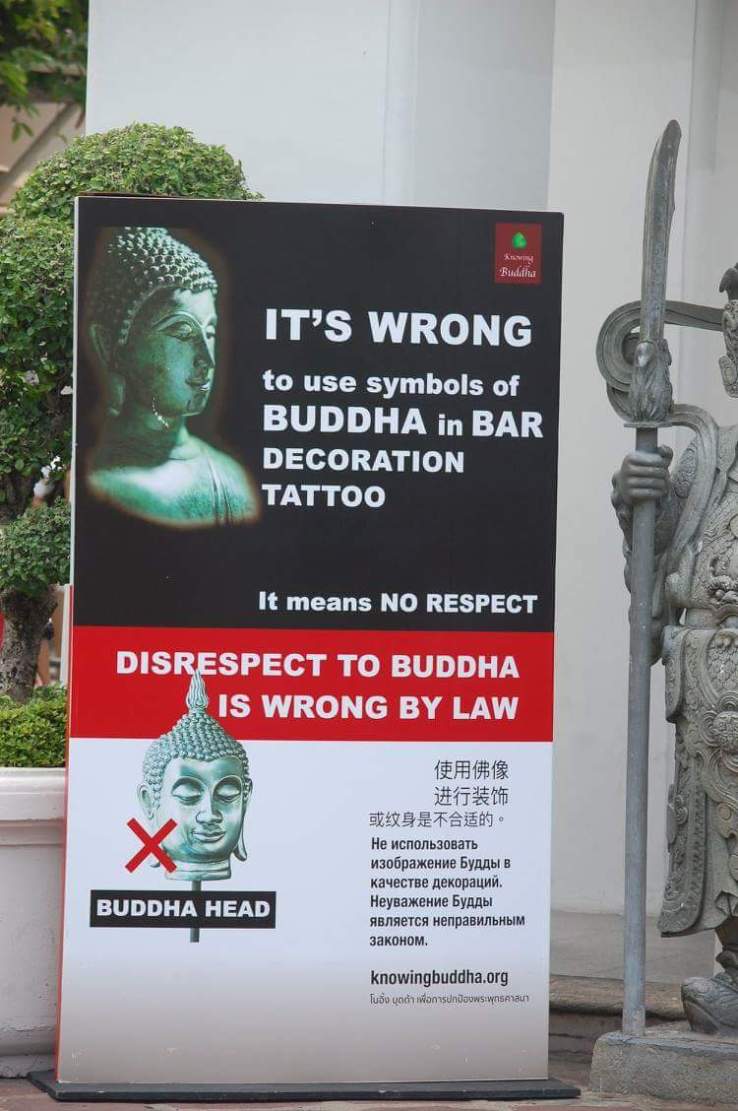
Although like most Westerners I’m attracted to the idea of overcoming craving, I spent 90% of my stay in Bangkok suffering from an insatiable yearning for deep sleep and iced refreshments. The fact that Thailand is a Buddhist society is thrust upon you as soon as you leave the airport, in the form of billboards sternly warning you that although it might be calming to place a craven image of Mr Buddha (fat version) in between the plant pots or adorning your upper left buttock, this is very actively discouraged, in fact it’s actually illegal to buy religious symbols as a ‘decoration’. Such ‘respect for Buddha is common sense’, admonishes the poster. It’s the kind of evocation of common sense which would make Pierre Bourdieu cough up his tam yang soup. Symbols of Buddhist faith do nowadays play an important decorative role in Western lives and households. What the relationship is between such images and actual faith and practice is a very moot question.

Maybe the authorities should also put up signs against selfies at buddha shrines. It’s easy (and fun) to sneer at such misplaced displays of self-centredness. It would also be unfair (as I did at one point) to complain that Thailand is less the land of smiles than the land of selfies. As it happens I identify with a lot of Buddhist philosophy and have a lot of respect for those who genuinely try to live according to its precepts, particularly renouncing one’s individual will. Just this morning I came across a lovely quote from the Buddha: “Each morning we are born again. What we do today is what matters most”. As it turns out, on tracking down that saying I see it’s fake, as is a lot that Westerners believe about Buddhism. In a classic article which he really should have called ‘Western Buddhism and the Spirit of Neoliberalism’ Slavoj Žižek argued that in contemporary Western ideology Eastern religions play much the same role as Weber (Max, not Lloyd) argued that Protestantism did in the development of capitalism*. They underpin an individualist mentality of detaching oneself from social responsibilities, particularly the moral consequences of one’s actions. You can spend 16 hours ruining lives by pushing innovative forms of debt enslavement in the City and then go home, close your eyes and pretend that reality is a mere illusion. To be fair my position had softened on this, but I do still think that those who persist in the belief that Buddhism is inherently more tolerant and peaceful need to take an honest look at what’s happening in Burma. The attitude of the Chinese authorities to religion has also changed. The former leader Jiang Zemin was keen on allowing Christianity to spread in the belief (also pace Weber) that it promoted industriousness. The current leaders seem to be taking a different tack, urging Party followers to stick to Marxist-Leninist atheism and restrict their contact with religious belief to eating members of the Falun Gong.
Maybe they should ask you at Bangkok Airport if you’ve come to nourish your body or your soul. I wasn’t there on a spiritual sojourn, but to accompany my wife while she did a summer course at the university. It wasn’t my first visit. In January 2005, in the aftermath of the Asian tsunami, me and my then girlfriend abandoned our plans for a beach holiday and instead spent several weeks on the west coast helping tourists locate their loved ones and rebuilding fishing boats with our teeth while using our hands to bottlefeed orphaned children. The language was no problem, we picked it up in a couple of hours. The highlight was when I received a gold medal from the King, who became a close personal friend and subsequently introduced me to Michael Jackson, with whom I (retrospectively) wrote ‘Earth Song’.

Some of the preceding paragraph is not true. There were probably tourists who sacrified their time and energies in such a way. We (shamefully) took our lead from George Bush after 9/11 and ‘supported the economy’ on the relatively corpse-free west coast. Maybe it was the heat bearing down from the Thai sun or rising up from the bowls of Tam Yung, but my memories of our actual holiday are vague. As we were living in China at the time, the ease of finding transport and accommodation came as a pleasant shock and we were overwhelmed by how friendly and cooperative everyone seemed to be, especially when it came to providing us with smoothies and toasted sandwiches. I quite liked Bangkok, including the backpacker enclave of the Kaoshan Road. The Sukhumvit area was relaxing to walk around and the presence of the occasional street elephant impressed me, although the animals themselves didn’t seem to be massively enjoying themselves, except when they were producing tsunamis of steaming elephant wee.

In London over the years I had lots of Thai students. I’d sometimes gently oblige them to do a neat party trick, which was to recite the full name of their capital city, which is basically a massive list of everything of significance in the place. People’s names are also not what you might think. For years I had no idea how complicated the whole thing was and arrogantly insisted on using their ‘first’ names. It’s actually far more respectful to call Thai people by their chosen nicknames, even though my students were had invariably chosen things like Rabbit or Blue. The most common surname by far was Porn and we had one student who unwittingly glorified in the name Bumsick. Again, it’s easy to make fun, until we recall that the name of the current US President is a synonym for bottom burp, two of his predecessors were called Bush and the present UK Prime Minister shares almost her entire name with a scuzzy porn star.
Even the smiliest Thai person must get frustrated at being asked about the same old prurient clichés, particularly about ladyboys and the social role of women-who-work-as-prostitutes. One night our group of humanitarians and alternative thinkers ended up in a strip bar on the street called Soi Cowboy. We tried to join in with the hilarity but I’d read too much about the background to have a lot of fun. There is a mythology that sex workers are more respected back in their home villages. I hope it’s true and that they’re not coerced. It’s also nice to think I would never have to take my clothes off and waggle my arse in the face of fat German tourists. That whole supply and demand thing is probably a key factor.

My experience of the Thai language was actually kind of refreshing, in that it was a relief not to pretend that I fitted in. Learning any new language is always a great game but I was reminded how difficult it is to start, to get past the stage where you can get a phrase out but not understand a word of the reply. Had I been there for more than a few weeks I would have tried harder (try saying that in Thai) but as it is I felt grateful when people responded in English. It made a change from feeling resentful, as I often do in countries where I do speak the language and someone addresses me or replies in English. Given the immense linguistic and cultural gap, in Thailand calling yourself an expat makes sense. Although I vastly prefer the word ‘foreigner’ it would be misleading and absurd to put yourself in the same social category as a enslaved Burmese refugee peeling prawns for British supermarkets or a Pakistani Christian asylum seeker terrified of arbitrary deportation. A lot of English language culture is nonetheless very bland, filling out that nebulous category of ‘international’: soulless hotel bars, vapid pizzas, what should really go by the name of “Mexican” “food”. I joked with a random person we met at an expat meetup about how all we have in common is our language – for all I know, I could find myself talking to an arms dealer! He turned out to be basically an arms dealer, one who lives in Oman and occasionally comes to Bangkok for the (nudge nudge) ‘recreation’.
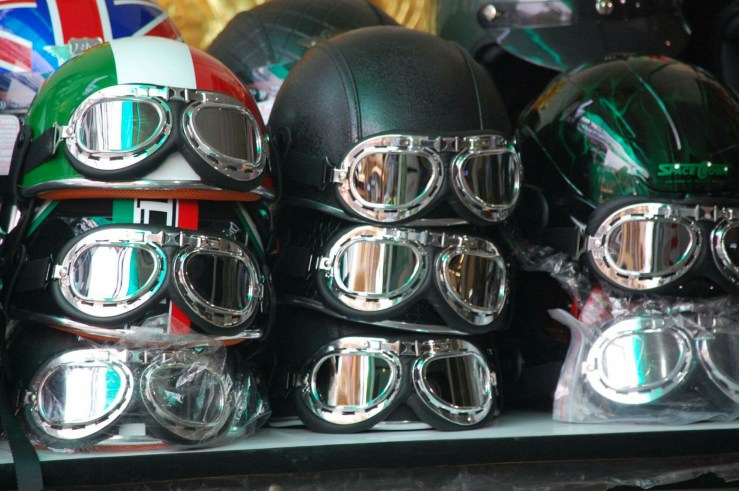
Maybe (to be generous) he meant the shopping. It’s incongruous that the authorities are so fussy about the statues because they are, like everything else, very much for sale in endless parades of stupendously cavernous malls. If you didn’t know Bangkok was the capital of a Buddhist society you might mistake it for a gigantic monument promoting human cravings. Parts of it felt distinctly like the most boring part of London, viz Canary Wharf. The absence of parks and the presence of the Sky Train above congested roads makes for a heavy and frenetic atmosphere and what starts as a five minute stroll to seek out yet more international adaptors can quickly drain you of physical and mental strength. The BTS trains themselves provide some relief from the heat as they are kept at a constant temperature of -273.15C.

Two cities that make for useful comparison are Bangkok and Mexico City. Before going to the former we spent a year living in the latter. There are obvious point in common (heat, traffic, spices, political chaos) but in terms of walkability the Mexican capital is (relatively speaking) paradise, with its abundant green spaces and (where we were living) leafy boulevards. Between Mexico and Thailand we also spent ten days in Cuba (ain’t life grand!), where the heat was often unbearable. We are making a sterling contribution to global overheating by virtue of our globetrotting and will have some great travelling stories to regale our daughter with should we be able to stop gasping for air long enough to share them.
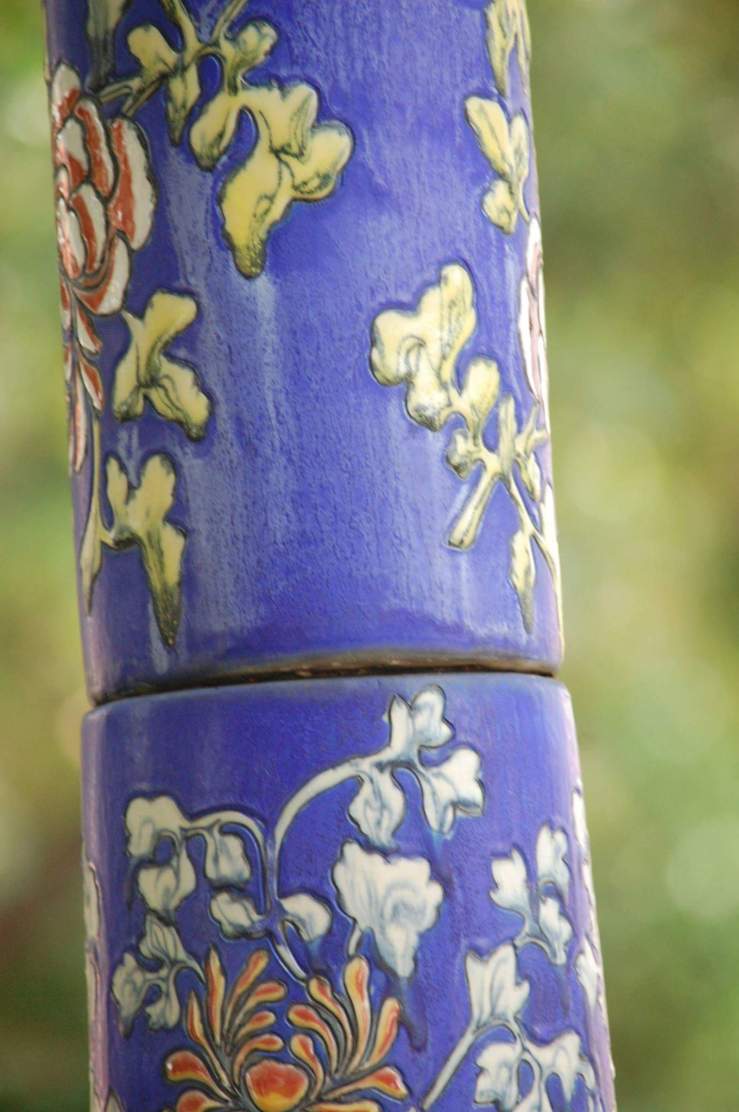
There are also, as mentioned, some nice, quieter parts of Bangkok: some pleasant side streets and the teak mansion which that silk guy who used to be in the CIA called home. The night markets (particularly JJ Green’s) are a charm and a joy. Some of them are actually less markets, more shopping centres, because if there’s one thing which absolutely everyone loves and that Bangkok is crying out for, it’s more shopping centres.

I tried to take an interest in Thai politics but it’s a murky affair and it’s hard to work out who the least-bad guys are. The whole red and yellow t-shirt thing may be, well, colourful to outsiders but those garments are indications of treacherously deep rifts in society exploited by those with the means to do so. From a very voluble taxi driver I heard the best argument against democracy I’ve ever encountered. He explained cheerfully that given the immense power of Thailand’s version of Berlusconi (Taksin Shinswatra, who, when ousted from a military coup, simply put his sister in charge of his party – the army stepped in to cancel an election she would have won) there is simply no alternative at present to military rule (a fascinating and detailed background can be found here). In the light of Trump’s rise and Rupert Murdoch’s victory in the UK referendum it was hard to argue back.

At the Foreign Correspondent’s Club we saw a poster for an intriguing upcoming event discussing free speech in the light of the upcoming constitutional referendum. It was subsequently banned by the regime, which didn’t want people discussing what they’d be voting on. God forbid that participants in referendums should be well-informed, especially by bloody (vomits) experts! While we were there things were calm but there was a certain nervousness around the King’s health (he subsequently died in October). This is something that it is immensely hard to discus with Thai people and it would be wrong to joke about, especially given that the university hosting us is known as the ‘Pillar of the Kingdom’.
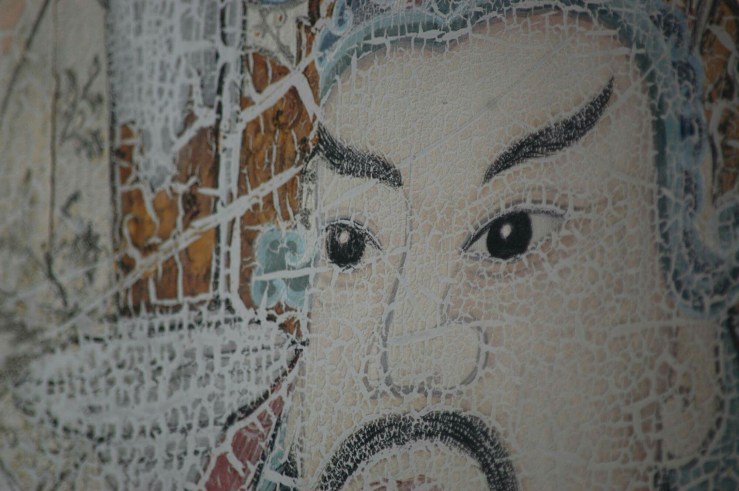
In our brief interactions with people in uniforms we noticed a certain harshness of tone. Traffic policement were uniformly brusque, as if no one told them about the smile thing. Being snarled and barked at by people in khaki became a daily experience. The brutal treatment of those who challenge or offend authority both contrasts and is intertwined with the tweeness of official state promotion. The current Prime Minister is a retired general who gives regular speeches on ‘returning happiness to the people’ (he also write a ballad of the same name) and said of those who oppose his regime “Whoever causes chaos to Thailand or disrupts peace and order, they should not be recognised as Thais, because Thais do not destroy each other…The charm of the Thai people is that they look lovely even when they do nothing, because they have smiles”. This reminds me of General Wiranto, the sadistic Indonesian general with his love for karaoke. The documentary ‘The Act of Killing’ also exposes this deeply sentimental aspect of authoritarianism. Autocrats have a necesarilly limited and often puerile emotional range. An entertaining complement to Peter York’s classic coffee table book on dictators’ houses would be one on their music collections. I suspect that Trump’s CD rack contains a fair few Whitney Houston discs – ‘American Psycho’ Patrick Bateman (a character partly modelled on Trump) was obsessed with the production on her debut album. If he gets to lead the G7 I can imagine him, Putin, and Duterte joining in on a rousing version of ‘The Greatest Love of All’.

The course my wife was on was about Peace Studies. On a field trip down south the group was chaperoned by the army. The episode gave us an insight into how autocracy works: the military politely asked if someone could come along, and the organisers of the trip were in no position to say ‘no’. Those who work in human rights exhibit immense bravery and intelligence in the face of outright repression. The history of Thailand in the 1970s involves a communist insurgency partly inspired by the massive presence of US troops, soundtracked by bands like Caravan and marked by massacres of radical students. It puts me in mind of Costa Rica’s role in relation to the Contra death squads in Nicaragua. Thailand may famously have remained formally independent for centuries but its history is certainly not free of geopolitical compromise.

The imperial struggle to win over young people’s hearts and minds continues in other forms. One weekend towards the end of my stay an ‘Edutech’ festival took place on campus, the central theme of which seemed to be: “let’s get rid of teachers!”. Let the students eat laptops instead. Upcoming TEFL guru Hugh Dellar wrote an excellent diatribe against big business’s ongoing takeover of education here. Apart from the odd exchange I had little contact with the university students themselves. The atmosphere around the residence felt a little twee, or maybe that’s my sulky impression as for the first few weeks I couldn’t seem to find anywhere to buy beer.
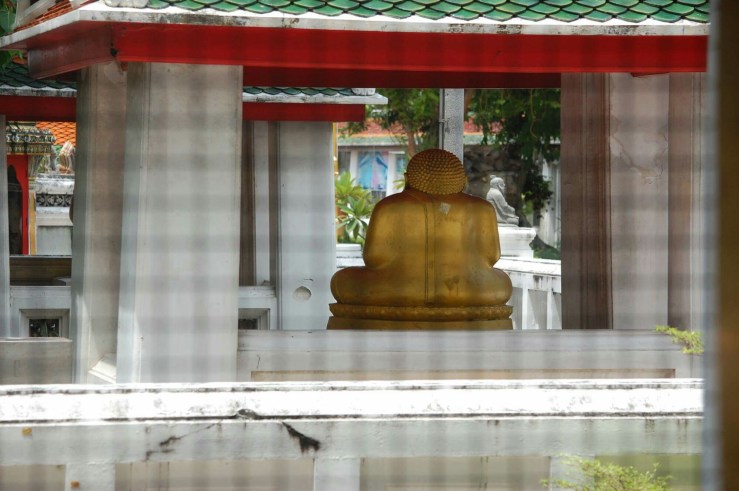
The area next to where we were staying is being transformed from a filthy storage place for heavy industrial machinery into spick and span student apartments surrounded by manicured lawns and immaculate, if empty, bijoux shopping malls. I came across a friendly cafe several grubby street away whose owner was recently turfed off the campus to make way for shinier, newer things. There’s big money in international education. Another cafe just next to our building employed two charming Cambodians who spoke less English than anyone else I have ever met (although my command of their language is considerably  worse – at least they knew how to say ‘hello’). An extended stay in the orient is, as Edward Said taught us, an object lesson in trying not to essentialise, to see everything as (in this case) quintessentially ‘Thai’. Any society houses hidden tensions and exclusions. Bangkok is a primate city, which means it attracts huge numbers of immigrants, some of whom, especially those from the Esan region in the north-east near Laos, are not always well treated. Most people would also prefer to live near the centre, in the place where we were privileged to be staying, rather than spending inordinate numbers of hours on various cramped and stuffy forms of public transport.

I lived a charmed life for the few weeks I was in Bangkok. Since I was in the midst of a swimmimg mania, my daily schedule involved an hour-long dip rewarded with a smoothie and toasted sandwich followed by a sunblasted stagger to the MBK shopping mall to seek out even cooler drinks, even more breathable garments and ever-spicier rice and noodle dishes, followed by a few desultory hours of dozy work interspersed with shouting at people who might be racists on Twitter. Although I did survive the heat, get paid for the work and achieve a relatively deep and even suntan, my one-man online campaign against Brexit failed to have any meaningful impact. Proof, if any more were needed, of the ultimate ineffectiveness of all human endeavour. Or maybe further evidence that Twitter is not an appropriate forum for combatting incipient fascism, especially when you happen to be thousands of miles away from where the events you’re ‘debating’ are taking place.
*If you’re in the market for an imponderable conundrum to meditate on, that sentence may well be it.
Of course football is a beautiful game…but maybe…

Football has been all over the front pages this week, and although I’m neither a huge fan nor a massive expert on the sport I do sort-of follow it and have some possibly useful/unpopular feelings on the subject which, partly in the spirit of Louis CK’s classic ‘of course…but maybe…‘ routine and also in my own tradition of writing provocative screeds about what the Guardian has taken to calling ‘soccer’, think worth airing.

nintchdbpict000316273863

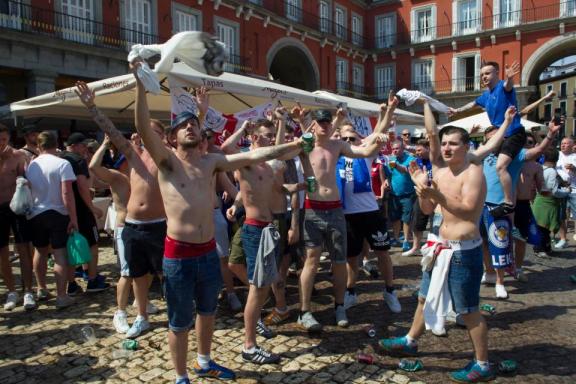
1. Madrid. The sight and sound of Leicester fans rioting in the Plaza Mayor while shouting drunken nonsense about Gibraltar is to be roundly, squarely and triangually condemned. Of course. But maybe…a lot of the tabloids doing the condemning are the very sources of both the misinformation being yelled and the (sorry, Jeremy) momentum for such displays. In any case, given football’s relationship to territory, maleness and alcohol, a certain amount of violence is absolutely inevitable. When a few years ago in London the Evening Standard cleared its front page of foreigner hatred and upper class triumphalism to make way for a diatribe at how appalling was a bit of minor rioting by Millwall fans, I was left feeling a bit nonplussed. There seems to be a major and wilfull misunderstanding in some quarters of the media about the role that football plays in British life. For centuries the country sent generations of working class lads overseas in order to keep Johnny Foreigner in check, no questions asked. For the last few decades they’ve been tearing into each other at home and away instead. I don’t want to come across as all class tourist/reverse snob and I do hope that my feelings on this are not provoked by buried ancestral loyalty to our lads – personally I think it may not be a bad idea to put the whole of the UK mainland under the control of the Spanish in order to avoid any more Tory-inspired catastrophes – but I do think that it’s better that football fans beat each other up than have a go at people who happen to have been born elsewhere.

I say all this as someone who is, partly thanks to an accident of birth and barring possibly my mum, Sheffield’s least likely hooligan, and also a fan who, when I visit Bramall Lane (UTB), is no more likely to be welcomed as a member of the same species than a particularly bookish-looking antelope at a watering hole generally reserved for wildebeest. I don’t have the hair (or lack thereof), the accent and a brief conversation generally confirms that I don’t follow the team closely enough to qualify as a proper Blades supporter.

maxresdefault

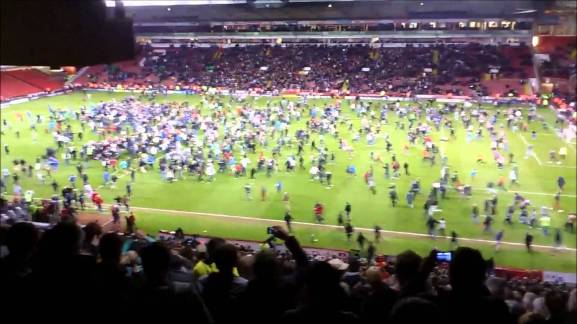
2. Sheffield United’s pitch invasion. Nevertheless, sometime in April or May 1982 I stood in the Junior Blades section and watched fans pour onto the pitch to celebrate winning the 4th Division championship, and I was pleased to see such scenes repeated last week as we (UTB) clinched promotion from League 1.  The football authorities hate pitch invasions and go to (sometimes murderous) lengths to prevent them, partly because they damage the grass but mainly because they (stern voice) ‘Bring The Game Into Disrepute’. The same is said of ‘excessive celebrations’, e.g. the moral stain left on the universe by a player doing a happy little I-scored-a-goal dance or lifting up his shirt to reveal a birthday message to his baby daughter. This in a game marked by genuinely shocking and blatant corruption, money- and reputation-laundering, tornaments held in slave states, the open feting of racists and rapists, club sponsorship of everything down to the official player’s undergarments, the official water everyone officially associated with the club officially drinks and the official brand of condoms that are optimistically distributed on the official team bus. Of course there are tasteless and impetuous things that individual players and fans do that serve as a distraction, but maybe it would be easier to identify things that bring the game out of disrepute. Football’s high horse is a pantomime one which goes clippety clop clippety clop across the stage and then gets sexually assaulted by a 22-year-old with a £125,000-a-week salary, a regulation hipster/Isis beard and a Hindi tattoo that (unbeknownst to him) means ‘twat’.

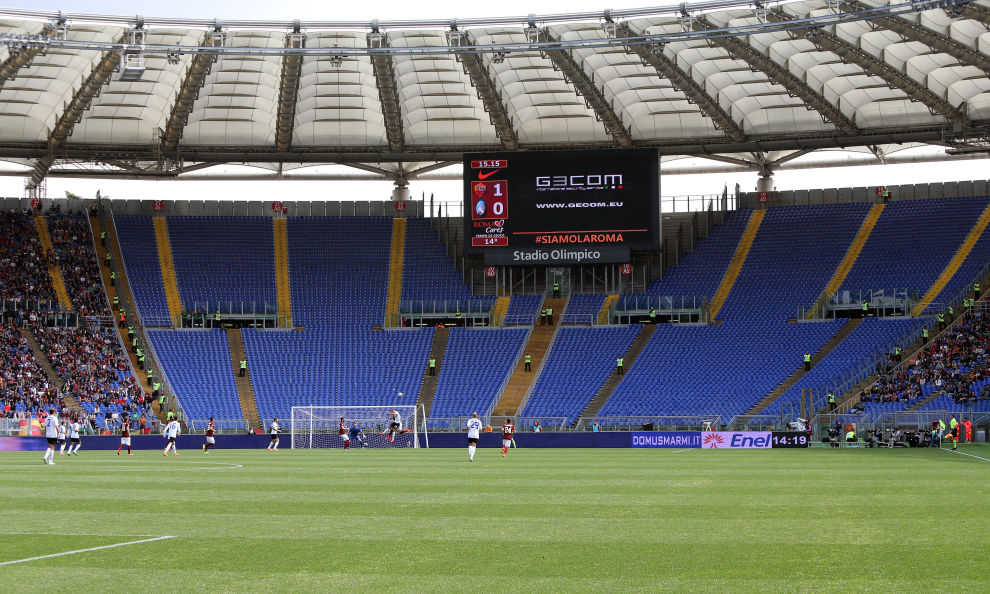
3. On the white stone of the beautiful bridge crossing the Tiber* round the corner from our house, some stronzetto has left prominent graffiti protesting against the reorganisation of territorial subdivisions in a football stadium**. This is not as arcane as it sounds. Over the last couple of years a large proportion of Roma fans have been on strike because the stand where they, er, stand has had some new barriers installed, separating them from each other. As a result they refuse to go and cheer on their team (they still ‘support’ it, but that’s a difficult concept to make sense of, even when the fans in question aren’t petulant arseholes). As a result, there’s no atmosphere at the matches and therefore no point going to see Roma. The couple of games I’ve witnessed have been desultory affairs, and given that the club with whom Roma share their Mussolini-obelisk-surrounded stadium (Lazio) are the chosen team of local fascists I’m very disinclined to lend them my support in any form. Of course not all changes that clubs make to their stadiums are to the liking of fans, but maybe if you refuse to go to the stadium as a result you weren’t really that much of a supporter in the first place.

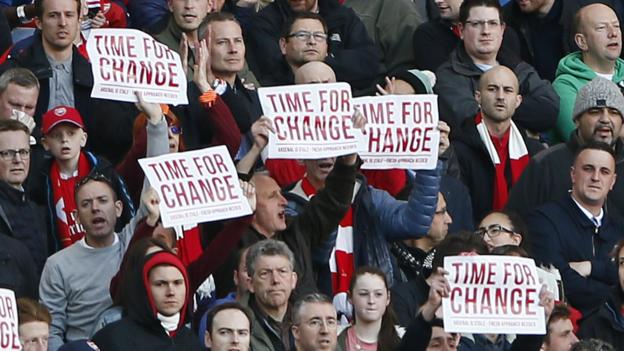
4. Arsenal. Now, football deserves to be taken seriously. Supporting a team involves (and for some resolves) issues like identity, belonging and purpose, rather like a religious faith. Arsenal fans are angry because they haven’t won anything for years (except for the FA Cup, twice, which for the gooners means about as much as a fifth-round EFL Cup victory against QPR would to the Blades). Of course it’s fun to win things and get promoted (UTB), but maybe football has always been less about winning and more about the camaraderie that comes from not having lost. Really, there’s not that much to do when your team wins something big except drink, cuddle your fellow supporters, eat a massive burger and then go home and watch the highlights til you conk out. I can nevertheless understand the frustration with Wenger, as when asked why they haven’t won anything important for so long he tends to talks about how much money the stadium is worth nowadays, how many people work there compared to when he started and how pretty the grass looked before the football match, the one in which they were beaten 3-1 at home by Stoke, kicked off. Maybe they should just make him janitor and get someone else in.

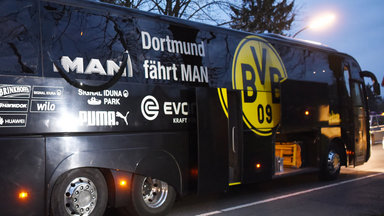
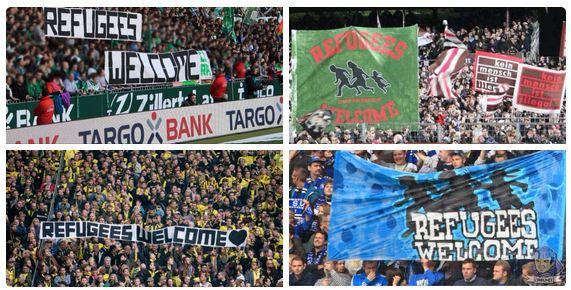
5. Dortmund. I’ve been to Dortmund and it felt like Leeds: northern, working class, post-industrial. I can see how football is very important in such a place***. Of course the terrorist attack on the team is abhorrent. But maybe…In relation to the reporting of suicides there are certain conventions that newspapers adhere to in order to avoid contributing to copycat cases. It seems to me that in the salacious publicity that’s been given to the writer of the letter (presumably also the author of the crime) there’s an excitability which may encourage others to see football as a useful target. What responsibility does football have for this? As with so much else about the game, the way the media overhypes football involves an abdication of basic journalistic responsibility. Of course it’s a good thing (and a cheering story) that fans in France and Germany united in response to the attack. But maybe…there’s a distinct possibility that such reports play into the hands of the far-right, who are never far away from the sport and always keen to bring fans under their sway. The fact that the UK’s fascist movement takes so much of its form and focus from football is a cause for concern (fuck the EDL) and in a European context the media’s coverage of fans uniting against ‘Islamic’ terrorism rather than (for example) drawing attention to the many gestures of solidarity with fellow fans and players fleeing entire societies terrorised and brutalised by Isis doesn’t necessarily bode well. To return to those Leicester fans in Madrid, misinformed and motivated by Murdoch’s increasingly openly racist Sun**** into making absolute pricks out of themselves, there are malignant elements closer and closer to political power who will make the most of sporting loyalties and emotions as an organising tool for prejudice and violence. Of course football is a beautiful game, but maybe media coverage should be careful about encouraging young men to place territorial loyalties closely linked to violence at the heart of their identities at this particular point in history. UTB.

refugee

*Which, contrary to what you might hear, is not flowing with blood.

**Italians are great at frescoes but shit at graffiti.

***Obviously much more important than it is in Leeds these days (UTB).

****Why is Kelvin Mackenzie still alive?

What to say to French people to try to stop them voting fascist

original_192884324-1160x772

Everyone above a certain age will have had that experience of looking round a bus or a meeting table of compatriots on the morning after an election and thinking: how could you.

The Tory victories in 1992, 2010 and 2015. Brexit. There’s been an acceleration of late. Days and nights of trying to rationalise and make excuses for the irrationality and inexcusable selfishness and cruelty of the average voter, to adjust to the certainty that my values were not shared by my neighbours and that things were about to get worse in terms of all the things I cared about.

Of course, it doesn’t have to be that way. I did enjoy the optimism of Labour’s victory in May 1997, although I was living in Dublin at the time. In the last six months we’ve seen the far-right beaten back in Austria and failing to get into government in The Netherlands. Maybe this poet had a point:

Sometimes things don’t go, after all,
from bad to worse.  Some years, muscadel
faces down frost; green thrives; the crops don’t fail,
sometimes a man aims high, and all goes well.

A people sometimes will step back from war;
elect an honest man, decide they care
enough, that they can’t leave some stranger poor.
Some men become what they were born for.

Sometimes our best efforts do not go
amiss, sometimes we do as we meant to.
The sun will sometimes melt a field of sorrow
that seemed hard frozen:  may it happen for you.

Actually it may not comfort you to hear that the author of that poem later disowned it to the point of asking her name be removed from all future posts and publications, on the basis that it encouraged undue optimism. We shouldn’t assume, as many do, that Marine Le Pen won’t become the next President of France.

This is the big one. Le Pen is an outright fascist, a Vichy revivalist who even Nigel Farage prefers to steer clear of. Her victory would mean the far-right taking power in the cradle of the enlightenment, one of the world’s most iconic and reputable democracies. The scum of history is finally rising back to the top. Her voters will include many who are feeling frustrated at rising unemployment and inequality, have been persuaded by her exploitation of the EU’s lack of response to the terrorism and the refugee crisis and her sly attempts to link the two, and are generally terrified about the future. They may well never have voted for her repugnant father, Jean-Marie, and they have certainly not given sufficient thought to the fact that the fascism she represents involves nationalist militants collaborating with traditional elites to destroy democratic liberties and impose a regime based on violence.

Now, Le Pen is famously politically independent of her father. He repeatedly called the Holocaust/Shoah ‘a mere footnote of history’, whereas his daughter just denies France’s part in it. Marine’s niece, Marion Maréchal-Le Pen, (also a National Front politician) is known to associate with Hitler-saluting skinheads. As for the sympathies of the candidate herself, let’s just say that Nazi allegiance is not one of those genetic traits known to skip a generation. Like all those of her stripe, Le Pen knows full well what the Third Reich and its French collaborators were responsible for, she just approves and presumably wants to resume it.

Face-to-face with the Front’s potential voters

I’m not French and I don’t live in France, but near where I work in the centre of Rome I sometimes find myself literally surrounded by French people, blocking the pavement while they point and marvel at some ancient wonder. I sometimes get asked for directions and get into brief conversations with francophone tourists. They’re generally cheerful and chatty, and some of them may well right now be thinking of voting for someone whose life’s mission is to destroy democracy and get rid of all those she regards as inferior beings.

Rome is also one of the most popular cities for US tourists, which led me, at one point before the US election, to develop the idea of getting together a group of people and standing outside the Colosseum or the Pantheon wearing Stop Trump t-shirts and urging people to vote sensibly. A man called Nate Silver convinced me it wasn’t necessary. Maybe it could have made a tiny difference in an election where the stakes could not have been any higher.

Over the last couple of days I’ve been canvassing ideas as to what might be an effective response to someone saying they might vote for Le Pen.

Over the last couple of days I’ve been canvassing ideas as to what might be an effective response to someone saying they will/might vote for Le Pen. I don’t want to suggest for a second that it’s easy to turn people away from the FN or that I have more of an understanding than anyone involved in the various campaigns. This is about extending the political battlefield to anywhere that voters in the French election are to be found and also giving visitors to France an opportunity to engage politically with their hosts.

Online ‘debates’

Why not just argue about it on Facebook or Twitter?, you might ask. I’ve now come to accept that ‘discussing’ electoral politics online is an absolute waste of time, indeed probably more counter-productive than anything else. In person we are obliged to treat each other civilly, as fellow human beings. In online ‘debate’ no such conventions apply and any adversarial discussion is much more likely to end in abuse and entrenched opinions than in dialogue and understanding.

The collection of phrases below are offered in the context of polite debate: persuading rather than abusing. They derive from suggestions from people living in France and French people living abroad as to how best to respond to potential FN voters. Once pleasant greetings have been exchanged and the niceness of the weather/food/wine remarked upon, it’s easy to enquire “Pour qui pensez-vous voter?”. The suggestions as to how to continue the conversation can be proferred with a smile and lightness of tone. There’s always the possibility that those swayed by the FN will also speak good English, so obviously there’s no need to struggle through a potentially uncomfortable conversation in French if a ready alternative is available.

The maverick philosopher Slavoj Žižek, in relation to the US election of 2004, suggested that only non-Americans should be allowed to vote, and obviously something of that provocative approach has inspired this. One obvious riposte to my mischievousness is: after Brexit, what is a British person doing telling people how (not) to vote? Is it a good idea for a foreigner to try to change the voting intention of people whose voting intentions are partly influenced by resentment of foreigners? At the same time, it’s also the case that as a British person I’m ideally placed to know what it is to be manipulated by the far-right into doing something absolutely catastrophic.

Fatalism is no response to fascism.

That Le Pen can win has become a truism. There’s an (in my lifetime) unprecedented level of apathy and complacency with regard to the return of actual fascists to major political power. We are increasingly resigning ourselves to the victory of fascism in Europe. People openly state that Le Pen is going to win as though such an outcome isn’t the absolute worst thing that could happen to the world right now. Fatalism is no response to fascism.

These are extremely conservative times, for which I hold the internet largely responsible. I suspect that if the election was happening online we might feel more inclined to get ‘involved’. Doing so implies less emotional risk than starting a conversation about politics with flesh-and-blood strangers. That’s the political placebo effect of social media. Except we know that the other side have the weapons to win the online battle. The much more important debate is happening off-Matrix. The excuse that “I was too busy looking at my phone to stop another holocaust” ne marchera pas: it won’t wash.

Things to say to people who are thinking of voting Le Pen

C’est une mini-Trump! (She’s a mini-Trump!)

Vous vous rendez compte que vous risquez d’elire un escroc comme President de la Republique? (Do you realise you risk electing a con artist as President? – Nota bene, this also applies to Fillon.)

C’est la fille de Putin! (She’s the daughter of Putin/daughter of a whore! – Obviously use this advisedly if you’re sure the other person can take a joke.)

Mais vous soutiendriez son père? (Would you vote for her father?)

Avez-vous lu quelque livre d’histoire? Il faut que je vous expliques ce que va arriver a la prochaine page? (Have you read any history books? Do you need me to explain what happens on the next page?)

Tel pere, telle fille! (Like father, like daughter.)

Le Pen, c’est la heritiere d’un Petain, elle fait honte a la France! (Le Pen, heiress of Petain, don’t shame France! – Nota bene, this one sounds a bit grandiose, so use with caution.)

Avez-vous confience en elle? Apres tout elle a volé del’argent à Europe! (Do you really trust her? After all, she did steal money from Europe! – Obviously don’t say this is you’re not familiar with the background.)

Réfléchissez bien avant de voter FN, les conséquences sur votre vie quotidienne pourraient être bien pires que ce que vous imaginez. (Think twice before voting FN, it could have far worse consequences than you might think.)

Ne te trompes pas de colère! (Don’t trip yourself up out of rage.)

H.P. Lovecraft: Misanthropy and the Anthropocene

C6

The most merciful thing in the world, I think, is the inability of the human mind to correlate all its contents. We live on a placid island of ignorance in the midst of black seas of infinity, and it was not meant that we should voyage far. The sciences, each straining in its own direction, have hitherto harmed us little; but some day the piecing together of dissociated knowledge will open up such terrifying vistas of reality, and of our frightful position therein, that we shall either go mad from the revelation or flee from the deadly light into the peace and safety of a new dark age.

H.P. Lovecraft, ‘The Call of Cthulhu’

What would say H.P. Lovecraft say about climate change? His fanatical racism suggests that he would have found a great deal of common ground with Nigel Farage, Steve Bannon and countless others who have made a profession out of denying reality and scapegoating specific groups of human beings for its inconvenient incursions*. But Lovecraft would nonetheless have recognised (and, given his misanthropy, probably welcomed) the climatic transformation that is upon us, and (as the above quote suggests) would have understood our (lack of) reponse to it.

As it happens, he described the Age of the Anthropocene in (joyously unpleasant) detail:

Yet not at first were the great cities of the equator left to the spider and the scorpion. In the early years there were many who stayed on, devising curious shields and armours against the heat and the deadly dryness. These fearless souls, screening certain buildings against the encroaching sun, made miniature worlds of refuge wherein no protective armour was needed. They contrived marvellously ingenious things, so that for a while men persisted in the rusting towers, hoping thereby to cling to old lands till the searing should be over. For many would not believe what the astronomers said, and looked for a coming of the mild olden world again. But one day the men of Dath, from the new city of Niyara, made signals to Yuanario, their immemorially ancient capital, and gained no answer from the few who remained therein. And when explorers reached that millennial city of bridge-linked towers they found only silence. There was not even the horror of corruption, for the scavenger lizards had been swift.

Only then did the people fully realize that these cities were lost to them; know that they must forever abandon them to nature. The other colonists in the hot lands fled from their brave posts, and total silence reigned within the high basalt walls of a thousand empty towns. Of the dense throngs and multitudinous activities of the past, nothing finally remained. There now loomed against the rainless deserts only the blistered towers of vacant houses, factories, and structures of every sort, reflecting the sun’s dazzling radiance and parching in the more and more intolerable heat.

Typically in his stories, something terrible irrupts into our universe. Sometimes it is known by the name Cthulhu, described in ‘The Call of Cthulhu’ as “A monster of vaguely anthropoid outline, but with an octopus-like head whose face was a mass of feelers, a scaly, rubbery-looking body, prodigious claws on hind and fore feet, and long, narrow wings behind”. It’s a non-human force, a possibly divine entity but one which is definitely not benign. Lovecraft drew on previous mythologies in creating his own. In inventing Cthulhu he was influenced by Tennyson’s poem ‘The Kracken‘**.

The first Lovecraftian stories I read were not actually by him, but by various writers about Lisbon. Their stories showed Lisbon as an emblematically Lovecraftian city, with its thousand-year history hiding all sorts of monsters. Some stories drew on the earthquake of 1788, with all that it drowned the city with and all that it buried. Lovecraft’s writing itself is extremely vivid and compelling. It lends itself particularly well to treatment by graphic novelists and is popular with creative misfits like Mark E. Smith of The Fall. The notoriously misanthropic French writer Michel Houllebecq wrote an excellent book on Lovecraft, a writer whose legacy is everpresent both in his work, while the current leading exponent and champion of Weird Fiction is China Miéville (who shares Houellebeqc’s assessment that racism is the driving force in Lovecraft’s fiction, the inspiration for his “poetic trance”).

Another fan was the critical theorist Mark Fisher (aka k-punk). In his final book (‘The Weird and the Eerie’) he writes of the ‘weird intrusion of the outside’ in Lovecraft’s fiction, the ‘traumatising ruptures in the fabric of experience itself’ occasioned by the appearance of phenomena ‘beyond our ordinary experience and conception of space and time itself’.

This echoed with something else I read recently: a book by the novelist and essayist Amitav Ghosh called ‘The Great Derangement: Climate Change and the Unthinkable’ (you can read an extract from it here). In it he argues convincingly that the modern novel is underpinned by a philosophy of gradualism. The novels of great authors such as Austen, Chatterjee and Flaubert are set in reduced and largely self-contained social worlds in which it is taken for granted that everyday life is largely predictable and ordered. The standard plot involves a disturbance from inside or outside in response to which the world of the novel reconfigures and resettles itself.

While in the time before the modern novel, popular texts such as ‘The Arabian Nights’ and ‘The Decameron‘ “proceeded by leaping blithely from one exceptional event to another”, when we enter the worlds depicted in realist fiction we are conditioned to regard sudden cataclysmic events as contrived and implausible. This is partly because the real subject of such novels is not so much the events themselves but rather the details and stylings of the bourgeois worlds that the characters inhabit. Thus miraculous and exceptional events which overturn that world do not get a look in.

We can also see something like this in the form of soap operas. In their later years domestic dramas such as ‘Brookside’ and ‘Emmerdale’ were regularly ridiculed for using such attention-grabbing contrivances as plane crashes, fires and terrorist attacks. Such intrusions breaks the rules of realist narrative, which say that this is a stable, self-centred and largely predictable world.

How would a soap opera set in the Phillipines deal with a hurricane like Haiyan? Such increasingly commmon catastrophes undermine the dependable world of the telenovela. An interesting example of a partly anthropocenic soap opera is ‘Jane the Virgin’, which regularly features extreme weather events in order to provide far-fetched plot twists, and which works because it’s a post-modern (as in tongue-in cheek and preposterous) pastiche of the format itself.

Soap operas and the modern novel dramatise everyday life in societies which are presented as essentially stable. They are not able to portray a world which is more vulnerable to sudden cataclysm and in which events cannot be explained without making explicit our dependence on other times and places. One thing that makes Lovecraft’s fiction so frightening and unusual is its depiction of non-human forces, intrusions which challenge our agency and control as a species, and consciousnesses with which we cannot communicate or negotiate.

Of course, with what is usually referred to as genre fiction – principally fantasy and science fiction – magical and miraculous elements occur. Long before Climate Change became public knowledge JG Ballard was speculating about what an overheating planet would be like in works like ‘Drowned World’ and ‘The Drought’. The main proponent of the mini-genre apparently known as ‘cli-fi’ is of course Margaret Atwood, who has used the conventions of Science Fiction to depict a climate-induced dystopia in ‘Oryx and Crake’, ‘The Year of the Flood’ and (although I haven’t read it yet) ‘MaddAdam’.

Then there is the genre of adventure fiction with its interest in time travel, including century-old classics by Jules Vernes and HG Wells. Such works particularly inspired children’s fiction which was often set in a unchanging world whose social forms were so static no one even grows old. Thomas Pynchon parodied this form in ‘Against the Day’, which does qualify as a climate change novel given that it features Lovecraftian passages such as this:

“We are here among you as seekers of refuge from our present—your future—a time of worldwide famine, exhausted fuel supplies, terminal poverty—the end of the capitalistic experiment. Once we came to understand the simple thermodynamic truth that Earth’s resources were limited, in fact soon to run out, the whole capitalist illusion fell to pieces. Those of us who spoke this truth aloud were denounced as heretics, as enemies of the prevailing economic faith. Like religious Dissenters of an earlier day, we were forced to migrate, with little choice but to set forth upon that dark fourth-dimensional Atlantic known as Time.”

Anthopocenic fiction will need to be considerably more radical than what still passes for fantasy. While it purports a world entirely other, ‘Lord of the Rings’ depicts a comforting world based on a conservative mythology. It may be that ‘Game of Thrones’ (which I’ve never seen) falls into the same category, in the sense that for all its shocking elements it conveys a fundamentally reactionary view of the universe, like an even more atavistic Downton Abbey. It may also be the case that the new form of soap opera which that programme belongs to – longform Netflix/Amazon dramas which develop over several dozen (or in some cases several hundred) hours – is able to accommodate new kinds and levels of human experience. Although I haven’t talked here about cinema (one film that bears repeated attention in this context is ‘Children of Men’), it seems clear to me that the worlds presented in dystopian Hollywood blockbusters such as ‘Hunger Games’ and ‘Mad Max’ are not actually predictions but prescriptions of a future world which is short on resources but high on aggression and conflict. In the modern age it is partly through bigscreen fictions that we learn how to be human.

Will we (in the words of Lovecraft) “go mad from the revelation or flee from the deadly light into the peace and safety of a new dark age”? The latter is what such films are selling. It’s no accident that the tropes they draw upon (dispensible peasants, bows and arrows, mortar and pestle) are largely medieval. Our cities already resemble those of the Middle Ages, with all their exclusions inscribed into both the visible and invisible frameworks.  Lovecraft’s misanthropy is as addictive and hugely entertaining as his racism is vile; let’s hope (no matter how horrifyingly compelling the phantasmagoric soap opera that is anthropocenic politics is) that atavistic tyrants such as Trump and Putin do not turn out to be the manifestations of Cthulhu in (barely) human form that they appear to be.

*This gave the title to one of China Miéville’s novels.
**Although relativising Lovecraft’s virulent racism appears to be a sub-hobby for a few of his fans, this is not an article about that subject. Please leave your comments requesting that his racism not be discussed at the end of this (excellent) piece instead.

Are Republicans and the ‘alt-right’ now our allies against Trump?

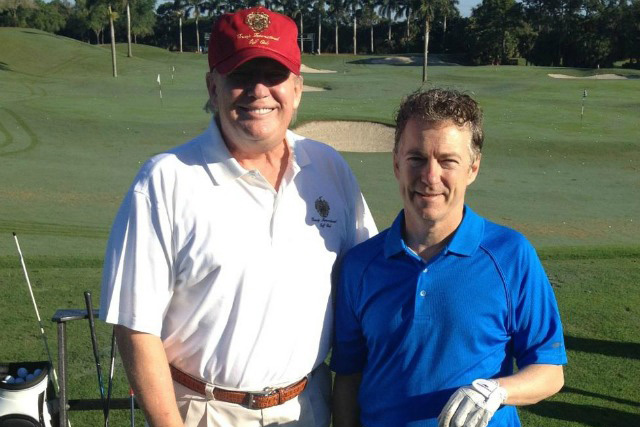
Rand Paul, the alt-right and probably some guy in Idaho who’s covered his mom’s basement in swastikas and ‘Make America Great Again’ posters have suddenly decided that Donald Trump shouldn’t be President. The fact that for the last year they have continued to support him in the face of dire warnings that he was absolutely unsuitable in every possible way didn’t fase them in the slightest. They have gone along with all the most deranged and hateful things he has done in office without blinking. In fact, they’ve cheered him on over the Muslim ban, the cancellation of Obama’s climate measures, his attempt to destroy the healthcare system, and his appointment of lifelong nazis, outright morons and billionaire swamp-creatures to some of the most powerful positions on earth. They’ve sneered at every one of his detractors and victims, and aggressively dismissed any suggestion that he’s personally corrupt.

Now, as it happens, he has done exactly what we – people who think and feel – knew and said he would, ie risk a global war in an act of puerile petulance. As soon as the media quite rightly pointed out his hypocrisy over Syria – criticising Obama for not having done what he himself was explicitly and repeatedly opposed to – he, in his teeny tiny fizzing-on-and-off brain, has decided to dispatch missiles over which we knew and said again and again and again that he should not have control.

Far-right Republican politicians and the teenage trolls of the hipster KKK are grievously offended on behalf of their idol: Putin. He, rather than this demented orange playboy prick, is their anointed Hitler. Now they’re showing up in progressive forums online asking for admittance to the resistance. They want to replace Trump with someone even worse as soon as possible.

Should they be welcomed as part of the burgeoning movement against the kind of worldview of which Trump is the culmination? Are anti-Trump supporters going to accept white supremacists as part of their networks? Will such groups therefore be asking their non-white members to leave to make way for a bunch of actual full-on no-holds-barred fascists?

Hell, no. Trump was never any more than their puppet. Now his strings have snapped they want our help to build a new one. Fuck that. They are our enemy.

Instant Psychopath Test: is this “fake news”?

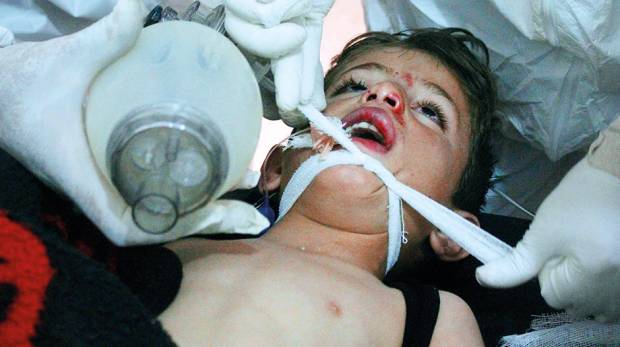
It’s a relief to see that the world as a whole can still respond with horror and revulsion at the sight of something as unambiguously horrifying and revolting as the chemical attack on civilians in Syria. A Kremlin spokesperson nonetheless dismissed it as “fake news”, implying it had been staged to discredit the regime. Pro-Putin propaganda outlet Infowars blamed the supposed attack on George Soros and other Jews.

According to University of Kent psychologists Karen Douglas and Robbie Sutton in the British Journal of Social Psychology, “At least among some samples and for some conspiracy theories, the perception that ‘they did it’ is fueled by the perception that ‘I would do it,’”. In the case of Vladmir Putin, he already has done something similar.

Here are some facts about what Putin was responsible for in 1999. They are facts because they cannot be disputed by any reasonable means. The Russian Government has failed to put together any other plausible explanation. 

(If you are among that growing number of people who are inclined to automatically dismiss such features of reality as the violence and corruption of the powerful or the findings of science with regard to the climate, you are probably in need of some form of therapy. Luckily it’s never been easier to seek out such help. Google ‘mental health services’ in your area. You may be directed to a practitioner who is willing to negotiate a lower rate. Tell him or her that your short-term objective is to read some facts about Vladimir Putin without allowing your judgement to be clouded by denial. That will give you a reasonable and not too ambitious goal to work towards.)

In September 1999, on the eve if elections to choose Boris Yeltsin’s successor, a series of explosions took place in four apartment buildings in Russia. They killed hundreds of civilians and were swiftly attributed to Chechen terrorists. However, local police in a town called Ryazan arrested secret service (FSB) agents planting a bomb in a fifth building. The head of the FSB claimed it was a ‘training exercise’, but was unable to explain why the explosives being used were real. There was a quick cover-up, and amidst a febrile atmosphere Putin was elected three days later and soon started a new war in Chechnya. A number of those who continued to investigate the bombings (including Anna Politkovskaya and Alexander Litvinenko) were subsequently murdered. Putin’s Government has gone on to assasinate dissidents at home and abroad and to murder journalists and anyone else who tries to share information about real events.

It’s also become very expert at disseminating false news stories. One key figure in Putin’s regime is Vladislav Surkov, the former Deputy Prime Minister, who in that role “directed Russia like a huge reality TV show”:

He would meet once a week with the heads of the television channels in his Kremlin office, instructing them on whom to attack and whom to defend, who is allowed on TV and who is banned, how the president is to be presented, and the very language and categories the country thinks and feels in. (from The Atlantic.)

Such insidious propaganda is not just for a domestic audience. During the US elections targetted individuals with false news stories via Facebook, as The Washington Post documented

Again, these are facts. If you’re interested in this area then you need to take them on board. Otherwise they will sink your case.

One tool apparently used to spread disinformation is Facebook groups. Rachel Maddow reported on one ‘pro-Bernie Sanders’ group that is based in Albania, while the Daily Beast details how Putin’s operations targetted those who think of themselves as ‘progressive’. This may explain why so many posts in such (ostensibly anti-Trump) groups dismiss out of hand any suggestion of Russian involvement in the US elections.

The bombings in Saint Petersburg followed two major anti-government protests. The images of death and destruction will have the effect of allowing the Government to clamp down on such dissent. Two days later came the chemical attack in Syria. Even such a malignant, deluded narcissist as Trump felt compelled to condemn it. His way of doing so (implying immediate military action in order to satisfy his insecurity complex wrt his predecessor) is incredibly dangerous. I’ve argued here several times that Trump’s Presidency is and remains an impossibility. In such a prominent role, consistently disrespecting the truth gets you into trouble. Up until he became President, Trump led a mostly consequence-free existence, and it seems he has only got this far by following the dictats of Steve Bannon, an actual psychopath whose explicit short-term goal is to provoke a world war. The fact that in response to this sudden geopolitical crisis they have sidelined Bannon suggests that know they will also have to get rid of Trump. Somehow.

As for Putin, he’s a monumental liar. Does saying that somehow mean that I think that Hillary Clinton is morally impeccable or that I believe the recent history of the US with regard to foreign interventions to be free of reproach? No, it doesn’t mean any of that. Bizarre as it may seem to some who think of themselves as ‘progressive’, opposing Putin and opposing Trump are highly compatible. Putin, like Assad, is a brutal tyrant who murders ordinary people to achieve his political objectives. He’s no friend of anyone who regards themselves as even remotely progressive. And anyone who professes to ‘believe’ the Kremlin’s claim that the chemical attack is ‘fake news’ is probably either in the pay of the Russian Government or in dire need of psychiatric treatment, or both.