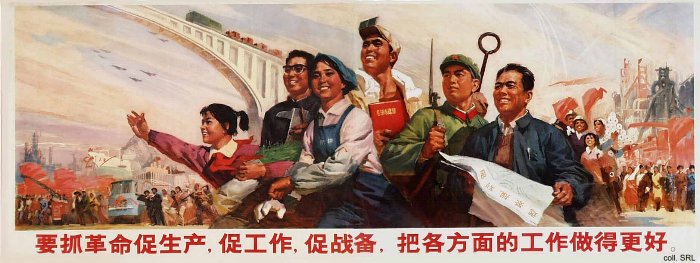
The Face of Mao


I’m not usually a huge fan of Xinran, but this is a great article from today’s Guardian, about a kid’s game involving a Chinese bank note:

“You have been moulded by the western media, which has hardly any positive press about China and the Chinese. You often go back to China, so tell me why Mao’s picture still hangs on the walls of so many people’s houses, shops and offices. You think it is because the Chinese government orders them to display them, or because those people have never heard western views? Or do you think they don’t know that Mao did terrible things to his people and how much he damaged his country? Be honest to our history, Xinran. I know your family has lost people under Mao’s cruel policies, I know your parents were sent to prison for years and you suffered in the Cultural Revolution as an orphan.

“I am sorry to remind you of your unhappy memories. But don’t look down on what Mao did for Chinese national pride, and for those poor parents in the early 1950s. I feel it is unfair to Mao.”

I stopped her. “What about the millions of Chinese who died under his rule, because of his policies, in the 50s and 60s?”

“If westerners still believe their God is just after he flooded the world for his own purpose, or George Bush could invade Iraq with growing numbers of deaths for his campaign for moral good, why shouldn’t Chinese believe in Mao, who did lots of positive things for the Chinese but also lost lives for his own mission for good?”

For me this seems to neatly sum up two widely held beliefs in China: that all westerners are christians who unquestioningly accept the decisions of their leaders, and that Chairman Mao should be regarded as a kind of god!

Free the Chinese Clothes!


The eyes of the world are being opened to a tragedy far, far greater than that in Sudan, and with more disturbing implications for our planet than the war on terrorism or global climate change: the tragedy of the 40 million jumpers, 50 million pairs of trousers and one billion bras being piled up in European warehouses and ports as a result of the restrictions on Chinese clothes imports into the EU.

All over Europe shoppers are terrified of the very real possibility of the shelves of Zara, Mango and H & M having slightly less cheap Chinese-made garments. Says recently laid-off factory operative Edna Typical, 22, a woman who already owns more clothes than the entire population of Jiangsu Province, “Am I to wander the cavernous empty shopping centres of my land unshod, with nary a stitch of clothing, bereft of accesories? Can not the Governments of the world see a way to resolving this catastrophe to the benefit of consumers?!”

The crisis is being watched anxiously in the clothes’ home villages in China. The China Daily quotes one woman as saying, “I work 12 hours a day in basically inhumane conditions for the equivalent of three dollars a day to produce those clothes, and it breaks my heart to think that those poor Western consumers might soon only be able to make four as opposed to twelve separate clothes purchases on a single Saturday afternoon. Long live Chairman Mao.”

Pressure is indeed mounting on those governments to take immediate action to Free The Chinese Clothes. According to one real person on the radio who I have honestly not just made up, “the priority now is to find some way to get those garments onto the shelves in time for the Winter Collection”.

One solution that has been mooted is to move forward next year’s quota of Chinese clothes imports. However, this will inevitably lead to problems next year, when the 2007 quota will have to be brought forward to 2006, and so on, and so on, until the world ends, or Peter Mandelson dies, whichever happens first.

In the meantime millions and millions of human beings who are happy to do nothing whatsoever with their free time apart from eating junk food, watching home improvement shows and shopping for that perfect £6.99 spangly green top are in for an uncertain weekend.

On Injustice


I’ve recently found myself in what is for me a very unusual situation; that of being the victim of an injustice. I’m not going to go into any details here, suffice it to say that it’s a workplace-related dispute which I’m determined to resolve in the calmest and most effective way possible, which is to get those responsible into big heaps of trouble themselves. I find that doing so actually gives me a fair bit of satisfaction and moral purpose. When I was striding purposefully to work this morning I idly started to imagine myself as some sort of Soldier of Fortune making a stand on behalf of the world’s downtrodden and mistreated. Fortunately the consequences for me or for the world as a whole are not particularly serious, but it’s gratifying to feel that I’m definitely taking the right course of action for a change.

If by any chance you hear of a bloodbath taking place in a language school in Cambridge, you’ll know that I’ve had a change of tactics.

On the theme of the struggle against injustice, there is someone, quite possibly a child, who has taken to hanging round this website expressing heartfelt concern for the possible fate of Britain’s muslims as a result of the Government’s catastrophic reaction to the terrorist attacks in London. He, she or it has also repeatedly expressed outrage on behalf of the malogrado Brazilian executed in cold blood and with apparent impunity by the British police several weeks ago.

This may appear puzzling to anyone who has visited this site before, given that it focuses almost exclusively on issues related directly to my experiences of teaching English in China. However, I have a sneaking suspicion that the person concerned may just be Chinese, and that a basic fact about the big wide world outside China may remain tantalisingly outside their grasp.

It goes pretty much like this: it is not just that people living outside of autocratic regimes enjoy the freedom to openly think and speak critically about what goes on in their and in other countries – many, many people around the world do not see the country where they happened to be born as the single defining factor in the way they choose to see the world. This means that they see injustice as something that exists in every country, and something that must be exposed and fought wherever it occurs in the world.

For this reason, until I begin to meet many more Chinese people who can and will express concern for the victims of injustice in China, I will not be inclined to regard their expressions of outrage at injustice elsewhere as genuine or sincere. Which is a shame, because I have the feeling that some very noble and laudable sentiments, especially amongst young Chinese people, are being led carefully astray.

Still among the living


There’s nothing funny or insightful contained in these few lines, just to say that I’ve been far too busy to write anything recently but it’s still my intention to add to this site regularly.

I’ve been alternately chuffed and appalled to read all the many comments that I’ve been getting of late. If you have left comments or just enjoyed the site many thanks, I can only say that I feel very encouraged that people read and are so often inspired to respond to what I’ve left here. As for the negative comments, I have always been an extremely contrary bastard and given to acts and statements of outright provocation. Hence the picture.

Unfortunately my only bit of original thinking recently has been the invention of the word ‘Chaiwanese’ to refer to about 70% of the students I have here, who I must say have been getting along swimmingly in most of the classes. I have actually been shocked and not a little disappointed to find quite a few pro-Chinese students among those from the country that dare not speak its name – in fact most of the few classroom conflicts that have taken place have been provoked by this rogue element, rather than by the Chinese themselves.

I will find time sometime in the next few weeks to do some writing again. In the meantime, I would suggest that anyone thinking of starting their own blog but hampered by time constraints seriously consider moving to China to teach English. If I hadn’t been so fucking bored I would never had got around to starting this in the first place.

Just for the record, though, I’d stay well clear of Dalian in general, and Dalian Maritime University in particular. Now how do I get that sentence to show up in Google?!?

“Which part of China are you from?”


At the moment in my school we have a group of students from China and one from Taiwan, and it’s pretty interesting to witness the dynamics between the two. I’ve learnt pretty quickly that the best way to distinguish between them is to ask if they’re from Taipei or Shenzhen, because the Chinese students, who are absolutely charming in every other way, really do feel obliged to forcefully respond with the point that They Are From The Mainland, And Taiwan Is Part Of China. I have to confess that now I’m not in China anymore my response has been to start whistling and look extremely bored – not that they seem able to take the hint though.

From what I’ve seen they completely ignore the Taiwanese kids; maybe it’s the fear of lack of face that makes them do so, because it’s pretty obvious to me that even the shortest conversation would lead to arguments which they might well lose. As a consequence most Taiwanese kids seem to think that the Shenzhen kids just don’t like them, which is a real shame. Last week at the disco the Shenzhen kids just sat in a big group near the door looking utterly uncomfortable, while the students from ‘Taipei’ and, er, other parts of Taiwan pranced around having a great time, dancing and making friends with people from other, erm, countries. So I suggested that next week the (hem hem) mainlanders bring some of their own cds to play – maybe the fact that the Taiwaners know all the same songs will force them to get to know each other a bit. I’m trying in my own small way to break down the barriers a bit – after all, they all like the same music and share a lot of cultural references, so there’s no real reason they shouldn’t be singing together at Karaoke.

It’s difficult marshalling them as a group when we’re out on excursions together – obviously the Taiwanese kids don’t want to be referred to as Chinese (yesterday I amused them by repeatedly insisting that Taiyuan is a part of China. I don’t think I was saying it right though), so I’ve just taken to shouting ‘Can we get all the ethnically Chinese people together please?!’ I know it’s uncomfortable for the Chinese students, but I just want to subtly suggest to them that their attitude makes them suddenly seem to be completely indoctrinated and more than just a little bit mad.

‘Understanding’ China

c05Is there anyone alive today who still sees China as a grey, hostile country, closed off to the rest of the world, where everyone sports Chairman Mao hats and rides bicycles while chanting passages from the Little Red Book? Certainly anyone who has visited the country in the last 20 or so years is genuinely surprised by the size and number of the skyscrapers, the traffic jams and the brand-new shopping centres selling the same fashions as in the West.The Chinese are proud of their new country, and pleased that people come to visit and see the results of the changes for themselves. Foreigners visiting or living in China are encouraged to spread the word, to use the benefit of their broadmindedness and wisdom to impart the truth to others abroad who ‘don’t understand’ how much things have changed. And the authorities also see their own job as ‘educating’ foreigners about the new China. According to Sun Jiazheng, the head of the Ministry of Culture:

(We) have many foreign friends, including some ambassadors. They have special opinions about China because they are knowledgeable about our country and are very friendly to us. I often travel abroad, and I make self-criticisms when I come back … sometimes I find foreign countries know so little about China. As a minister in charge of cultural exchange, I feel that I have not done a good job in introducing modern China to the world. Our foreign guests here (on the CCTV discussion show Dianhua) are all experts on China’s issues or know a lot about our country, but most foreigners are not like them, and know little about China. Take our trip to Germany for example: When we asked a taxi driver about his impression of China, he said it was a country with a vast area. Then he added that he did not know much and the country seemed quite mysterious to him. Changing the Subject: How the Chinese Government Controls Television, Ann Condi

Apart from the example of the German taxi driver, what does not ‘understanding’ China mean? According to the Government, many people happily expose their own ignorance, not by talking about Mao hats or little red books, but those other tired items of former importance so beloved of foreigners – Tibet, the Cultural Revolution, Tiananmen Square, and Human Rights.

When the Government talks of the importance of educating the world about China, it’s not just pride in the new shopping centres full of consumer goods. What it is, is code: what they really want is for the debate about China’s past, present and future to be on China’s (meaning the Government’s) terms.

My students, as I had expected, were evidently taught to be very suspicious about any less-than-positive information regarding China. But what is interesting is that they weren’t taught to see it as ‘imperialist lies’, but rather as the result of a misunderstanding. Put in these terms, of course, it sounds generous, tolerant and forgiving; but what is actually happening is that the authorities are exploiting the goodwill and naivity of the young in order to encourage them to automatically reject anything that contradicts what the Party tells them. Both Chinese youth and foreigners resident in China are encouraged to talk about the occupation of Tibet as an issue too difficult to discuss. The Cultural Revolution is sold as a terrible period in the past with no bearing on the country’s present. Human Rights is a confusing issue because, as we all know, ‘all countries have problems’ (China now goes as far as to produce a regular report on Human Rights in the US, just to emphasise what a complex issue it really is). Democracy as practiced in the West is perhaps not appropriate for China…and so on.

It’s true that many of these issues have complicated aspects to them. But the Party line is that any conclusions reached about them which does not show the Party in a flattering light are based on a false or superficial understanding – so the Government tells China’s young people and ‘foreign friends’ that they have a special duty to tell others the ‘truth’ – ie. that these things are just too complicated to discuss.

It is of course flattering to be told that you have a ‘special understanding’ of an issue which your peers lack. Foreign politicians seem to fall for the CCP’s rhetoric just as foreign teachers do. One foreign ESL teacher gave the following formula for avoiding controversy in the classroom:

Tibet (“I’ve heard a lot of contradictory information about that place, let’s talk about something else.”)
Tiananmen (“I wasn’t there, let’s talk about something else.”)
Taiwan (“I am certain that the people of Taiwan and the Mainland can work out this issue in a peaceful way, let’s talk about something else.”)
Religion (“People have so many strange and wonderful superstitions, let’s talk about something else.”)
The ‘superiority’ of western democracy (“Every country has its problems, let’s talk about something else.”)

But it seems to me that if we agree to conclude, whether in class or in public, that these topics are not up for discussion for whatever reason, just as the Party insists they are beyond the understanding of ordinary Chinese, we end up conceding a huge amount of ground to the CCP.

Surely it is better for foreign teachers, instead of saying ‘it’s too complicated’ or ‘both sides have their arguments’, to respond with the basic truth: “One of the conditions of my being here is that I’m not allowed to talk about those subjects”.

Of course there are some subjects that the Government does permit, although not encourage, discussion over: the economy, the environment and corruption. I think this shows that they are, at least for the moment, confident of being able to control the debate over those issues, acknowledging them as problems and promoting the idea that they are doing everything they can about them. Sometimes this can lead to bizarre admissions: a university professor interviewed during the BBC’s China Week of documentaries claimed that the Government had simply never considered that economic inequality might result from the policy of economic liberalism.

On other issues – alternative political organisations, the legitimacy of the CCP’s rule, the status of Taiwan and Tibet – debate will remain completely proscribed and penalised, as they know that to even acknowledge them as issues would jeopardise their very existence.

Another irritating and troubling aspect of the Government’s propaganda regarding free information about China, is the argument that any criticism is due to jealousy of China’s economic success. This trite argument unfortunately seems to appeal to the young. It is, needless to say, a contemptuous way to deal with genuine concerns about social injustice and human rights, and about the sustainability of the economic model they have adopted.

The authorities have so far been extremely adept at dealing with the Internet Generation. Throughout all my time in the country, despite all the restrictions and without using proxy servers, I was able to find pretty much all the information about Tiananmen Square, Tibet, the recent riots etc etc etc that I was looking for. But when I told my students about the Guardian’s special week of articles on China, despite the fact that they had never heard of the Guardian before, and although the Guardian site is not in any way blocked in China, none of them was prepared to take a look. Of course they claimed that they would find the language too daunting, but I think that this was a pretty poor excuse for an excuse. I think that one reason is that they are genuinely apprehensive of the possible consequences of being seen to visit a non-Chinese website. But I think the main reason is that they feel they might encounter information which contradicts what the Party has told them about China; and if they do, they will have to take the time and effort to systematically disregard each and every word of it.

Last Post from Dalian

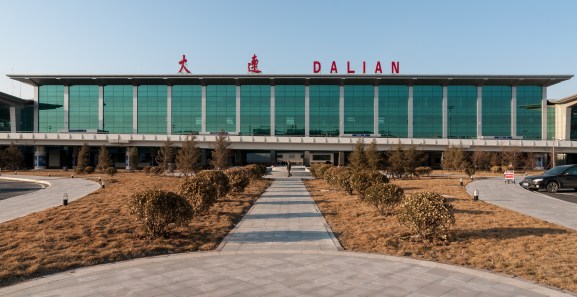
dalian_china_international-airport-01About 10 or so years ago I used to do a weekly show on pirate radio in Dublin. A lot of it consisted of me ranting about whatever was going through my head, interspersed with playing whatever bits of music took my fancy. It being a pirate station, it wasn’t like we conducted regular audience research, and apart from a closely-written postcard accusing me of being an ‘English cesspit’, the only feedback I remember receiving was comments coaxed out of friends, telling me that it was ‘quite funny’, ‘not quite as funny as that other time’ and asking me where I’d got that track from, the one about mescalin that went dum dum THUMP dumdum THUMP THUMP THUMP….A lot of the time it felt a lot like hard work without much more than its own reward.

By comparison blogging is a walk in the park! I mean, hopefully one of these days something I’ve posted here will be picked up by one of the web’s countless equivalents of ‘The World’s Stupidest Home Videos’ and eternal recognition and boundless wealth will be mine. But for the moment I’m really happy with the response that this site has generated, mostly thanks to sites such as the Peking Duck, Simon World and Asiapundit identifying with what I’ve written and encouraging others to drop by.

Over the last few months the site has served as a kind of out-tray for my reflections on what I see around me here in China and the things I read that help me make sense of it. Now I’m leaving China my intention is to continue with the site, but obviously as time goes by my theoretical in-tray will contain less China-related, er, files (?!?), and more things related to where I am in the future.

Nevertheless I’ve now got a huge list of books that I want to read which I haven’t been able to get hold of here, beginning with Jasper Becker’s The Chinese and Jung Chang’s Mao book and also including Mr. China, China Inc and lots more. Partly for this reason, China will occupy a large part of my thoughts for some time to come, as well as influencing how I think about other places and issues. So if you have been dropping by this site in search of China-related stuff, don’t stop doing so just yet. I will continue to post regular but more occasional China material on it.

In the longer term, well, I don’t know exactly what to expect. More things related to teaching, Spanish, Latin America, globalisation and whatever is going through my head.

And in the shorter term you may well find some species of semi-coherent stoned ramblings occupying this space!

My First Podcast!


In honour of my 30th post, and my upcoming 30-somethingth birthday, here is a 3-part recording of interviews with my 1st year university students about questions such as: Who was China’s greatest leader, Which Chinese people are most famous around the world, and Which events in recent Chinese history are best known in other countries.

Unfortunately due to general ineptitude on my part and poor equipment (see above) the sound quality is not fantastic. It sounds like I was shouting the questions, but I don’t think I was.

Part a: The students talk about Zhao Ziyang, once they’ve got over my mangling of his name; their admiration for Zhou Enlai and Chairman Mao; along with some terrible editing and spectacular coughing.

Part b: The Liberation of China; the death of Zhou Enlai; Deng Xiao Ping in Hawaii; and how to say pretty much anything in Japanese.

Part c: What happened if Deng Xiao Ping walked round your house; and how long it will be before China has a female leader.

***** UPDATE *****
After problems with the site they were being hosted on, I’ve moved them back to yousendit.com, which is only good for a limited amount of downloads, so if that runs out email me and I’ll repost them as soon as I can.

Just in case the original links are working (it seems to be a question of browser compatability), the original links (unlimited downloads) are here: Part a, Part b and Part c.

Apologies for all the messin’ around.

China’s New Left

Paramilitary policemen hold their fists in front of a flag of Communist Party of China as they attend an oath-taking rally to ensure the safety of the upcoming 18th National Congress of the Communist Party of China, at a military base in HangzhouRecently, during a class discussion about acceptable questions to ask a recent acquaintance, I asked my students if it was okay to ask a relative stranger if they were a member of the Communist Party. I expected them to answer, as I think most Westerners would do, that it was not okay, because discussing politics in this way might lead to unwanted disagreement. The consensus was, however, that it might be okay if you needed something done and the person concerned might be able to help you.

What, then, is the Chinese Communist Party? It is certainly Chinese, but there are very few people who would these days characterise its politics as related to the theories of Karl Marx or the efforts of the Bolsheviks to establish a classless society in anything other than a purely rhetorical sense.

But is it, in fact, a political party? Not in the sense that it competes on an ideological battleground with other political forces. The Communist Party is supposed to be an all-encompassing organisation that renders other points of view obsolete. In practice, of course, instead of encompassing other points of view it ferociously silences them. The right of political debate is restricted solely to proven Party members.

More recently some of those Party members have been more vociferous about the kind of society they want to create. Known as the New Left, they look to a more social democratic model, influenced as far as I can tell by European societies which in the post-war period established a social pact between the trade unions, the Government and the employers. This social pact enabled Germany and Scandinavian societies to develop sustainably and to provide an enviable social safety net for their citizens.

Could such a model be applied in China? Well, I think it does need to be remembered that the social pact which apparently functioned so well in those societies from which China’s New Left are so keen to draw inspiration, was itself the product of struggle; the development of social welfare systems and the inclusion of trade unions in social bargaining was not something freely granted from above, but was based on a recognition of their very real and proven power in relatively free societies. However, could the Chinese Communist Party begin to make serious adjustments and reforms which at least ameliorated the worst effects of rampant capitalism on people’s lives and provided some kind of social safety net for those most in need?

This is a hugely complex issue which I think will come to dominate international debate about China in the coming years. According to an optimistic point of view, as expressed by one of the discussion panel members on this BBC radio programme, what China wants and needs to do is to copy the example of the Labour Party in Britain, with the added difficulty of doing so while remaining in power.

To start with, I think that the example of the British Labour Party is hugely misleading. Firstly, because the project of reforming the Labour Party was carried out by the pro-market leadership in opposition to the wishes of a very large proportion of the more left-wing socially concious Party members. In the case of China, it is the left-wing party members who are the advocates of change against the wishes of the dominant right-wing pro-market Party leadership.

Another problem with the analogy is that, although superficially attractive, it ignores the recent history of the Communist Party. The Communist Party has been making a rightward-bound ideological journey more or less ever since the early nineteen-sixties, when in the aftermath of the Great Leap Forward a certain amount of market reforms were introduced as a precursor to the start of the abandonment of Communist ideology by Deng Xiao Ping in the late nineteen-seventies. This was of course following the outburst of out-and-out autocracy of Mao’s ‘Great Purge’. Over ten years ago the disavowal of the wish for an equitable society was formalised by Jiang Zemin, who in his bizarrely-named ‘Three Represents’ theory welcomed back into the party all those people – ‘rightists’, capitalists and so on – who had been persecuted throughout the nineteen-fifties and sixties.

However, the journey the CCP has been taking has nothing to do with an increasing sense of social justice; quite the opposite, in fact. What it says clearly is: “If you can’t beat them, join them”. Now when the CCP is so keen to welcome representatives of the Guomindang to China, it seems that there is very little to distinguish the two in political terms.

So can the Chinese Communist Party reform itself into a Social Democratic Party with Chinese Characteristics? As I say, it’s a huge area of debate and I think the arguments will run and run, but I just want to draw two brief analogies.

The first is the Catholic Church, which in the nineteen-sixties attempted through the Vatican II doctrine to get rid of some of it’s more backward thinking on social issues. I think that at the time a lot of Catholic clergy took heart from the changes that were made, and it led directly to what we call ‘Liberation Theology’, the promotion of social as well as heavenly justice.

So what happened? Now we have a church which seems to be more reactionary than ever, promoting the development of AIDS throughout the second and third world, arrogantly refusing to deal with the firestorm of paedophile allegations which threaten to drive more and more moderate Catholics away from the church, and whose congregations are now asked to worship an ex-Nazi Pope, as if to emphasise that there is nothing worldly about his power and that he cannot be challenged by mere mortals. So what happened?

I think the main reason has to do with power. The Catholic Church is driven first and foremost by the need to protect its own existence. Its authority derives from core beliefs which are reactionary and superstitious, and to suggest that they can be adapted to suit social realities is I think to call into question that authority. A Catholic church genuinely and actively committed to challenging poverty and injustice would be unable to sustain its own power and wealth.

As I said at the start, my students don’t seem to really regard the Chinese Communist Party as a political party as we might understand it, but as an organisation of power, privilege and prestige. Throughout the country party officials and to a certain extent ordinary Party members are allowed to run amok: charging peasants illegal taxes, running up restaurant bills for thousands of dollars, stuffing their pockets with public cash, paying thugs to beat villagers off their own land, building up huge unpayable debts with banks, everywhere doing favours for people they like and making life difficult or impossible for those who they don’t. And doing all this with relative impunity – who is going to stand in their way? Other Party members?

It is only a tiny amount of cases of corruption that we ever get to hear about. As far as I can see, corruption and abuse is the rule and not the exception. My second analogy, then, is the Mafia.

In the Godfather Part 2 Michael Corleone is young, idealistic and determined not to follow the example of his father. He is going to clean up his family businesses and make them respectable. So what happens? I don’t want to spoil it for anyone, but it is the Mafia we are talking about here after all. How can you reform an organisation that is based on criminal corruption, on the systematic hoarding and abuse of power? Maybe we can conclude that what Michael wants doesn’t really change, but as a leading member of the organisation he has a crucial job to do: Protect the Family.

I don’t think that China’s New Left are in any way insincere about their project of bringing social justice to China. But I think they’re misguided and possibly naive about the organisation they are members of. Unfortunately I think their efforts only go to provide window dressing for the Party leadership – it enables them to say ‘Look! We have open debate inside the Party! No need for dissidents! Don’t you see how wrong Wei Jingsheng and all those other foreign agents were? China is marching straight down the road to democracy all by itself and we don’t need any advice or criticism from outside!’.

Teaching English Outside China

Seeing as I will soon be returning to the world of proper TEFL teaching (No more than 16 students to a class! Chairs you can move around! Staff rooms! Students who bring notebooks to class!) here are some really useful English teaching links I’ve come across recently:

www.tesall.com is great for jobs, lessons plans and also for links to the best ESL teacher’s blogs all over the world – they were recently kind enough to feature a prominent link to my article about Tefl as a Missionary Language.

www.doyoutefl.com will soon be a great resource if you’ve left teaching, or if you’ve moved on to another school or country. It’s basically a TEFL version of that site I’ve forgotten the name of where you look up and get in touch with old schoolfriends, and is just starting up, so obviously the more people who sign up soon the better. The people who run the site are extremely helpful at offering TEFL-related advice too.

www.developingteachers.com is a site more for serious teachers, particularly for people intending to Do the DELTA, like what I am. They have very detailed lesson plans to look at and use, and lots, and lots, and lots, of really useful teaching tips.